
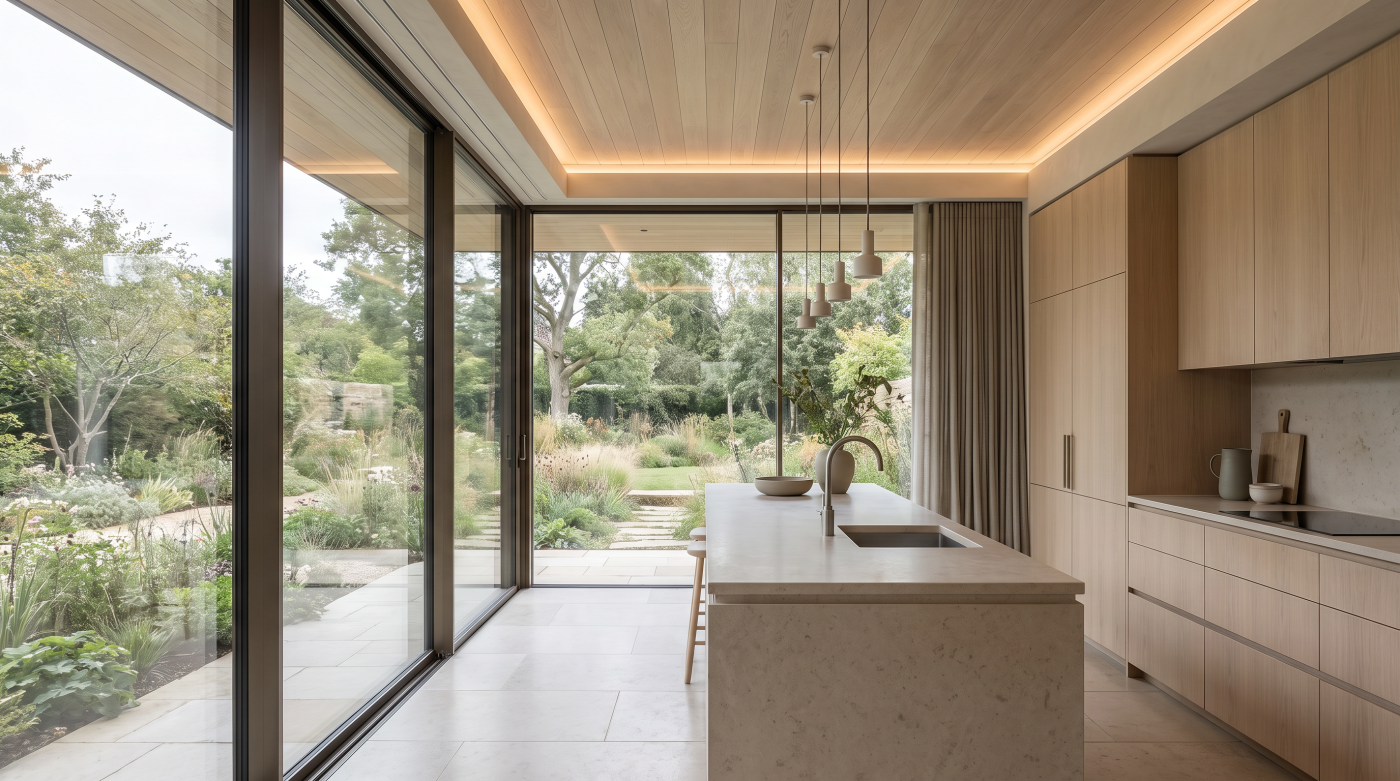
What’s the Real Payback Period on New Windows?
There is no single reliable payback period for new windows. The result depends on the existing glazing, complete project cost, heating system and estimated annual savings. Replacing single glazing and upgrading serviceable double glazing are different investments, even if the new products look similar.
First establish the comparison. Recovering the entire replacement cost through lower bills is different from recovering an additional performance premium when replacement is already necessary. Comfort, operation and architectural quality can also justify work, but they should remain distinct from cash savings. This guide uses sources checked on 14 October 2026 and clearly labelled illustrative arithmetic.
What Does Payback Mean for a Window Project?
Simple financial payback divides the relevant initial cost by estimated annual net cash savings. The result is a number of years, assuming those savings continue at the stated level. It is a useful starting calculation, but its meaning depends on the cost and savings selected. Define both before treating the answer as a project forecast.
Energy payback, carbon payback and resale value answer different questions. A reduction in emissions is not a payment into the household budget, and an opinion about saleability is not evidence of a future price increase. Keep those assessments separately labelled. Combining several uncertain benefits into one financial return can make a project appear more predictable than it is.
Simple payback also treats a pound saved many years later as equivalent to a pound spent today. It does not capture the time value of money or automatically account for changing tariffs, maintenance and future replacement. A more complete financial appraisal may need those factors considered over a realistic period, with appropriate advice where the decision warrants it.
Use the calculation to make assumptions visible rather than conceal them behind a precise-looking result. If annual net savings are zero or negative, this simple method produces no positive finite recovery period. A project can still have other valid objectives, but the claim that it pays for itself through energy bills would need a different evidential basis.
Are You Replacing Single Glazing or Upgrading Existing Double Glazing?
The starting point determines the improvement being assessed. A house with single glazing has a different baseline from one with functioning modern double glazing. Even among older double-glazed windows, frame construction, glass specification, seals and condition vary. The age of the installation can help guide investigation, but it does not describe its complete present performance.
Establish what can reasonably remain in service. A failed glazing unit, worn hardware and widespread frame deterioration can call for different interventions. If a targeted repair addresses the problem, compare that option with complete replacement. Otherwise the financial assessment may credit the new windows with solving an issue that could have been resolved at a different cost.
Describe the proposed assembly accurately as well. A centre-pane glass figure differs from a whole-window performance figure, and the surrounding installation affects the opening’s behaviour. Energy Saving Trust explains whole-window ratings and U-values. Use information relevant to the actual frame, glazing and arrangement rather than selecting the most favourable number from an unrelated configuration.
Then compare existing and proposed performance on the same basis. A saving modelled for replacing every single-glazed window cannot simply be transferred to renewing a few serviceable double-glazed units. The useful assessment explains the area being improved, the starting condition and the expected change, so the cost is being tested against a relevant estimate rather than a generic upgrade claim.
How Should Annual Energy Savings Be Estimated?
A credible estimate needs information about the home and its use. Relevant factors include window area, existing and proposed performance, location, heating system, internal temperatures and occupancy patterns. Orientation, shading and ventilation can also affect the assessment. A product label provides useful information, but it cannot establish the household’s annual bill reduction by itself.
The heating calculation needs translating into the energy actually purchased under the relevant tariff. Fuel type and system efficiency matter, while fixed charges should not simply be reduced in proportion to a heat-loss estimate. If the household chooses warmer rooms after improvement, some benefit may appear as comfort rather than the cash saving assumed under unchanged conditions.
As checked on 14 October 2026, Energy Saving Trust’s published example gives £85 annual savings in Great Britain for A-rated double glazing in an entirely single-glazed semi-detached home. That is a defined published scenario, not a default forecast for another property or an estimate of savings from replacing existing double glazing. Its scope matters as much as its headline.
Ask whoever prepares a project estimate to explain the baseline, assumptions, tariff basis and date. Consider a reasonable range where inputs are uncertain. Keep an energy-performance model distinct from the actual household budget, and revisit material changes in heating or occupation. A transparent estimate is more useful than a larger saving whose relationship with the proposed work cannot be explained.
Which Costs Belong in the Calculation?
For full-project payback, begin with the complete cost of achieving the finished installation. Include relevant surveys, products, installation, access, removal, disposal, surrounding repairs, finishing and applicable VAT. Permissions or specialist design input may add further expenditure. A frame-only figure should not be compared with savings from a complete project if essential work is still outside the budget.
Read the quotation’s assumptions and exclusions. If the condition of the opening remains uncertain until removal, establish how any additional work will be assessed and agreed. The project price used in the calculation should reflect the scope being evaluated, with remaining uncertainty identified. A low initial allowance can distort the result if necessary tasks are omitted.
Consider relevant differences in ongoing costs as well. Maintenance should be assessed for the actual materials and arrangements, without assuming every new system has no future expenditure. Where the project is financed, interest and fees belong in the broader financial assessment. MoneyHelper advises comparing complete borrowing costs alongside the home-improvement budget.
Label the cost basis clearly. A calculation using the household’s contribution after confirmed support answers a different question from one using the full resource cost. Likewise, an upgrade premium differs from the whole replacement invoice. Either comparison can be useful for a stated purpose, provided its numerator and estimated savings describe the same decision and the arrangement is explained accurately.
How Does a Transparent Worked Example Look?
Take an invented project cost of £10,000 and invented annual net savings of £200. Dividing £10,000 by £200 gives a 50-year simple payback. These inputs are teaching figures only: they are neither a quotation nor a savings forecast, and they are not taken from the Energy Saving Trust scenario discussed earlier. They demonstrate the arithmetic.
Keep the same hypothetical cost but change the annual saving to £100 and the result becomes 100 years. At £400 annual savings it becomes 25 years. That sensitivity explains why the savings estimate deserves scrutiny. A precise division cannot compensate for an annual figure that does not relate to the property or proposed intervention.
The calculation assumes a constant annual saving and no additional costs during the period. It should not be read as a prediction of tariffs decades ahead or a guarantee that the installation will remain in service throughout. If the calculated recovery extends beyond the relevant appraisal period, acknowledge that limitation rather than describing the investment as certain to repay itself eventually.
For a real project, replace both invented inputs with an appropriate complete cost and a justified estimate, then test material uncertainty. Use the result alongside condition, service expectations and other objectives. The value of the worked example is a method the homeowner can question and apply, rather than a headline period presented as the normal outcome for every new window.
What If the Windows Need Replacing Anyway?
Where replacement is already necessary, the decision may concern which suitable specification to choose. One calculation asks whether lower energy bills recover the complete replacement invoice. Another asks whether the additional savings from a higher-performance option recover its extra cost. These are separate comparisons and should be labelled clearly rather than using their results interchangeably.
Establish an appropriate baseline replacement first. It must suit the building and relevant requirements, rather than represent an unsuitable or unavailable option chosen to make the upgrade look attractive. Match the scope, installation and finishing work between proposals so the additional price reflects an understood difference. Identify any other features bundled into the more expensive option.
Then assess the additional expected cash saving relative to that baseline. Savings from the old windows to the higher-performance choice cannot all be credited to the upgrade premium, because some would arise from the baseline replacement too. The numerator and denominator must compare the same two options. This distinction is particularly useful when considering a change in glazing specification.
Keep the wider reasons for replacement visible. Necessary renewal, operation and architectural fit still belong in the decision, even where the extra performance investment has a long calculated payback. Ask the specification team to explain both the baseline and the upgrade. That gives the homeowner a clearer choice than a single claim that a premium assembly will pay for the entire project.
Could Repairs or Other Improvements Offer Better Financial Value?
Consider whether a different intervention would address the priority more effectively. Appropriate repairs, draught-proofing or secondary glazing may be relevant where the existing assembly can remain. The comparison should include condition, compatibility and complete installation costs. A lower-cost measure is useful only if it suits the building and achieves the objective being assessed.
Historic windows require a careful assessment of retained material and significance. Historic England recommends considering repair and suitable adaptation. A financial comparison that assumes removal of repairable historic fabric can miss an important constraint. Appropriate permissions and conservation advice should inform the available options before their costs and savings are compared.
Other parts of the home may also deserve attention. RICS recommends a coordinated approach to retrofit, with advice relevant to the building. Consider glazing alongside suitable insulation, heating controls and ventilation decisions. The best next step depends on the home rather than a universal ranking that makes the same measure first for every property.
Avoid adding overlapping savings estimates as though each were independent. Several improvements can act on the same heating demand, and their combined effect needs considering coherently. Where the scope is substantial, appropriate whole-home assessment can help establish a sequence. That supports a better comparison of justified interventions than assessing each sales claim separately and assuming all advertised savings will accumulate.
When Can New Windows Be Worthwhile Despite a Long Payback?
Windows serve several functions, and direct energy savings may be only one reason for work. Necessary renewal, reliable operation, weather resistance and architectural quality can all matter to the homeowner. Those objectives deserve a clear brief and appropriate evidence. A long energy payback does not by itself establish that a justified repair or replacement project has no value.
Comfort can also influence the decision. Improving a cold internal surface or reducing an identified draught may change how a room is used. Acoustic or security objectives need their own suitable specification and evidence, rather than assuming they follow automatically from a particular pane count. Describe each intended benefit according to what the proposed assembly can support.
Resale expectations should remain separate from the annual savings model. A future buyer may value the improvement, but an invoice does not establish an equal sale-price increase. Nor should uncertain future energy prices be selected solely to create a shorter recovery period. Assess the project using reasonable assumptions and recognise which benefits are personal priorities rather than measurable cash returns.
For homes across Bath, Bristol, Wiltshire, Somerset and the Cotswolds, CBP’s architectural glazing and specification approach begins with the building and intended outcome. The useful decision combines condition, appropriate performance, design, complete cost and transparent assumptions. If the project is worthwhile for reasons beyond energy savings, explain those reasons directly while keeping its financial payback calculation honest and clearly defined.