
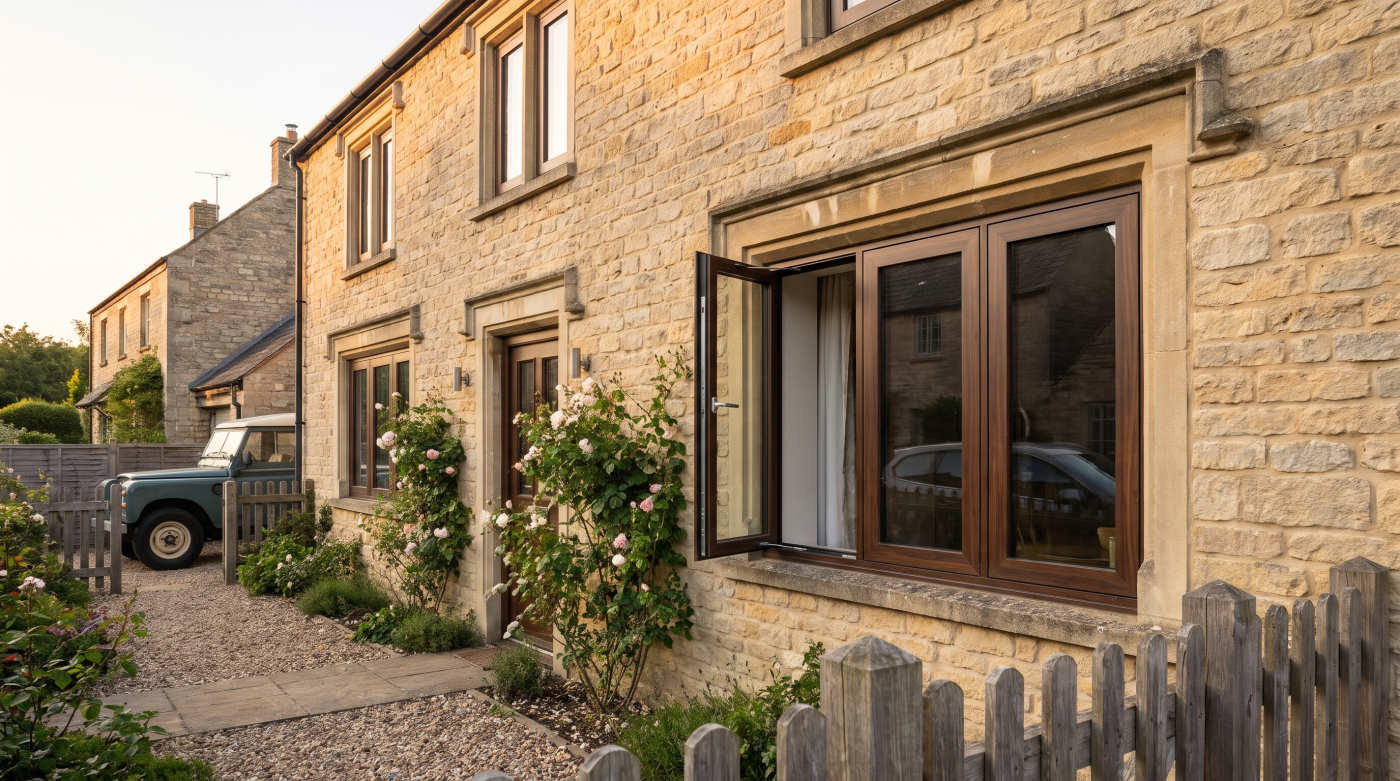
Timber-Look Aluminium: Convincing or Not?
Timber-look aluminium can create an appealing wood-like appearance, but whether it is convincing depends on the actual finish, the window design and its setting. A small image of a grain pattern cannot establish how a whole opening will look beside stone, brick or existing joinery. The surface and the assembled window need to be assessed together.
The better question is what you want the finish to achieve. It might introduce a warmer colour, relate to nearby timber or imitate a particular kind of joinery. Those are different aims. For a rural Wiltshire home or a contemporary extension in Somerset, a sample-led decision can establish whether the proposed effect supports the architecture without assuming it will be indistinguishable from real wood.
Establish What Timber-Look Aluminium Actually Means
Timber-look aluminium describes a decorative appearance applied to a metal substrate. The product remains an aluminium window, with its own profile geometry, connections and operating system. It is different from a timber window, a timber-effect uPVC product or a designed combination of timber and aluminium within one frame. Establish that construction before comparing appearance, performance or the care each option requires.
The finishing process can vary. Sherwin-Williams’ architectural coating information describes one system allowing decorative effects to be transferred by sublimation using specially designed films. Powdertech’s Wood Finish range describes decorative powder coatings formulated to reproduce variations associated with wood. These are examples of different approaches, not evidence that every timber-look window uses the same process.
Ask the window provider to identify the finish actually proposed, including the coating reference and its intended application. A generic description such as oak effect can leave both the colour and the process uncertain. The relevant specification should connect the surface with the finished product. A coating available for architectural metalwork is not automatically an offered finish on every window system.
This distinction helps frame the design decision honestly. You may want a metal window with a wood-like palette, rather than a replica of historic joinery. Alternatively, the precise material and construction may be central to the brief. Defining that aim early prevents a pleasing sample from being approved for a purpose it cannot establish, and keeps the comparison grounded in the actual options.
Examine Colour, Grain, Texture and Sheen
Begin with the base colour rather than the finish name. The timber you have in mind might be pale, reddish, weathered or deeply stained, while the proposed effect could have a different undertone. Compare it with a representative reference for the intended appearance. Oak, for example, is not one unchanging colour that can be captured completely by a descriptive label.
Then look at how the grain is expressed. Consider its contrast, density and direction, and whether it feels appropriate to the scale of the profile. Inspect the actual sample rather than assuming all decorative systems have the same pattern behaviour. Some effects are deliberately varied, while others may create a more regular expression. What matters is the product you are being offered and your design intention.
Texture and sheen deserve their own review. A convincing colour can still look unlike the intended timber if the surface is very smooth or reflective. Conversely, a quieter finish may work well without attempting a close imitation. Examine it under suitable light and, where permitted, feel the sample. Photographs rarely communicate surface character as reliably as a representative physical piece.
Write down what you like or dislike rather than relying on an immediate overall reaction. You may approve the tone but want less pronounced grain, or prefer the texture of another finish with a different colour. These observations help the architect and glazing team refine the shortlist. The result is a more specific brief than simply requesting something that looks convincingly wooden.
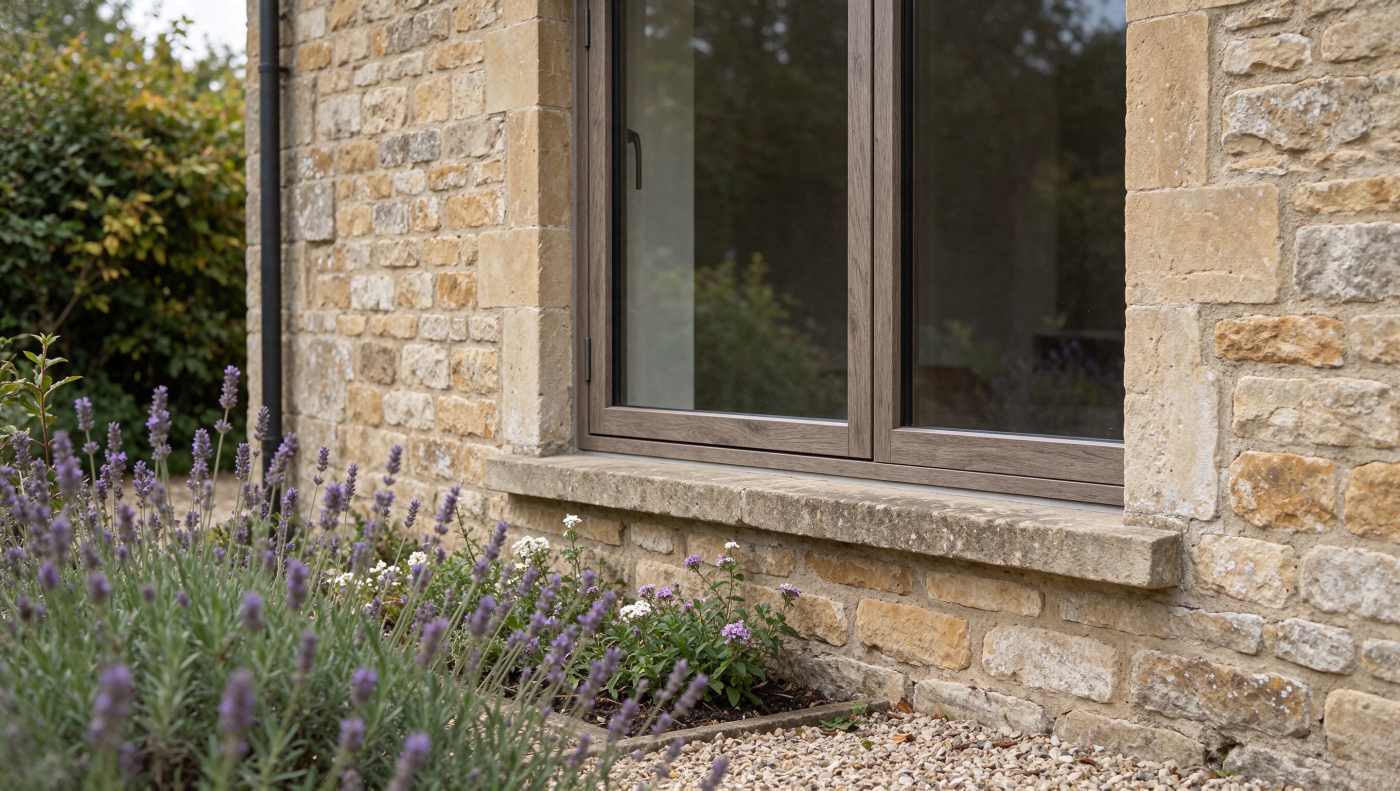
Look Beyond the Finish to Profiles and Joints
The eye reads the construction of a window as well as its colour. Frame width, sash proportions, corners and glazing bars all influence whether an opening resembles the timber joinery you have in mind. A finish cannot change those underlying relationships. This is particularly relevant where a homeowner is comparing a slim aluminium system with a more substantial traditional timber window.
Look at an assembled corner and the junctions between members. Ask how the finish is presented at cut ends, joints and accessories, using the actual manufacturer’s details. A flat swatch can show the surface but cannot explain those transitions. The point is to understand what will be visible, rather than judge the entire window from its most flattering uninterrupted piece.
Opening and fixed elements also need comparison. Their visible profiles may differ, and an effect that looks restrained on a narrow frame can read differently across a wider section. Include the configurations required for your house, particularly where several windows will be seen together. A showroom example with a different opening arrangement may not demonstrate the proportions of the proposed elevation.
Glazing bars and hardware complete the picture. Their shape, position and finish can reinforce or weaken the intended appearance. For a Bristol extension, a clearly contemporary aluminium window with a warm finish might be the desired result. For a different project seeking faithful joinery details, the same assembly could be unsuitable. The geometry needs to support the brief rather than depend on the coating to do everything.
Judge It at Close Range and Across the Elevation
A finish can read differently at the distance from which it is normally seen. At close range, texture, grain and junctions become prominent. Across a garden or from the street, the overall tone and proportions may dominate. Neither view is the only correct assessment. Consider the experience of the people approaching the house as well as the composition of the complete elevation.
An entrance or frequently used terrace opening invites closer scrutiny than a high window viewed mainly from below. The requirement should reflect that setting. A small sample held at arm’s length does not establish the appearance of a large glazed wall, while a distant photograph may conceal details that matter beside the front door. Review examples at a scale relevant to your proposed openings.
Light changes the reading too. A shaded recess, direct sun and an overcast day can reveal different aspects of the surface. Take suitable samples to the site and compare them in the intended orientation where practical. Avoid basing approval on a brightly lit showroom alone. The aim is a representative understanding of the finish in the conditions where it will be used.
Keep the judgement connected to the desired effect. A finish may be attractive from every relevant viewpoint without becoming indistinguishable from natural wood. That can be a successful design choice if it meets the brief. Trouble is more likely when the expectation remains undefined, leaving one person approving a warm metal finish while another anticipates a close replica of traditional timber construction.
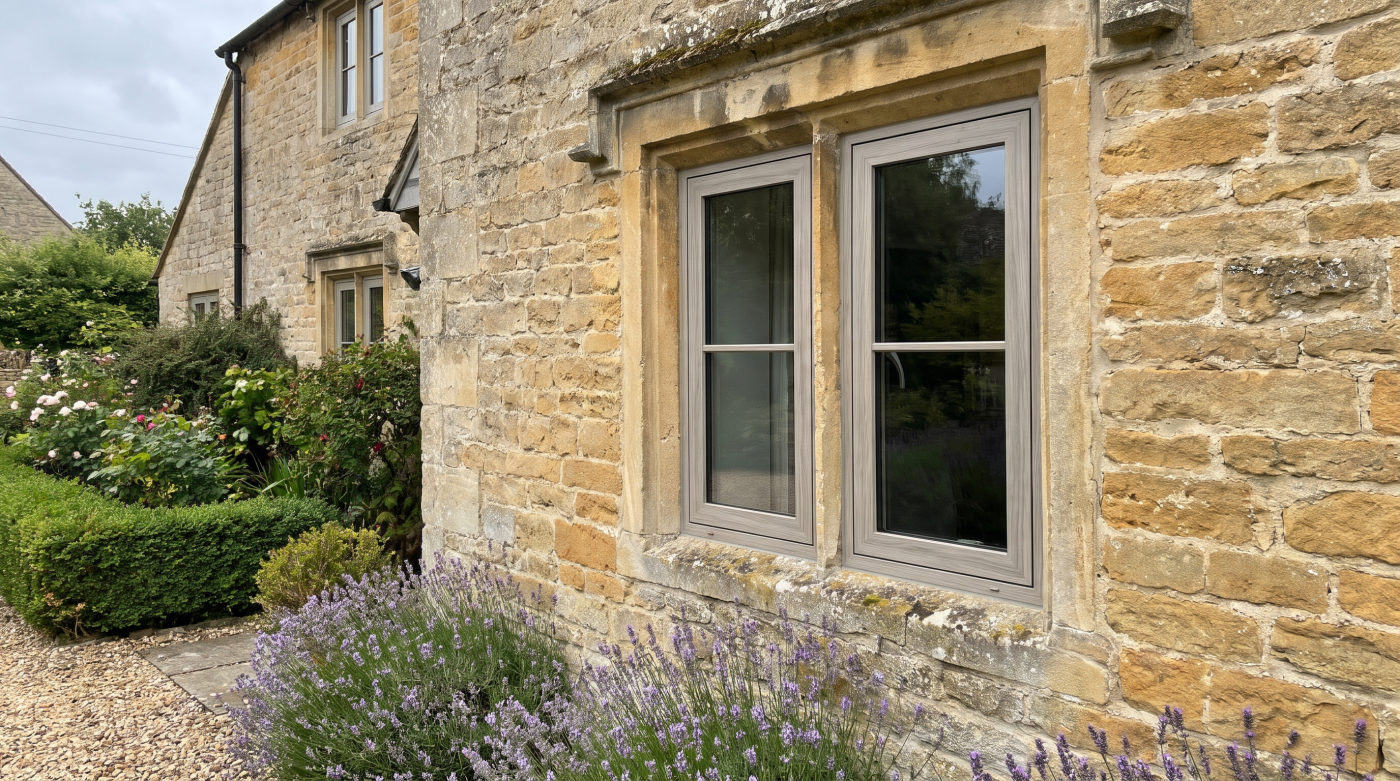
Compare Samples With the Building’s Actual Materials
Take the proposed finish out of isolation. Place samples alongside the brick, stone, render or other surfaces they will meet, using actual materials where possible. A colour that appears neutral on a showroom wall may look markedly warmer or cooler in the house’s palette. The useful question is how the materials relate, rather than whether each one looks attractive on its own.
Nearby timber needs particular thought. If an existing door or cladding is retained, decide whether the new window should imitate it, complement it or create a deliberate difference. Natural variation and an aged finish can make an exact visual match unrealistic. A coordinated but distinct effect may be more satisfying than an almost-match that draws attention to the difference between two surfaces.
Powdertech specifically cautions that powder-coating colours may not reproduce well on screen and directs customers towards physical samples. The principle applies to the approval process here: digital images can develop an idea, while the representative product finish needs direct review. Keep photographs as supporting context, without treating a phone image as a binding colour standard or an exact record of how the eye sees it.
A Cotswold stone elevation may benefit from one relationship, while a Bath interior with retained joinery suggests another. Those are design questions for the actual building, not regional prescriptions. If external and internal appearances differ, review both with the relevant rooms. Confirm the finish options offered for the chosen system before assuming that the preferred combination can be manufactured.
Check the Coating Specification and Care Requirements
Once the appearance is promising, establish the actual coating specification. Ask which finish is being supplied, who applies it and what supporting information relates to the finished product. A sample’s appearance does not establish its suitability for every exposure or application. The product provider and relevant specialist should confirm the finish required for the project and any conditions attached to its use.
Quality labels need the same precision. QUALIDECO concerns special finishes applied to coated aluminium, but the existence of the scheme does not establish that every wood-effect product or applicator holds the relevant approval. Where a certification claim forms part of the proposal, ask for current evidence covering the specified arrangement. Do not infer it from a logo on unrelated literature.
Obtain the care and warranty information for the actual finish and window. Cleaning products, treatment of marks and any repair options should follow the applicable instructions. A general low-maintenance description does not mean every component needs no attention. Equally, advice for natural timber should not be transferred to a decorative metal coating simply because the surfaces have a similar appearance.
Ask how later damage or a replacement component would be handled, without assuming an invisible repair or permanent availability of an identical effect. Those questions can influence the choice where the finish is unusually distinctive. Keep performance, care and appearance evidence together, while recognising that a coating specification does not by itself certify the thermal, acoustic or weather performance of the complete window.
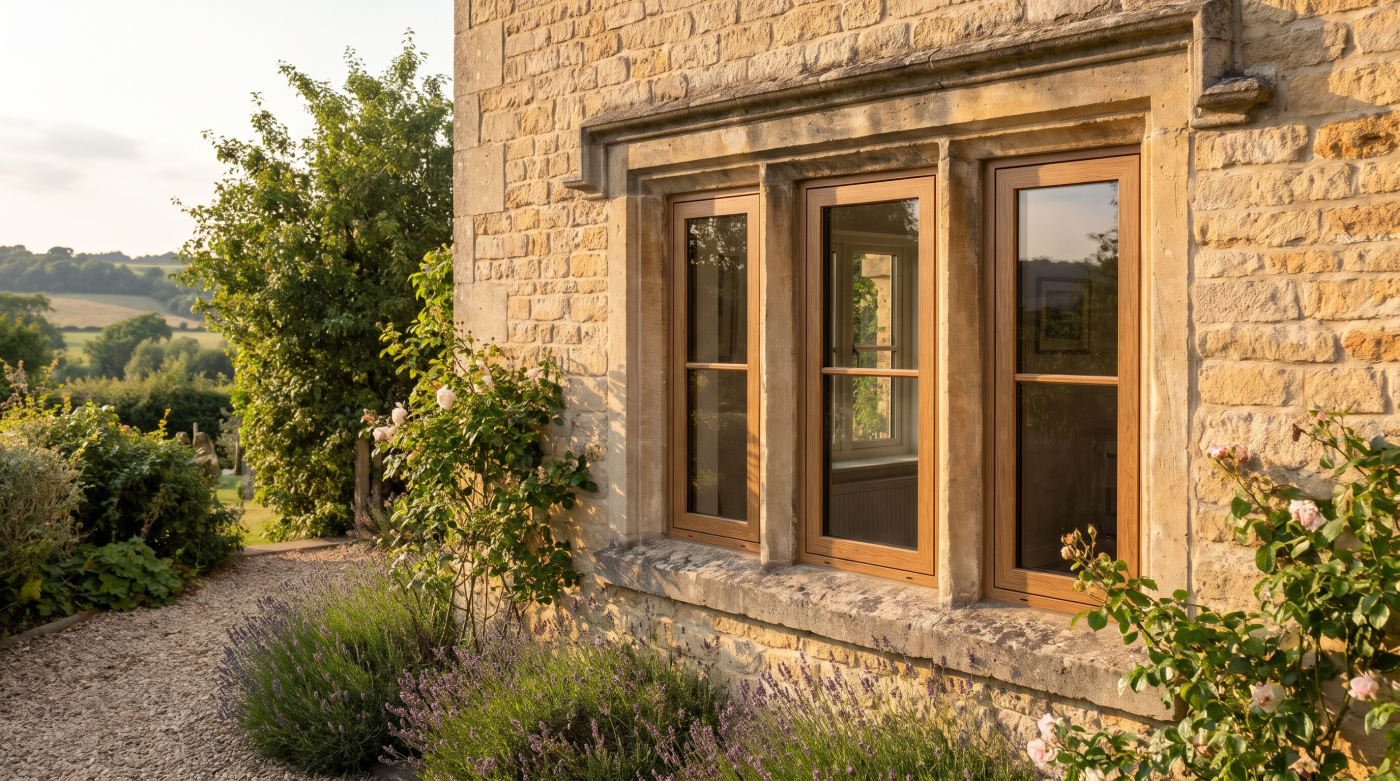
Consider Where Real Timber or Another Finish Fits Better
A successful assessment can lead away from timber-look aluminium. If the brief depends on the natural material, a particular joinery construction or a significant existing detail, real timber may deserve closer consideration. If the aim is simply a quieter or warmer palette, a plain coloured metal finish might work well. Keeping these alternatives open helps avoid selecting an imitation without a clear purpose.
For an important historic opening, appearance is only part of the question. Material, workmanship and surviving fabric can also contribute to significance. Obtain appropriate advice before assuming a timber-like surface will satisfy the relevant requirements. A product described as suitable for traditional homes does not establish acceptability for a particular listed building or replace the permissions that may apply to the work.
There may also be a different way to combine the desired qualities. A factory-designed timber/aluminium window can provide actual timber internally and aluminium externally, depending on its construction. That is a distinct product option, not a decorative finish applied to an all-aluminium window. Compare the proposed systems in terms of the room, elevation, performance and ownership brief rather than treating the descriptions as interchangeable.
None of these options is automatically the most authentic, practical or economical for every project. The decision should emerge from what the house needs and what the homeowner wants to experience. An architect or interior designer can help assess those priorities, especially where a new addition meets retained work. The finish succeeds when it supports the overall design, with its limitations understood.
Agree the Sample and Record the Complete Specification
Before manufacture, record the approved finish in a way that can be related to the order. Include the relevant reference, intended sheen or texture and which components receive it. Keep a representative sample where practical and identify the date and decision it records. A note saying wood effect is too broad to resolve many later questions about what was actually approved.
Connect that approval with the window schedule and relevant drawings. Confirm the profile, opening arrangement, joints, glazing bars and hardware that were considered alongside the sample. If one of those changes, review whether the appearance still meets the brief. A finish approved on a particular configuration should not silently be transferred to a substantially different assembly without considering the result.
Agree how any proposed substitution or supply change will be reviewed. A finish with a similar name may have a different tone, grain or care requirement. Ask what would be supplied and inspect appropriate evidence before accepting it. Recording these decisions provides a clear shared reference; it should not be presented as guaranteeing that every future batch or replacement part will be visually identical.
CBP, as an architectural glazing and specification partner, can contribute to the conversation between finish choices and the wider window design. Across Bath, Wiltshire, Somerset, Bristol and the Cotswolds, the useful approach is to judge the actual product in its intended setting. Timber-look aluminium can be convincing for its purpose, provided that purpose is clear and the complete specification supports it.