
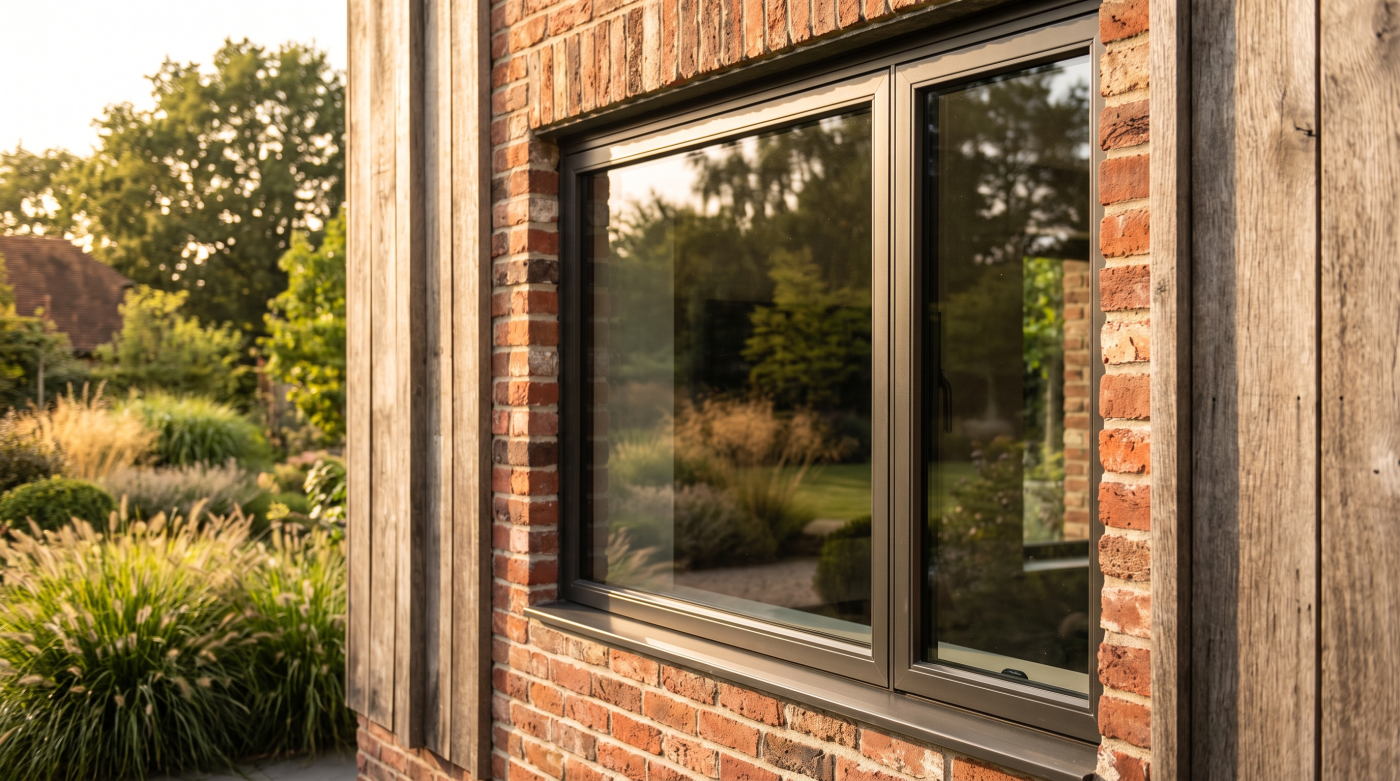
What Is the Spacer Inside Double or Triple Glazing?
Look closely at the perimeter of a double-glazed unit and you will usually see a narrow strip running between the panes. That component is the spacer.
Its most obvious job is contained in its name: it maintains a controlled distance between the individual panes of glass, helping create the cavity that forms part of an insulated glass unit.
In double glazing, the spacer runs around the perimeter between the two panes. Triple glazing introduces an additional pane and cavity, creating a more complex insulated glass construction.
But keeping the panes apart is only part of the spacer’s role.
The spacer forms part of the sealed edge construction of the glazing unit. Depending on the particular system, it can also incorporate desiccant designed to help manage residual moisture within the sealed cavity. Together with the wider edge-seal construction, this helps create the controlled environment required inside an insulated glass unit.
Thermally, the spacer is interesting because it sits at the junction between the glass panes around the entire perimeter.
Traditional spacer constructions have often used highly conductive metallic materials such as aluminium. Heat can travel through conductive materials relatively readily, making the edge of the glazing unit behave differently from the centre of the glass.
This is where warm edge spacers enter the conversation.
Rather than describing one particular product, warm edge refers to spacer technologies designed to reduce heat transfer around this perimeter compared with more conductive traditional spacer constructions. Different manufacturers achieve this using different materials and designs, so not every warm edge spacer should be assumed to have identical characteristics.
For most homeowners, the spacer will never be the most visually exciting part of a window.
But it sits continuously around every insulated glass unit in the building.
And that makes this almost invisible strip much more important to the performance of the glazing than its size might suggest.
What Does “Warm Edge” Actually Mean?
The term warm edge can sound as though the spacer somehow generates warmth around the perimeter of the glass. It does not.
The principle is much simpler: a warm edge spacer is designed to reduce heat transfer through the edge of an insulated glass unit compared with more conductive traditional spacer constructions.
That matters because the centre and perimeter of a glazing unit do not behave identically.
Across the centre of the pane, thermal performance is largely determined by the glass construction, coatings, cavities and other characteristics of the insulated unit. Around the perimeter, however, the spacer connects the edge region between the panes and becomes part of the route through which heat can travel.
Where that spacer uses a highly conductive material, the perimeter can form a more pronounced thermal bridge.
Warm edge technologies aim to reduce that effect. Different products achieve this through lower-conductivity materials or composite constructions designed to improve the thermal behaviour of the glass edge.
The result is not that the edge suddenly becomes warm.
It is that less heat can be transferred through this particular part of the glazing construction compared with a more conductive alternative.
In technical glazing information, you may encounter this edge effect represented through values such as the linear thermal transmittance, or Psi value, associated with the glass-edge junction. Homeowners do not need to calculate this themselves, but it helps explain why the spacer can influence the performance of the complete window even though it occupies very little visible area.
Importantly, “warm edge” is a category rather than one universal specification. Different spacer systems use different materials and constructions and should not automatically be assumed to provide identical performance.
That is why the label alone tells you relatively little.
The useful question is not simply whether a window has a warm edge spacer.
It is how effectively the complete glazing edge has been designed to reduce one of the small thermal bridges hidden inside the window.
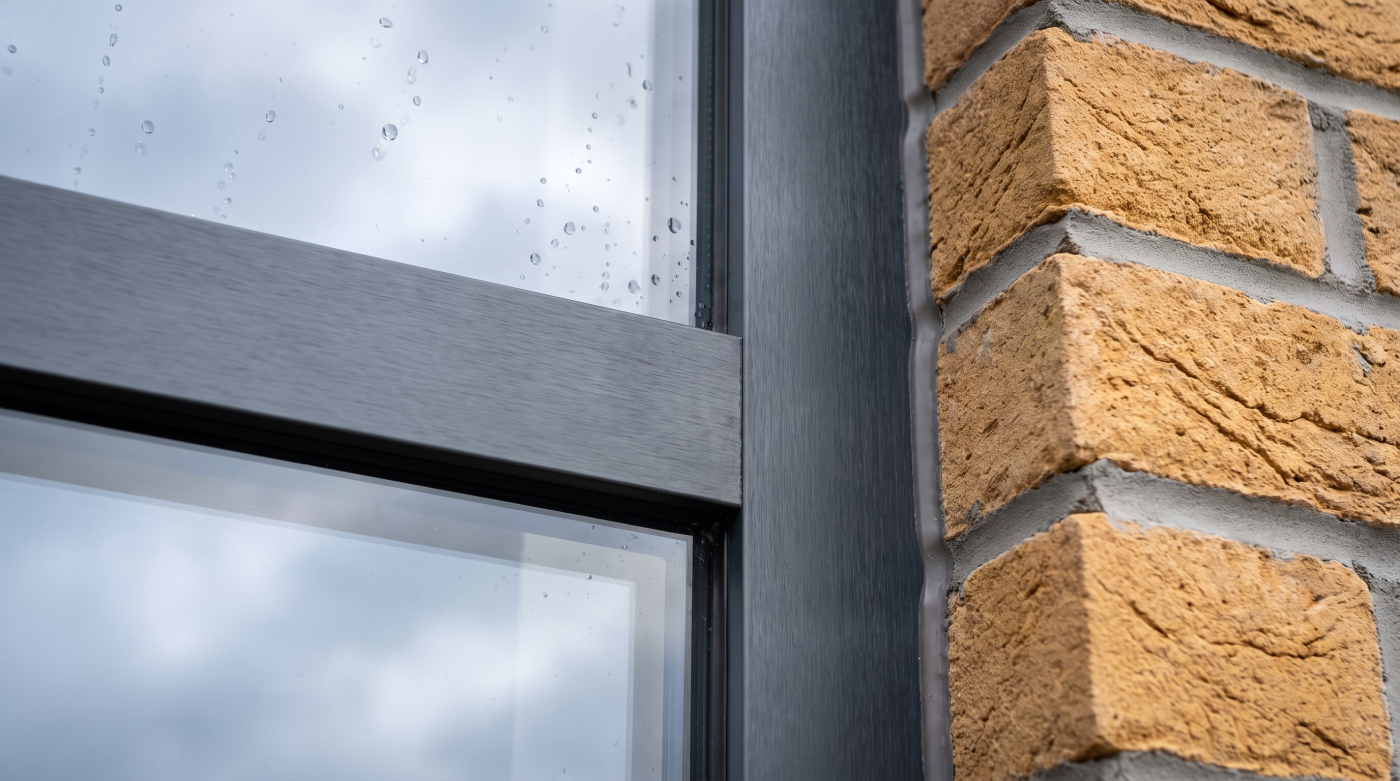
Why a Few Millimetres Around the Edge Can Affect the Whole Window
A spacer occupies only a narrow strip around the perimeter of an insulated glass unit, so it is reasonable to wonder how something so small can have any meaningful influence on the performance of an entire window.
The answer is that the spacer may be narrow, but it runs continuously around the glass.
Every window therefore contains a perimeter region where the thermal behaviour is different from the centre of the pane. Across a building containing numerous windows and doors, those individual edges collectively represent a significant length of glazing junction.
This also explains an important distinction in window performance: the U-value of the glass is not necessarily the U-value of the window.
The centre-pane performance of an insulated glass unit is commonly expressed through its Ug-value. The complete window has to account for more than that. The frame has its own thermal characteristics, while the junction between the frame and glazing introduces the edge effect influenced partly by the spacer construction.
Complete-window thermal performance is commonly expressed as the Uw-value.
This distinction matters when comparing glazing specifications. Two windows could use glass with similar centre-pane performance while producing different overall results because the frames, glass-edge details, dimensions and complete constructions differ.
Geometry matters too.
A small window has proportionally more perimeter relative to its glass area than a very large pane. This means edge effects do not influence every window size in exactly the same way, which is one reason a universal claim that a warm edge spacer will improve a window by a particular amount can be misleading.
The effect becomes especially worth understanding on high-performance buildings, where numerous relatively small thermal improvements collectively contribute to the overall energy strategy.
Warm edge spacers should therefore not be viewed as a miraculous upgrade.
They are one carefully controlled detail within a much larger thermal system.
And that is the broader lesson: when assessing glazing performance, look beyond the headline number for the centre of the glass.
The whole window is what separates the inside of the home from the outside.
Warm Edge Spacers and Condensation: What Changes?
Condensation is one of the areas where warm edge spacers can create a benefit homeowners may actually notice, but it is also an area where claims need to be made carefully.
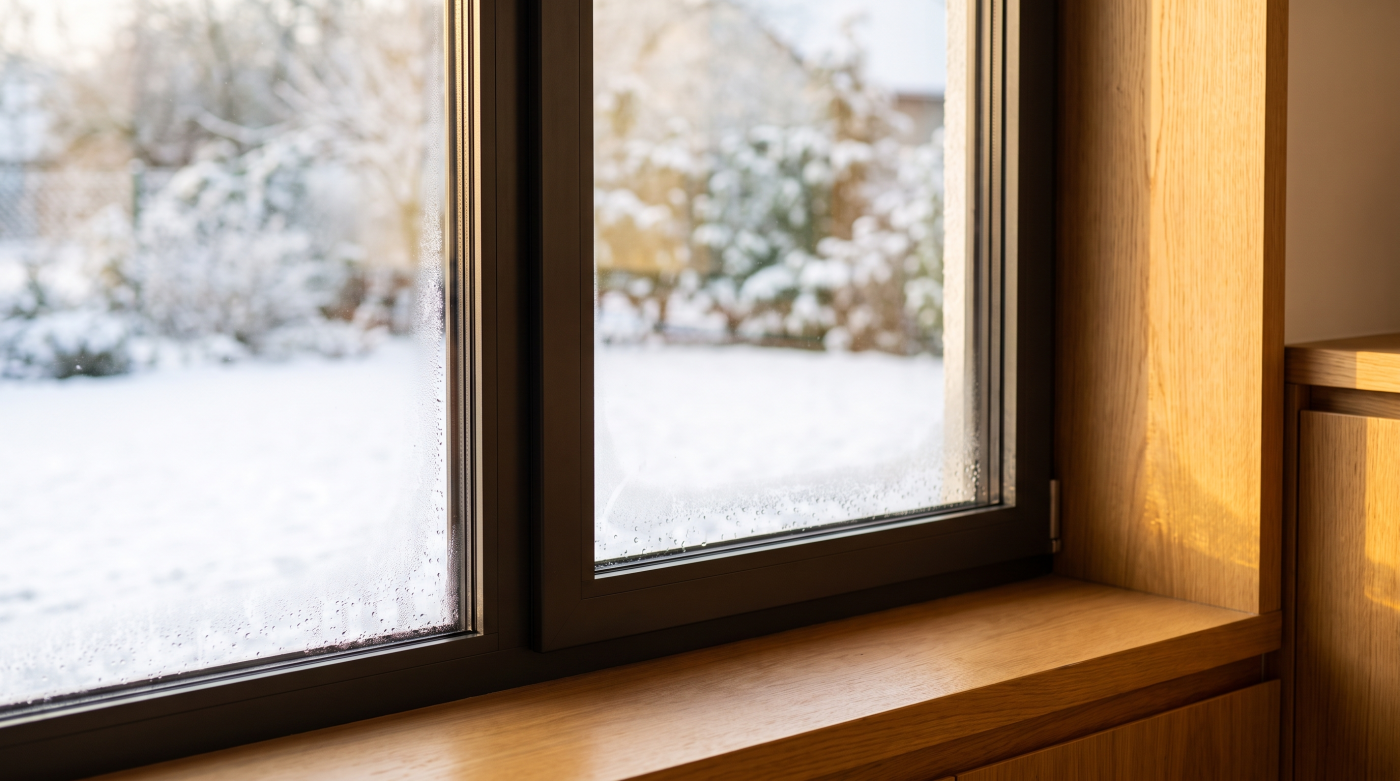
The internal surface of a window is not necessarily the same temperature everywhere. During cold weather, the perimeter of an insulated glass unit can be one of the colder areas because of heat transfer through the glass-edge construction.
A more conductive spacer can contribute to this effect.
Warm edge technology is designed to reduce heat transfer through that perimeter region. By improving the thermal behaviour of the glass edge, it can help maintain a higher internal surface temperature around the perimeter compared with a more conductive spacer construction.
Why does that matter?
Condensation can form when a surface becomes sufficiently cold for moisture in the surrounding air to condense onto it. If the internal glass edge remains warmer, it can therefore become less susceptible to condensation under equivalent conditions.
But that does not mean warm edge spacers prevent condensation.
Indoor humidity remains critical. Cooking, showering, drying clothes and everyday occupation all introduce moisture into a home. Ventilation, heating, external temperature and local airflow around the window also influence whether condensation occurs.
Curtains and blinds can change conditions around the glass too, particularly when they restrict warm room air from circulating close to the internal surface.
It is also worth distinguishing internal condensation from condensation that occasionally appears on the outside of efficient glazing. External condensation is a different phenomenon and should not automatically be interpreted as evidence that the spacer or glazing is performing poorly.
This is why statements such as “warm edge spacers stop condensation” oversimplify the issue.
They can improve one of the conditions that influences condensation: the temperature around the internal perimeter of the glass.
That can be a worthwhile improvement.
But condensation is ultimately the result of an interaction between glazing performance, temperature, humidity, ventilation and the way the building is being used—not something a few millimetres of spacer material can eliminate on its own.
Does Spacer Colour Matter in Minimal-Frame Glazing?
Thermal performance may be the principal reason to consider a warm edge spacer, but on highly refined architectural glazing there is another detail worth thinking about:
What does the spacer actually look like?
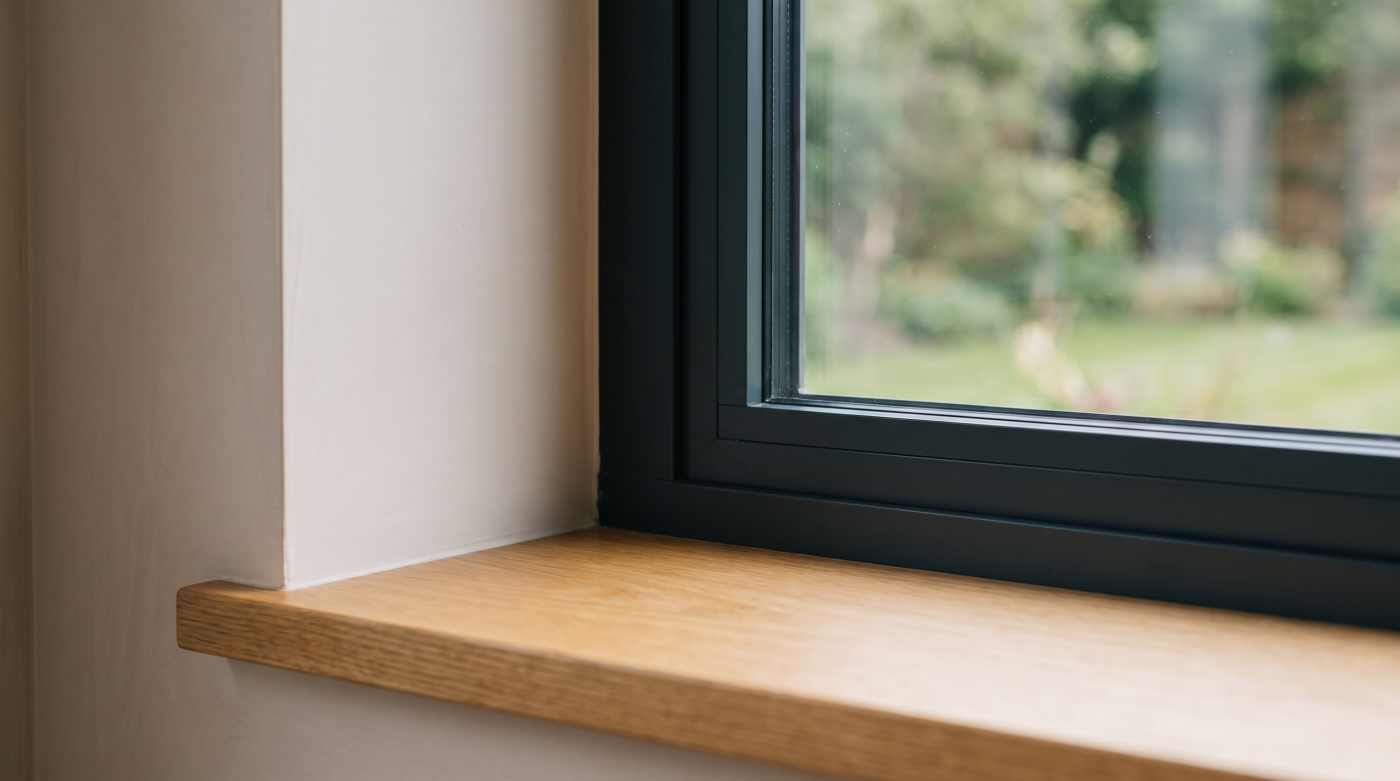
The spacer runs around the perimeter of the insulated glass unit. Although much of it may sit close to the surrounding frame, it can remain visible when looking through the glazing towards its edge.
On a conventional window, this may attract very little attention.
On a large minimal-frame sliding elevation, it can matter considerably more.
Minimal glazing deliberately removes visual distractions. Frames become narrower, junctions become cleaner and the architecture increasingly relies on large uninterrupted surfaces of glass. As those obvious components disappear, seemingly minor details can become surprisingly noticeable.
Spacer colour is one of them.
With dark aluminium framing, a suitably dark spacer can help create visual continuity around the perimeter of the glass. Rather than introducing a contrasting line inside the glazing unit, the edge construction can visually recede towards the framing.
Across a large pane, that line may run for several metres.
The same consideration can become important around highly refined fixed glazing, glass-to-glass corners and other details where the intention is for the glazing construction to appear as visually quiet as possible.
But aesthetics should not override performance.
Not every spacer technology will necessarily be available in every colour, and colour options should not be assumed to be technically interchangeable. The spacer needs to remain appropriate for the insulated glass construction and compatible with the wider glazing system.
Its appearance should therefore be considered alongside its thermal and technical characteristics rather than instead of them.
This is one of the peculiar consequences of minimal architecture.
The more successfully you remove frames, handles and other obvious components from view, the more attention can fall on details most homeowners never expected to see.
A spacer may only be a narrow line around the glass.
On a beautifully resolved minimal elevation, that can be exactly why it matters.
Warm Edge Spacers in Triple Glazing and High-Performance Homes
As the thermal performance of a home improves, details that once seemed relatively insignificant become increasingly worth understanding.
Warm edge spacers are a good example.
Triple glazing adds another pane and cavity to the insulated glass construction, helping create glazing capable of meeting more demanding thermal objectives. But improving the centre of the glass does not make the perimeter of the unit irrelevant. The edge construction still forms part of the route through which heat can travel.
This is why warm edge technology is particularly relevant in high-performance glazing.
A carefully specified triple-glazed unit may combine low-E coatings, appropriate cavities, multiple panes and a thermally considered spacer construction. Each element contributes differently, but together they determine how the insulated glass unit behaves.
The distinction between Ug and Uw becomes especially important here.
A very low centre-pane Ug-value can look impressive on a specification sheet, but the homeowner ultimately lives behind the complete window. Frame performance and glass-edge effects also contribute to the overall Uw-value, meaning the highest-performing glass does not automatically create the highest-performing window.
For low-energy self-builds and projects pursuing particularly demanding performance targets, these incremental differences become more significant. Once walls, roofs, airtightness and glazing have all been substantially improved, remaining thermal bridges deserve greater attention precisely because the obvious sources of heat loss have already been reduced.
That does not mean the spacer should be considered in isolation.
The frame, glazing build-up, installation and junction between the window and surrounding building fabric all remain important. A warm edge spacer cannot compensate for poor installation or resolve a separate thermal bridge around the window opening.
It is one part of a much bigger performance strategy.
But specifying sophisticated triple glazing while ignoring the thermal behaviour of its perimeter would be an odd contradiction.
High-performance buildings are rarely created by one extraordinary component.
They are created by many carefully resolved details working together—and the narrow strip hidden around the edge of every insulated glass unit is one of them.
Are All Warm Edge Spacers Basically the Same?
Once a glazing specification includes the words “warm edge spacer”, it can be tempting to consider that part of the decision complete.
But warm edge is a category of technology, not one universal product.
Different spacer systems can use different materials and constructions. Some use composite designs combining several materials, while others achieve lower thermal conductivity through different manufacturing approaches. As a result, two products both described as warm edge should not automatically be assumed to have identical thermal characteristics.
That distinction matters when evaluating complete-window performance.
The objective is not simply to replace a metallic-looking spacer with something carrying a warm edge label. The relevant question is how the particular edge construction contributes to the thermal performance of the proposed insulated glass unit and complete window or door.
There are other considerations too.
The spacer forms part of the sealed edge construction, so compatibility with the insulated glass manufacturing process matters. The proposed system also needs to suit the glass build-up, processing requirements and relevant approvals associated with the window or door being specified.
Appearance can differ as well. Spacer colours and finishes may vary between products, which can become relevant on minimal-frame glazing where the perimeter of the glass remains visible.
This does not mean homeowners need to start comparing individual spacer products as though they were choosing appliances.
Usually, that would be focusing on the component rather than the outcome.
For architects and homeowners, the more useful approach is to establish the performance required from the complete glazing system and then understand what specification is being used to achieve it.
Ask whether warm edge technology is included. Look at verified whole-window performance where appropriate. Check how the spacer works visually with the framing. And make sure comparisons between different glazing proposals are genuinely like-for-like.
Because “warm edge” is not a performance number.
It describes an approach to reducing heat transfer around the perimeter of the glass.
What matters is how effectively the particular spacer, glass, frame and complete system work together.
The Small Detail Worth Checking Before You Order
Most homeowners should never need to design an insulated glass unit component by component. The glazing specialist and system manufacturer should be doing that work.
But understanding that the spacer exists allows you to ask better questions before the glazing is ordered.
Start with the thermal performance being presented. Is the headline figure describing the centre of the glass, or the complete window or door? A strong Ug-value is useful, but it should not be mistaken for the Uw-value of the finished system.
Then ask what edge technology is included.
If warm edge spacers form part of the specification, their contribution should already be reflected appropriately within the relevant calculated or tested performance information. For demanding self-build or low-energy projects, this becomes particularly worth understanding when comparing apparently similar glazing packages.
Appearance deserves a quick check too.
On large minimal-frame glazing, the spacer may remain visible around the perimeter of the glass. Its colour can therefore influence how quietly the glass edge integrates with the surrounding frame. This is a tiny detail on a drawing but potentially several metres of visible line on the finished elevation.
Condensation claims should also be treated carefully. Warm edge technology can improve internal surface temperatures around the glass perimeter and help reduce susceptibility to condensation, but no spacer can guarantee condensation-free windows regardless of humidity, ventilation and external conditions.
Most importantly, avoid choosing glazing because of the spacer alone.
Frames, glass coatings, cavities, seals, installation and the junction with the surrounding building all contribute to thermal performance. The spacer is valuable precisely because it works as part of that complete construction.
When comparing quotations, seemingly similar descriptions can conceal meaningful specification differences. Verified system information provides a much better basis for comparison than individual component claims.
You may never notice the warm edge spacer once the project is complete.
That is almost the point.
Some of the best details in architectural glazing quietly perform their job for years without demanding attention.
But before the order is placed, those almost invisible details are worth checking—because premium glazing is often defined as much by what happens around the edge as by what happens through the middle.