
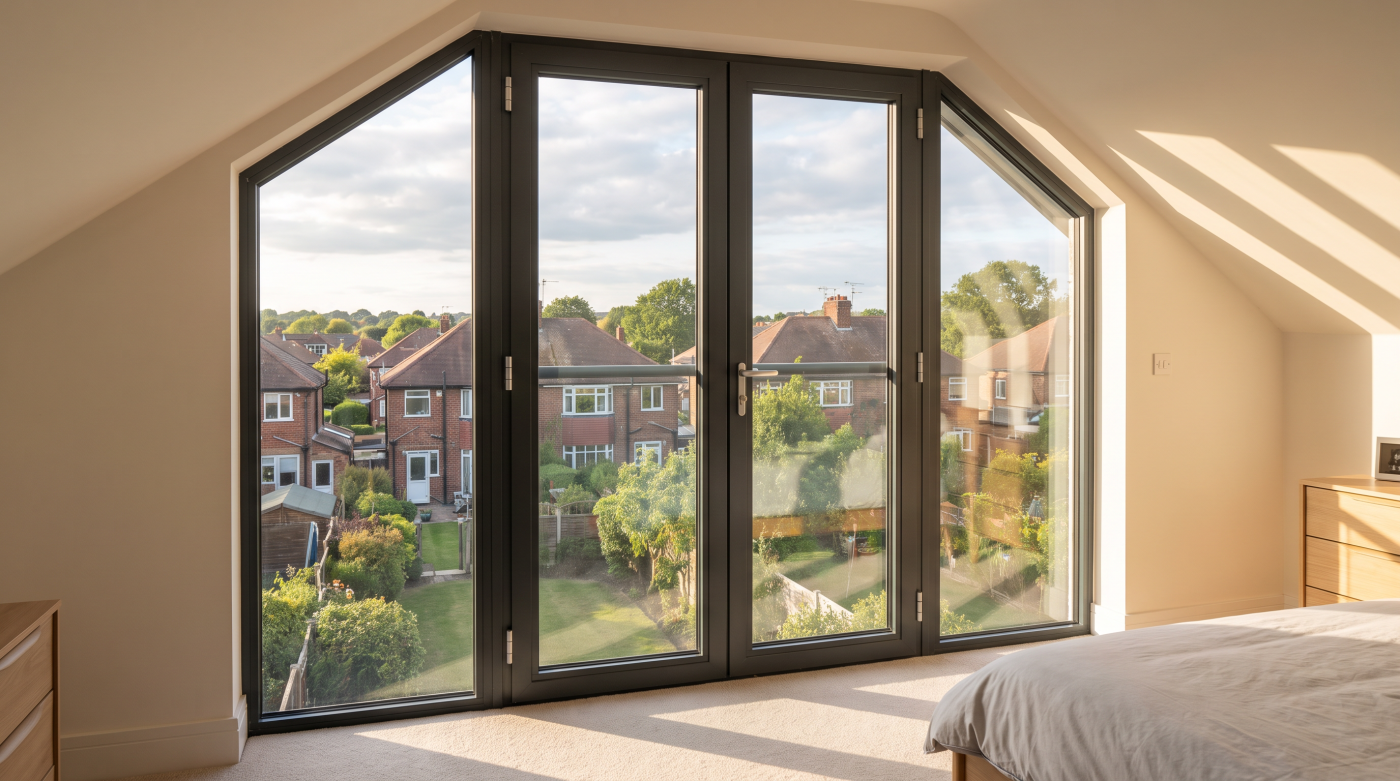
How Do You Stop TV Glare From a Big Window?
Start by identifying what makes the picture difficult to watch. A reflected image of the window, direct sunlight on the screen and a generally bright room can need different responses. Changing the television or glazing before understanding that relationship can leave the original problem unresolved.
Room layout and adjustable light control are useful starting points. The television, seating, windows and shading should be considered together, with the hours of normal viewing in mind. A large window can remain an enjoyable feature of the room while its unwanted effect on the screen is managed through a proportionate combination of measures.
Is the Problem a Reflection, Direct Sunlight or General Brightness?
A recognisable window image on the screen is a reflection. A patch of direct sun striking the display is another condition, while strong ambient light can make the picture appear less distinct even without an obvious reflected shape. These effects can overlap. Describe what happens and when, rather than treating every complaint about glare as the same problem requiring an identical product.
Observe from the seats normally used, with the television in its ordinary position. Note which window, lamp or bright surface appears in the screen and whether the effect changes as daylight moves. Darker scenes may make a reflection more noticeable than a bright programme. A short record of the difficult periods provides useful information before furniture, coverings or glazing are changed.
Check the whole room. A bright opening behind the viewer can reflect in the display, while a bright area behind the television can make the viewing conditions uncomfortable in a different way. Internal lighting may contribute after sunset as well. The important relationship involves the source, screen and viewer, so a photograph taken from elsewhere in the room may not capture the issue.
Use the observations to choose the next step. A reflection from one angle may respond to a layout adjustment; direct sun may need suitable shading at particular times. General brightness can call for a wider balance of daylight control and screen settings. Diagnosing the condition first keeps the work focused and reduces the temptation to replace an otherwise suitable window or television prematurely.
Where Should the TV Sit in Relation to the Window?
A screen directly opposite a large window can pick up a prominent reflection, depending on the viewer’s position and the display surface. Placing the television on a wall beside the opening can be a useful starting point for comparison. It is not a universal cure, because the sun’s path, other windows and the furnished room still affect the result.
Philips’ television-placement guidance recommends considering sunlight, reflections and the seating relationship together. Apply those principles to the actual room rather than copying a showroom arrangement. An appropriate position should offer comfortable sightlines for the household and a practical response to daylight during the hours the television is normally used.
Compare more than one elevation on a furnished plan. A tempting clear wall may put the screen in a circulation route or require awkward viewing angles. A position beside glazing may work well at one time but receive low-angle sun later. Include doors, radiators and the space needed for associated equipment so the layout remains convincing beyond the single question of glare.
For a new extension, establish these options before the glazing and electrical positions are fixed. For an existing room, assess feasible alternatives before commissioning permanent joinery or a new mount. The objective is a position that works with daylight and ordinary activities, with suitable coverings available where needed, rather than a formula based only on the distance between television and window.
Can Moving the Seating or Adjusting the Screen Help?
Changing the viewer’s position can change a reflection without altering the window. A modest adjustment to the sofa or a supported screen angle may therefore be worth assessing. Try the relevant options during the difficult period, keeping the equipment properly supported. The useful test concerns the actual viewing seat and conditions rather than whether a new arrangement looks better in an empty-room photograph.
A movement that helps one viewer may make another seat less comfortable. Include the household’s usual positions and consider both picture visibility and physical comfort. Avoid solving glare by placing the display at an awkward height or requiring everyone to sit at a sharp angle. A suitable arrangement balances the light problem with a realistic, comfortable use of the room.
Check what the existing mount or stand is designed to permit before adjustment. Screen size, support, wall construction and cable movement need appropriate consideration where installation changes are proposed. An audiovisual professional can help where the options are uncertain. The aim is a supported layout, rather than an improvised tilt or a new position that creates strain or instability elsewhere.
Keep successful temporary observations as part of the brief. Record the position and the times it was assessed, then consider whether other seasons or windows may produce different conditions. Layout changes can be a proportionate improvement, but may work best alongside adjustable shading. That combination often deserves assessment before the household concludes that the only solution is different glass or a more powerful television.
Which Blinds or Curtains Are Most Useful for TV Viewing?
Choose coverings by the amount and type of light control required. A sheer fabric can soften daylight while leaving a bright window visible in a reflective screen. A more opaque covering can provide greater control, but its effect depends on coverage and gaps as well as the fabric. The useful specification follows the viewing conditions rather than a generic description such as glare-reducing.
Test suitable samples where possible. Colour, openness and the way the covering meets the reveal can influence the result. A material that looks dark on a small display may behave differently across a large sunlit opening. Review the complete installation, including side gaps and any need to control separate parts of the glazing independently during different periods of the day.
Consider how often the household will use the covering. Easy adjustment can preserve daylight when television is not the priority, while a difficult control may lead to a room being kept unnecessarily dark or the covering left unused. Agree suitable operating arrangements and follow relevant installation instructions, including child-safe operation where appropriate. Practical use belongs alongside appearance in the design decision.
Coordinate coverings with the window’s opening, ventilation and maintenance needs. Close-fitting systems or altered thermal conditions may need advice for the actual glazing. A covering should not obstruct the intended operation or be improvised directly against a pane without assessment. The strongest choice gives the household a manageable range of light conditions while leaving the room and opening functional in ordinary use.
Would External Shading Make a Difference?
External shading can help where it intercepts the sunlight responsible for the viewing problem. Its usefulness depends on geometry and the sun’s position. An overhang that shades high sun may do little for low-angle light arriving from another direction. Start with the actual difficult hours and opening, rather than assuming any projecting canopy will produce the same effect throughout the year.
Compare suitable options with the architect or shading specialist. An awning, external blind or another supported arrangement can provide different degrees of adjustability and coverage. The design should explain where it acts and how the household uses it. A claim about reducing solar heat gain should not be treated as proof that the same arrangement removes every reflected window image from the television.
Consider the building and installation conditions as well. Fixing, exposure, drainage, operation and maintenance need appropriate coordination. A new external feature may also require investigation of relevant permissions, particularly on a sensitive building or shared property. Establish those matters before committing to equipment, with the complete proposal explaining both the intended benefit and its practical requirements for the actual location.
Shading can contribute to wider comfort and protect the room from unwanted sun, but should be assessed against the specific viewing objective. A Somerset garden-facing room and a Bristol rear extension may need very different arrangements despite similar glazing widths. The useful response follows orientation, surroundings and normal viewing times, with other measures retained where external shading alone does not address the problem.
Can Solar-Control Glass or Window Film Solve Glare?
Glazing can influence the light reaching the room, but the relevant properties need separating. Visible-light transmission concerns admitted visible light, while solar-control measures address solar energy in a different way. Surface reflectance is another characteristic. A product described as energy-efficient or solar-control should not automatically be expected to resolve a recognisable reflection on a television or every uncomfortable daylight condition.
Ask for a proposal addressing the actual problem. The household should understand how brightness, colour, daylight and outside appearance may change. A sample and relevant technical information can make those trade-offs clearer. Low-reflection window glass also needs its purpose explained: reducing reflection at that glass surface does not mean transmitted sunlight can no longer strike or reflect from the television.
Film requires compatibility assessment before application. The Window Film Company’s guidance identifies the importance of matching film with the actual glazing and thermal conditions. Check the unit, coatings, condition and supported installation rather than treating all films as interchangeable. Confirm warranty and maintenance arrangements alongside the claimed light-control benefit for the proposed application.
For replacement glazing, preserve the opening’s other required properties and assess complete costs. The specification may need impact safety, security or another function alongside light control. A change should explain the expected benefit compared with practical alternatives such as coverings or a revised layout. Retaining suitable existing windows can remain a sound outcome when the glare issue is better addressed elsewhere in the room.
How Much Can TV Settings and Screen Technology Help?
The television’s settings and display surface can influence how it handles ambient light. Maximum brightness is not a universal remedy. Use the manufacturer’s supported viewing options and assess the result in the actual conditions. A setting that helps daytime viewing may be less comfortable after dark, so consider how conveniently the household can adjust it or use supported automatic functions.
Different screen treatments can change the appearance of reflections, but product names do not guarantee identical performance. Ask how a proposed display behaves with the relevant light source and normal seating angles. A bright retail demonstration may not represent the living room or the programmes normally watched. Compare the equipment within a realistic brief instead of relying on a universal ranking of display technologies.
Follow the manufacturer’s instructions for placement and cleaning as well. Residue or an inappropriate treatment should not become part of an improvised glare solution. If the screen receives direct sunlight, investigate suitable positioning and shading rather than assuming that a new coating or stronger picture setting removes the source. The room remains part of the viewing system even when the display has improved light-handling features.
Equipment replacement may serve the broader brief, but compare it with proportionate room changes first. A suitable covering or layout adjustment can have value without purchasing another television. Where a new display is planned, coordinate it with the interior and glazing design so the household understands both its capabilities and the conditions that still need managing around it.
How Do You Plan a Bright Living Room That Still Works for Television?
Start with the furnished room and viewing times. Identify the main seats, screen positions, windows and likely sunlight, then compare layouts and light-control options together. A glazing elevation alone cannot settle the issue. The design should serve different activities, with daylight enjoyed when wanted and manageable conditions available when the television is in use.
Coordinate the practical details before committing to fixed elements. Power and data, mounting support, associated equipment and space for coverings can all affect the final arrangement. In a new home or extension, early decisions leave more flexibility. In an existing room, a short period of observation and supported trials can clarify which changes are worthwhile before joinery or permanent installation is commissioned.
Review daylight seasonally and avoid judging the proposal only during one convenient visit. A flexible covering or shading arrangement can accommodate changing conditions more readily than a promise that one fixed position never receives troublesome light. Where specialist input is useful, give the architect, interior designer, shading professional or audiovisual installer the same observations and priorities so their proposals address a shared brief.
CBP considers these decisions as an architectural glazing and specification partner, connecting the opening with the room’s everyday use. A large window and comfortable television viewing can coexist when layout, shading and relevant product choices are coordinated. The appropriate outcome is a practical balance for the actual home, with clear expectations about what each measure achieves rather than an assumption that replacing the glass must be the answer.