
“Recycled Aluminium” Sounds More Precise Than It Often Is
Sustainability language around aluminium has become increasingly prominent in architectural specification. Terms such as recycled aluminium, recyclable aluminium, low-carbon aluminium and circular aluminium can appear alongside one another in product literature, creating the impression that they describe broadly the same environmental benefit. They do not necessarily mean the same thing.
The first distinction is particularly important:
Recyclable aluminium describes what may be possible in the future. Recycled content describes something about the material being used in the product now.
An aluminium profile may be technically capable of being recycled at the end of its useful life while containing a different proportion of recycled material when it is manufactured. These are related ideas, but they are not interchangeable claims.
Even the statement “contains recycled aluminium” leaves important questions unanswered.
How much? Of what? From where? How was it calculated? And what evidence supports the claim?
The percentage might relate to a particular material input, profile, component or defined product range rather than the complete window. Likewise, terms such as low carbon require their own evidence and boundaries. They should not automatically be inferred simply because recycled material is involved.
None of this makes recycled aluminium meaningless. On the contrary, credible recycled-content information can be an important part of understanding the environmental characteristics of an aluminium glazing system. The problem begins when a useful piece of information is allowed to become a complete sustainability verdict.
For architects and informed homeowners, the right response to a recycled-aluminium claim is therefore neither immediate acceptance nor automatic scepticism. It is investigation.
Ask what the manufacturer is specifically claiming, what part of the product the claim applies to and what documentation sits behind it.
Sustainability terminology should trigger specification questions, not end them.
“Recycled aluminium” becomes useful information when the evidence is precise enough to explain what those words actually mean.
Not All Recycled Aluminium Tells the Same Story
A recycled-content percentage can appear reassuringly straightforward. If one aluminium product contains more recycled material than another, it is tempting to assume that the environmental comparison has already been made. But the percentage becomes meaningful only when we understand where that recycled material has come from and what the figure actually represents.
Broadly, recovered aluminium can come from different material flows. Some material is recovered during manufacturing and processing before a finished product has completed a useful life. Other aluminium can be recovered from products that have already been used and subsequently reached an end-of-life or recovery stage.
Those routes tell different circularity stories.
Material recovered efficiently from manufacturing processes is clearly preferable to unnecessarily losing usable aluminium. But recovering aluminium from products that have already provided years of useful service represents a different part of the material cycle. This is why recycled-content claims may distinguish between different categories of recovered material rather than presenting every recycled input as though it were identical.
The terminology and calculation methods used can vary, so architects should avoid assigning their own meaning to a manufacturer’s percentage. Instead, look at how the manufacturer defines the claim and what supporting documentation is available.
If a system is described as containing a particular percentage of recycled aluminium, useful questions include:
- What type of recovered material is included?
- Is its source or category defined?
- Does the percentage combine different recycled-material streams?
- What part of the product does the figure apply to?
- How has the percentage been calculated?
- Is the claim independently evidenced or verified?
This does not mean that one source of recycled material should automatically be labelled “good” and another “bad”. The purpose is to understand what is actually being measured before using the number to influence a specification.
A headline percentage without that context can create more certainty than the underlying information justifies.
A percentage without a definition is weaker evidence than it first appears.
Before comparing two recycled-aluminium claims, make sure they are actually describing comparable things.
The Percentage Can Be Misleading Without the Product Boundary
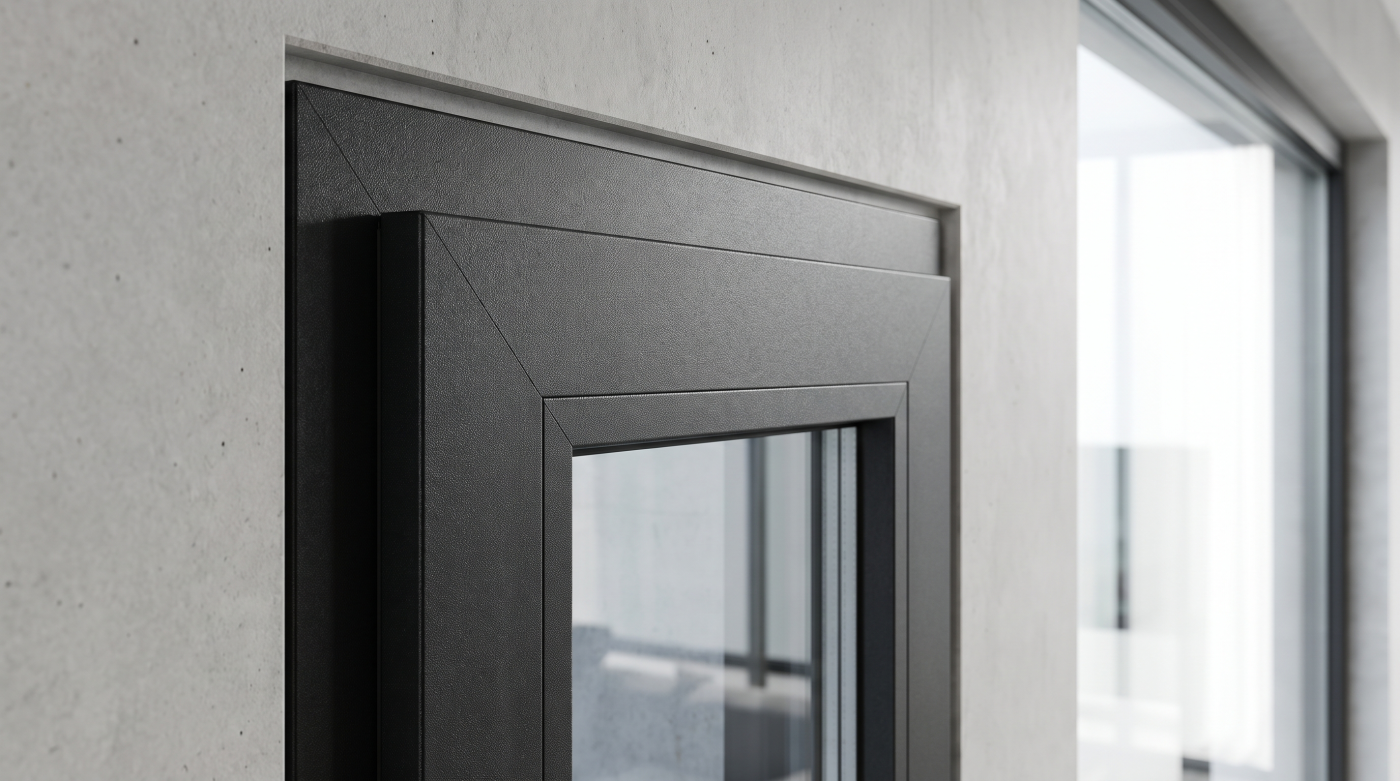
A recycled-content figure becomes even more difficult to interpret when it is separated from its product boundary. A manufacturer might state that a product is “made with X% recycled aluminium”, but before that percentage can influence a specification, there is a deceptively simple question to ask:
X% of what?
The figure might apply to the aluminium input used for a particular profile. It might relate to certain aluminium components, a defined profile range or another clearly specified part of the manufacturer’s product offering. What it should not automatically be taken to mean is that the same percentage applies to the complete installed window.
That distinction matters because a window is not made solely from aluminium.
Depending on the system, the complete assembly may contain glass, insulating components, hardware, gaskets, seals, coatings, spacers and other materials alongside the aluminium profiles. Large glazed systems may contain a substantial amount of glass relative to the visible frame. A strong recycled-content claim for the aluminium therefore tells us something potentially valuable about one part of the assembly, not necessarily the environmental characteristics of the complete product.
This is where headline percentages can unintentionally create an exaggerated impression. If an aluminium input contains a high proportion of recycled material, presenting that number prominently beside an image of a complete window can make it easy for the reader to mentally transfer the percentage from the material to the whole system.
Good specification requires keeping those boundaries clear.
When reviewing a recycled-content claim, ask:
What material does the percentage describe? What component or product range does it cover? And does the supporting documentation use the same boundary as the claim being presented?
This becomes particularly important when comparing manufacturers. Two impressive-looking percentages may not be directly comparable if they have been calculated for different materials, products or boundaries.
A high recycled-content figure can be meaningful evidence. But its usefulness depends on understanding precisely what has been measured.
Never compare the percentage until you know what sits inside the percentage.
Recycled Content and Low Carbon Are Not the Same Claim
Once a recycled-content percentage has been established, it is tempting to make the next leap: more recycled aluminium must mean a lower-carbon window. Recycled content can be environmentally significant, but it should not be used as a substitute for evidence about the carbon impact of the product itself.
The distinction is important:
Recycled content is an input characteristic. Carbon is an assessed environmental outcome.
The carbon associated with an aluminium product can depend on more than the proportion of recycled material it contains. Energy used during processing, the source of that energy, manufacturing routes, transport and the amount of material required can all influence the result. Once aluminium becomes part of a complete window, glass, hardware, insulating components and other materials also form part of the wider embodied-carbon picture.
The same scrutiny should be applied to the phrase low-carbon aluminium.
Low compared with what? Does the claim relate to the aluminium material, a particular profile or the complete glazing system? Which stages of production are included? What methodology and declared unit have been used? Is the comparison supported by independently verified information?
Environmental Product Declarations can provide useful structured evidence when available, but an EPD should not simply become another sustainability badge. The product represented, declared unit, life-cycle stages, assumptions and boundaries need to be understood—particularly when figures from different products or manufacturers are being compared.
This is why a window containing a higher percentage of recycled aluminium should not automatically be declared the lower-carbon choice. The recycled-content figure may be an important part of the evidence, but the environmental conclusion requires a broader and appropriately comparable assessment.
For architects, the practical principle is straightforward:
Do not convert a recycled-content percentage into a carbon claim unless the evidence actually supports that conclusion.
Recycled aluminium can strengthen the environmental case for a product. But if embodied carbon matters to the project, ask for the carbon evidence as well.
A material story and a carbon result are related—but they are not the same thing.
Recyclability Does Not Prove Circularity
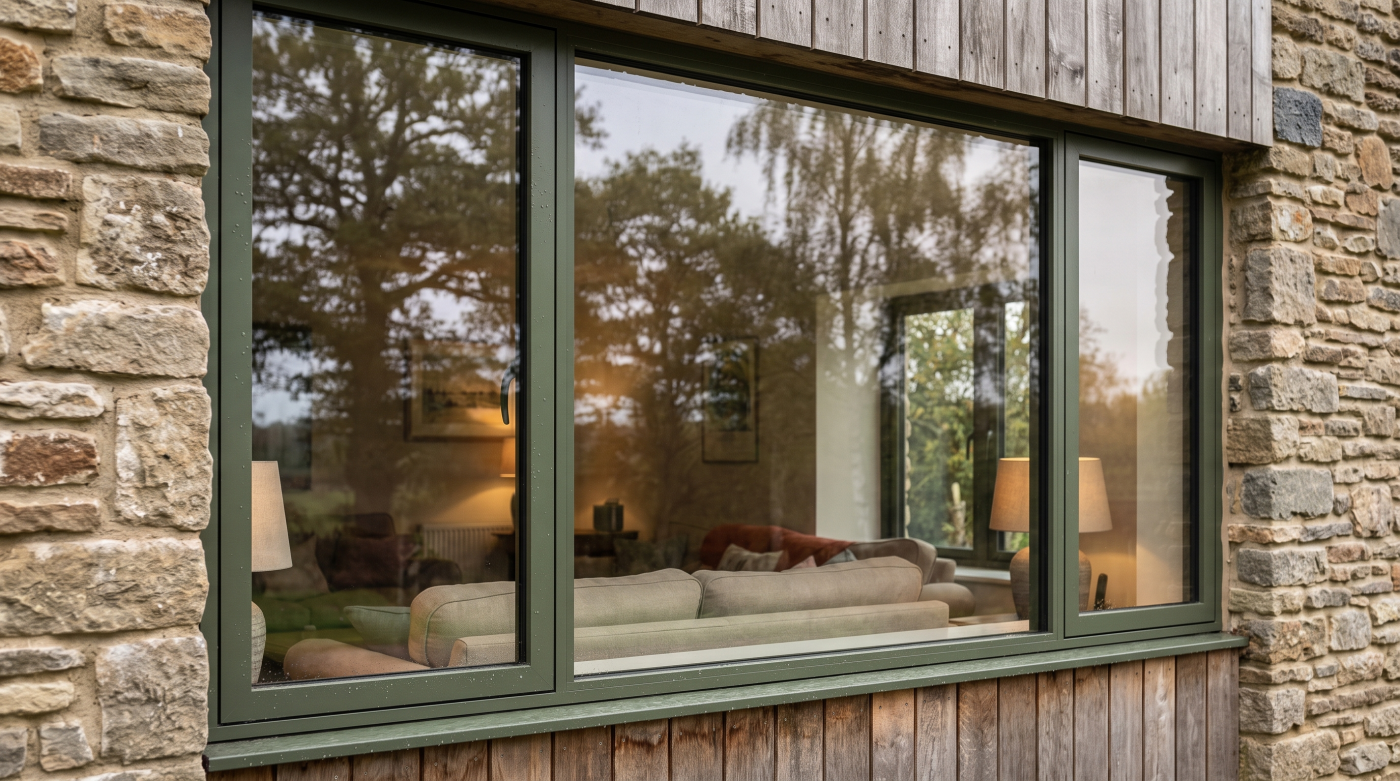
Aluminium’s ability to be recycled is an important part of its environmental story. But there is a significant gap between a material being technically recyclable and a window participating in a genuinely circular material system.
For aluminium from an old window to become useful material again, several things need to happen successfully.
Recyclable → Recoverable → Recovered → Reprocessed → Reused as material
Those stages should not be treated as though they are interchangeable.
A window is a multi-material assembly. Aluminium profiles sit alongside glass, hardware, gaskets, seals, insulating components, coatings and other materials. At the end of the window’s useful life, those materials may need to be separated and directed towards appropriate recovery routes. Whether that actually happens depends partly on how the product is constructed, how it is removed and what waste and recycling infrastructure is available to the project.
This is why a statement such as “aluminium can be recycled repeatedly” does not, by itself, demonstrate what will happen to the aluminium in a particular window when that window eventually leaves the building.
The practical questions are more demanding.
Can the aluminium be separated from the rest of the assembly? Is there an appropriate recovery route? Will the contractor or waste provider actually direct the material into that route? And what evidence exists about its eventual destination?
Design for disassembly can also become relevant here. If products can be separated into useful material streams at the end of their service, recovery may become more practical. But this should be investigated at system level rather than assumed simply because aluminium is present.
There is also a connection with longevity. The objective should not be to recycle a perfectly serviceable window as quickly as possible. If the glazing remains useful, maintaining or repairing it may preserve more of the value already invested in the product before recycling eventually becomes necessary.
So recyclability matters—but it represents potential, not proof of circularity.
A genuinely circular outcome requires that potential to survive specification, decades of use, removal, separation and the realities of the waste stream.
A window is not circular merely because its aluminium could theoretically be recycled. Circularity depends on what actually happens to the material when its first useful life ends.
What Evidence Should Architects Actually Ask For?
If recycled aluminium is going to influence specification, the claim needs to survive beyond the sustainability page of a brochure. The objective is not to collect more environmental language. It is to establish exactly what is being claimed and what evidence supports it.
A manufacturer statement can be a useful starting point, particularly when it clearly defines the recycled-content percentage and the material or product to which it applies. But the statement becomes more useful when supporting documentation explains the calculation basis, material categories and scope of the claim.
Environmental Product Declarations can add another layer of structured information. Where an appropriate EPD is available, it can provide environmental data for a defined product, product family or material. However, the existence of an EPD does not automatically make two products directly comparable. Product boundaries, declared units, life-cycle stages and other assumptions still need to be understood.
Third-party verification or certification may also strengthen particular claims, provided the scope of that verification is clear.
For architects, a practical evidence request can begin with seven questions:
- What recycled-content percentage is being claimed?
- What exactly does that percentage apply to?
- What source or category of recycled aluminium is included?
- How has the figure been calculated?
- Has the claim been independently verified?
- Is environmental information available for the actual system being specified?
- If products are being compared, are the figures genuinely based on equivalent boundaries and methodologies?
Not every project will require the same level of investigation. But where recycled content or embodied carbon is being used to influence a material decision, the evidence should be proportionate to the significance of the claim.
This is also where a glazing specialist can add value without pretending to be the project’s sustainability consultant. Rather than simply repeating manufacturer language, the useful role is to obtain the relevant product information, identify what it actually covers and pass that evidence into the wider specification process.
Good sustainability specification is partly an exercise in information management.
The strongest environmental claim is not necessarily the most impressive headline. It is the one whose definition, boundary and supporting evidence remain clear when somebody asks to see the documentation behind it.

Beware of Sustainability Claims That Collapse a Complex Window Into One Number
Recycled aluminium can be useful evidence, but it is still only one characteristic of a much larger product. A complete window cannot be given a credible sustainability verdict from a single recycled-content percentage.
Consider two glazing systems. One might promote a particularly high proportion of recycled aluminium. Another might present a less dramatic recycled-content claim. It would be tempting to rank them immediately, but doing so could ignore significant differences elsewhere in the systems.
A wider assessment may need to consider the quantity of material used, the glass specification, manufacturing impacts, operational performance, expected useful service, maintenance, repairability and what happens when the product eventually reaches the end of that service.
Longevity is particularly relevant. A window that remains architecturally appropriate, can be maintained and allows individual components to be repaired or replaced may avoid premature wholesale replacement. That does not automatically make it the lower-carbon option, but it demonstrates why environmental performance cannot be reduced to the origin of one material.
The same applies to glazing quantity. More glass, more framing or more complex assemblies introduce different material considerations. Again, this does not make large-format glazing inherently unsustainable. It simply means that a recycled-aluminium claim cannot describe the complete environmental consequences of the architectural decision.
This is the danger of single-metric thinking.
A useful sustainability characteristic can gradually become a marketing shortcut:
Contains recycled aluminium → therefore low carbon → therefore sustainable
The evidence may only support the first statement.
For architects, the better approach is to keep each claim within its proper boundary. Recycled content can inform material sourcing. Environmental declarations can provide structured product information where available. Performance evidence can address operational characteristics. Maintenance and repair information can help assess long-term usefulness. None should automatically substitute for the others.
The objective is not to find one number that makes the specification decision easy.
It is to build a sufficiently complete evidence picture to make the decision defensible.
Recycled aluminium is one piece of evidence—not the sustainability verdict for the complete window.
So, Is Recycled Aluminium Substance or Marketing?
The answer is: it can be either—and sometimes it is both.
There is nothing inherently wrong with manufacturers promoting genuine improvements in material sourcing or environmental performance. If recycled aluminium forms a meaningful part of a product and the claim is clearly defined and properly evidenced, that information deserves to be communicated. Marketing becomes problematic when the language creates a stronger environmental conclusion than the underlying evidence can support.
A useful way to interrogate any recycled-aluminium claim is:
Claim → Definition → Boundary → Percentage → Source → Verification → Carbon evidence → Complete system
Start with the words themselves. What exactly is being claimed? Then establish what the terminology means and which material, component or product range it covers. If a percentage is quoted, understand how it has been calculated and what types of recovered aluminium are included.
Next comes evidence. Is the claim supported by appropriate documentation? Has relevant information been independently verified? Is an Environmental Product Declaration or other product-specific environmental information available? And if carbon performance is being discussed, does the evidence actually support that separate conclusion?
Finally, return to the complete window.
Recycled aluminium does not tell us everything about the glass, hardware, insulating components, manufacturing, performance, maintenance, repairability, longevity or eventual end-of-life route. Those factors remain part of the wider environmental picture.
This leads to a more defensible way of discussing sustainable glazing.
Rather than saying:
“This window is sustainable because it contains recycled aluminium.”
A more credible position is:
“This manufacturer provides specific evidence about the recycled aluminium used within this system. That information can form part of the project’s wider environmental assessment.”
That distinction may sound cautious, but it is precisely what makes the claim useful. Architects do not need bigger sustainability adjectives. They need information that can withstand scrutiny and be compared on an appropriate basis.
So recycled aluminium should neither be dismissed as green marketing nor accepted as proof of a sustainable window.
Ask:
How much? Of what? From where? How was it calculated? What verifies it? And what does it actually tell us about the complete product?
Recycled aluminium becomes substance when the evidence is specific enough to survive scrutiny. Until then, it remains a claim worth investigating.