
What Do We Actually Mean by Switchable Glass?
“Privacy glass” can describe several very different products, so the terminology needs to be understood before deciding whether any of them are appropriate for a home.
At its simplest, privacy glass can mean conventional glass that is permanently obscured. Frosted, etched or patterned glass allows light through while making it difficult to see clearly from one side to the other. Its appearance does not change: the privacy is always there.
Switchable privacy glass is different.
Depending on the technology, an electrical input allows the glass to change its optical state. In a typical residential application, this means moving between a more transparent state and a translucent privacy state when required.
That distinction matters. Switchable glass does not necessarily become an opaque wall when activated. Light can still pass through many privacy-glass systems while detailed views through the pane become obscured. This makes the technology particularly interesting where homeowners want privacy without permanently sacrificing daylight.
You may also hear terms such as smart glass, switchable glass, privacy glass and switchable film. They are sometimes used interchangeably in conversation, but they should not be treated as descriptions of one universal product. Different technologies and constructions can have different levels of clarity, haze, privacy, electrical requirements and suitability for particular glazing applications.
There can also be an important distinction between a manufactured switchable glass construction and a switchable film system, so the actual product being proposed needs to be understood rather than specified from a generic label.
This is the useful starting point:
Conventional privacy glass creates a fixed condition. Switchable privacy glass allows that condition to change.
That ability to move between openness and privacy is what makes the technology architecturally interesting.
But exactly how clear it looks, how private it becomes and how it integrates into the wider glazing system depends on the specific product—so those characteristics should always be established from verified manufacturer information before specification.
What Happens When You Press the Switch?
The appeal of switchable privacy glass is remarkably simple: a pane that can provide an open visual connection at one moment can provide privacy when it is needed.
With common electrically controlled privacy-glass technologies, applying or removing power changes the way light behaves as it passes through the switchable layer. The result is a transition between a more transparent state and a translucent privacy state.
That word translucent is important.
When switched to privacy mode, the glass does not necessarily become a solid, opaque surface. Daylight can still pass through while detailed views are obscured. For a bathroom, ensuite or internal partition, that can be particularly useful because privacy does not have to mean closing off the space from natural light.
But the degree of privacy should never be assumed from the word “switchable”.
Objects or people positioned close to the glass may be perceived differently from those further away, and silhouettes can potentially become more noticeable depending on the particular product and lighting conditions. Night-time conditions deserve particular attention because the relationship between bright interiors and darker surroundings can change how privacy is experienced.
The control itself can potentially be incorporated into a conventional wall switch or, where the selected system allows it, integrated with wider home-control or automation systems.
What happens during a power cut also needs to be understood. Different technologies and system configurations can behave differently, so it should not automatically be assumed that every switchable pane defaults to either clear or private when power is lost.
This is one reason a real product demonstration can be more useful than simply reading “switchable privacy glass” on a specification.
See the proposed glass in both states. Look at it from both sides. Consider daylight and artificial lighting.
Because pressing the switch does not simply turn a window into a wall.
It changes the visual relationship between the spaces on either side.
Where It Can Work Brilliantly in a Home
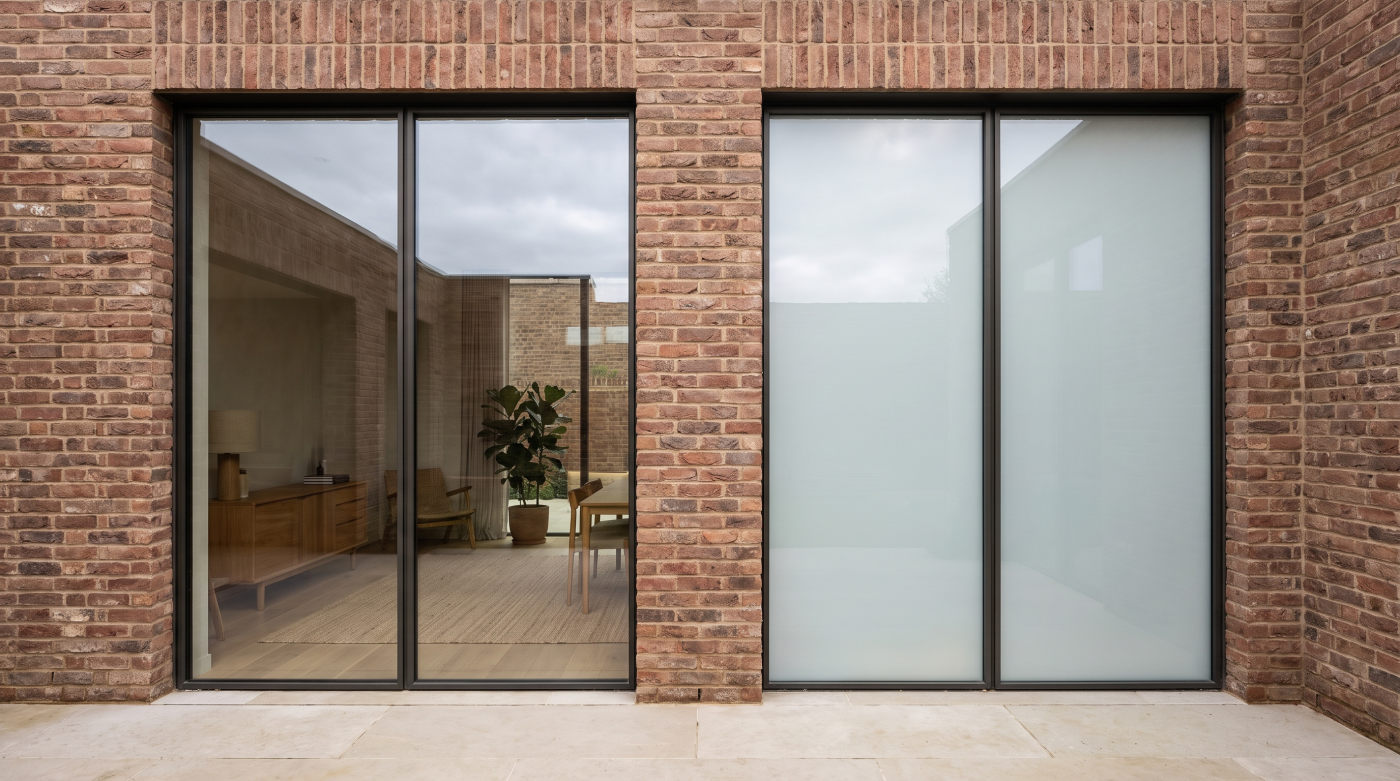
Switchable glass becomes most interesting when a room needs to be open and private at different times. Rather than asking where smart glass can be installed, the better question is where changing the visibility through a pane genuinely improves how the home works.
Bathrooms and ensuites are obvious examples. Natural light may be highly desirable, particularly where glazing forms part of a carefully designed space, but permanent transparency clearly may not be. Switchable privacy glass can allow the opening to feel visually lighter when appropriate and become obscured when privacy is required.
Internal glazing can present an even stronger architectural opportunity.
A home office separated from a living area by glass can remain visually connected and benefit from borrowed light during normal use. When privacy is needed for a meeting or concentrated work, the glass can change state without requiring curtains, blinds or a solid partition.
The same principle can work with internal screens, bedroom-related spaces and entrance areas. In each case, the value comes from allowing the architecture to change according to how the occupants are using it.
There may also be applications on external glazing where overlooking creates a genuine privacy problem. However, the required privacy level, night-time performance and suitability of the specific system need careful consideration rather than assuming switchable glass will behave like a conventional blind.
This is why whole-house specification is rarely the most interesting approach.
The strongest applications tend to be specific architectural moments where transparency is desirable most of the time but inappropriate some of the time.
Used selectively, switchable glass can remove the need for visually intrusive window coverings and preserve daylight, clean detailing and openness.
That is where the technology stops feeling like a gadget.
It becomes an architectural tool: one opening capable of supporting two different ways of living.
Where Switchable Glass May Be the Wrong Solution
Switchable glass can solve some privacy problems elegantly, but that does not mean every privacy problem needs a technological solution.
Sometimes a blind or curtain simply does the job better.
A bedroom is a good example. If the real requirement is darkness for sleeping, changing a pane from transparent to translucent may not achieve the desired result. Privacy and blackout are different objectives, and a conventional blackout blind or curtain may still be required.
The same applies where window treatments form an intentional part of the interior. Curtains can contribute softness, texture and acoustic character to a room. Removing them in favour of switchable glass is not automatically an architectural improvement simply because the technology appears more sophisticated.
It is also worth identifying whether privacy is actually the problem.
A heavily glazed south-facing room may feel uncomfortable because of solar gain or glare. Making the glass translucent does not automatically mean the correct solar-control strategy has been achieved. Those requirements need to be considered separately.
Architecture itself can sometimes provide the better answer. Building orientation, landscaping, external screening, carefully positioned openings and changes in level can create privacy without requiring the glass to change state at all.
Cost and complexity matter too. Switchable systems introduce additional considerations around electrical provision, controls, detailing and future maintenance. Across large areas of glazing, that complexity needs to solve a sufficiently important problem to justify itself.
The most useful question is therefore not:
“Could we use switchable glass here?”
It is:
“What problem are we actually trying to solve?”
If the requirement is changing privacy while retaining daylight and clean architectural detailing, switchable glass can be extremely compelling.
If the requirement is simply darkness, solar control or privacy that never needs to change, a simpler solution may ultimately produce the better building.
Privacy Glass, Solar Control and Blackout Are Different Jobs
One of the easiest mistakes to make with switchable glass is assuming that because the pane can change appearance, it can solve several glazing problems at once.
Privacy, solar control, glare, blackout and thermal insulation are different requirements.
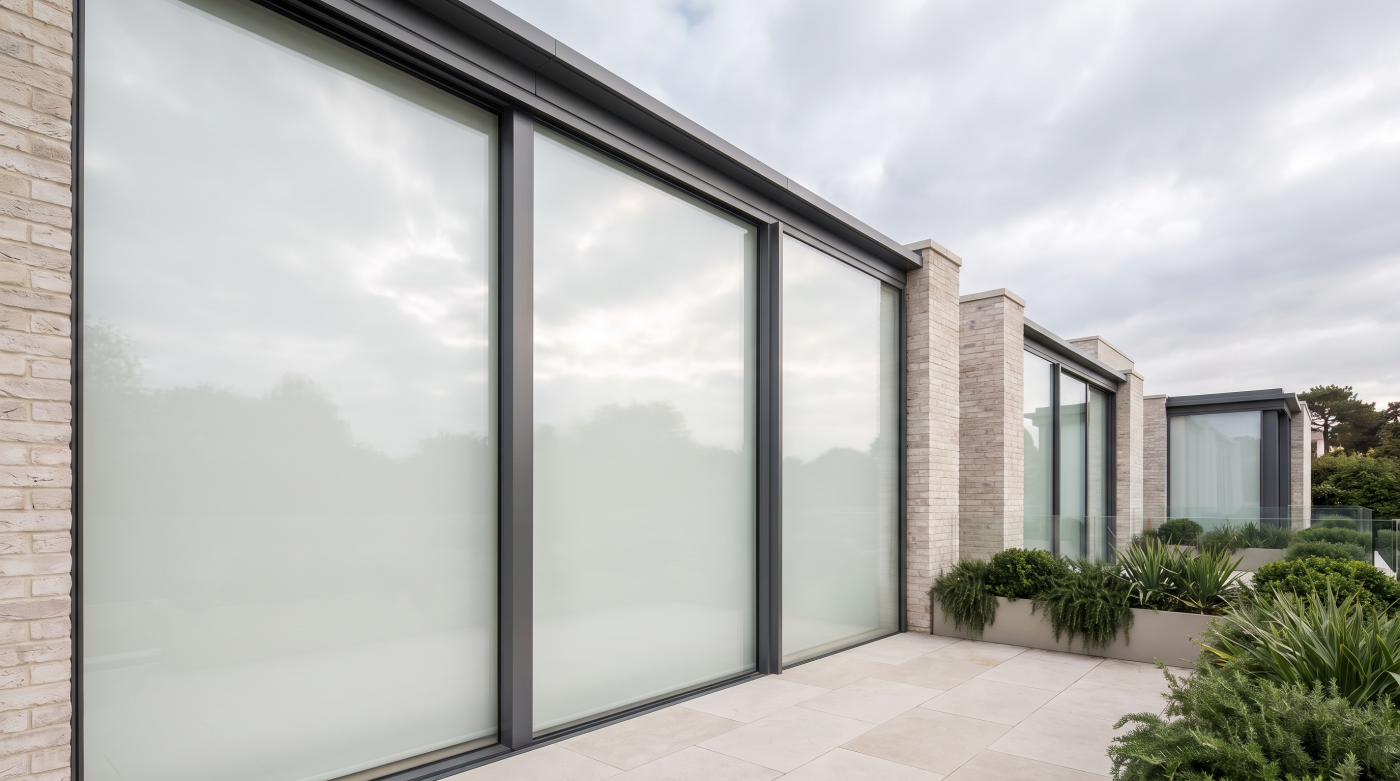
Privacy is primarily about controlling whether people can see through the glass. A switchable privacy system can obscure detailed views while still allowing substantial amounts of light into the space.
Blackout is different. If a bedroom needs to become genuinely dark for sleeping, a translucent privacy state may not achieve that objective. Light can still pass through the glass, meaning blinds, curtains or another dedicated blackout strategy may still be required.
Then there is solar control.
A highly glazed room can receive significant solar energy through its glazing depending on orientation, glass area, shading and specification. Switching a privacy pane into its translucent state should not automatically be interpreted as providing the solar-control performance the building needs. If overheating is a concern, that requirement needs to be addressed deliberately within the glass and wider building design.
Glare is another separate issue. Bright sunlight can create visual discomfort even when privacy is not required, and the appropriate response depends on the particular space and glazing strategy.
Thermal insulation remains distinct again. The complete glazing unit and window or door system need to deliver the thermal performance required by the project regardless of whether a switchable privacy layer is incorporated.
This is why “smart glass” should never become shorthand for glass that somehow does everything.
A sophisticated glazing build-up may need to combine several functions: switchable privacy, appropriate low-E performance, solar characteristics and the necessary safety construction. Alternatively, some requirements may be better addressed through external shading, internal blinds or other architectural measures.
The specification becomes much clearer when each problem is named separately.
Do you need privacy? Darkness? Reduced solar gain? Less glare? Better insulation?
Once those questions have individual answers, switchable glass can be judged for what it actually does well rather than being expected to solve problems it was never selected to solve.
The Detail Architects Need to Consider Early
Switchable glass becomes considerably easier to integrate when it is treated as part of the building design from the beginning rather than introduced as a late glazing upgrade.
The obvious difference is electrical provision. Once a pane requires power to change state, cable routes, connections, controls and switching locations need to be coordinated with the architecture. If integration with a wider home-automation system is intended, that requirement needs to be understood early too.
The glass itself also remains part of a complete glazing system.
Pane dimensions, glass build-up, safety requirements, thermal performance and solar characteristics still need to be resolved. The switchable element does not remove any of those considerations, and compatibility with the proposed window, door or framing system needs to be established using verified technical information.
Edge detailing can become particularly important. Electrical connections have to reach the switchable element while remaining appropriately integrated into the finished construction. On a highly minimal architectural detail, hiding the technology convincingly can require more coordination than the finished installation suggests.
Visual consistency deserves attention as well. If switchable glass sits beside conventional glazing, what do the panes look like when the switchable unit is transparent? Differences in colour, haze or reflectivity may matter across a carefully composed elevation or internal screen.
Future access should also be considered. Electrical components, controls and specialist glazing introduce different maintenance and replacement questions from a completely passive pane of glass. Understanding how those elements could be accessed later is better than discovering the problem after finishes have been completed.
This creates a wider coordination requirement between the architect, glazing specialist, electrician and relevant system or glass manufacturer. Responsibilities need to be clear, particularly where the glazing specification interfaces with electrical work.
The key principle is simple:
The moment glass requires power, it stops being solely a glazing decision.
Switchable glass can look remarkably simple when finished—one clean pane changing state at the touch of a switch.
Achieving that simplicity usually depends on making the complicated decisions early enough that the technology can disappear into the architecture.
What Does Switchable Glass Cost — and Is It Worth It?
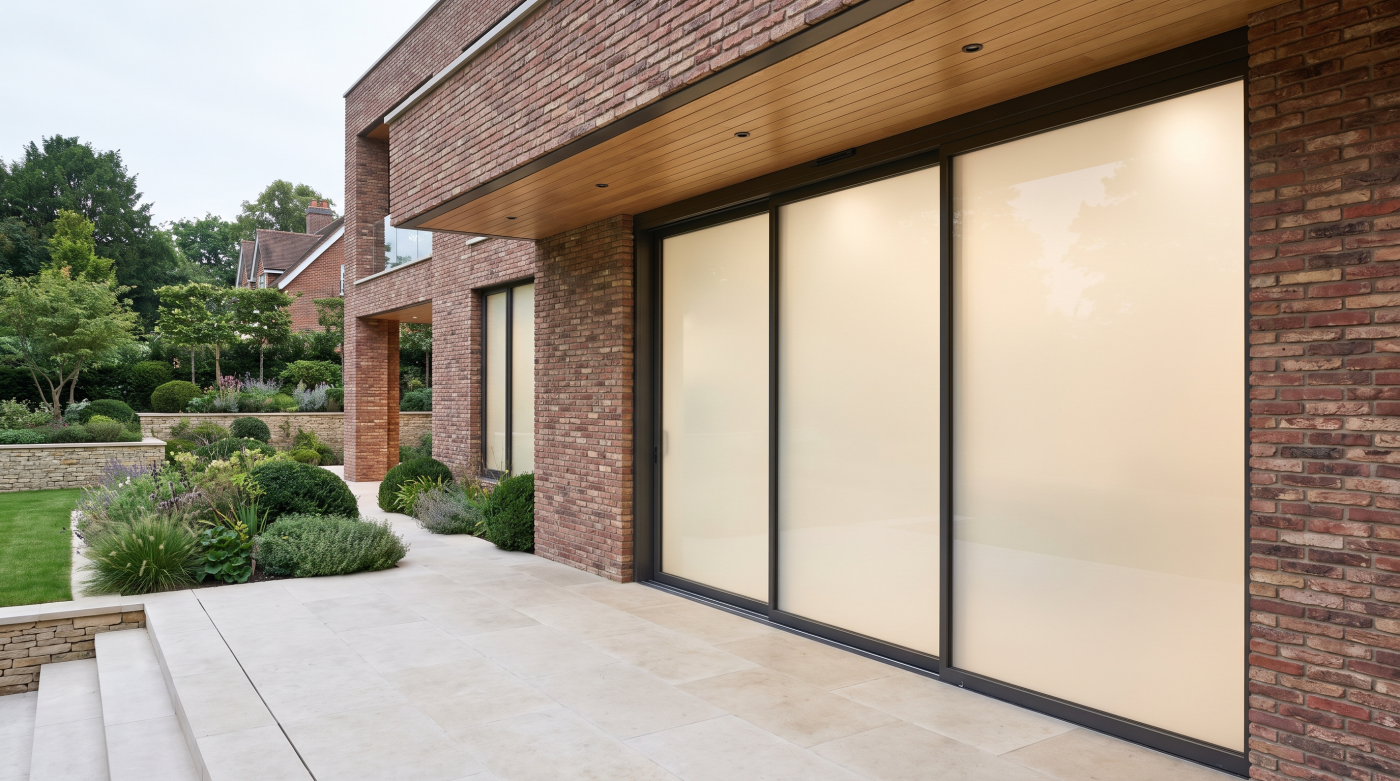
Switchable glass is a premium glazing technology, so it will generally cost more than conventional glass. But reducing the decision to a simple price-per-square-metre comparison can be misleading because the glass itself is only part of what the project needs.
The final cost can be influenced by pane dimensions, glass build-up, processing, the particular switchable technology, electrical components, controls and the complexity of integrating everything into the proposed glazing system. Installation and coordination requirements can matter too.
For that reason, generic pricing figures are rarely a useful basis for making a real project decision. The relevant cost needs to come from the actual specification and a project-specific quotation.
A better question is:
What architectural problem is the additional investment solving?
Imagine an internal glass screen separating a bathroom from a bedroom. Permanent obscure glass would provide privacy but remove the option for visual connection. Clear glass would preserve openness but require a blind, curtain or another privacy solution. Switchable glass potentially allows the architecture to provide both conditions using the same opening.
In that situation, the premium is buying more than an unusual piece of glass. It is buying the ability for the space to behave differently at different times.
That value can also exist in home offices, carefully detailed internal partitions and selected external openings where conventional blinds would compromise the intended architecture.
But the argument becomes weaker when the technology solves no meaningful problem. Specifying switchable glass across numerous windows simply because it feels technologically advanced can add considerable cost and complexity without creating equivalent architectural value.
Selective specification is therefore often the more intelligent approach.
Identify the openings where changing privacy genuinely matters. Consider whether conventional screening would compromise daylight, space or detailing. Then compare the switchable solution with the realistic alternative.
Switchable glass does not need to be inexpensive to be worthwhile.
It needs to solve a problem valuable enough to justify its cost.
Should You Put Switchable Glass in Your Home?
Switchable glass can be an excellent addition to a home, but the decision should begin with the problem rather than the technology.
Start by asking when privacy is actually required.
If an opening needs to remain private all the time, permanently obscured glass may provide a simpler solution. If privacy needs to change throughout the day—while preserving daylight and visual openness at other times—switchable glass becomes much more interesting.
Then consider what you mean by privacy.
If the real requirement is complete darkness in a bedroom, switchable privacy glass may not replace a blackout blind. If overheating is the concern, the project needs a solar-control strategy. If glare is making a room uncomfortable, that needs to be addressed separately too.
The strongest case exists when conventional solutions interfere with the architecture.
Perhaps an internal glazed wall is intended to bring borrowed light into a bathroom. A home office needs separation for meetings without becoming permanently enclosed. Or a carefully detailed opening needs occasional privacy without introducing curtains, tracks or blinds.
In situations like these, switchable glass can solve a genuine architectural problem.
But it needs to be considered early. Electrical provision, controls, glass build-up, safety requirements and integration with the glazing system all need coordination. It is also worth establishing what happens during a power interruption and understanding how future maintenance or replacement would be handled.
Where possible, view the actual proposed product operating in both states. Look through it from both sides and consider how it behaves under different lighting conditions. “Private” and “clear” can sound absolute on paper, while the real visual experience can be more nuanced.
Most importantly, do not assume every pane needs the technology.
Selective specification is often stronger: use switchable glass where changing privacy genuinely transforms how a space works, and use simpler solutions where it does not.
The smartest home is not the one containing the most technology.
It is the one where technology quietly solves a real problem—and then disappears into the architecture.