
The Difference Between Openness and Exposure
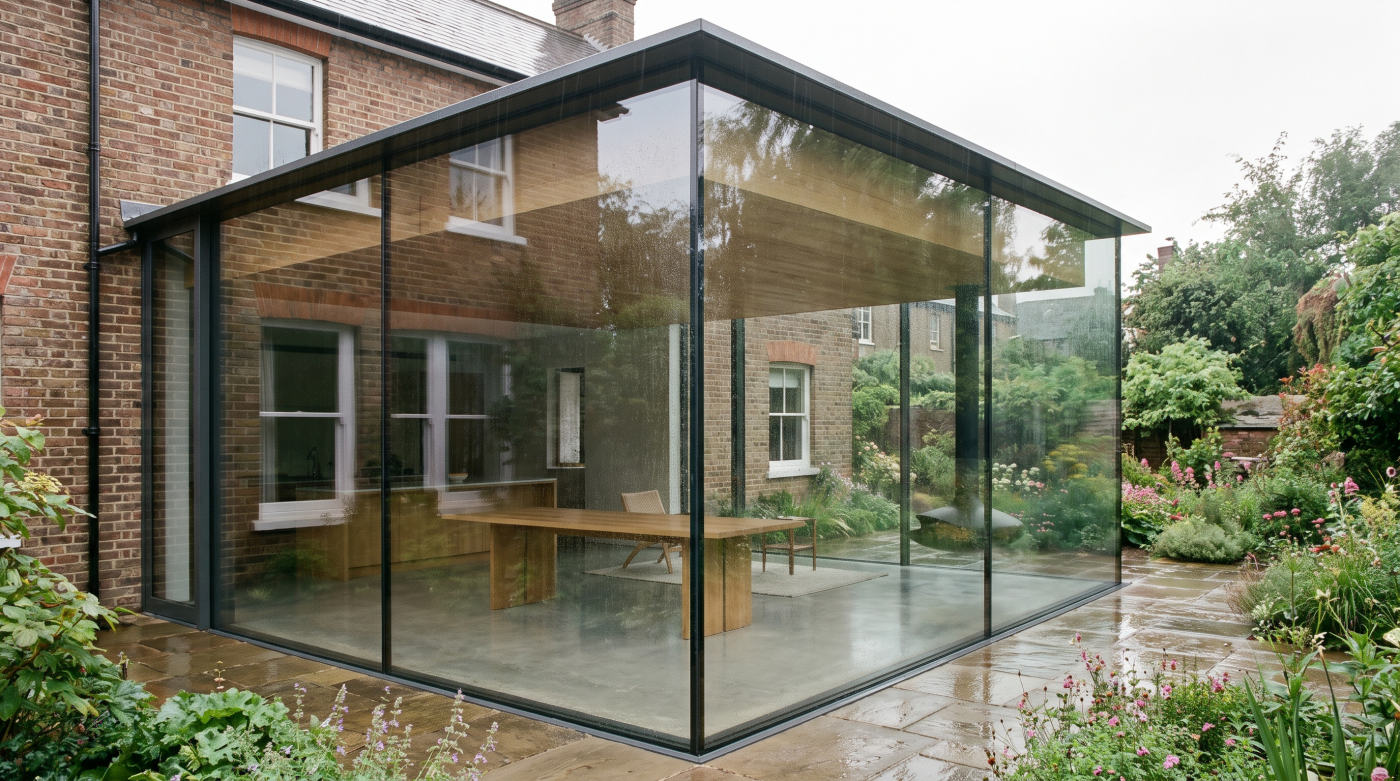
Large areas of glass can make a room feel extraordinarily open.
Daylight reaches further inside. The garden becomes part of the interior experience. Long views can make the room feel larger than its physical boundaries suggest.
But there is a point where openness can become exposure.
The difference is not determined simply by how many square metres of glass the room contains. It depends on what that transparency gives the occupant—and what it takes away.
Imagine two living rooms with almost identical floor-to-ceiling glazing.
One looks across a private garden towards open countryside. The other sits several metres from a pavement, neighbouring terrace or overlooking first-floor window.
The glass may be virtually identical.
The experience is not.
In the first room, transparency creates visual freedom. In the second, the same transparency may create an awareness of being watched, even when nobody is actually looking.
Position within the room matters too.
Standing beside a large window for a few moments is different from spending an entire evening sitting with glass immediately behind the sofa. Transparent corners can produce spectacular panoramic views, but they also remove some of the solid enclosure that helps furniture—and occupants—feel anchored within a space.
This is why there is no universal percentage at which a room suddenly contains “too much glass.”
A circulation space, kitchen, bedroom and living room each create different expectations of enclosure and privacy.
Solid walls still have architectural value. They provide somewhere to position furniture, artwork, lighting and storage, while also creating visual boundaries against which carefully positioned glazing can become more powerful.
The mistake is evaluating the room only from the elevation drawing or the dramatic viewpoint used for the architectural render.
Instead, occupy it mentally.
Sit on the sofa. Take a seat at the dining table. Stand at the kitchen island. Imagine being there after dark.
What can you see?
Who can see you?
And does the glass make that position feel more connected—or more exposed?
Because openness is created when transparency gives the occupant something valuable.
Exposure begins when that same transparency removes something they need.
Prospect and Refuge: Why We Like Views Without Wanting to Be Seen
There is a reason some window seats feel instantly comfortable.
You can sit beside a large opening, look across a garden or landscape and feel deeply connected to the outside—while still feeling protected by the architecture around you.
That balance can be understood through two simple ideas:
prospect and refuge.
Prospect is the ability to see outward. Long views, awareness of the landscape and visual connection with the surroundings can all make a room feel expansive.
Refuge is the corresponding sense of enclosure or protection.
Good glazed architecture can provide both.
Consider a large picture window set within a solid wall. The opening may provide an enormous view, but the wall surrounding it still defines the room. A deep reveal can strengthen that sense of enclosure. A window seat backed by solid construction can feel particularly comfortable because the occupant looks outward without feeling surrounded by transparency.
Compare that with sitting in the middle of a completely glazed corner.
The view may be even greater, but glass beside and behind the occupant can remove some of the visual protection that made the first position feel settled.
Neither approach is inherently right or wrong.
The question is what experience the architecture is trying to create.
Overhangs, recessed openings, solid wall sections, courtyards, landscape planting and carefully positioned screens can all introduce subtle forms of refuge without sacrificing the wider view.
Furniture placement matters as well.
A sofa with a solid wall behind it and expansive glazing ahead can feel very different from the same sofa floating between glazed elevations. Bedrooms may demand a stronger sense of enclosure than circulation spaces, while living areas can often tolerate—and benefit from—greater transparency.
This suggests a useful principle for highly glazed homes:
Do not distribute transparency uniformly simply because the system allows it.
Use glass where prospect has genuine value, and preserve enclosure where it helps occupants feel settled.
Because people often want something apparently contradictory from architecture:
to see a long way without feeling visible from a long way away.
The calmest glazed rooms frequently achieve exactly that—expansive views outward, combined with just enough architectural refuge to make the person inside feel protected.
What You See Through the Glass Matters as Much as the Glass Itself
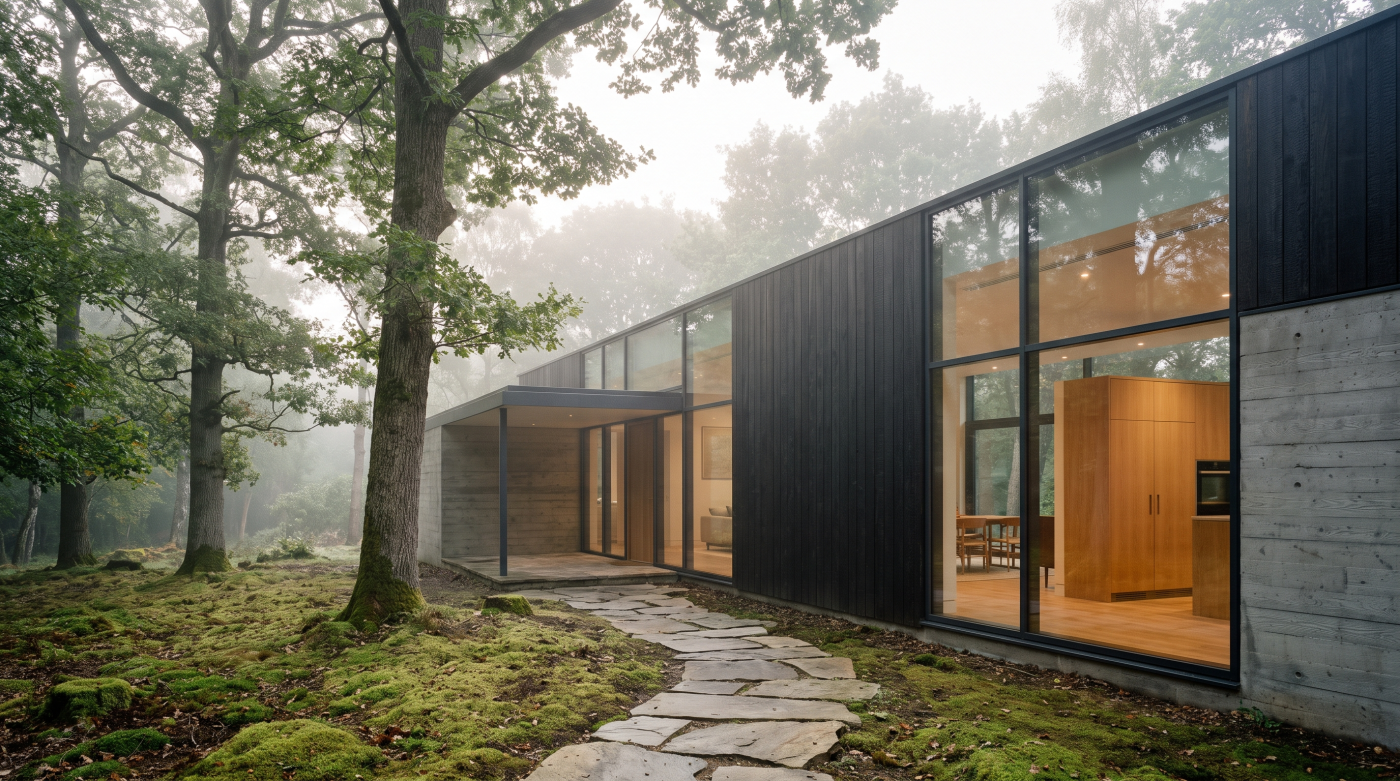
A large pane of glass does not create a view.
It creates a frame.
What sits beyond that frame determines much of how the room feels.
Floor-to-ceiling glazing overlooking a mature garden, open countryside or distant landscape can create a remarkable sense of depth. The eye travels beyond the physical boundary of the room, making the interior feel connected to something much larger.
Place the same glazing several metres from a boundary wall, parked cars or a neighbouring property and the experience changes completely.
The glass has not changed.
The visual environment beyond it has.
This is why glazing should ideally be designed around specific views rather than simply distributed across an elevation.
Think about the landscape in layers.
There may be planting immediately outside the glass, a terrace or garden beyond it and then a longer view towards trees, countryside or architecture in the distance. These foreground, middle-distance and distant elements can create visual depth that makes an interior feel more settled and expansive.
Landscaping can also remove distractions.
A carefully positioned tree, hedge or architectural screen might interrupt the sightline towards a neighbouring window while leaving the important landscape view untouched. Instead of obscuring the entire pane, the design edits what appears within it.
Window proportions can perform a similar role.
A carefully positioned picture window can frame one exceptional view more powerfully than an entire transparent wall containing several less desirable ones. Corner glazing can dramatically expand the field of vision, while low-level glass can strengthen the occupant’s awareness of the garden immediately outside.
But every view should also be considered after dark.
Once the landscape becomes darker than the illuminated interior, the external scene can become less visible and reflections within the glass more dominant. A room designed entirely around a daytime view may therefore feel very different at night.
This is where glazing, architecture and landscape design should be considered together.
Before making an opening larger, ask:
What exactly are we making more visible?
Because a large pane of architectural glass is effectively an enormous picture frame.
And the success of that frame depends as much on what the architecture chooses to reveal as it does on the glass itself.
Why Seating Position Can Make the Same Room Feel Completely Different
A glazed room is not experienced from an architectural elevation.
It is experienced from a chair, a sofa, a dining table, a desk or a kitchen island.
That distinction matters because the same window can feel completely different depending on where the occupant spends their time.
Consider a living room with a large glazed elevation overlooking the garden.
A sofa positioned with a solid wall behind it and the glazing ahead can create a strong sense of connection with the landscape. Turn that arrangement around so the occupant sits immediately in front of—or with their back towards—floor-to-ceiling glass, and the experience changes.
Privacy may become more noticeable. The occupant may feel more exposed to external sightlines. At night, reflections can alter the visual character of the glass entirely.
Physical comfort can change too.
A dining table positioned directly beside a large glazed elevation may be wonderful on a mild spring morning but experience intense solar exposure at another time of year. In winter, the performance of the glazing becomes particularly relevant when occupants spend long periods close to it.
Desks introduce another issue.
A beautifully glazed home office can provide an exceptional outlook, but direct sunlight or a very bright window within the field of view can create glare and reflections on screens.
Even the kitchen island should be considered.
Where will somebody naturally stand while preparing food? What direction will they face? Does the glazing create a view, direct sunlight, glare or an unwanted sightline from outside?
This is why the furniture plan should not always be treated as something to resolve after the glazing has been designed.
The two influence each other.
Solid walls provide useful places for televisions, artwork, storage, lighting and furniture. Glass provides daylight, views and connection. The strongest interiors deliberately balance both.
Before fixing a major glazed opening, place the important furniture on the plan.
Then mentally occupy each position.
What can the person see? Who can see them? Where is the sun? How close are they to the glass? What happens after dark?
Because a window is not experienced from a drawing.
It is experienced from a position in the room—and that position can determine whether the glazing feels beautifully open or uncomfortably exposed.
Light Can Create Calm—or Destroy It
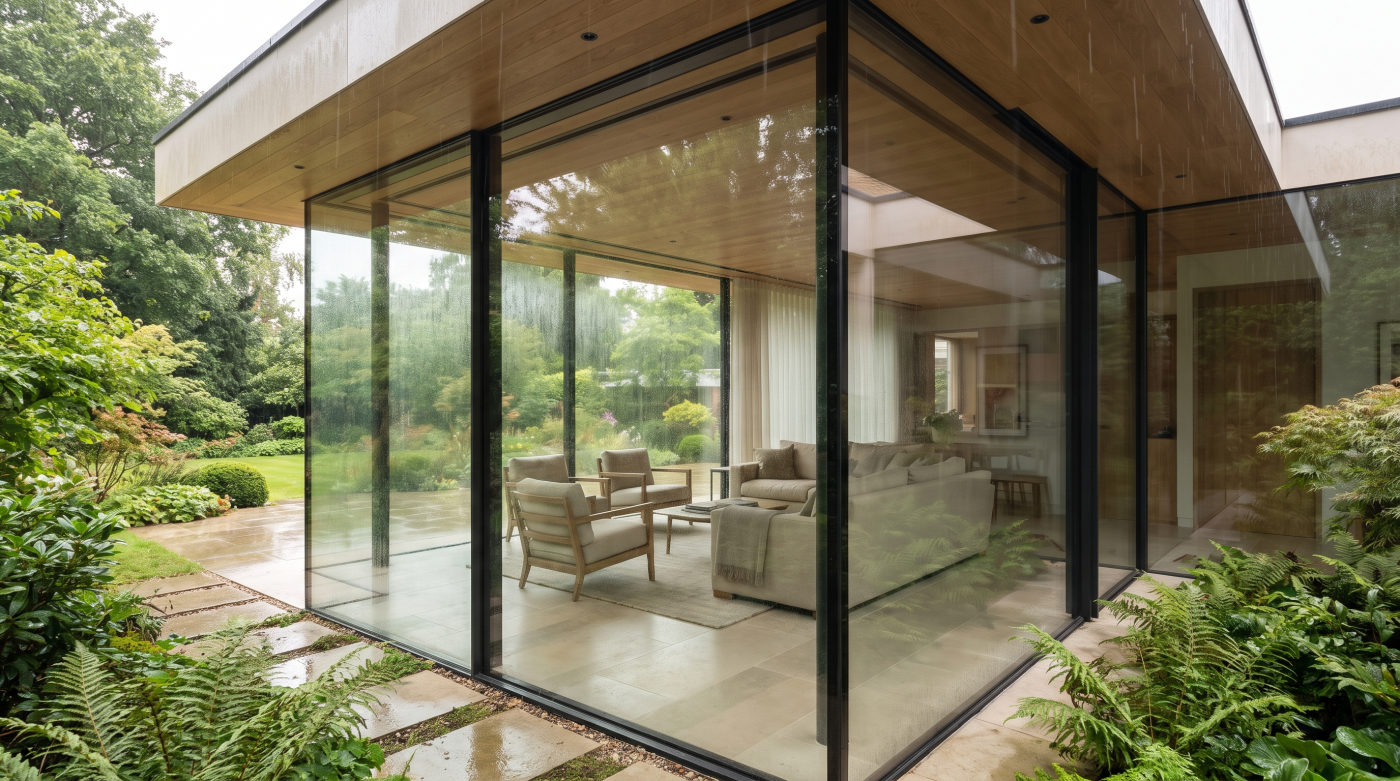
Natural light is one of the strongest arguments for architectural glazing.
But more daylight does not automatically create a more comfortable room.
The character of that light matters.
Soft, diffuse daylight can create an even, settled atmosphere with relatively little visual contrast. Direct sunlight can produce something entirely different: intense brightness, sharp shadows and rapidly changing conditions as the sun moves across the building.
Orientation therefore has a major influence on how a glazed room feels.
North-facing glazing generally receives predominantly diffuse daylight, creating a different experience from south-facing glass exposed to direct sun. East-facing rooms can experience strong morning light, while west-facing elevations may receive low-angle sunlight later in the day—potentially exactly when a living space is most heavily occupied.
Roof glazing introduces light from another direction again.
The result can be spectacular, particularly in deeper plans, but a very bright rooflight above a comparatively darker interior can also create strong visual contrast.
Then consider where the sunlight actually lands.
Does it illuminate the floor?
Does it fall directly across the dining table?
Does it hit the sofa at 5pm?
Does it reflect from a polished worktop or make a television screen difficult to see?
These questions determine whether daylight feels effortless or becomes something occupants continually have to manage.
Shading can therefore be part of good glazing design rather than an admission that the architecture has failed. External shading, carefully designed overhangs and internal blinds can each provide different forms of control, while solar-control glazing may be appropriate where solar exposure requires it.
The objective should not be to create the brightest room possible.
Nor should the specification chase maximum visible light transmission without considering the wider environmental design.
Instead, aim for useful daylight: enough to create the openness, atmosphere and connection the architecture needs without producing persistent glare or unwanted solar exposure.
For demanding highly glazed designs, appropriate daylight and overheating analysis can help test those conditions before construction.
Because the calmest interiors are not necessarily the ones containing the most light.
They are often the ones where light has been controlled so successfully that the occupants barely need to think about it.
Privacy, Reflections and the Moment Darkness Changes the Room
A highly glazed room can feel completely different once the sun goes down.
During the day, the glass often appears to connect the interior with the landscape beyond. The garden, trees and sky provide visual depth, allowing the eye to travel beyond the physical boundary of the room.
After dark, much of that can disappear.
When the interior becomes brighter than the outside, the glass can begin to behave visually more like a reflective surface. Instead of seeing predominantly into the landscape, occupants may see reflections of themselves, furniture, lighting and the room behind them.
An expansive view can become a large, dark reflective plane.
That change can have a surprising effect on how exposed—or enclosed—a room feels.
Privacy changes at the same time.
During daylight, external reflections can sometimes make it more difficult to see into a glazed room. At night, with the interior illuminated and the exterior comparatively dark, occupants may become considerably more visible from outside.
A room that felt completely comfortable at 2pm can therefore feel surprisingly exposed at 8pm.
This is particularly important where glazing faces a pavement, neighbouring property or shared boundary.
Curtains and blinds can restore enclosure when required, while external screens, landscaping and carefully positioned solid architecture can provide privacy without sacrificing daytime transparency. Selected projects may also justify switchable privacy glazing.
Exterior lighting can sometimes help maintain a degree of visual connection with terraces, planting or landscape after dark, although it needs to be designed carefully to avoid unwanted glare and excessive external light.
The important point is that every highly glazed room effectively has two visual identities.
There is the daytime room, when the landscape may dominate the glass.
And there is the night-time room, when reflections, privacy and artificial lighting can completely change the experience.
So when evaluating a glazed design, do not stop at the daytime architectural render.
Imagine the same room on a dark winter evening.
Where does the view go? What appears in the glass instead? Who can see in? And what gives the occupants control when they want the room to feel enclosed again?
Because successful glazing should feel considered when the landscape is visible—and when darkness turns the glass into something entirely different.
Calm Is Also Thermal and Acoustic
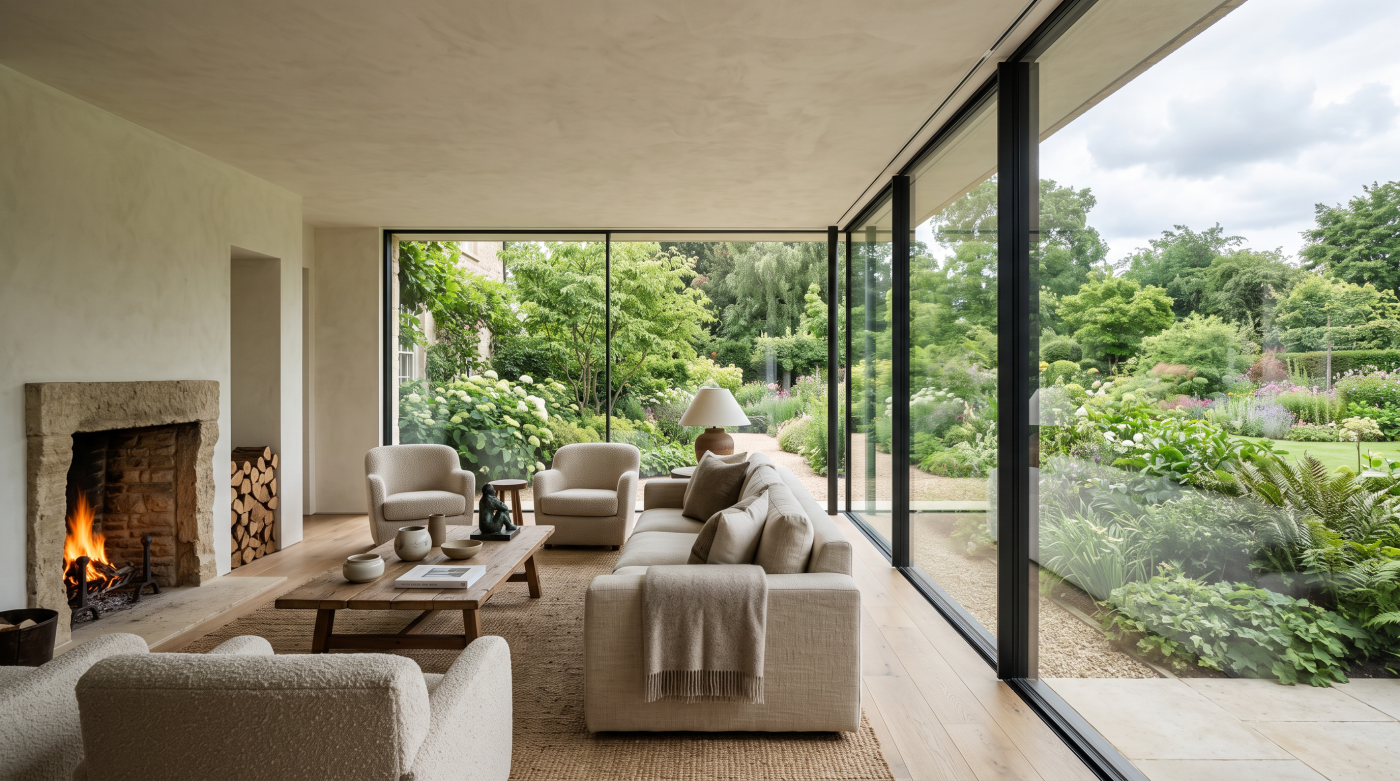
A room can look perfectly calm and still feel anything but calm when you actually spend time in it.
That is because our experience of a space is not purely visual.
Temperature, sound, glare, air movement and surface conditions all contribute to whether a room feels settled.
Consider a beautifully minimal living space surrounded by large areas of glass. If direct summer sun causes the room to become uncomfortably warm every afternoon, the visual simplicity quickly becomes secondary.
Winter can create a different sensation.
Even when the room air is adequately heated, large glazed surfaces with relatively low internal surface temperatures can influence how comfortable occupants feel when sitting close to them. Appropriate glazing and whole-system thermal performance therefore contribute to more than energy efficiency—they influence the lived experience of the architecture.
Sound creates another layer.
Glass is a hard, reflective surface. Combine extensive glazing with stone floors, plastered walls, hard kitchen cabinetry and minimal soft furnishings, and an open-plan room can begin to feel acoustically lively.
Conversation, television and kitchen activity may all compete within the same space.
Acoustic laminated glass can be useful where the objective is reducing particular external noise transmission through an appropriately designed façade, but that is different from controlling reverberation inside the room. Internal acoustic comfort may require absorption elsewhere through furnishings, textiles or purpose-designed architectural treatments.
Ventilation matters too.
A room that requires windows and doors to remain open simply to maintain acceptable summer conditions may experience external noise very differently from the same room when everything is closed.
These factors interact.
A blind lowered to control glare removes the view. An open window used for cooling may admit noise. Hard surfaces chosen to create visual minimalism can influence the acoustic character of the room.
That is why the best highly glazed spaces should be evaluated as complete sensory environments, not collections of impressive glass elevations.
Because a room does not feel calm simply because it looks minimal.
It feels calm when light, temperature, sound, privacy and view stop demanding the occupant’s attention.
When those elements work together, the glazing can do what it was intended to do all along:
connect the occupant with the outside without making the architecture itself feel intrusive.
The Calm Glazing Checklist: Designing Transparency Around the Occupant
Before finalising a highly glazed room, stop looking at the elevation and start thinking about the person who will actually live inside it.
Begin with the purpose of every major opening.
What is this glass doing for the room?
Is it framing an important view? Bringing daylight deeper into the plan? Connecting the interior with a garden? Creating architectural transparency?
If a large pane cannot answer that question convincingly, consider whether it genuinely needs to be there.
Then examine what sits beyond it.
Is the view open or constrained? Are there neighbouring windows, pavements or boundaries within direct sight? What changes when someone is seated rather than standing?
Now place the furniture.
Where is the sofa? Dining table? Desk? Kitchen island? Does the occupant have a solid surface behind or beside them, or are they surrounded by transparency?
Then introduce the sun.
Which direction does the glazing face? When will direct sunlight reach it? Could low-angle sun create glare? What happens during a hot summer afternoon? How will shading or solar control work without permanently sacrificing the view?
Now imagine winter.
How close will people sit to the largest glazed surfaces? Has appropriate whole-system thermal performance been considered? Will the room remain comfortable when external temperatures fall?
Then listen to the space.
If the room combines large areas of glass with stone, timber, plaster and other hard surfaces, where will acoustic absorption come from?
Finally, switch off the daylight.
What happens after dark? Does the landscape disappear into reflection? Can neighbours see in? Are curtains, blinds, screens or other privacy measures integrated into the architecture?
For demanding projects, appropriate daylight, overheating, thermal or acoustic analysis may help test aspects of the design before construction.
But the fundamental test remains remarkably human.
Imagine the room in four conditions:
A bright summer afternoon.
A dark winter evening.
A quiet morning with one person inside.
A busy evening when the house is full.
Then ask:
Does the occupant feel connected to the outside—or displayed to it?
The objective is not maximum transparency.
It is the right amount of transparency in the right places, supported by enough enclosure, privacy, environmental comfort and control that the occupant can simply enjoy the room.
Because the best glazed spaces do not constantly remind you how much glass they contain.
They make the architecture feel effortless.