
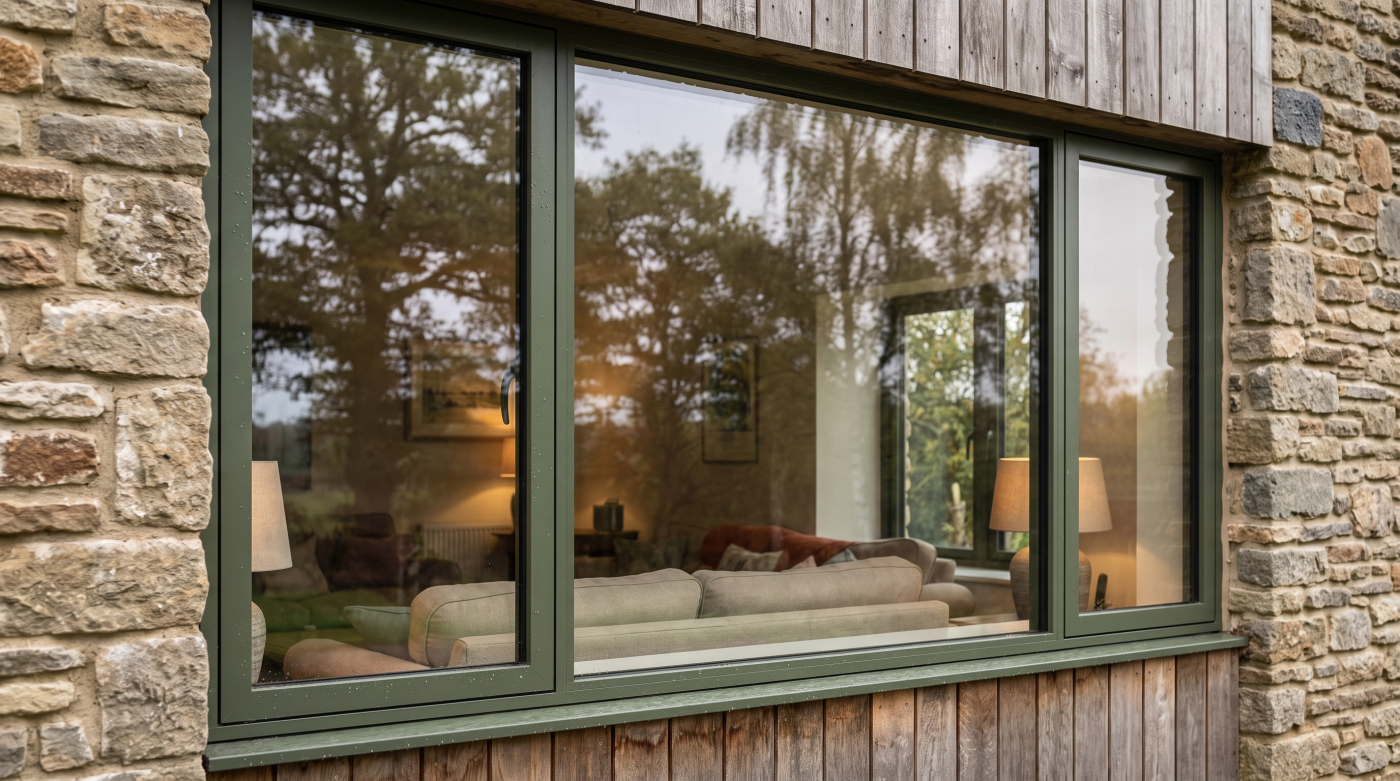
Why Do Windows Make Clicking Noises in the Sun?
A click or pop from a window during sunshine can be unsettling, particularly after replacement work. Temperature-driven movement is one possible explanation, but hearing the sound does not identify the component responsible or establish whether the installation needs attention. The glass, frame, fittings and adjoining construction need to be considered together.
Start with the pattern and any accompanying changes. When does the sound occur, which opening seems affected, and has operation or appearance changed too? A clear record can help a competent installer investigate. It is more useful than assuming every sunny-weather noise is harmless or that every click proves the window has been fitted incorrectly.
Can Heating and Cooling Make a Window Assembly Move?
Materials change dimension as their temperature changes, and a window contains several materials joined within a surrounding opening. Those changes may be small, but the assembly must accommodate relevant movement. Small relative movements at contact points are a plausible explanation for some clicking sounds. That is a possible mechanism, rather than a diagnosis that can be confirmed by listening alone.
The movement principle appears in technical installation guidance. For example, Climatec’s published guide for REHAU systems discusses accommodating expansion and contraction at the connection to masonry. The document illustrates why junction design matters. Its system-specific details and dimensions should not be treated as current universal instructions for altering an unidentified window.
A sound may arise where components interact, but its apparent location does not reveal the exact contact or restraint involved. A homeowner cannot reliably infer a particular fixing problem, glass-support condition or defect from a single pop. Those possibilities need inspection against the actual system and construction, with attention to when the behaviour occurs and whether other symptoms are present.
The practical conclusion is to keep the explanation proportionate. Temperature-related movement deserves consideration where the timing fits, but it is not a blanket reassurance about condition. Nor is it proof that the window requires replacement. Ask for the relevant installation to be assessed if the sound is concerning, especially where it is new, changing or associated with an operating problem.
Why Might the Noise Follow Sunshine or Evening Cooling?
The temperature of an exposed component can change when sunlight reaches it, and change again when the sun moves away. A noise associated with those periods may suggest a temperature-related process worth investigating. Notice whether the sound starts on one elevation first, follows a moving patch of sunlight or occurs later as the affected area cools.
Use observations that can be shared clearly. The relevant conditions may involve a sunny winter morning as well as a hot summer afternoon. Air temperature alone does not describe every component’s temperature or exposure. Record the weather and timing without deciding that the hottest day must necessarily produce the most important symptom or explain every sound from the opening.
Consider whether the surroundings have changed. New shading, altered coverings or nearby building work may be relevant to the history, even when their significance is uncertain. A change in timing can help the professional understand what to inspect. It should not become an assumption that a particular tree, blind or neighbouring structure caused the problem merely because it changed first.
Where practical, arrange assessment when the noise usually occurs and provide the record in advance. An inspection on a cool, overcast day may not reproduce a sound heard during direct sunshine. That does not invalidate the household’s experience. The aim is to give the investigation an appropriate opportunity to observe the behaviour, rather than repeatedly trying to provoke it yourself.

Do Frame Material, Colour and Window Size Make a Difference?
Material properties, exposure and dimensions are relevant to movement, but they do not identify a noise source by themselves. A frame-material label leaves out its configuration, connections and surrounding construction. Avoid concluding that aluminium, PVC-U or timber windows must all behave alike, or that changing material would necessarily remove an unexplained sound without any further investigation.
The finish and exposure belong in the installation information too. A professional may need to understand which surfaces receive sunlight and how the selected system accommodates the conditions involved. Provide the actual product details where available. A general comparison of light and dark finishes is not a substitute for assessing what has been installed and how it connects to the building.
Size is another part of the brief rather than a diagnosis. A broad fixed window, a smaller opening leaf and a combination of joined frames have different arrangements. Report whether one area or several are affected. The fact that a large opening makes a noise does not establish that its dimensions are unsuitable, just as silence from a smaller window proves little about the larger assembly.
For new projects, discuss movement accommodation through the actual specification and installation detail. For an existing home, gather the relevant records rather than selecting a replacement from a material ranking. The useful question is how this assembly was intended to function and whether its observed behaviour is consistent with that arrangement, taking the surrounding construction and household concerns into account.
Could the Sound Come From Trims, Sills or Nearby Construction?
A sound heard beside a window may not originate in the glass or main frame. Trims, sills, coverings and adjoining finishes are also present around the opening. Include them in the discussion as possible areas for investigation. Apparent direction can be difficult to judge inside a furnished room, so describe what you hear without claiming to have located a concealed source.
Record whether the noise followed decorative work, a new covering or changes to the surrounding room. A contractor may have added a component near the window without altering the glazed unit itself. That history can help direct inspection, but it does not prove the later work caused the sound. Several changes may have occurred during one renovation and need to be considered together.
Look only for accessible visible changes from a safe position. A new gap, damaged finish or loose-looking part can be photographed without removing it. Do not prise off trims or press against glass to discover whether the noise changes. Such experiments may disturb useful evidence or affect components whose role is not clear from their visible appearance.
A coordinated inspection can then consider the interfaces that are actually relevant. Where more than one trade worked around the opening, share drawings and the sequence of work with the person assessing it. The aim is to identify the source and appropriate response, rather than assume the last trade present is responsible or ask for every surrounding finish to be replaced speculatively.
Is Clicking the Same Thing as Thermal Stress Cracking?
A clicking sound and a crack in glass are different observations. Neither should be used casually to diagnose the other. A noise does not establish that a pane is fracturing, and the absence of a visible crack does not settle every question about an installation. If damage is present, it needs appropriate assessment rather than an explanation based only on the day’s weather.
Pilkington’s thermal-safety guidance explains that thermal risk relates to temperature differences across glass, rather than absolute temperature alone. It identifies factors including shadows, glass type, heaters and blinds. This supports careful specification of the glazing situation; it does not provide an audible test by which a homeowner can identify thermal fracture from a click.
If a crack appears, keep people clear of the affected area and obtain competent glazing advice promptly. Do not touch the damaged pane, remove beads or attempt to prove the cause by heating or cooling it. A professional needs to assess the actual damage and arrangement. A photograph may assist the first conversation, but it cannot resolve every concealed edge or installation condition.
Keep later alterations in view too. A film or tightly fitted covering should not be added as a guessed cure for noise without confirming its suitability for the glass. Thermal compatibility is a separate specification question. Treat the sound investigation and any proposed shading or glass change as related decisions needing evidence, rather than assume one product can resolve both automatically.
What Information Helps an Installer Investigate the Noise?
A short record should identify the opening, approximate time, weather and what the household was doing. Note whether the window was closed or being operated, and whether heating, cooling or a covering had recently changed state. Use a consistent description of the sound and its apparent location. A few clear observations are more useful than an unsupported theory repeated at length.
A brief recording can help communicate an intermittent noise. Include enough context to identify the affected area, while avoiding unnecessary recording of neighbours or household conversations. A phone microphone can change how a click sounds and does not establish a calibrated noise level. The recording supports the report; it should not be presented as a professional acoustic measurement or proof of a particular defect.
Provide product and installation information where available. Useful records can include the system identification, installation date, contractor details and relevant drawings. Also explain previous adjustments or attempted treatments. This helps the professional avoid assuming the original arrangement remains untouched and makes it easier to establish which current instructions and specialist support apply to the actual assembly.
Agree what the inspection is intended to establish and what happens if the sound does not occur during the visit. Further observation may be appropriate, but should have a defined purpose. Retain written findings and any proposed work. A useful assessment explains what was checked, what is supported by the evidence and what remains uncertain, rather than dismissing the report because the room happened to be quiet.
When Should Clicking or Popping Receive Closer Attention?
Seek assessment where noise is new, increasing, persistent or disruptive to normal room use. Its significance cannot be decided from a universal number of clicks or an arbitrary settling period. Explain how the behaviour affects the household and whether it has changed. A clear report deserves consideration even when the window still appears to open and close normally.
Associated symptoms should be reported promptly. These include visible glass damage, loose components, rubbing, difficulty securing the opening or water appearing where it should not. They may alter the urgency and scope of the response. If a component appears unstable or damaged, avoid using it to demonstrate the fault and keep the affected area clear while obtaining appropriate advice.
The original installer can be a useful first contact, particularly for recent work and available product records. Ask for the applicable process and provide the evidence gathered. Warranty or contractual responsibilities depend on the actual arrangements; the sound alone does not establish coverage or entitlement. If the cause remains unresolved, an appropriately qualified independent assessment may help clarify the technical position.
For a self-build or extension, involve the architect or project lead where the opening and surrounding construction need coordinated review. Keep the response focused on the observed condition rather than brand reputation or general claims about one material. Appropriate investigation should establish whether action is needed and explain the basis for that conclusion, including any follow-up relevant to the temperature pattern.
Can the Cause Be Addressed Without Replacing the Window?
Replacement should follow an established need rather than an unexplained noise alone. If an inspection identifies a repairable component or interface issue, supported remedial work may be appropriate. Ask how the proposed intervention relates to the findings and how the result will be reviewed. A repair should preserve the opening’s required functions as well as address the identified cause.
Avoid loosening fixings, changing glass supports or cutting seals in an attempt to release a suspected restraint. Those components may have important roles that are not visible. The correct detail depends on the assembly and surrounding construction. Similarly, indiscriminate lubrication or added sealant is not a substitute for locating the source and could complicate later investigation.
Where replacement is justified, compare the complete scope, including installation interfaces and surrounding finishes. Simply selecting another frame material may leave an unresolved junction unchanged. In a Wiltshire self-build or Bath renovation, the same principle applies: the glazing needs a coherent relationship with the building. Product choice and installation detail should be reviewed together rather than as separate decisions.
CBP’s role as an architectural glazing and specification partner is relevant when that wider review informs a project. Start with the established findings, household needs and intended opening performance. Retention, supported repair and appropriate replacement are all possible outcomes. The useful result is an understood, proportionate response with realistic expectations, rather than an unsupported promise that one change will make every window silent.