
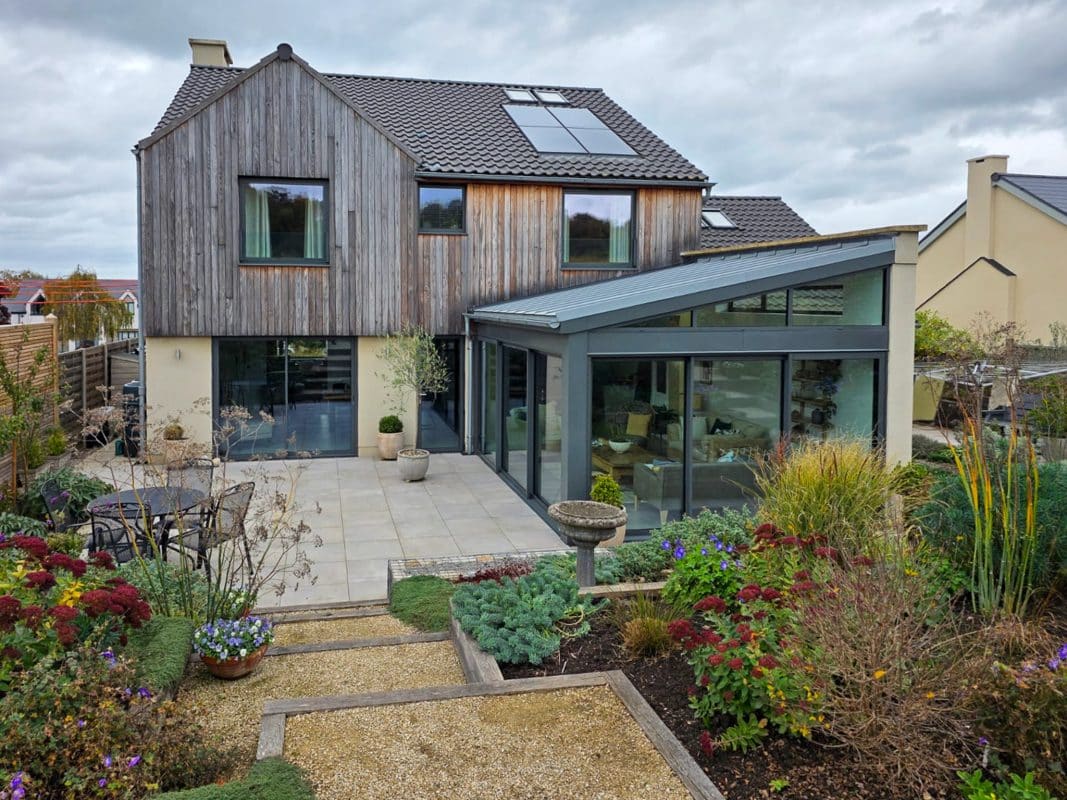
If you have started researching windows for a renovation, extension or new build, you may have noticed that CBP offers two quite different families of product.On one side, there are pure aluminium systems from brands such as Schüco, Aluco and Smart Systems. On the other, there are timber aluminium and PVCu aluminium hybrid systems from brands such as Internorm, Velfac and Rationel.
Customers sometimes assume aluminium or hybrid windows are simply different price points of the same thing. They are not. The distinction matters more than most window comparisons explain. This is one of the most common conversations we have in the Corsham showroom, so it is worth setting out properly.
What “hybrid” actually means
A hybrid window combines more than one frame material. In most cases, this means timber or PVCu on the inside of the window, with aluminium cladding on the outside. You get the warmth of timber, or the clean internal finish of PVCu, inside the home. Externally, the aluminium face protects the window from the weather and provides a durable, low-maintenance colour finish.
Internorm offers both PVCu and timber versions with its HF and KF ranges. Velfac and Rationel all use aluminium externall and timber internally. Each brand has its own construction, detailing and performance characteristics, but the broad idea is similar. The inside face of the window gives the room its character. The outside face provides weather protection and colour stability. You can read our article that explains all about hybrid windows and doors.
A pure aluminium window is different. Systems such as Smart Systems Alitherm 400, Schüco AWS 80 and Aluco Elite use aluminium for both the internal and external faces of the frame. A thermal break separates the inside and outside sections of aluminium to reduce heat transfer through the frame. The difference is not only about appearance. It affects how the window feels inside the home, how slim the frames can be, how the product performs and which projects it suits best. Aluminium offers slimmer sightlines than hybrid but that does not imply the latter is in any bulky.
Where hybrid windows genuinely work well
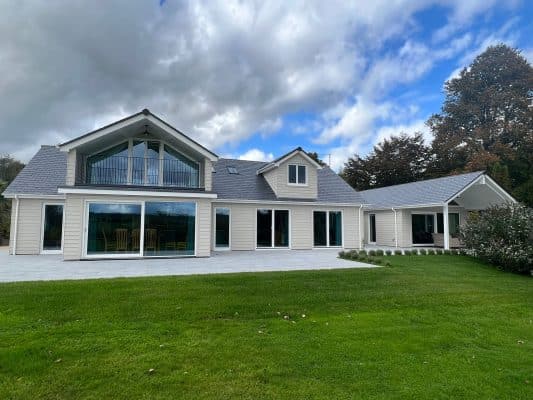
Hybrid windows are often chosen because of how they look and feel from inside the house. We installed Internorm HS330 sliding doors with a Juliet balcony, paired with HF310 Ambiente windows finished in RAL 7032 externally and oak internally, on a rear extension a few years ago. The client did not choose Internorm simply to chase the lowest U value. They wanted a warmer internal finish that suited the room, with the benefit of aluminium protection outside.
That is the hybrid case in simple terms. They are the most energy efficient windows on the market with a warm to the touch natural feel and essentially timeless.
You get the internal warmth of timber, or the clean look of a high-performance PVCu-based system, without the external maintenance normally associated with traditional timber windows.
This can work particularly well in older homes, traditional interiors, larger renovations and properties where the inside appearance matters as much as the external elevation. A crisp aluminium frame is not always the right internal look. Sometimes a softer, warmer finish suits the room better.
Where aluminium windows earn their place
Pure aluminium systems earn their place differently. Aluminium is strong, stable and well suited to slimmer frames, larger glass sizes and contemporary designs. Where the brief is for large panes of glass, narrow sightlines and a clean architectural appearance, aluminium often becomes the more natural choice.
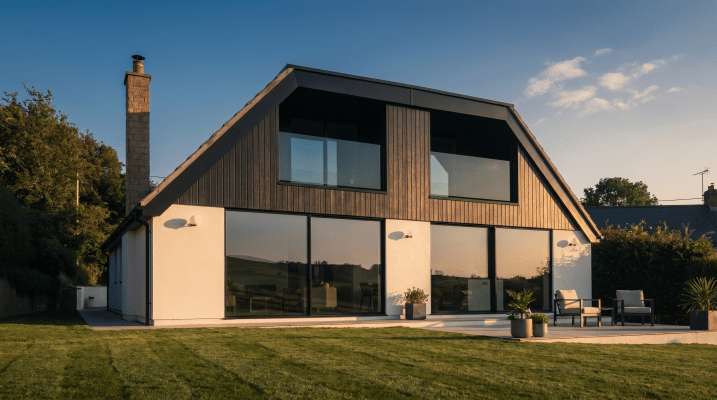
When we fitted the Schüco ASE 51 PD sliding doors into a contemporary chalet-style home near Bath, the brief was about slim sightlines, wide openings and a bright, open connection between the living spaces and the outside. Four sets of patio doors helped create a genuinely light-filled home.
That type of project is where aluminium performs particularly well. The strength of the material allows larger glazed elements and slimmer framing than many alternative materials can comfortably achieve.
This is also why many of our larger sliding and bifold installations, including Solarlux Cero projects and Reynaers lift and slide doors, are aluminium rather than hybrid. When glass sizes, panel weights and minimal framing become central to the design, aluminium usually gives the best combination of strength, appearance and practicality.
The inside view matters as much as the outside
Window comparisons often focus on the outside of the property. That is understandable, but it is not the whole decision. You live with the inside of the windows every day. The internal frame colour, material, handle style, cill detail and reveal all affect how the room feels. A pure aluminium window gives a crisp, modern internal appearance. That can be perfect in a contemporary extension, kitchen, open-plan living space or architectural new build.
A hybrid window gives a different feel. Timber internally can soften a room and work particularly well with traditional furniture, natural finishes and older properties. PVCu aluminium options can provide excellent performance and a clean internal finish, while keeping aluminium externally.
Neither is automatically better. They simply suit different homes and different customers.
This is one of the reasons we encourage homeowners to visit the showroom rather than choose from images online. A window that looks right in a brochure may feel different when you see the frame, finish and handle detail in person.
Heritage homes and conservation projects need careful judgement
There is also a heritage angle. On one conservation area project involving 27 replacement windows, two sets of French doors and a front door, the client had already received quotations from national and local companies before choosing CBP. A major part of the decision was being able to talk through sightlines, frame proportions, finishes and product suitability in detail. In projects like this, the choice between aluminium and hybrid is not about which material is theoretically superior. It is about what suits the building.
Some traditional homes benefit from hybrid windows because of the internal timber appearance and softer detailing. Others may suit carefully specified aluminium systems where slim sightlines, colour choice or matching doors are more important.
Planning requirements, conservation guidance, original window style and the character of the property can all influence the right decision. This is why a single online comparison rarely gives the full answer. You need expert advice from a local company that understands the local area, architecture and planning constraints and previous decisions on replacement windows and doors.
The trade-offs people don’t ask about when comparing aluminium or hybrid windows
Hybrid windows usually cost more than an equivalent standard aluminium window. That is because you are paying for more than one material, more complex construction and the engineering needed to bring those materials together properly. They are also low maintenance rather than maintenance-free. The external aluminium cladding protects the frame and reduces ongoing upkeep significantly, but the product should still be cleaned and looked after in line with the manufacturer’s guidance.
Pure aluminium systems vary widely in performance. A high-quality aluminium window with a deep thermal break and the right glass specification can perform extremely well. A basic aluminium window with a simpler profile and lower specification glass will not perform in the same way.
This is why we do not talk about aluminium as if every system is the same. The difference between a well-specified aluminium window and an average aluminium window can be significant. The same applies to hybrid products. Internorm, Velfac and Rationel are not identical products with different badges. They have different designs, frame depths, appearances, performance levels and price points.
The right comparison is not simply aluminium versus hybrid. It is which specific system suits the project.
How we actually help people decide at CBP
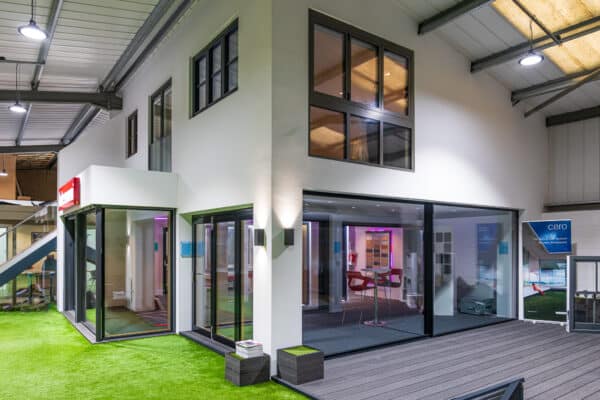
In the showroom, we do not begin by telling you which material is better. We ask what the property is like, what the room is used for, what the existing windows look like, whether there are planning or conservation constraints, how much glass is involved and what the budget needs to achieve.
A north-facing kitchen extension with large openings and a clean contemporary design may point towards aluminium. A period sitting room where the owner wants a warmer internal frame without regular repainting may point towards a hybrid system. A full renovation may need both. Aluminium sliding doors to the rear extension. Hybrid windows to the original part of the house. A premium front door chosen separately. The best specification is often a combination of products rather than one material used everywhere.
That is where showroom advice helps. You can compare real products side by side, see the difference between brands and understand what each system is best suited to. The powder coated finish on our aluminium or hybrid windows is premium grade and powder coated only by Qualicoat assured applicators for long term peace of mind.
Visit the CBP showroom in Corsham
CBP works on homes across Wiltshire, Bath, Bristol and the surrounding areas, where older properties, stone houses, modern extensions and contemporary new builds often need very different glazing choices. From our Corsham showroom, we can show you aluminium and hybrid windows and doors from leading UK and European brands, including Schüco, Aluco, Smart Systems, Internorm, Velfac and Rationel. We can help you compare aluminium or hybrid windows in our relaxed substantial showroom. Here you can see and feel the various products and examine how they differ by appearance, performance, suitability and long-term value.
Contact us on 01225 811663 or use our contact form to book a showroom visit, and we will talk through what is actually right for your project.