
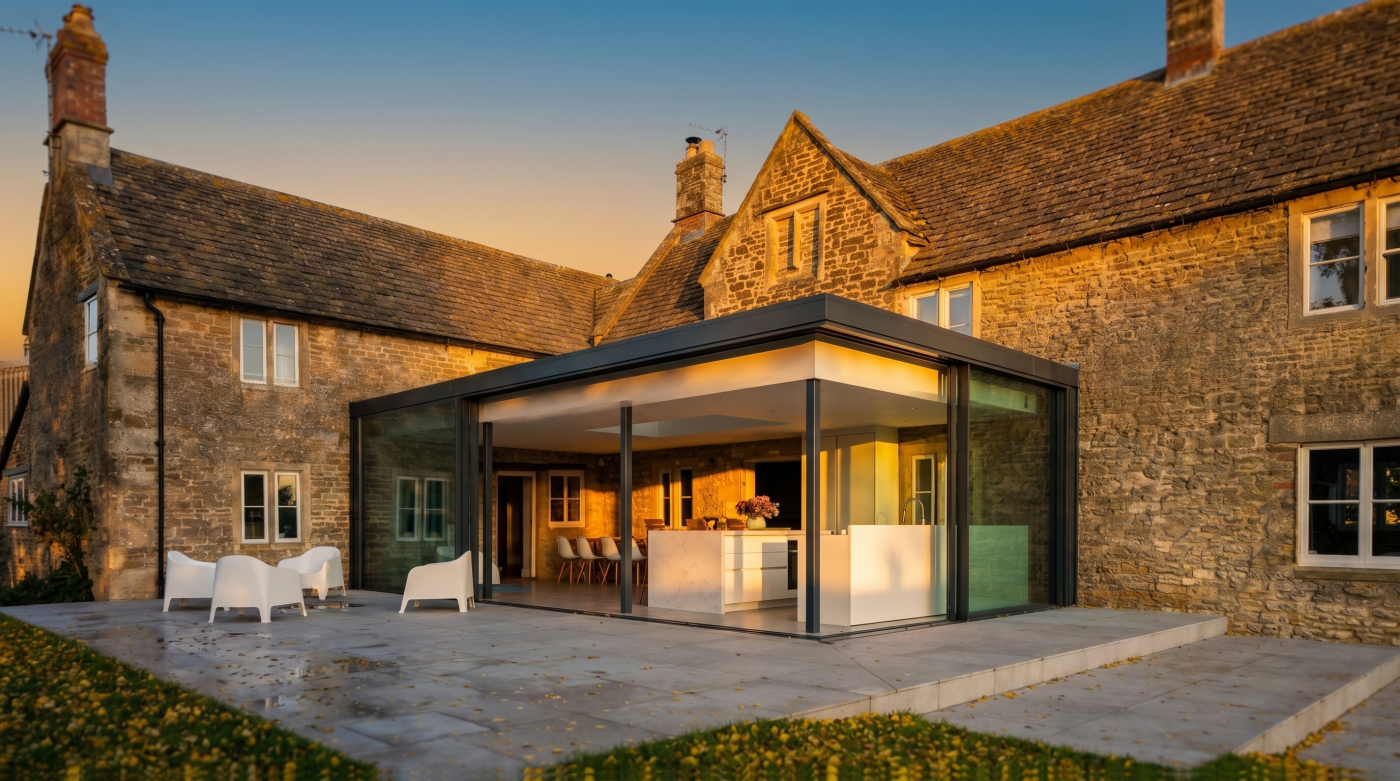
First, Decide What You Mean by “Add Value”
When homeowners ask whether new windows add value to a house, they are usually asking a financial question.
If I spend this much, will the property eventually be worth more?
It is understandable, but it compresses several different kinds of value into a single number.
There is market value: what somebody may ultimately pay for the property. There is marketability: how confidently a future buyer responds to the house. Then there is architectural value, comfort, usability and the everyday experience of living there.
A window project can influence these things differently.
Replacing visibly deteriorated glazing may remove an obvious concern without transforming the architecture. Redesigning an important opening might fundamentally improve how a room relates to the garden, yet there is no simple formula for translating that improvement into a future sale price.
Time matters too.
Someone replacing windows shortly before selling is entitled to think differently from someone renovating a home they expect to occupy for another fifteen years. For the latter, thousands of mornings spent in a more comfortable, better-resolved room form part of the return, even though they will never appear on an estate agent’s valuation.
So before asking whether new windows add value, define the objective.
Are you preparing the house for sale, correcting an existing problem or trying to create a substantially better home?
Houses are financial assets, but they are also places people live.
The value of improving one cannot always be measured by the eventual selling price of the other.
Buyers Notice Problems Before They Notice Specifications
Most prospective buyers will never ask which window system has been installed.
They may know very little about the glass specification, frame construction or hardware. Unless the glazing is architecturally distinctive, much of that information can pass almost unnoticed during a viewing.
Problems are different.
A window that is visibly deteriorating, difficult to operate or noticeably inconsistent with the rest of the house can attract attention quickly. Instead of becoming an invisible part of the property, it becomes something the buyer starts thinking about.
That change in perception matters.
The question is no longer simply whether they like the room. They may begin wondering what needs attention, how extensive the problem is and whether another project is waiting for them after they move in.
Replacing problematic windows can therefore create value in a different way from adding premium specification.
It may remove uncertainty.
That does not mean every older window should be replaced before a house is sold. An original window with architectural character may contribute considerably more to a period property than an inappropriate new replacement. Equally, perfectly serviceable glazing does not become a liability simply because something newer exists.
The distinction is between age and an obvious unresolved problem.
Buyers may never recognise every detail you paid for in a new window.
But when existing glazing visibly undermines confidence in the house, they are considerably more likely to notice what has been left undone.
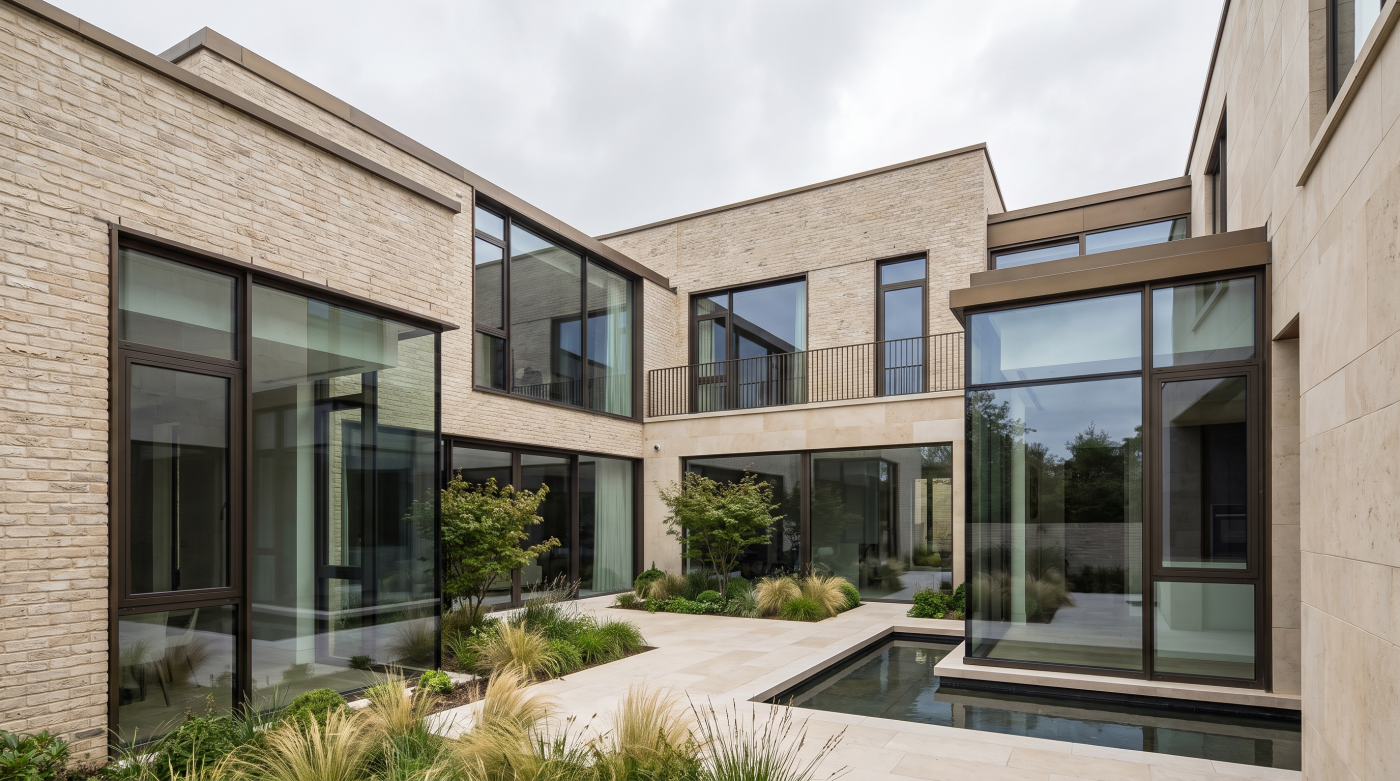
The Wrong New Windows Can Reduce Architectural Value
New windows are not automatically an improvement.
A replacement can perform exactly as intended as a manufactured product and still leave the house architecturally poorer.
Windows contribute to the proportions of an elevation. Their frames, opening patterns and relationship with surrounding materials help establish the visual rhythm of the building. Change those relationships without considering the architecture and something important can disappear, even though every window is technically newer.
This becomes particularly significant with period and character properties.
A Georgian townhouse, Victorian villa or traditional country house may derive part of its identity from the proportions and repetition of its openings. Replacing windows purely according to what is fashionable, readily available or visually appealing in isolation can alter that character considerably.
The same principle applies to contemporary houses.
Changing every frame to a fashionable colour or forcing uniformity across different parts of the building does not necessarily create a more coherent result.
This is why “new” and “valuable” should never be treated as interchangeable.
A window earns its place in the architecture through how successfully it belongs to the building around it.
For historically significant properties, there may also be wider considerations surrounding existing fabric and the appropriate approach to alteration, making informed professional advice especially valuable.
The relevant question is therefore not whether the replacement window is newer, more expensive or more fashionable.
It is whether the house is architecturally better once it is there.
The Biggest Value May Be Inside the Room, Not on the Estate Agent’s Particulars
Some of the most valuable things a window does are difficult to express in a property description.
It can change how a room feels in the morning. It can improve the relationship with a garden, frame a view more deliberately or help an extension feel connected to the landscape rather than simply attached to the house.
These improvements may never translate neatly into a line on a valuation.
They can still transform the experience of living there.
This is particularly important for homeowners planning to stay. If an existing opening compromises how a room is used, redesigning the glazing can create value every day rather than only when the property eventually reaches the market.
But more glass does not automatically create more of that value.
A larger opening can be impressive without improving the architecture. Daylight depends on more than the quantity of glazing, and the strongest connection with outside is not necessarily achieved by turning an entire wall into glass.
The better question is what the room needs.
Perhaps the view should be framed differently. Perhaps an opening needs to relate more successfully to circulation or furniture. Perhaps the existing glazing already works and the real problem lies elsewhere.
This is where architectural value becomes more useful than headline resale calculations.
A window can justify its place by making the space around it substantially better.
For someone living in the house for years, that daily improvement may be the most meaningful return of all.
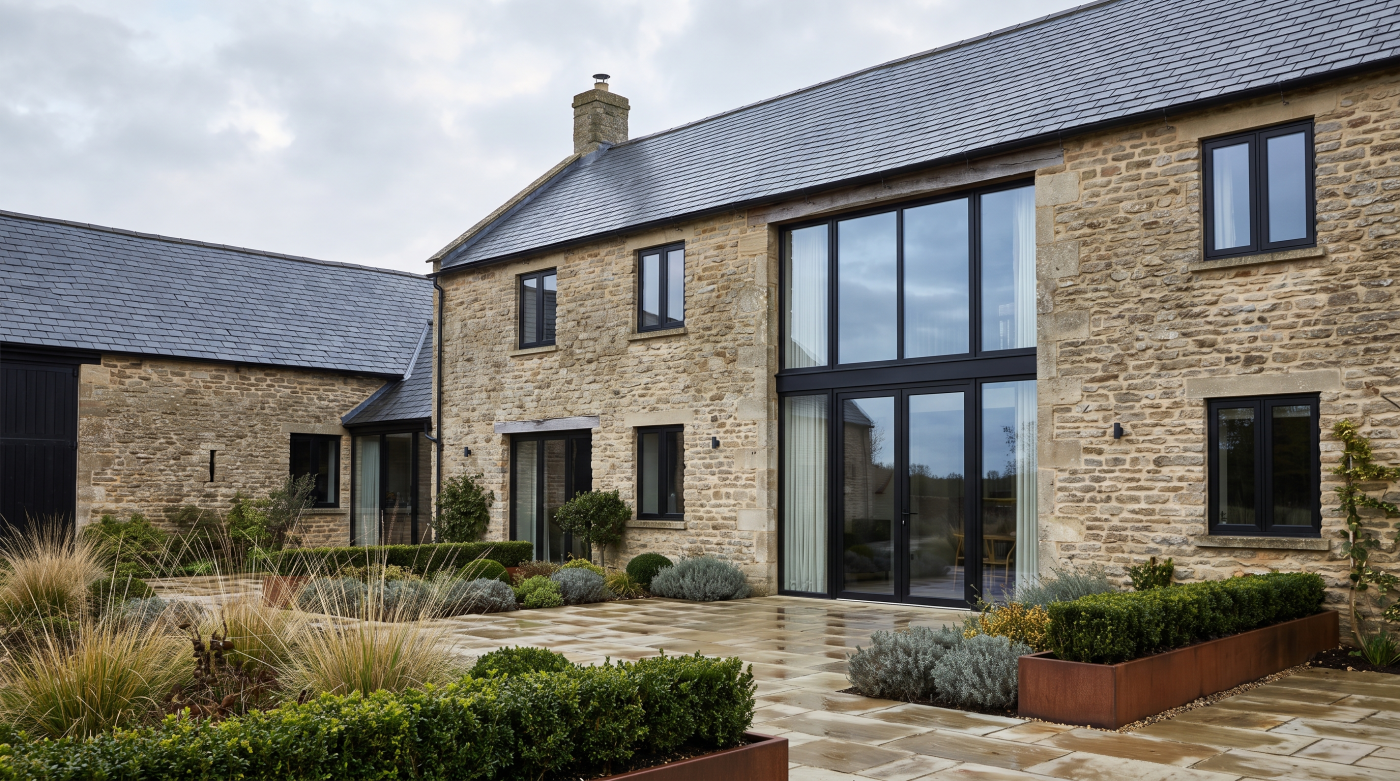
Windows Add More Value When They Belong to a Better Renovation
There is an important difference between replacing windows and redesigning the way a house uses glazing.
The first can be a perfectly sensible improvement. Existing windows are removed and new ones occupy broadly the same openings, perhaps addressing problems of condition, appearance or comfort.
The second begins with the architecture.
During a substantial renovation, rooms may move, circulation changes and new relationships with the garden emerge. Views that previously mattered very little can become central to the design. Materials, interiors and external elevations may all be reconsidered together.
Glazing then becomes part of a much larger idea.
Instead of asking which new window should occupy an existing opening, the project can ask whether the opening itself is in the right place, has the right proportions and contributes successfully to the room being created.
This is where architects can have considerable influence.
Not because architectural involvement guarantees a financial return, but because windows considered alongside space, structure, materials and movement have a greater opportunity to contribute meaningfully to the finished building.
That contribution is difficult to isolate on a spreadsheet.
A successful opening may make the kitchen work better, strengthen an extension or give an otherwise ordinary room a much clearer relationship with its surroundings.
The value comes from the complete architectural result.
New glazing is therefore often at its most convincing when you stop thinking about how much value the windows add and start asking how much better they allow the renovation to become.
Spending More Does Not Automatically Add More Value
It is tempting to assume that a more expensive window or door must add more value to the house.
Sometimes the additional specification is entirely justified.
A particular project may benefit from more carefully controlled frame proportions, a different glazing specification, a considered threshold, particular hardware or a finish that integrates more successfully with the wider material palette.
But expenditure and value are not the same thing.
A £15,000 door does not automatically improve a house three times more than a £5,000 alternative. The more expensive option may contain details that matter enormously to one architectural scheme and contribute very little to another.
The question is whether the building can use what you are paying for.
This becomes especially important with premium glazing because some of its differences can be deliberately subtle. A homeowner might appreciate those details every day, while a future buyer may neither recognise them nor attach the same financial importance to them.
That does not make the specification wasteful.
It simply means its value has to be understood in relation to the project rather than justified by an assumed increase in resale price.
Premium specification is most convincing when removing it would noticeably compromise something the architecture is trying to achieve.
If you cannot explain what the additional expenditure improves — visually, spatially or functionally — price alone is a poor argument for expecting it to make the house more valuable.
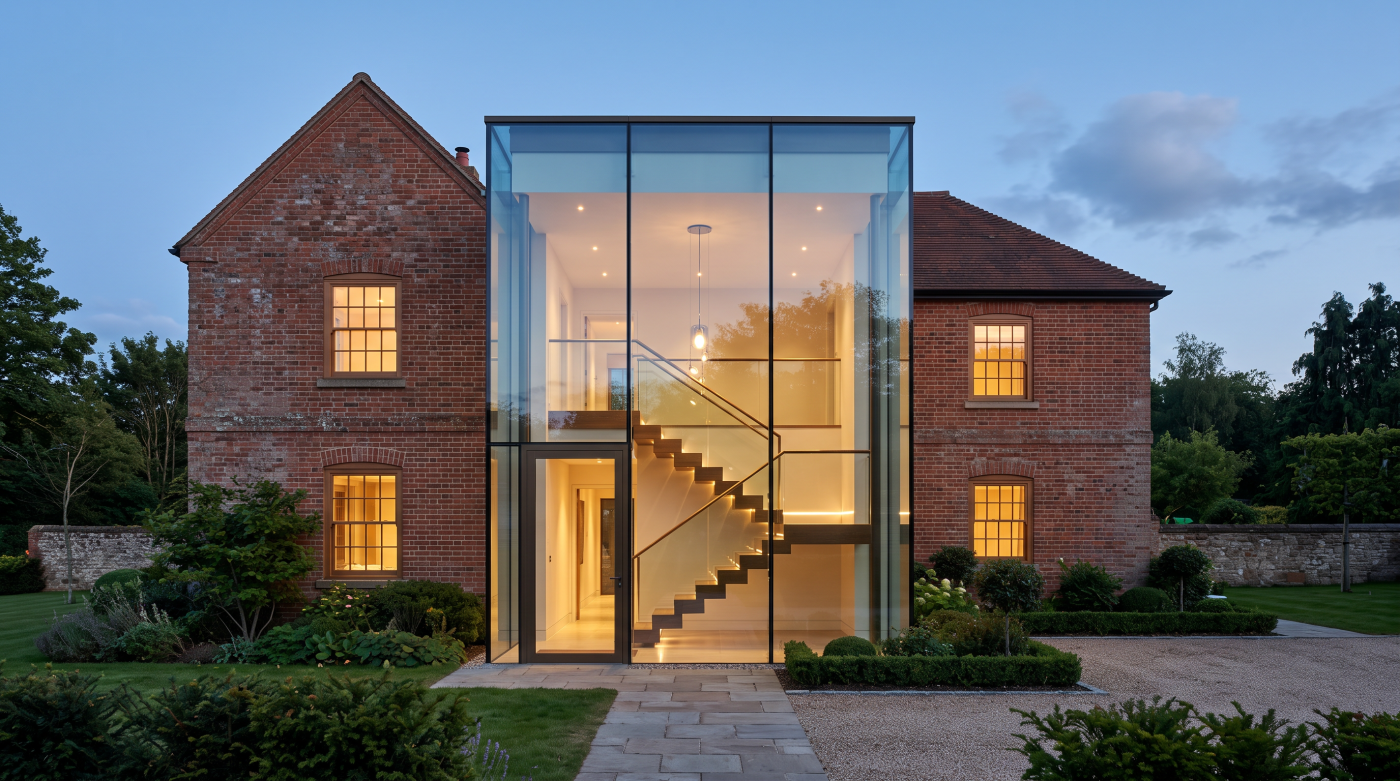
The Length of Time You Plan to Stay Changes the Calculation
A homeowner preparing to sell next year is asking a different question from someone creating a house they hope to live in for another twenty years.
For the short-term owner, the calculation may naturally focus on condition, presentation and whether the existing windows create an obvious concern for prospective buyers.
There may be little opportunity to experience the improvement personally.
Stay for longer and the definition of return begins to change.
A better-resolved window might contribute to a more comfortable room every winter, improve the way an opening is used or strengthen the relationship between an important living space and the garden. Those benefits accumulate quietly through years of occupation.
They are difficult to express as a percentage return.
That does not make them financially irrelevant, but it does mean that a resale-only calculation captures only part of what the homeowner receives from the project.
The same principle should also prevent unnecessary over-specification.
Living in a house for twenty years does not automatically justify buying the most expensive glazing available. The improvement still needs to solve something meaningful or contribute positively to the architecture.
Time simply changes the way value can be experienced.
If you intend to sell almost immediately, the eventual buyer inevitably becomes a significant part of the decision.
If you intend to stay, there is another person whose experience deserves equal attention.
You.
Replace Windows to Make the House Better, Not Simply More Expensive
So, do new windows add value to a house?
They can.
Replacing deteriorated glazing may remove an obvious concern. Better-considered windows can strengthen an elevation, improve the experience of a room or contribute to a renovation that transforms the way the house works. For a long-term owner, those improvements can continue creating value for years.
What they cannot provide is a guaranteed relationship between what you spend and what the property will eventually sell for.
That distinction matters.
If perfectly satisfactory windows are being replaced solely because somebody has suggested that new ones will increase the value of the house, the argument is relatively weak. Newer does not automatically mean better, and more expensive does not automatically mean more valuable.
If the existing windows are causing a genuine problem, the case changes.
And if the glazing is preventing a wider renovation from achieving its architectural potential, reconsidering the openings can become much more significant than simply replacing one product with another.
The strongest window projects therefore begin with the building rather than the future valuation.
What is not working? What could be improved? What would the new glazing allow the house to do that it cannot do successfully today?
Answer those questions first.
The best reason to replace a window is rarely that somebody has promised it will make your house worth more. It is that you can explain exactly how the new window will make the house itself better.