
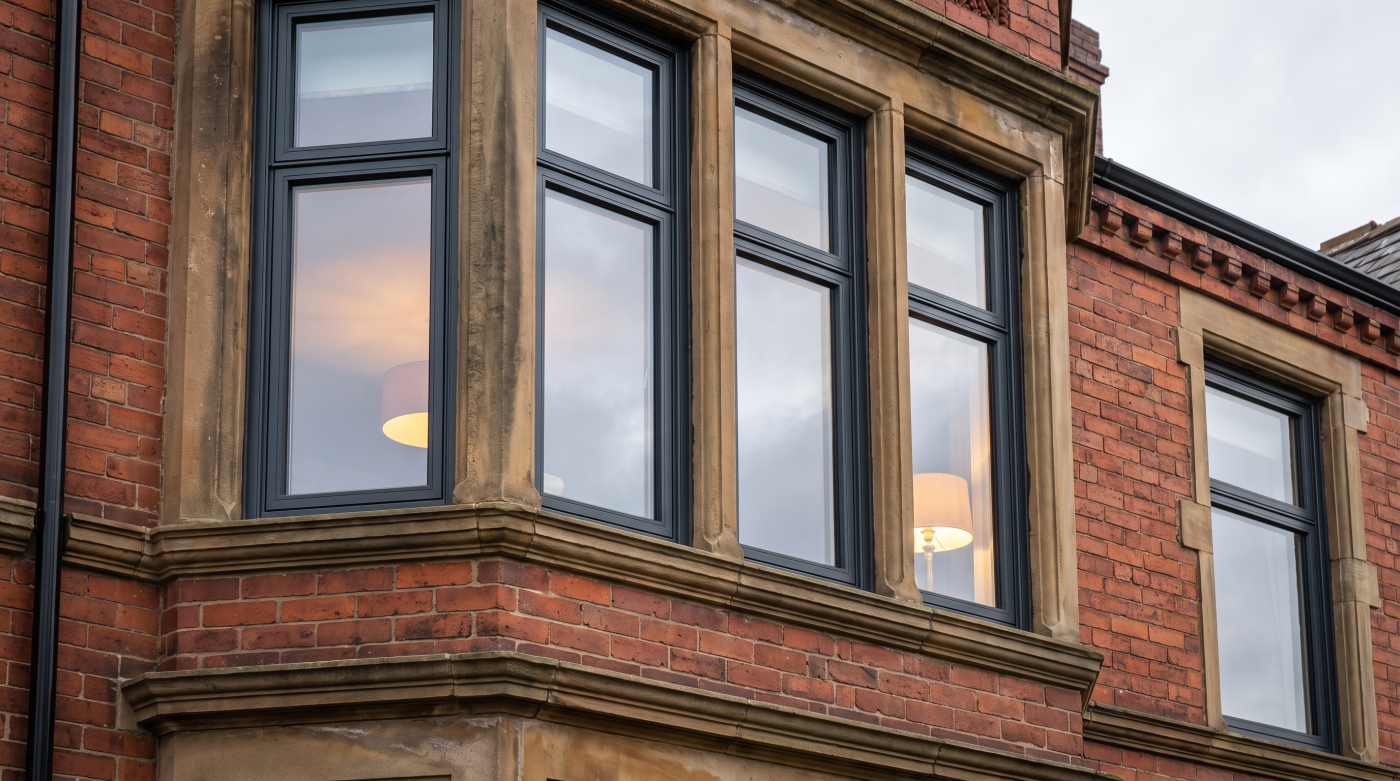
Is There VAT on Replacement Windows in the UK?
For an ordinary replacement-window project in the UK, a VAT-registered business will normally charge VAT at the standard rate of 20%. Improving thermal performance does not, by itself, make the work eligible for energy-saving VAT relief.
The answer can change where glazing forms part of a qualifying construction, conversion or renovation project. Those circumstances need their detailed conditions checked, including the actual supply and procurement arrangement. Establishing the tax basis before accepting a quotation gives the homeowner a clearer budget and avoids confusing a better window specification with eligibility for a lower rate.
What VAT Rate Normally Applies to Replacement Windows?
Ordinary window replacement in an existing home is normally standard-rated. The government’s guidance on VAT rates identifies 20% as the standard rate for most goods and services. A VAT-registered business should apply the appropriate treatment to its actual supply, with the quotation making clear whether the stated figures include VAT.
A net price and a final payable price are different figures. For illustration, a standard-rated net amount of £10,000 becomes £12,000 after 20% VAT. That is an arithmetic example, not a window-price estimate. If two quotations present their figures differently, a comparison of the headlines alone may obscure their true relationship.
The business’s VAT status matters too. An unregistered business does not add VAT in the same way, but that is different from a registered business making a zero-rated supply. It does not establish that the service, specification or final price is directly comparable. Ask for an unambiguous total for the scope being proposed.
Begin with the ordinary position, then identify whether a specific project-dependent rule is relevant. Avoid assuming that every renovation has a lower rate or that all glazing invoices follow one treatment regardless of context. The useful budgeting question is what VAT applies to this supply and how it is reflected in the complete price.
Why Energy-Efficient Windows Do Not Automatically Qualify for VAT Relief
Energy performance and tax classification answer different questions. A replacement window may improve comfort and reduce heat transfer, but those benefits do not automatically place it within HMRC’s specified energy-saving materials relief. The relevant tax categories should be checked independently of the product’s thermal claims or the homeowner’s reason for replacing it.
HMRC Notice 708/6, Section 2.23 states that other energy-efficient products, including secondary or double glazing and low-emissivity glass, are standard-rated under that framework. Choosing a more insulating glass build-up is therefore not, on its own, a reason to treat ordinary replacement windows as a zero-rated energy-saving installation.
The distinction can be confusing because other specified measures, such as qualifying draught stripping or insulation, have their own treatment. Replacing an entire window should not be equated with installing draught stripping around a retained opening. Nor should the tax rate for another element in a wider energy project be assumed to apply automatically to the glazing.
Discuss performance on its merits and establish VAT through the applicable rules. A good specification should explain how the opening serves the home, while a clear quotation should explain the tax basis. Combining the two into a general promise of ‘energy-efficient windows with no VAT’ would overlook the actual supply and qualifying conditions that need to be assessed.
Does Supply-Only Purchasing or Separating Labour Change the Answer?
A homeowner may buy windows directly and appoint an installer separately, or arrange a complete supply-and-install package. These routes allocate responsibilities differently, but a change in invoice presentation does not automatically create VAT relief. The liability follows the actual goods or services supplied and any relevant qualifying project circumstances.
HMRC Notice 708 explains the treatment of building services and materials supplied with them. Goods-only purchases need separate consideration from a contractor’s qualifying installed supply. For ordinary replacement work, listing labour on another line does not, by itself, turn standard-rated installation into a reduced-rated service.
Wider projects can involve genuine supplies with different treatments, but those distinctions need to reflect the contracts and work. HMRC’s single- and mixed-supply guidance illustrates why packaging, dependence between elements and the customer’s actual purchase matter. Artificially dividing a description should not be treated as sufficient evidence for a lower rate.
Choose the procurement route with the project responsibilities understood. Establish who measures, supplies, installs and completes associated work, then confirm the tax basis for each actual supply. This gives a more reliable comparison than restructuring a quotation solely in the hope of reducing VAT. The contract, scope and invoicing should provide a consistent account of what the homeowner is buying.
When Certain Renovations or Conversions May Qualify for 5% VAT
Some residential building work can qualify for the reduced rate of 5%, but ordinary refurbishment does not automatically do so. The relevant circumstances concern the project and supply, not simply the age of the windows or the scale of the planned improvement. Eligibility needs to be established against the detailed conditions.
HMRC Notice 708, Section 7 describes qualifying conversions to specified residential uses. Section 8 addresses qualifying renovation or alteration work to residential premises that have not been lived in for the required period. Glazing within such work may need assessment as part of the qualifying services and installed building materials.
The empty-property provisions include a two-year rule and detailed occupancy conditions and exceptions. A house being temporarily vacant is not sufficient on its own. Reliable evidence of its history, relevant dates and the nature of the services is important. The notice describes sources such as council records and an Empty Property Officer’s confirmation where appropriate.
For a conversion or long-empty home, establish the tax position while the scope and contracts are being developed. Ask the invoicing business to identify the rule it is applying and obtain appropriate tax advice where the circumstances are complex. A reduced rate should follow a supported assessment, with any necessary apportionment understood, rather than a general assurance that all work called renovation receives 5% VAT.
Why New-Build and Self-Build Glazing Have Different VAT Questions
Glazing installed during the construction of a qualifying new dwelling belongs to a different tax context from replacing windows in an existing home. HMRC provides rules for zero-rating qualifying construction services and appropriate building materials supplied with them. The requirements concern the building and the supply, so they should not be transferred casually to an extension or replacement project.
Notice 708’s new-building provisions explain the qualifying conditions and exclusions. An installed construction supply and a direct purchase of materials can therefore have different invoicing consequences. Establish the procurement route before assuming that every invoice associated with a new home should show the same VAT treatment.
A qualifying self-builder may have a separate route to recover eligible VAT on building materials through the DIY housebuilders refund scheme. This has its own eligibility, evidence and procedural requirements. New-build and conversion claims also need their appropriate guidance. It is not a general refund mechanism for ordinary replacement windows or every home improvement.
Bring the tax question into the budget early. Record who is supplying and installing the glazing, what invoices will be issued and which rule supports the proposed treatment or refund route. That helps the architect and project team coordinate the practical scope without making assumptions about tax. Retain the relevant documents from the outset rather than trying to reconstruct the procurement history at completion.
Does Listed Building Status Change the VAT Rate?
Listed status does not provide a general VAT exemption for replacing windows. Heritage requirements can influence the chosen materials, profiles and extent of repair, but they answer a different question from tax eligibility. A consent allowing particular work does not, by itself, establish a reduced or zero rate for the supply.
HMRC Notice 708 explains that the former zero-rating for approved alterations to protected buildings was withdrawn, with its transitional arrangements ending in 2015. The historical section remains in the notice for reference. Its older wording should not be read as a current general relief for alterations to listed homes.
Another qualifying rule may still be relevant to a particular project, but it needs its own conditions satisfied. For example, an assessment of qualifying empty-home renovation work concerns that project’s circumstances rather than listing alone. Separate questions about repair, replacement and significance should continue to be addressed through the appropriate heritage and design process.
For a Bath townhouse or Cotswolds property, begin with an accurate scope. Establish what is retained, what changes and which permissions are needed, then ask for the tax basis of the proposed work. This keeps conservation decisions and budgeting clear. Choosing a sympathetic specification remains important, but neither its appearance nor an accompanying heritage consent should be presented as automatic evidence of VAT relief.
How to Compare Window Quotations on the Same Basis
A useful comparison begins with equivalent scope and the final payable amount. Check whether the quotation includes VAT, which rate is being applied and whether any exception is being relied upon. A lower net figure cannot be compared directly with another business’s gross total without understanding the tax and work behind each.
The scope deserves the same attention. Window configurations, glass performance, opening hardware and installation responsibilities may differ. Associated making good, access arrangements or structural work can also affect what is included. Two prices described as ‘replacement windows’ may represent materially different projects even before their VAT treatment is considered.
Where a reduced or zero rate is proposed, request an explanation of the qualifying basis. Where a business is not VAT-registered, distinguish that status from a taxable supply charged at 0%. Neither circumstance establishes a like-for-like service or a saving of a particular percentage against another quotation. Compare the actual specification and total amount.
The objective is a reviewable budget that relates to a defined design. Clear drawings and a consistent schedule make it easier to compare what each appointment would deliver. Once those elements are aligned, the tax presentation can be understood accurately. This is more useful than treating the largest apparent VAT difference as the deciding factor in selecting a glazing arrangement for the home.
What Evidence and Confirmation Should Be Obtained Before Appointment?
Begin with the project’s classification and actual supply. Ordinary replacement work has a straightforward starting position, while a conversion, new dwelling or qualifying empty-property renovation may require additional information. Record the relevant property history, scope and procurement arrangement before relying on a quotation that proposes a different tax rate.
The invoicing business should explain the treatment it is applying. Ask which HMRC provision is relevant and what evidence or confirmation it needs. Where the facts are complex, appropriate tax advice can help establish the position. The architect’s drawings and planning documents may contribute information, but they do not independently determine every VAT question.
Keep the contract, quotations, invoices and supporting project records together. Review the tax implications of relevant scope changes before they become part of the order. A different procurement arrangement or altered project classification can require another assessment. Clear documentation supports budgeting and makes it easier to understand what was supplied and why it was treated in that way.
CBP supports architectural glazing and specification decisions across Bath, Wiltshire, Somerset, Bristol and the Cotswolds. For ordinary replacement windows, budget on the normal standard-rated position unless an applicable alternative has been established. Transparency about scope and VAT gives the homeowner a sounder basis for comparing proposals and choosing glazing that suits the building and its intended use.