
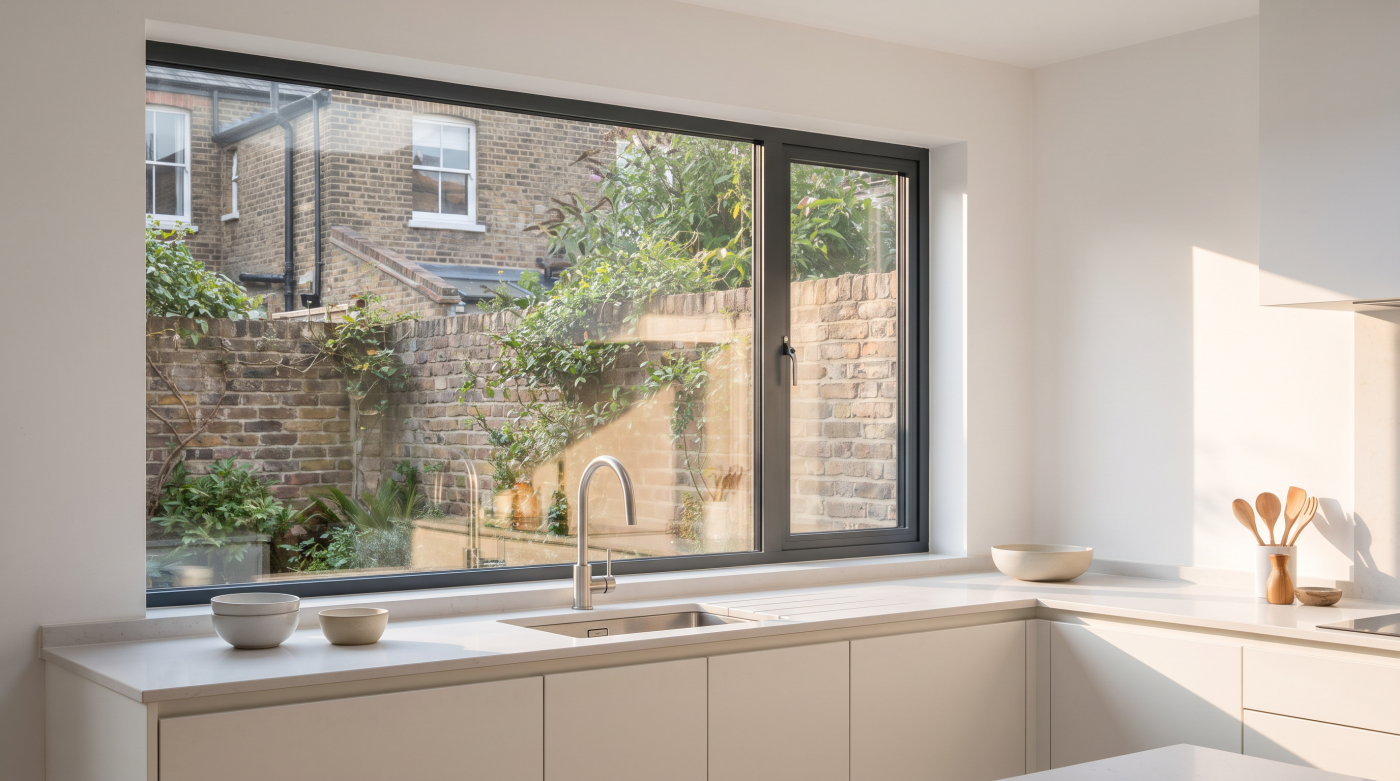
What Are Window Restrictors and When Do You Need Them?
A window restrictor limits how far an opening sash can move. An appropriate arrangement can help reduce the risk of someone falling through an open window, but its suitability depends on the window, the people who can reach it and the space outside. The presence of a catch alone does not establish that those questions have been resolved.
Restriction also needs coordinating with ventilation, cleaning and any escape function. Different settings call for different approaches, so a recommendation for a care facility should not be transferred automatically to a family home. Begin with the actual opening and its role, then select and maintain a supported arrangement.
What Is a Window Restrictor, and What Is It Designed to Do?
A restrictor limits the movement of the part of the window that opens, often called the sash. Some devices are integrated into the window hardware; others can be added where the existing assembly supports them. The intended function and release arrangement vary, so establish what the proposed device is designed to achieve rather than relying on its appearance alone.
A ventilation position, friction stay and child-resistant safety restrictor should not be treated as interchangeable. Hardware may limit initial movement or hold a sash in a convenient position without providing the protection needed for a fall-risk assessment. Ask what evidence supports the actual device and its installation on the selected window, including any conditions attached to its use or release.
Some arrangements allow a wider opening after a deliberate release; others have a different intended function. That choice needs to follow the building’s requirements and users’ needs. A device that cannot readily be released may be unsuitable where a particular opening is needed for escape, while an easily overridden catch may not provide the intended protection in another setting.
Discuss the complete window rather than the accessory in isolation. Frame condition, sash dimensions, hinges and fixings influence whether the arrangement can work as intended. A suitable specification should identify the hardware, its purpose and the supported operating sequence clearly. That gives the household and project team a shared understanding of what restricted, released and properly secured mean for that opening.
Which Windows Present a Fall Risk?
Assess the relationship between the internal floor, the opening and the level outside. An upper-floor window is an obvious place to investigate, but a ground-floor window can also overlook a substantial drop. The floor’s name does not establish the consequence of a fall. Look at the actual building and what someone could reach or climb onto within the room.
The Child Accident Prevention Trust’s advice on window falls highlights the role of furniture and rapidly changing childhood abilities. Beds, sofas and toy boxes can provide access to an opening that initially appears out of reach. Review those relationships as the room is furnished and used, rather than assessing an empty space once and assuming it remains unchanged.
Consider all relevant opening positions. Different window types can create gaps in different places, and the most noticeable gap is not necessarily the only one that matters. The proposed assessment should consider how the window behaves in use, with the appropriate professional or manufacturer clarifying the arrangement where necessary. Avoid assuming a handle height settles the whole question of access.
The occupants matter alongside the building. Young children and people with particular care needs may face risks that require a different response from other users. Supervision is important, but suitable physical precautions deserve attention because circumstances change quickly. Identify the relevant risks first, then establish an appropriate solution that considers restriction, guarding, room layout and the window’s other essential functions together.

Are Window Restrictors a Legal Requirement?
There is no single useful rule that every window above a named floor must have the same restrictor. In England, the applicable position depends on the building, work and use. Building-regulation provisions concerning protection from falls and the safe use of openings need to be read within their scope. Housing responsibilities and care settings introduce further considerations requiring their own assessment.
For relevant new residential buildings, Approved Document O addresses the usability of an overheating strategy, including safety when openings are used. It should not be described as applying automatically to every existing-home replacement or extension. Establish the actual project context before transferring a particular dimension or design provision into a universal household rule.
The government’s new Decent Homes Standard policy statement announces child-resistant restrictors, with adult override, for relevant fall-risk windows in rented homes. The announced implementation is from 2035. That future standard does not suspend existing obligations concerning safety, repair and fitness, and should not be presented as a new blanket requirement already applying to every home.
Health and social care premises require separate attention to their occupants and risk assessment. A solution suitable there may differ from one used in an ordinary dwelling with an escape window. Obtain advice appropriate to the actual setting and scope of work. The practical objective is to address a recognised risk now while understanding which specific duties and guidance govern the proposed arrangement.
How Do You Choose a Suitable Restrictor?
Begin with the window type, dimensions, opening geometry and the people needing protection. Ask the manufacturer which arrangements are supported and what evidence applies to the intended safety function. An accessory advertised as broadly compatible still needs a suitable installation on this frame and sash. Its appearance, price or cable length alone cannot establish that it provides the required protection.
Consider the complete gap and the forces the assembly may encounter. Fixing positions, sash movement and any flexibility can affect the opening created. A measurement at one convenient point is not a complete assessment. The relevant professional should establish the appropriate arrangement and checks, using the device and window manufacturers’ instructions rather than an improvised installation or informal strength test.
HSE’s guidance for health and social care premises describes restriction to 100 mm or less and release using a special tool or key where relevant risks are identified. That is setting-specific guidance. The number should not be treated as a universal domestic child-safety guarantee or its release arrangement copied indiscriminately to every household window.
Clarify how the selected device is released, reset and checked, and whether it provides the relevant child resistance. A restrictor is also distinct from a barrier designed to resist guarding loads. Where low-level openings or other conditions raise guarding questions, obtain a coordinated assessment rather than assuming an ordinary opening limiter performs every protective role simply because the sash remains partly closed.

Can Restrictors Be Used on Escape Windows?
First establish whether the window forms part of the building’s escape provision. Its role should come from the relevant design and assessment, rather than an assumption that every opening bedroom window is an escape window. Once that role is understood, any restrictor must be considered alongside the opening dimensions, operating sequence and other applicable fire-safety requirements for the actual project.
Approved Document B allows relevant escape windows to have locks and opening stays with child-resistant release catches within its guidance. This does not mean every restrictor is suitable. The proposed device and its release must allow the window to fulfil the required function, with the appropriate arrangement established for the building and users.
Do not choose a permanent restriction or keyed arrangement simply because it is recommended for a different setting. Equally, do not remove fall protection without a replacement strategy because the window may be needed for escape. The two questions need resolving together. Ask the designer, competent window specialist or appropriate fire-safety professional to clarify a supported solution where the existing arrangement is uncertain.
The household needs clear operating instructions once the solution is agreed. Adults should understand the release and any relevant key or tool arrangements, with access managed consistently with the assessed needs. Demonstrate the approved operation and retain the instructions. A coordinated specification is more useful than separate accessories added for different concerns without checking how they interact during ordinary use and an emergency.
Will Restrictors Affect Ventilation and Summer Cooling?
Restricting a window changes the opening available for airflow. The effect depends on its geometry, the permitted movement and the surrounding conditions. Do not use unrestricted dimensions to describe ventilation that will normally occur with the restrictor engaged. The designer needs to assess the opening people can appropriately use, including the relevant safety arrangement and any practical limits on operation.
That matters during hot weather, when a room may feel uncomfortable and occupants want a wider opening. Removing a safety measure without understanding the risk is not a satisfactory cooling plan. Review shading, the home’s ventilation strategy and other suitable openings instead. The aim is to provide a workable response to heat while preserving the protection the assessment has identified as necessary.
Background ventilation, extraction and occasional wide opening perform different roles. A restricted sash should not be assumed to replace every other provision, nor should a small gap be promised to deliver a particular cooling result without assessment. Discuss the complete room and building strategy, especially where sleeping spaces depend heavily on occupant-operated windows during summer conditions or at night.
Where an overheating assessment is required, check that the specified hardware and permitted opening match its assumptions. A later change to restriction or operation can affect that relationship. For a Wiltshire self-build or a Bristol family renovation, the practical question is the same: can the household use the planned ventilation and cooling arrangements comfortably while maintaining the appropriate safeguards for the actual building?
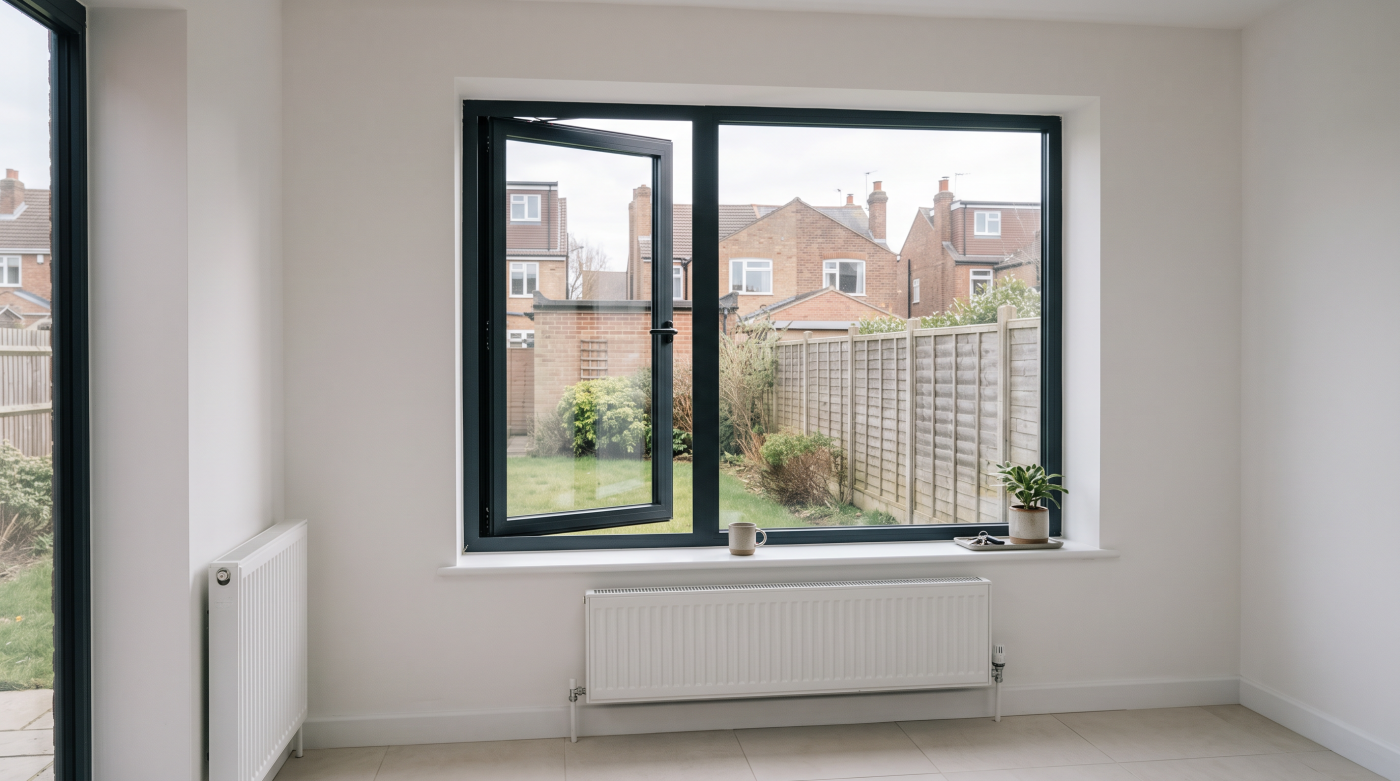
Can Restrictors Be Added to Existing Windows?
Retrofit may be possible when the existing window and proposed device support it. Survey the frame, sash, hinges and hardware before selecting an accessory. Damage, wear or unsuitable fixing locations can change the answer. A compatible improvement or repair may address the concern without full replacement, but that outcome needs an assessment of the actual assembly and its condition.
Ask the window manufacturer or an appropriately competent specialist to confirm the arrangement and installation requirements. Keep any warranty or performance implications clear. Avoid using generic drilling positions from a different window or relying on the apparent solidity of a surface. The fixing method and location must suit the construction and the purpose for which the restrictor is being installed.
Existing historic joinery needs additional care. In a Bath townhouse or Cotswold property, an appropriate intervention should account for the fabric and significance of the window as well as the desired safety improvement. Where controls or permissions apply, establish them before alteration. A discreet-looking accessory is not automatically harmless to the joinery or suitable for the protective function being proposed.
Arrange handover once the work is complete. The household should know the permitted operating states, how the device resets and what maintenance is required. If the window also has a defined escape or ventilation role, record how that has been preserved. A well-scoped retrofit explains both what has changed and how the complete window is intended to work afterwards.
What Checks Keep Restrictors Effective Over Time?
A suitable restrictor needs to remain functional and engaged when required. Follow the manufacturer’s inspection and maintenance instructions rather than inventing a force test. Notice changes such as loose fittings, damage, altered movement or a release that no longer resets as expected. If anything appears wrong, arrange competent attention and manage access to the opening appropriately while the issue is resolved.
Cleaning and other temporary wider-opening activities deserve a routine. Confirm the protection is restored afterwards using the approved procedure, and make sure other adults using the room understand it. A fitted device provides little benefit if it remains disengaged after maintenance. The task is to make the intended arrangement part of ordinary household management rather than a feature checked only at installation.
Review the room as well as the hardware. Furniture moves, children develop new abilities and household needs can change. In rented accommodation, report defects promptly through the appropriate management route and keep a record of the concern. The response should consider the actual risk; an approaching future housing-standard date is not a reason to overlook a present safety issue.
CBP approaches window specification as an architectural glazing and specification partner, connecting the opening with its occupants and wider design. Restrictors can be an important part of that work when properly selected, fitted and maintained. The strongest solution coordinates fall prevention, appropriate guarding, escape, ventilation and everyday operation, with clear responsibilities for keeping the agreed arrangement effective throughout its use.