
Is Your Letterbox a Security Risk?
A letterplate creates an opening through an entrance, so it deserves consideration within the door’s security design. That does not mean every letterbox is unsafe or that an existing door needs replacing. The fitting, surrounding construction and arrangement inside the hallway all influence whether an improvement would be useful.
Begin by identifying what you have and what concern needs addressing. A through-door letterplate raises different questions from an external mailbox, and a flat entrance may have fire-safety responsibilities that affect alteration. The appropriate response could involve household routines, a supported hardware improvement or a wider entrance assessment.
Are a Letterbox, Letterplate and External Mailbox the Same Thing?
Letterbox is a familiar word covering several arrangements. A letterplate usually describes the fitting around a delivery opening through a door or panel. An external mailbox receives and stores post outside the home. Other arrangements pass through a wall or serve several dwellings. Establish which one is involved before comparing security advice, products or the scope of any proposed work.
A through-door arrangement needs to work with the door leaf and its internal surroundings. The aperture, fitting and supported protective features all belong in that assessment. An external box instead needs appropriate storage security, fixing and access for collection. Neither arrangement can be judged solely from the appearance of its flap or the presence of a small lock.
Communal mailboxes introduce another context. Who can reach them, how residents collect post and who maintains the installation may involve a landlord or managing agent. Advice for replacing one house’s letterplate should not automatically be applied to a shared lobby. Identify ownership and responsibility before assuming an individual resident can alter the fitting or move the delivery point.
A clear description also helps when requesting quotations. State whether the work concerns an existing letterplate, a new door incorporating one or a separate mailbox. Include photographs and the available product information without attempting to diagnose the complete assembly yourself. That gives an appropriate professional a more useful starting point than a general request to make the letterbox secure.
How Can a Letterplate Affect Entrance Security?
A delivery opening can create an unwanted connection between the outside and parts of the entrance inside. The relevant assessment concerns what the fitting permits and what lies behind it. That includes nearby belongings and the relationship with internal hardware. The presence of an opening identifies a detail to review, rather than proving that the entire door is necessarily vulnerable.
Police.uk’s door-security advice recommends considering suitable protection at letterboxes and keeping belongings such as keys away from exterior doors. Use that advice defensively, as a reason to assess the home and improve routines. It does not establish how frequently a particular fitting is targeted or rank every available product by security.
Consider the complete entrance, including the leaf, frame, glazing, locks and surrounding construction. A better letterplate cannot compensate automatically for problems elsewhere. Equally, a substantial-looking front door should not make its smaller fittings invisible to the specification process. The useful question is whether each element contributes appropriately to the arrangement when it is installed and used as intended.
A specific concern deserves a specific response. If a fitting is damaged, loose or no longer closes correctly, arrange appropriate assessment. If the concern arises from general uncertainty, start with the available documentation and a competent inspection. Avoid treating an alarming example from a different property as enough evidence to replace an otherwise suitable entrance or purchase an unsupported accessory.
What Can You Improve Without Changing the Door?
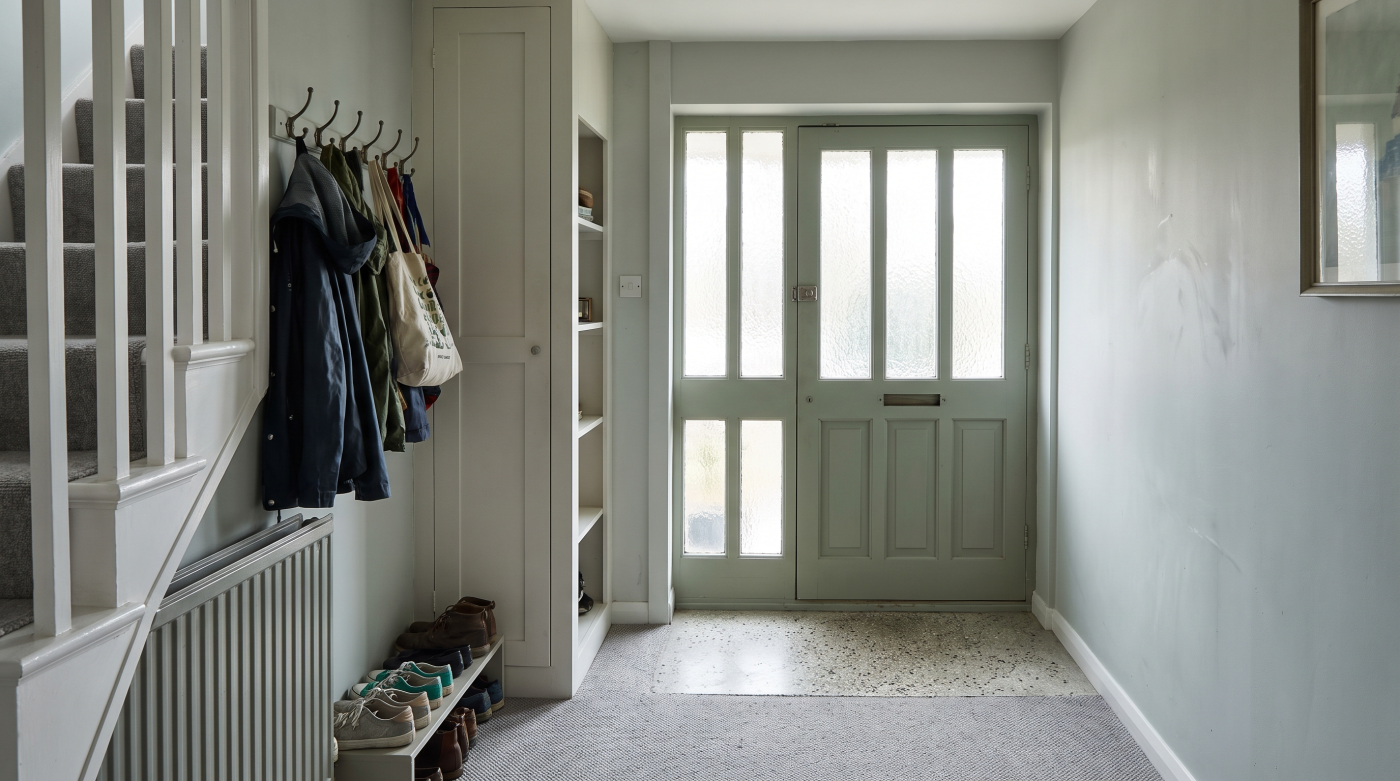
Review what is normally left beside the entrance. A convenient hallway surface can become a collection point for keys, bags and personal documents. Consider a storage arrangement that keeps valuables out of view and away from external openings. This is a useful household improvement in its own right, while any uncertainty about the actual door is assessed separately.
Keep the wider entrance usable. Storage should not obstruct the door swing, interfere with internal release or create a trip in the approach. Security routines and comfortable access need to coexist. A new place for keys is only practical if the household can manage it consistently and it respects the entrance’s assessed emergency arrangements rather than creating a different difficulty.
Look at the fitting’s everyday condition without attempting a security test. Notice whether the flap closes as intended, fixings appear loose or a previous accessory interferes with operation. Report or arrange attention for defects through the appropriate route. Maintenance should follow the product instructions, with a competent person identifying the cause where the assembly or its history is uncertain.
These measures can help define whether further work is justified. The issue may be a household habit, a repair need or an unsupported alteration made previously. For a rented home or flat entrance, involve the responsible party before modifying the door. Beginning with those questions keeps the response proportionate and provides useful information for any subsequent professional assessment or hardware proposal.
What Makes a Letterplate More Secure?
Look for evidence relevant to the actual fitting and installation. A broad flap, heavy finish or reassuring product name does not establish assessed performance. Ask for the product identity, classification and supported door or panel materials. The fitting needs to suit the construction, thickness and arrangement into which it is installed, rather than simply fit within the visible opening.
DHF TS 008:2022+A1:2025 provides enhanced security and general requirements for letterplate assemblies and slide-through boxes. Its classification distinguishes several properties, including security and fire resistance. A security claim therefore should not be interpreted as proof that the fitting has the required fire performance or is suitable for every fire-resisting door.
Ask how any claimed assessment relates to the proposed application. Evidence for a fitting in one substrate does not necessarily cover every other material or doorset. The complete entrance may have its own certification scope that needs checking. A useful explanation connects the component’s documentation with the door manufacturer’s supported configuration, rather than presenting separate badges as an assumed combined result.
Keep the specification focused on the problem and the entrance. Suitable protective design, correct fixing and appropriate performance evidence matter together. The objective is not to collect every available classification, but to establish the properties needed for the actual project. An informed selection should explain what is covered, what installation conditions apply and how ordinary postal use will remain practical.
Can You Add a Guard or Replace the Letterplate Yourself?
A guard or replacement fitting should be assessed for compatibility before installation. An existing aperture does not establish that any accessory of a similar size is suitable. The door material, internal construction, clearances and fixing requirements all matter. Ask the manufacturer or an appropriately competent specialist what is supported for the actual door and what information is needed to confirm it.
Enlarging an opening or adding new fixing holes can affect more than appearance. The work may alter the assembly’s supported specification, warranty or performance evidence. A replacement fitting’s individual rating does not automatically preserve the properties of the complete door. Confirm the proposed change before cutting or drilling, particularly where the original product or previous alterations are not clearly identified.
A fire-resisting entrance needs particular attention. This can arise with flat entrance doors, where the leaf, frame, seals and hardware form an important assembly. Seek the appropriate advice and involve the responsible building parties before alteration. A secure-looking fitting or generic fire-related label is not enough to establish compatibility with the door’s tested or assessed construction and installation.
The same care applies to removing old accessories. Establish how the door will be left complete, including any existing holes, damaged finishes or unsupported previous changes. A competent assessment may identify a straightforward repair, an approved replacement or a reason to review the entrance more broadly. The scope should follow that evidence rather than the assumption that a small fitting makes every alteration simple.
How Do Security, Escape and Postal Access Fit Together?
The entrance needs to support its occupants and normal delivery activity alongside security. Check that a proposed fitting or guard leaves appropriate internal clearance and does not obstruct the door’s movement or controls. The aim is a coordinated arrangement that the household can use comfortably, rather than a protective addition whose practical effects are discovered only after installation.
Internal release deserves separate assessment. Do not change a lock’s operation simply to address a letterplate concern without considering the relevant escape requirements. The appropriate arrangement depends on the building and entrance. A private house and a flat opening onto a common route should not be treated as interchangeable settings for hardware advice or assumptions about emergency use.
The government’s Approved Document Q clarification on letterplates discusses referenced guidance covering postal position, security and usability. Read it within Part Q’s new-dwelling scope rather than presenting it as a universal retrospective rule for existing homes. The actual work and building context still need establishing before a compliance claim can be made.
Discuss everyday delivery with the proposed arrangement in mind. The fitting should accept appropriate post without avoidable snagging or interference, while any box or collection point needs accessible use and maintenance. Include regular household users in that review. A well-specified entrance resolves these relationships together, with clear instructions where the fitting or protective arrangement introduces a different way of receiving mail.
Would an External Mailbox Be a Better Option?
An external mailbox can be worth considering where the household prefers not to receive post through the entrance door. It changes where mail is delivered and stored, so assess that arrangement on its own merits. Construction, secure fixing, collection access and the location’s exposure all matter. A small external lock alone does not describe the security of the whole installation.
Consider who can approach the box and how conveniently post can be collected. Its position should work with the household and delivery route without obstructing circulation or creating an awkward reach. Weather protection and maintenance deserve attention too. Choose supported installation details for the actual wall or other mounting structure rather than assuming any convenient surface provides an appropriate fixing.
The existing door must also be addressed if its letterplate is to be removed. Covering an aperture with an improvised plate does not automatically restore its original properties. Ask the door manufacturer or competent specialist about supported options and the relevant performance implications. In some cases a different door configuration may warrant consideration; in others the alteration may be unnecessary or inappropriate.
For a historic entrance in Bath or the Cotswolds, retaining significant fabric and understanding applicable controls come before changing the delivery arrangement. A shared building introduces separate ownership and management questions. Compare the complete proposals, including the mailbox, fixing, any door work and ongoing use. Moving post outside can be useful, but should solve a defined need within a properly completed entrance design.
When Is Repair, Upgrading or Replacement Appropriate?
Begin with a clear account of the concern. Is the fitting damaged, the product unidentified, an accessory unsupported or the wider door difficult to secure? Those situations may call for different responses. A measured inspection and available documentation can establish whether repair, a compatible fitting or a broader entrance proposal is appropriate, without assuming replacement from the outset.
Compare complete scopes when quotations are needed. Include the proposed component, compatibility confirmation, installation, making good and any relevant assessment or permission. A low accessory price does not describe the cost of leaving the door properly completed. Equally, a whole-door proposal should explain why a supported smaller intervention would not meet the identified requirement for that particular entrance.
Keep insurance questions specific to the policy. Do not assume one fitting guarantees acceptance, a premium reduction or a particular outcome after a claim. Ask the insurer where clarification is needed and retain the product and installation information. Those records also make later maintenance easier by identifying the intended assembly and the changes that have actually been made.
CBP considers these decisions as an architectural glazing and specification partner, connecting the entrance’s smaller details with the wider home. A letterplate deserves attention when its design, condition or surroundings raise a concern. The useful outcome is a proportionate, supported solution that preserves appropriate security, access and appearance, with clear responsibilities for installation and care rather than an isolated promise attached to one fitting.