
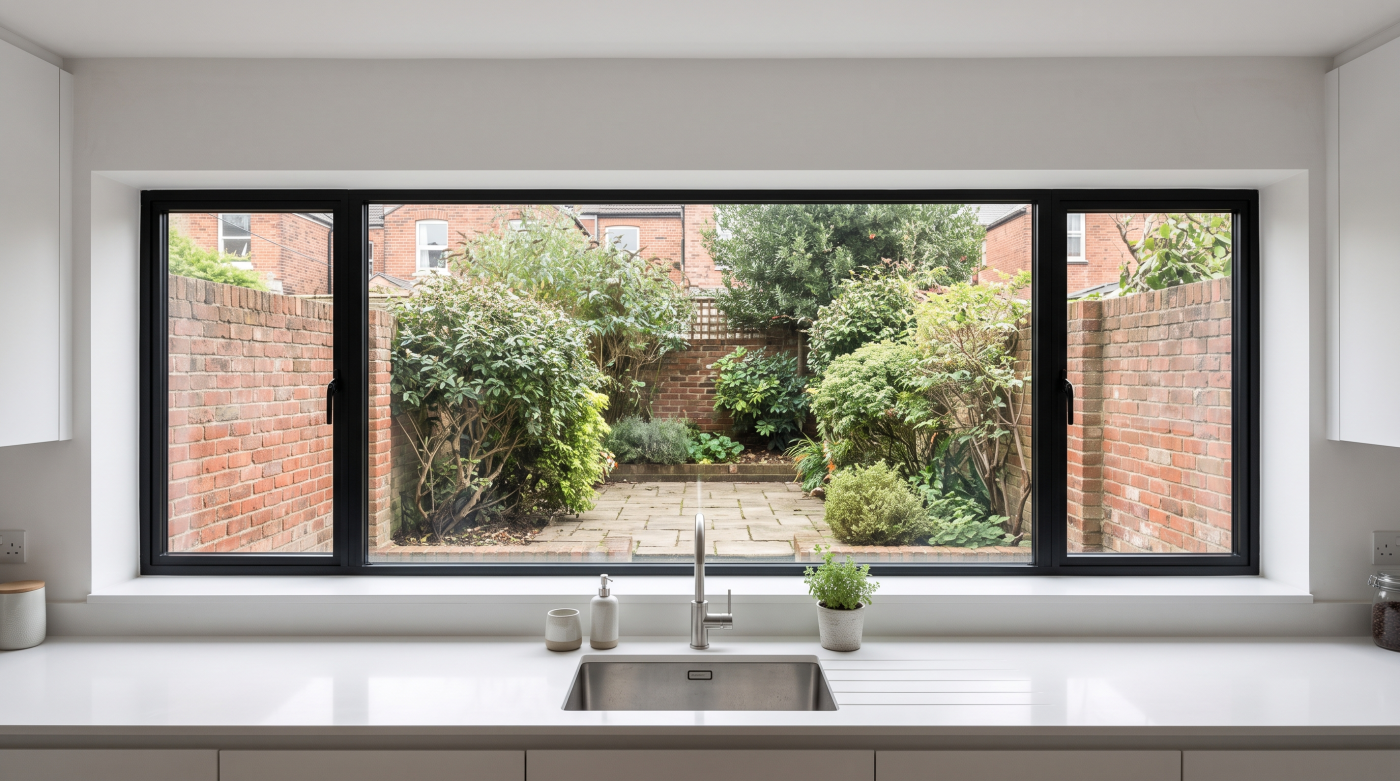
How Do You Get Privacy From a Big Rear Window Without Curtains?
A large rear window can bring light and a garden view into the room while leaving the household feeling overlooked. Curtains are one response, but they are not the only option. Adjustable blinds, appropriately specified obscured glass, compatible film and carefully placed external screening can each play a part.
The right starting point is the unwanted view rather than a favourite product. Establish who can see into the room, from which direction and under what lighting conditions. A useful solution should address those sightlines while retaining as much of the daylight, outlook and everyday access as the household values.
Where Are the Unwanted Views Coming From?
Begin from the places where people actually spend time. A sofa beside the window, a dining table farther into the room and a kitchen worktop can have different exposure to overlooking. Identify which activities feel uncomfortable and whether the concern involves passing views, a neighbouring garden or a higher window looking down into the space.
Then consider the viewing angle. A low screen that interrupts a direct garden-level view may do little against an upper-floor outlook. Conversely, a full-height covering may sacrifice more of the garden connection than necessary if the relevant sightline crosses only a limited part of the pane. A simple room section can make that difference easier to understand.
Review the actual view from accessible positions within your own property, respecting neighbouring privacy. Include standing and seated use, changes in ground level and the distance between the window and a boundary. Photographs can support the discussion, but lens settings and exposure can change the apparent visibility. They should not be treated as a precise demonstration of every real viewing condition.
Write a short brief describing the area needing protection and the outlook worth keeping. For example, the household may want privacy at the dining table while retaining a view of tree canopies. That is more useful than simply requesting private glass. It lets the designer compare targeted and adjustable responses before committing the whole opening to one permanent treatment.
Do You Need Privacy During the Day, After Dark or Both?
Privacy needs can change substantially through the day. A room that feels secluded when the garden is brightly lit may become more visible when interior lights are on. Include evening meals, winter afternoons and any other important routines in the assessment. A daytime demonstration alone cannot establish whether a treatment will serve the household’s usual pattern of use.
Separate privacy from the ability to see out. Some treatments interrupt views in both directions; others rely on differences in lighting. An option that retains an outward view in one situation may not offer the same protection later. Ask what the proposed material achieves under the relevant conditions instead of treating private, translucent and reflective as interchangeable descriptions.
Consider where room lighting is positioned, but do not make the design depend on living in darkness. Rearranging a lamp may improve comfort or reduce a particular reflection without resolving the underlying sightline. If privacy is needed with ordinary evening lighting, that should be part of the brief. The room needs to remain useful as well as visually protected.
Evaluate a sample or demonstration with those requirements in mind. Include the actual viewing angle, the material’s coverage and its relationship with neighbouring clear panes. Where a single treatment cannot meet every priority, an adjustable second layer may be appropriate. The important decision is which conditions each element addresses and how conveniently the household can move between them.
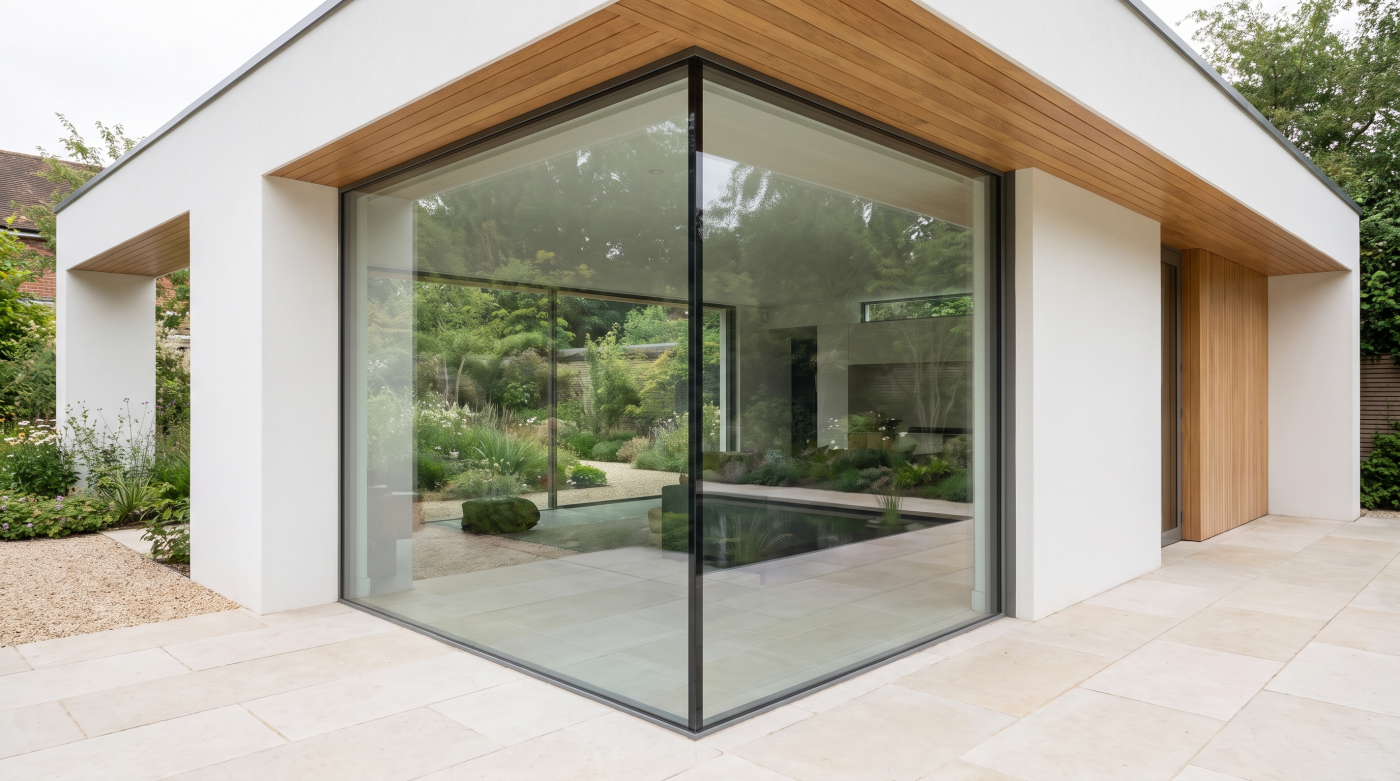
Can Frosted Glass or a Partial Privacy Treatment Preserve Daylight?
Translucent materials can admit diffuse light while obscuring a clear view. As one example, Pilkington’s Optifloat Opal information describes an acid-etched glass with light-diffusing characteristics. That illustrates the distinction between transmitting daylight and retaining clear vision. It does not establish that every frosted finish provides the same privacy or appearance in a domestic opening.
Assess the proposed material rather than its name. Pattern, translucency and the distance of a person from the surface can affect what remains discernible. A finish that blurs detail may still allow shapes or movement to be perceived in some conditions. Ask for an appropriate sample and explain whether the household needs to obscure detail, silhouettes or the room more completely.
Targeted coverage can preserve a clear area above or beside the private zone. A lower obscured section might suit a particular garden-level sightline, while overlooking from above may require another response. The height should follow that geometry rather than a decorative convention. Consider how the treatment reads across the elevation and whether the remaining clear glass still exposes the sensitive area.
Partial film needs a separate compatibility check before it is recommended. The film type, existing glass and application pattern all matter; approval for one material does not make every part-covered pane suitable. For replacement glass, establish the complete unit specification and relevant safety requirements. Retaining suitable existing glazing with a supported treatment may be preferable where it meets the actual brief.
Does Reflective Privacy Film Work at Night?
Reflective privacy film relies on the balance of light on either side of the pane. The Window Film Company’s explanation makes clear that the effect changes when the interior becomes brighter than outside. A treatment providing useful daytime privacy should therefore not be assumed to conceal an illuminated room after dark.
The phrase one-way can be misleading if understood as a permanent direction of vision. The material is not recognising which side contains the home and protecting it regardless of conditions. Ask for an explanation that includes evening lighting and the actual outside setting. A sunny showroom example or a photograph taken from a favourable angle is not enough to establish suitability.
Also consider the appearance of a reflective surface from the garden and adjacent rooms. The preferred view and daylight balance should be assessed using the actual film’s information and a suitable sample. Avoid assuming every reflective treatment has the same light transmission or external appearance. Its privacy role is separate from any supported solar-control claim, which needs its own specification evidence.
If evening privacy is essential, plan another appropriate measure, such as a suitably opaque blind or a different screening arrangement. That does not mean reflective film has no useful applications; it means its role should be defined accurately. The household should understand when it provides the intended benefit and what is required when lighting conditions no longer support that effect.
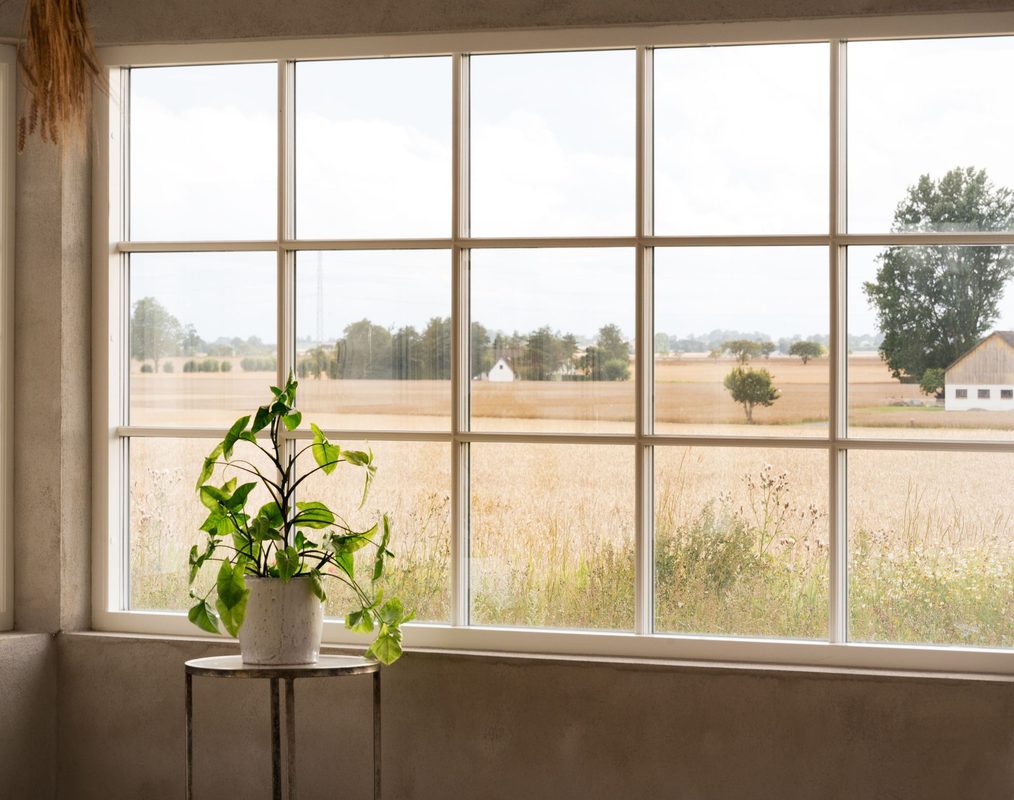
Which Blinds or Shutters Offer an Alternative to Curtains?
Adjustable coverings let the household respond to different activities and lighting conditions. A roller arrangement can provide a broad covered area, while Venetian slats offer control over angle. Some pleated systems allow more selective positioning. These are starting points for comparison, not a ranking: the actual material, dimensions and controls determine what each proposal can achieve.
Shutters need their own space and operating assessment. Consider where panels sit when open, how their divisions relate to the window and whether the proposed arrangement obstructs handles or an opening leaf. A photograph of a neatly closed shutter does not reveal its full effect on circulation or outlook. Review the stored position alongside the appearance when privacy is required.
For any covering, assess gaps and coverage around the relevant sightline. A light-filtering material is not automatically appropriate for privacy in an illuminated room. Equally, a more opaque treatment may restrict an outlook the household wants to retain during the day. An adjustable arrangement can help, provided its operation is convenient enough to become part of normal room use.
Include control reach and appropriate child-safety measures from the outset. The BBSA’s Make it Safe campaign explains safe-by-design options and the need to manage cord and chain hazards. A tidy visual result should also leave required opening functions, ventilation provision and routine cleaning accessible. Those practical requirements belong beside privacy and appearance in the choice.
Can Planting or External Screens Reduce Overlooking?
External screening can address the viewing route before it reaches the window. Its position matters as much as its height. A screen near a seating area may affect a different sightline from one close to the boundary. Use the actual levels and viewing angles to establish what would be obscured, rather than assuming a taller object always provides the most useful response.
Planting can also contribute to privacy, but it changes over time. Establish what coverage exists when planted, how it may develop and what happens seasonally. A future mature outline is not immediate protection. The arrangement needs a practical care plan, including access and the effect on the garden, while retaining the daylight and outlook important to the room.
Built screens or slatted structures should be assessed from the relevant directions. Gaps that look private straight on may allow views at another angle. Their effect can differ for a neighbour looking down from above. A sample or simple model can help compare options before construction, with the intended geometry shown clearly rather than inferred from a photograph of another garden.
Check relevant permissions, boundary responsibilities and the suitability of the proposed work separately. Do not assume every screen or planting alteration is unconstrained because it is outside the house. A landscape designer and architect can help coordinate the response where necessary. The objective is a useful garden and room relationship, not a barrier that creates new access or maintenance difficulties.
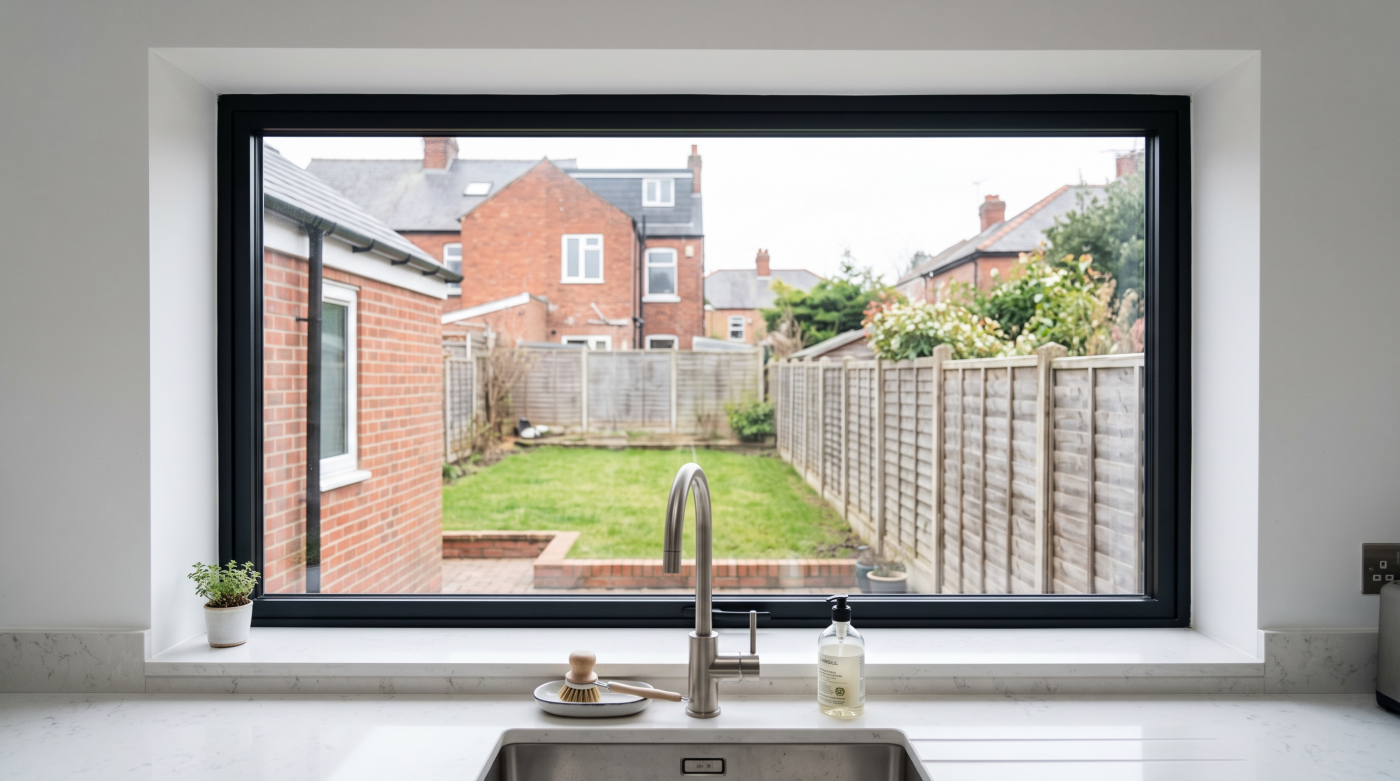
What Should You Check Before Adding Film or Changing Glass?
Identify the existing glass and any coatings before selecting a film. The condition, unit construction and exposure can affect suitability. The Window Film Company’s compatibility guidance distinguishes suitable combinations from those needing advice or an alternative. Its chart relates to its products; it should not be transferred to every film or used as a substitute for identifying the actual pane.
Describe the intended coverage, including any partial treatment. Ask for confirmation that the exact material and application are supported for the glazing, rather than assuming a decorative strip is automatically benign. Thermal considerations, existing defects and other nearby shading may need assessment. The useful answer is specific to the combination, not simply that film is generally sold for domestic windows.
If changing glass, retain the required functions of the complete opening. Privacy does not replace impact safety, appropriate security or other application requirements. Confirm the unit’s suitability for the frame and the proposed work around it. Check any relevant property, lease or heritage responsibilities before alteration, keeping them separate from the technical suitability of the material itself.
Include future cleaning, removal and replacement in the comparison. A treatment that suits a current privacy concern may eventually need renewing or changing as room use evolves. Establish how that work can be undertaken and what limitations apply. This makes it easier to compare a compatible existing-window improvement with a more permanent glass change on a realistic basis.
How Do You Combine Privacy, Daylight and a Useful Garden View?
Bring the decisions back to the original sightlines and the room’s use. A targeted translucent area, adjustable covering and external screen can each serve a different purpose, but more layers are not automatically better. Compare their combined effect on privacy, daylight, outlook and operation. Start with the least extensive arrangement that can reasonably meet the established requirements.
Test the proposal from normal seats and under evening lighting before treating the design as resolved. Show what remains visible when coverings are stored and how the household reaches controls. For a new extension, include these positions in drawings while the glazing and room layout remain flexible. Existing homes can also benefit from a practical trial before committing to permanent work.
Regional context should inform the actual project. An overlooked Bristol rear extension may need a different sightline response from a Wiltshire self-build with a more distant outlook. A Bath or Cotswolds renovation may also involve significant existing fabric. Those distinctions call for assessment of the home rather than assumptions that a particular privacy product suits an entire area.
CBP’s role as an architectural glazing and specification partner is relevant when privacy forms part of the wider opening brief. The aim is a clear account of what needs protection and what the household wants to retain. Suitable existing glazing, supported retrofit measures and appropriate new specifications can all contribute when they are selected around the room rather than a promise of universal privacy.