

Why Do Sliding Doors Get Harder to Open Over Time?
A sliding door that once moved comfortably can become frustrating to use. Grit in the track, worn components, damaged seals or changes in alignment may contribute, but the right response depends on the actual mechanism and where the resistance occurs. Reaching for a lubricant or adjusting a roller before identifying the problem can make the investigation less straightforward.
Begin with a clear description of the change and the manufacturer’s operating instructions. Some issues call for ordinary care, while others need a competent specialist. The aim is to restore dependable everyday operation and understand whether the existing assembly remains suitable, rather than assume stiffness automatically means replacement.
Has the Door Become Harder to Slide, Unlock or Close?
Describe the point at which the door becomes difficult. A reluctant key, a handle that resists turning and a panel that scrapes along its travel are different symptoms. Note whether the change appeared gradually or suddenly, whether it affects one leaf or several, and whether the difficulty occurs throughout the movement or only near the closed position.
Identify the opening mechanism before comparing advice. A conventional sliding arrangement and a lift-and-slide system do not operate in the same sequence. In the latter, the handle controls a lifting action before the panel travels. Confirm the correct procedure from the applicable instructions, particularly if the property has changed hands and the original handover information is missing.
Include ordinary household use in the assessment. Perhaps the door has always required more effort than one person can comfortably manage, or a recent change has made an established routine difficult. Those are useful distinctions. A system can need attention because it has deteriorated, because its intended operation is misunderstood, or because its everyday suitability deserves reconsideration.
Do not repeatedly force the mechanism to demonstrate the fault. A brief description, photographs of visible rubbing and relevant product records give the installer a useful starting point. If the door feels unstable, appears damaged or cannot close securely, arrange prompt professional advice and avoid continued operation that could worsen the condition or create a handling problem.
Could Dirt or Debris Be Affecting the Track?
Accessible tracks can collect grit, leaves and other debris, especially beside a busy garden route. Renovation work can introduce dust and fragments that remain after the room looks finished. Inspect the accessible area without putting fingers near a moving panel. The purpose is to identify ordinary obstructions, not to dismantle covers or reach into unfamiliar running gear.
Follow the actual cleaning instructions. SUNFLEX’s sliding-door care guide describes keeping the bottom track clear and removing debris with a vacuum cleaner. That is a documented example, rather than a complete care schedule for every brand. Check which tools and cleaning materials are supported for your finish and assembly before starting work.
Gentle cleaning should preserve the surface and drainage arrangement. Scraping with a sharp implement, using an abrasive product or washing debris into hidden chambers can create additional problems. Keep track cleaning separate from any need to investigate persistent water. The fact that the visible running surface looks clean does not establish that every concealed component is in sound condition.
If removing accessible debris resolves the symptom, retain the appropriate care routine and watch for recurrence. If resistance remains, avoid progressively more aggressive cleaning as a substitute for assessment. Report what was found and what changed afterwards. This helps distinguish an ordinary housekeeping issue from wear, damage or an installation condition that cleaning cannot reasonably correct.

Do Sliding-Door Tracks and Rollers Need Lubricating?
There is no single lubrication instruction for every sliding door. The rail, running gear, locking mechanism and seals may have different requirements within one assembly. A recommendation for one component should not be extended to all the others. Find the precise system information and ask the manufacturer or installer to clarify any missing or contradictory advice.
For example, the SUNFLEX guide specifies silicone spray at particular wheel and guide contact points for the system it describes. That does not make a general silicone treatment appropriate for an unidentified door. The product, application point and preparation matter together. Treat a named instruction as part of a particular maintenance procedure, not a universal shortcut.
A lubricant also cannot establish why a door is resisting movement. A damaged roller, a distorted track or rubbing caused by alignment needs a different response from supported routine care. Temporarily changing the feel of operation is not equivalent to correcting the cause. Avoid using repeated applications to keep a worsening fault in service without an appropriate inspection.
Keep a record of any materials already applied and share it when arranging help. This is particularly useful where previous owners or contractors have tried several treatments. If the correct instructions cannot be established, pause the experiment and obtain advice. An informed maintenance decision is more useful than choosing a product because its label mentions doors or moving parts.
Can Rollers, Guides and Seals Wear Over Time?
Moving components can deteriorate through use, damage or unsuitable conditions. Rollers and guides deserve assessment where movement becomes rough, noisy or uneven, but those symptoms do not identify the failed part on their own. A competent inspection should consider how the panel is supported and guided, rather than assume every difficult door needs the same replacement wheel.
Seals form another part of the operating arrangement. A damaged, displaced or unsuitable seal may interfere with closing, while an alteration intended to reduce rubbing could affect weather protection. Do not trim or remove material simply to make the panel move. Ask whether the fitted component is correct and how its condition relates to the observed symptom.
Replacement parts need to suit the actual assembly. Similar-looking hardware is not proof of matching capacity, geometry or function. Establish the system, relevant parts and proposed work before a repair proceeds. Where records are incomplete, identification becomes part of the assessment. The age of the door alone does not establish either that parts remain available or that replacement is necessary.
For homeowners, the useful outcome is an explanation connecting the fault with the proposed repair. Ask what will be replaced, why it is suitable and how operation and closure will be checked afterwards. A supported component repair may preserve a serviceable opening. Equally, repeated repairs without a clear diagnosis deserve a wider review of the installation and its condition.
Could Alignment or Movement Around the Opening Be Responsible?
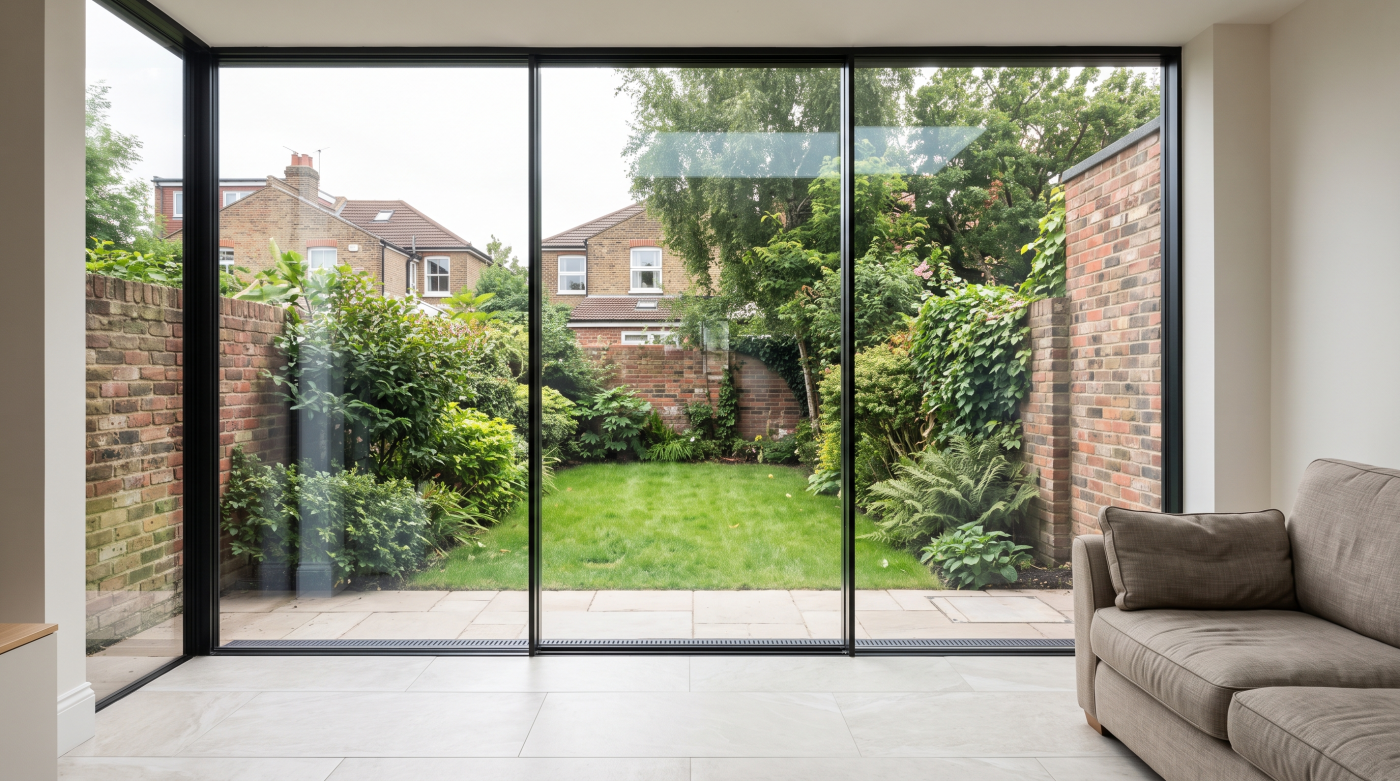
A sliding door relies on the relationship between its panel, frame and supporting opening. If that geometry is unsuitable, the symptom may appear as rubbing, uneven clearances or difficulty engaging the lock. These observations justify investigation, but they do not by themselves prove structural movement. The assessment needs to distinguish the door’s condition from the surrounding construction.
Explain whether nearby work preceded the change. Alterations to floors, external finishes or the opening itself may be relevant to the history, even where the connection is uncertain. Provide drawings and installation information where available. An accurate sequence of events helps the professional decide what to inspect without turning a coincidence into a diagnosis before evidence is available.
Adjustment should preserve the complete operating relationship. Making one point appear better can create difficulties elsewhere if the underlying support or alignment has not been understood. Reynaers’ professional maintenance guidance assigns sliding-gear adjustments, including roller assemblies and keeps, to a window expert. Use the applicable requirements for the actual installation rather than a generic adjustment video.
In a new extension, this is also a coordination issue for the architect and builder. The opening, frame support and surrounding finishes need to follow the intended detail. For an existing door, request an assessment before concealing evidence with decorative work. Restoring alignment is a considered repair task, not simply a matter of making the visible gaps look equal.
Why Might Resistance Change With the Weather?
Some households notice a door is harder to operate after strong sunshine or during particular seasons. Record that pattern, including which panel is affected and what movement becomes difficult. Weather-related variation can be useful evidence, but it does not establish that the behaviour is harmless or identify a particular component as the cause without inspection.
Materials respond to temperature, and the installation must accommodate the conditions relevant to its design. The important question is whether the actual assembly continues to operate as intended. Avoid assuming that every warm-weather problem is ordinary expansion, or that all systems of the same frame material will behave identically regardless of size, finish, mechanism or installation.
Give the professional a description that can be compared with conditions during the visit. A door may feel different on a cool morning from the afternoon when the household encounters the problem. Photographs of rubbing and notes about timing can help. Do not deliberately heat, cool or force the panel to reproduce a fault for a demonstration.
The response should follow the evidence. Supported adjustment, repair or investigation of the surrounding detail may be appropriate, depending on the findings. Changing shading solely to conceal an unresolved operating defect is not a substitute for understanding it. Where seasonal symptoms recur, agree how the outcome will be reviewed under relevant conditions rather than judging success from one easy movement.
Which Problems Need a Professional Rather Than a DIY Adjustment?
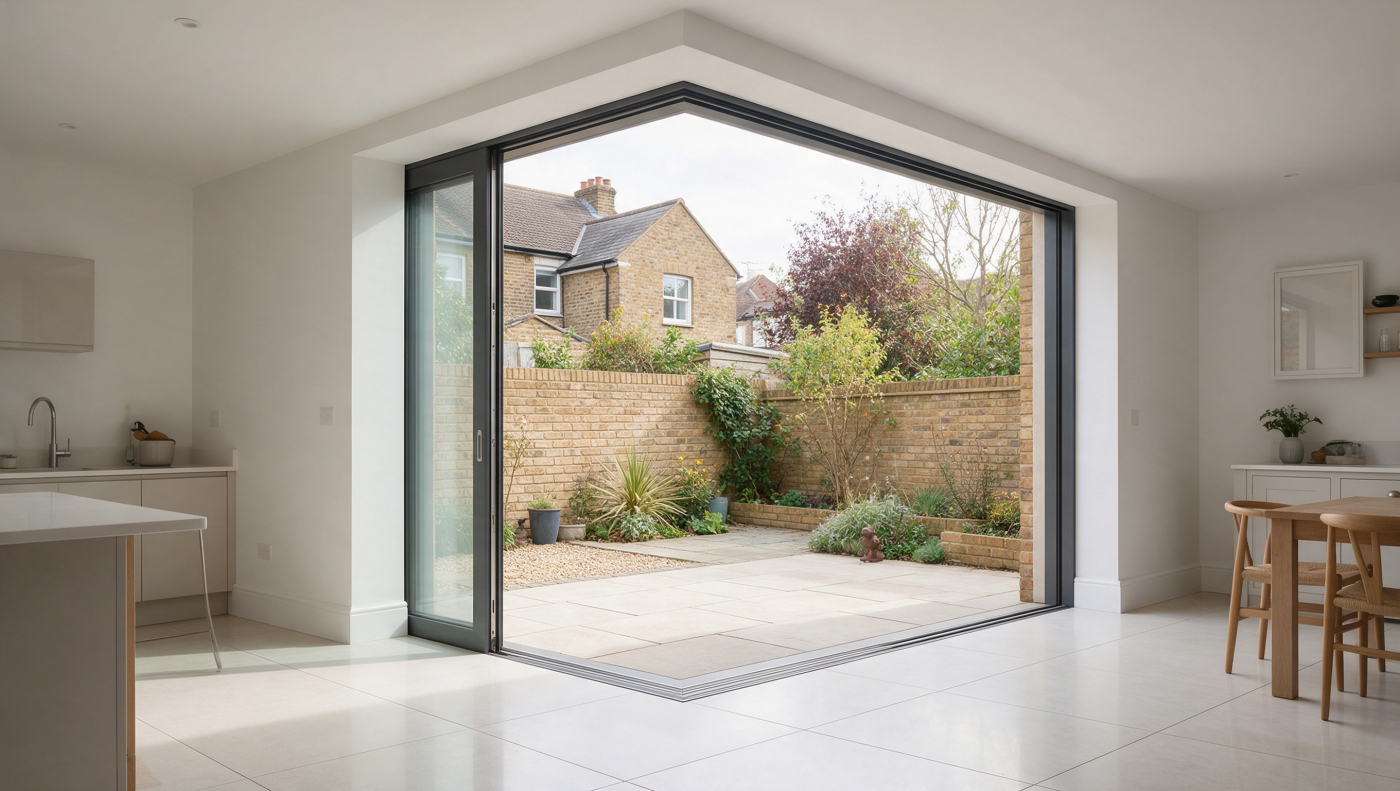
Ordinary care ends before dismantling, unsupported adjustment or handling a heavy glazed leaf. A sliding panel can be difficult to control, and its fixings form part of the complete assembly. Do not remove it to inspect the rollers or attempt to put a displaced panel back in position without the appropriate specialist equipment, knowledge and support.
Seek professional attention for persistent resistance, damaged hardware, visible rubbing or insecure closure. The original installer is a useful first contact where available, particularly when product records or warranty arrangements remain relevant. Explain the symptoms and previous interventions. Avoid assuming that a warranty automatically covers every condition, or that a repair by any contractor preserves every existing entitlement.
Motorised systems introduce additional equipment and control requirements. Follow their specific operating and service information rather than treating the motor as an accessory to be bypassed when movement becomes difficult. Faults involving powered operation, controls or protective features need appropriately qualified attention. Do not keep resetting or overriding a system merely to force it through a recurring problem.
Ask for a clear handover after the work. It should explain the correct operation, appropriate care and anything the household should report promptly. The result needs to be practical for the people using the opening. A professional repair is most useful when it restores understood, dependable operation and leaves the owner able to maintain the system appropriately afterwards.
When Is Repair Enough, and When Should Replacement Be Considered?
Repair is worth considering where the assembly remains suitable and the identified problem can be corrected with supported work. Compare the condition of the frame, glazing and hardware alongside the proposed intervention. A single worn component does not automatically justify replacing everything. Equally, the cheapest immediate repair may not address wider deterioration or a recurring installation problem.
Replacement becomes a more useful discussion when the existing opening has limitations that a reasonable repair cannot resolve. These might concern overall condition, supported parts or the household’s operating needs. Establish those limitations explicitly. A different mechanism should be assessed in its actual size and configuration rather than selected on a showroom impression or a promise of effortless movement.
Include the complete scope when comparing options. Frame removal, surrounding finishes, threshold details and any changes to the opening belong in the discussion alongside the new door. In a Wiltshire self-build or a Bristol extension, early coordination can help prevent future compromises. An existing home deserves the same attention to support, access and practical maintenance rather than a product-only decision.
CBP’s role as an architectural glazing and specification partner is relevant when reviewing that wider brief. The useful starting point is what has been diagnosed, who uses the door and what the completed opening needs to achieve. Retaining a suitable door, carrying out a supported repair or planning replacement can each be reasonable outcomes when they follow the evidence.