
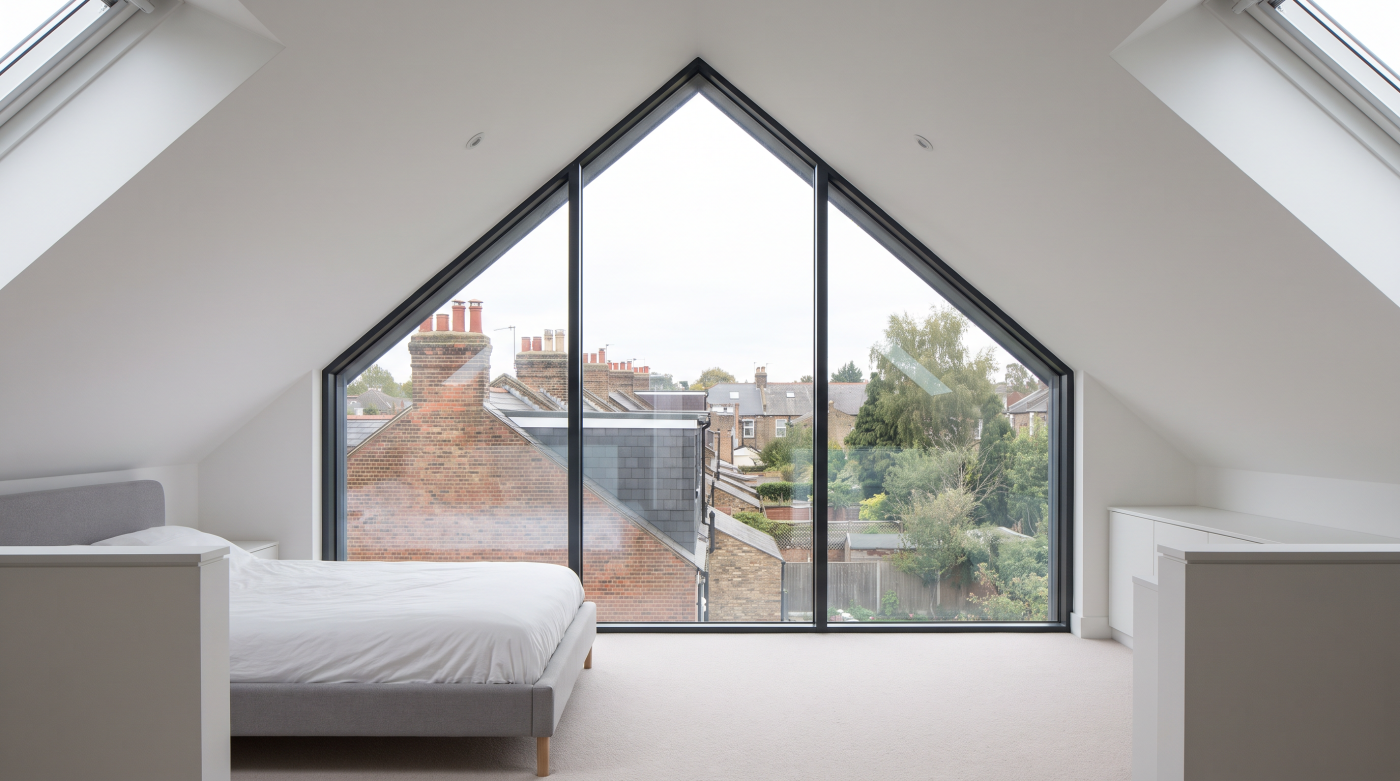
How Do You Stop Birds Flying Into Large Windows?
The most useful way to reduce bird collisions is to make the relevant glass recognisable as a barrier. That usually means a suitably visible, closely spaced treatment across the outside surface, rather than one isolated sticker. First establish whether birds are colliding with a reflected landscape, attempting an apparent route through the building or reacting territorially to their reflection.
Large windows can still provide daylight and a garden outlook, but their relationship with the surroundings deserves consideration. Existing panes may be improved without replacement, while a new extension offers an opportunity to coordinate the glazing and landscape early. The appropriate response depends on the actual window and conditions.
Why Do Birds Fly Into Glass?
Glass can present birds with a misleading image of the space ahead. Reflected trees or sky can appear to continue the landscape, while a clear view through the house can suggest an unobstructed route. The problem is therefore not simply that the pane is large. Its appearance from the bird’s approach and the scene around it matter as well.
The US Geological Survey’s collision guidance distinguishes reflection, transparency and territorial behaviour. These are useful prevention principles for understanding a domestic window, although the source is not UK building law. Observe where the bird approaches and what the glass appears to show before assuming that every repeated visit has the same cause.
A bird repeatedly challenging an image at the same pane may be reacting to its own reflection. BTO’s advice on window attacks discusses this behaviour separately. An abrupt collision during flight and a prolonged territorial interaction both warrant attention, but the observations help explain which visual stimulus needs addressing at that particular window.
Avoid interpreting the incident as evidence that the whole installation needs replacing. Begin with the visible conditions and a practical prevention plan. A compatible treatment may address the problem more directly than changing the frame or glass specification. Understanding the cause also helps the architect or glazing professional assess whether a wider design change would have a useful role.
Which Parts of Your Glazing Need Attention?
Look at the window from outside at different times of day. Notice reflections of vegetation and sky, and whether a view through another opening appears to create a route across the building. Check from normal accessible garden positions without climbing or approaching unsafe edges. The relevant image may change considerably between an overcast morning and a bright afternoon.
Glazed corners and windows facing one another deserve particular attention because transparency can connect separate views. A garden room may present several surfaces, while a clear terrace screen can create another barrier beyond the main window. Assess the complete arrangement rather than treating the pane with the most obvious mark as the only possible location involved.
Record where incidents occur and which surfaces appear relevant. A simple annotated elevation can help identify the area that needs treatment and the practical access available. Include fixed panels, opening leaves and adjoining clear elements. A narrow untreated pane beside a broad marked window may remain a problem if it continues to present a misleading view to approaching birds.
The landscape belongs in that assessment. Trees, planting and other features affect what the glass reflects, but they are not automatically things to remove. The design should preserve a useful garden while addressing the actual barrier. For an extension, discussing those relationships early gives the architect and landscape designer more scope to develop an appropriate response across the whole elevation.
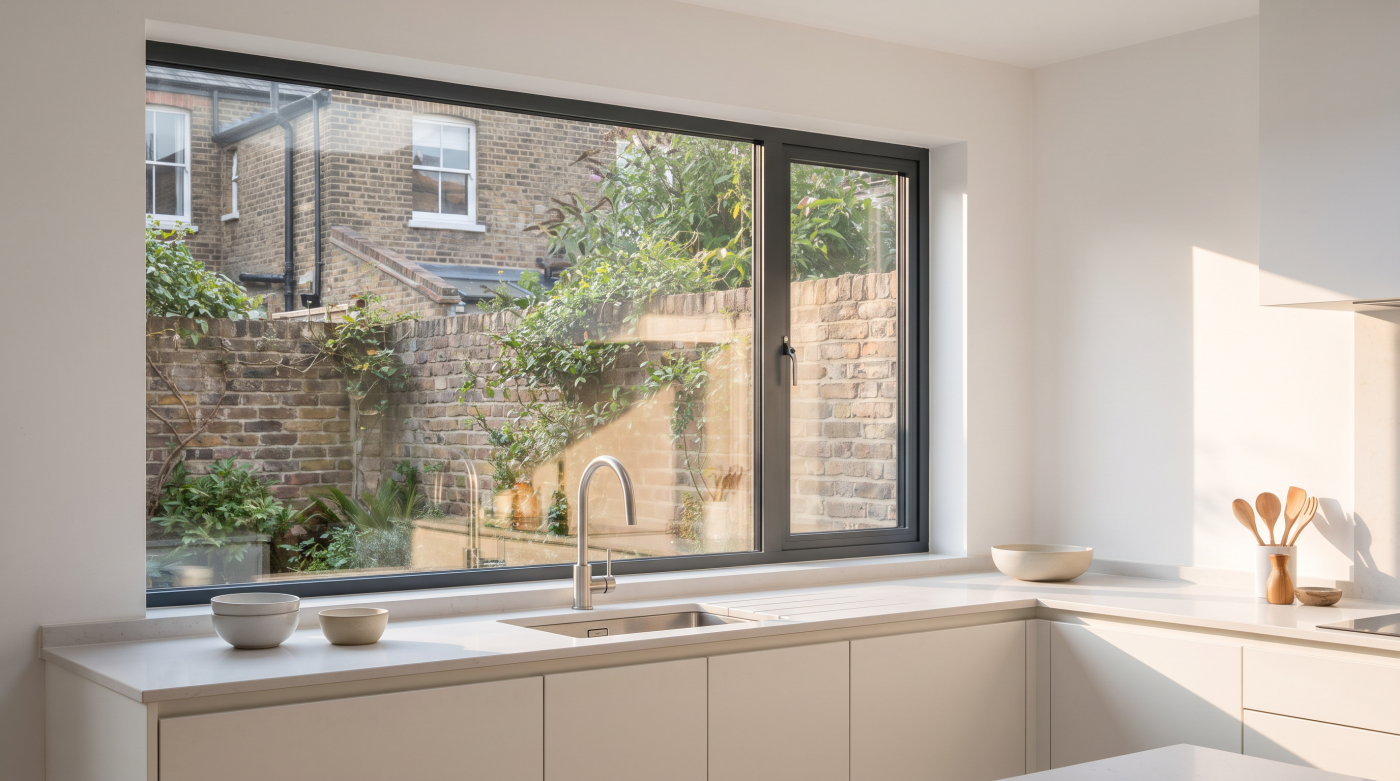
What Kind of Window Markings Actually Help?
The important qualities are coverage, spacing and visibility. A bird may avoid one marker while still interpreting the broad clear area beside it as open space. A single hawk silhouette or decorative sticker should therefore not be treated as a complete solution for a large pane. The pattern needs to make the relevant surface recognisable rather than leave apparent routes around isolated objects.
Environment and Climate Change Canada’s guidance describes a pattern across the entire glass surface, with no gaps greater than 5 cm horizontally or vertically. It also calls for components at least 5 mm wide, good contrast and placement on the outside. Keep those factors together when considering a treatment, rather than quoting spacing alone.
Dots, lines or another supported pattern may offer different visual effects for the household. Compare an appropriate sample and the full proposed coverage, not a small decorative patch. Consider how clearly it contrasts with the reflected scene. A treatment intended to be unobtrusive to people still needs evidence that its actual appearance and arrangement provide the intended visibility to birds.
Check application and maintenance instructions before selecting a product. The surface, coating and exposure must suit the treatment, and the intended pattern should remain consistent at edges and around adjoining panels. The aim is an effective, practical design across the relevant glazing. An attractive illustration or a product’s bird-themed name does not establish that the installed coverage meets those needs.
Should Treatments Go Inside or Outside the Window?
The outside surface is generally the useful starting point because it places the treatment in front of reflections. Something attached inside can remain visually behind an image of the garden on the outer glass. The actual result depends on the glazing and conditions, so an internal decoration should not be assumed equivalent simply because it looks clear from within the room.
The American Bird Conservancy’s birds-and-glass guidance explains this distinction and discusses assessing internal measures where exterior treatment is not feasible. Treat restricted external access as a design question requiring a considered response. It is not a reason to assume that any convenient interior sticker will provide the same preventive effect.
Plan access safely and within the property’s responsibilities. Upper-floor glazing, fixed panes and openings over a drop may need professional installation or another suitable approach. A straightforward-looking treatment should not encourage an unsafe attempt to reach the outside. For a leasehold or shared building, establish the relevant permissions and responsibilities before altering external surfaces or fitting screens.
Compatibility matters alongside position. Ask whether the proposed adhesive, coating or screen is suitable for the actual glass and frame, including any existing surface treatment. Confirm cleaning and removal requirements as well. A useful retrofit should remain effective without creating damage or unexamined performance implications for the glazing assembly, and should have a practical route for future maintenance.
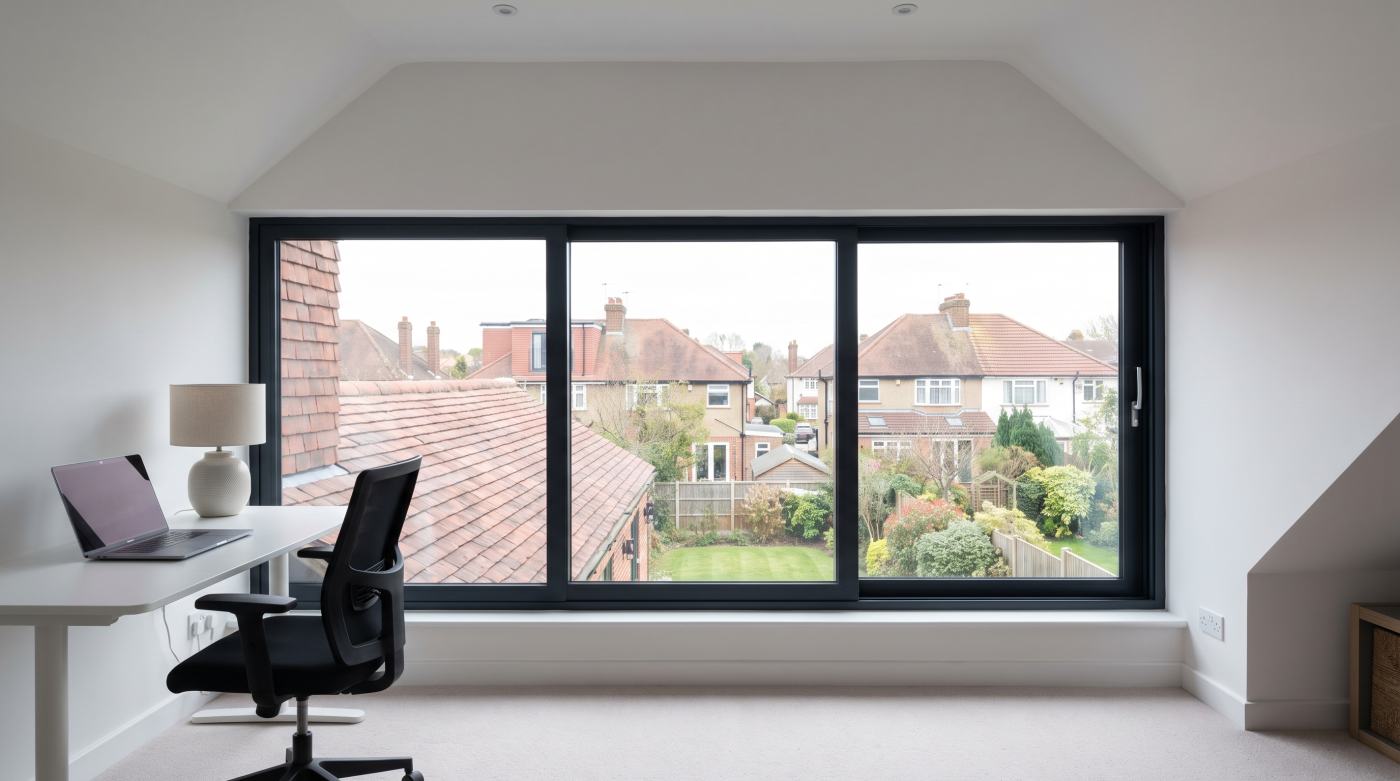
Can Screens, Shading and Garden Changes Help?
Suitable external screens or shading may change the visual relationship between a bird and the glass. Their effect needs assessing in the positions in which they will actually be used. A device that helps when fully deployed may offer no equivalent benefit when retracted. Compare the intended everyday operation with the periods and surfaces associated with collisions at the property.
Coordinate any screen with the window’s movement, cleaning and maintenance. The material, spacing and fixing should suit the purpose, without introducing an entanglement risk or interfering with another required function. Do not improvise loose netting or assume a general garden product has been designed for this application. Obtain suitable advice where an external installation or uncertain arrangement is proposed.
Review planting, interior houseplants and lighting as complementary considerations. What birds see through or reflected in the glazing can affect their approach, while unnecessary night-time lighting deserves attention in a wider wildlife-conscious design. Those measures do not automatically replace treatment of a misleading daytime reflection. The response should explain which part of the problem each proposed change addresses.
Feeder placement also needs current, appropriate wildlife advice rather than a universal instruction to move every feeder a particular distance. Garden geometry, cover and other welfare considerations can influence the decision. Keep the main objective clear: make the relevant glass recognisable as a barrier. A change elsewhere in the garden should not become a reason to leave the problematic surface unexamined.
What Should You Ask About Bird-Friendly Glass?
A new opening gives the project team an opportunity to consider bird-collision prevention before manufacture. Ask what a proposed bird-friendly description refers to: the pattern, treatment, assessed product or another feature. The specification should identify the actual glass and intended application, rather than assume every pane with a particular coating or surface appearance provides the same result.
Request relevant evidence and an explanation of its scope. Pattern position, contrast and the installed configuration can matter, so connect the product information with the design drawings. A test result or rating needs its method and limitations explained. It should inform the proposal without being turned into a guarantee that no bird will ever collide with the completed building.
Ordinary solar-control, privacy or UV-filtering glass should not automatically be described as bird-friendly. Those labels address different properties. Likewise, a decorative pattern selected for people needs assessment before being relied upon for collision prevention. The useful question is how the proposed product makes the relevant surface visible under the conditions created by this building and its surrounding landscape.
Review the architectural consequences alongside effectiveness. Daylight, outlook, privacy, appearance and maintenance remain part of the brief. A physical sample and a clear elevation help the household understand the proposal before committing to it. The aim is a coordinated glazing design that considers wildlife from the outset, with product evidence supporting the actual arrangement rather than a general environmental claim.
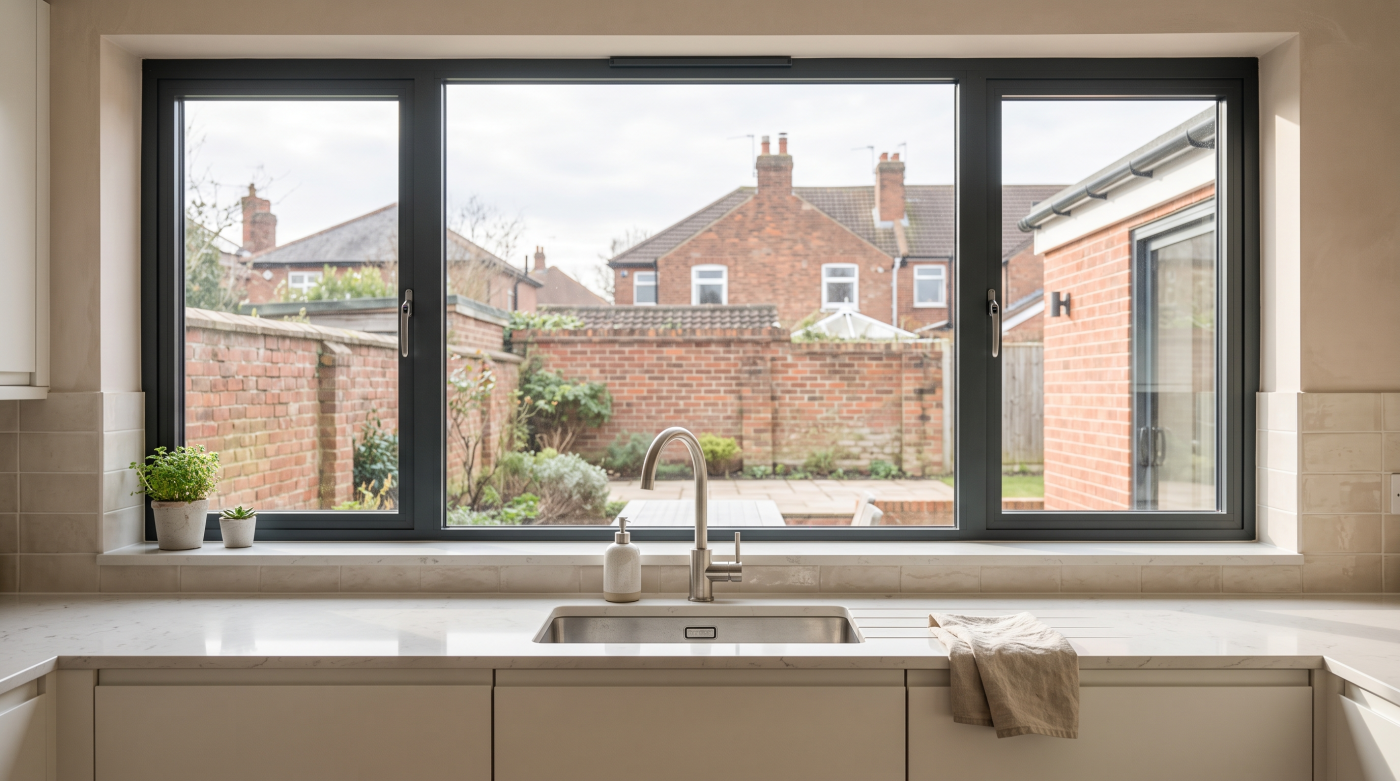
Can You Improve Existing Windows Without Replacing Them?
Existing glazing may be suitable for an effective retrofit. Start with the assessed surfaces and practical access, then compare compatible markings, films or screens. A frame replacement is not automatically necessary to change what birds see. The appropriate measure should address the identified cause and provide the coverage required, with clear installation and maintenance instructions for the actual window.
Film deserves particular care because the term covers products with different functions and properties. A general UV-filtering or tinted film is not automatically a collision-prevention treatment. Confirm the intended pattern and evidence, then check suitability for the existing glass and any coatings. The manufacturer or competent installer should explain compatibility rather than rely on a broad claim that all window films are interchangeable.
Consider the assembly’s other functions before adding anything. Opening, ventilation, cleaning, security and any relevant escape arrangement should remain appropriately supported. Historic or sensitive façades may also require advice about appearance and applicable controls. In Bath or the Cotswolds, for example, the existing building should inform the proposal without becoming a reason to assume every intervention is either prohibited or unrestricted.
Compare complete scopes if professional work is needed. Include surface preparation, access, application, any fixing and future upkeep, rather than only the price of a packet of markers. A supported modest change may be the most proportionate solution. Where replacement is already planned for other reasons, use that opportunity to assess the new specification and the wider garden relationship together.
How Do You Check Whether the Changes Are Working?
Keep a simple record of incidents and changes after the treatment is installed. Note the pane, time and conditions where possible, without assuming every collision will be observed. A reduction in visible incidents is useful information, but should not be presented as proof that the risk has disappeared. The record can help identify remaining untreated areas or a need for adjustment.
Inspect the treatment using its maintenance instructions. Missing markers, deterioration, changed spacing or a screen left retracted can affect the intended arrangement. Reassess the window as seasons and planting change, and after any work to the glazing. A design that remains effective needs its relevant features preserved rather than treated as a decoration that can be removed without reconsidering the problem.
If a bird is injured after a collision, seek appropriate wildlife assistance rather than assuming it has recovered because it moves. The RSPB’s injured-bird guidance provides a UK starting point. Keep pets away and follow suitable advice for the particular situation; the glazing article’s role is prevention rather than replacing specialist care.
CBP approaches these questions as an architectural glazing and specification partner, considering how the home meets its surroundings. Effective prevention starts with understanding the glass’s appearance and selecting a compatible, evidence-led response. That may be an improvement to existing windows or an early decision within a new design, supported by monitoring and care that keep the intended treatment working over time.