
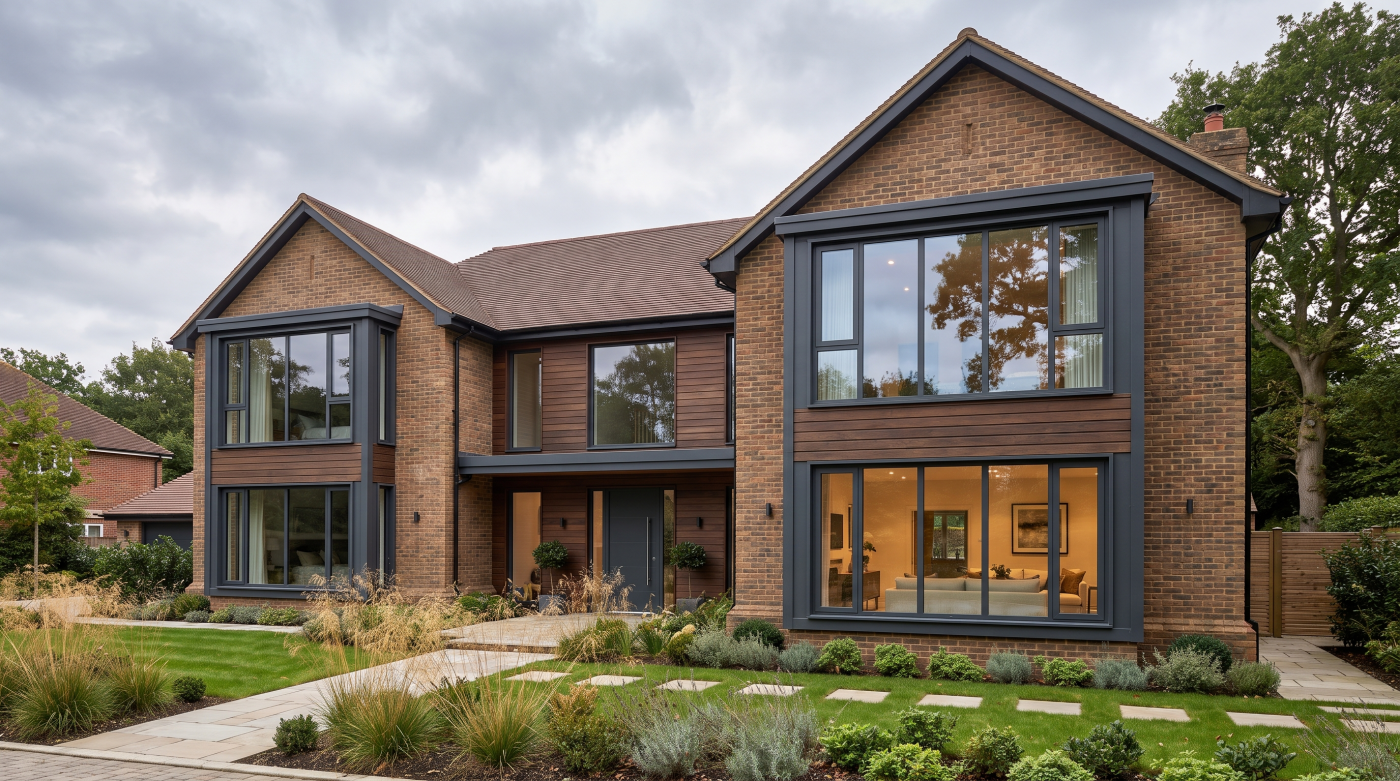
Embodied Carbon Starts Before the Window Reaches the Building
The embodied carbon of glazing does not begin when a window or door arrives on site. By that point, materials have already been extracted and processed, glass has been manufactured, frames and components have been produced, and the complete system has been assembled and transported. Each of those activities can contribute greenhouse-gas emissions before the glazing becomes part of the finished building.
This is what distinguishes embodied carbon from operational carbon. Embodied carbon relates to emissions associated with materials and products across relevant stages of their life cycle, potentially including manufacture, transport, maintenance, replacement and what happens at the end of their useful life. Operational carbon relates to emissions associated with the energy used while the building is occupied. The two are connected when considering the building as a whole, but they are not interchangeable.
That distinction is particularly important with glazing because discussions about sustainability have often concentrated on thermal performance. Improving the performance of the building envelope can help reduce energy demand, but good thermal performance does not make the emissions associated with manufacturing the glazing disappear. Equally, acknowledging those embodied impacts does not mean that higher-performance glazing is inherently the wrong choice. The relevant question is broader: what combination of embodied impact, operational performance and architectural outcome makes sense over the life of this particular building?
The answer cannot be established from a generic sustainability claim. It depends on the actual specification, the building and the assumptions used in any assessment. Where embodied or whole-life carbon is an important project requirement, the appropriately appointed sustainability or carbon professional should establish the assessment methodology, supported by relevant product-specific information where available.
For architects and self-builders, the first step is therefore conceptual rather than numerical: recognise that glazing carries an environmental impact before the building begins operating.
A thermally efficient window is not automatically a low-embodied-carbon window. Both questions matter, and responsible specification begins by keeping them distinct enough to evaluate them honestly.
Why Glazing Is Particularly Difficult to Reduce to One Carbon Number
It is tempting to ask for the embodied carbon of a window as though every window can be assigned a single, directly comparable figure. In practice, the answer depends on what has been specified, how it was manufactured and, crucially, what the assessment includes. A precise carbon number is only useful when the boundaries and assumptions behind it are understood.
Architectural glazing is particularly difficult to generalise because the product itself can vary substantially. Size and configuration matter, as do the quantity and type of glass, frame construction and other components within the system. Manufacturing processes and material sourcing can differ, while transport, maintenance, replacement and end-of-life assumptions can further change the picture depending on the scope of the assessment. Two windows that perform a similar architectural function are therefore not necessarily represented by directly comparable carbon figures.
Environmental Product Declarations, or EPDs, can provide useful evidence where relevant information is available. They can help design teams move away from broad environmental claims towards documented product information. But an EPD should not be reduced to a single number without understanding what that number represents. Comparisons need an appropriate and consistent basis: assessment boundaries, declared or functional units, life-cycle stages and other underlying assumptions can affect what is actually being compared.
This is where apparently scientific comparisons can become misleading. A product displaying a lower figure is not automatically the lower-carbon choice if it has been assessed differently from the alternative. Similarly, generic statements about the embodied carbon of aluminium, timber, glass or any other material may provide context, but they do not automatically describe the environmental impact of the complete glazing system being considered for a particular building.
Where carbon materially influences specification, the relevant assessment should therefore be undertaken by the appropriately appointed professional using suitable and comparable evidence. The glazing specialist can support that process by providing verified product or manufacturer information where available, rather than attempting to turn complex whole-life-carbon assessment into a sales claim.
The most useful question is not simply, “What is the carbon number?” It is:
“What does this number include, and are we comparing like with like?”
Without that context, precision can create the appearance of certainty without providing a reliable basis for a design decision.
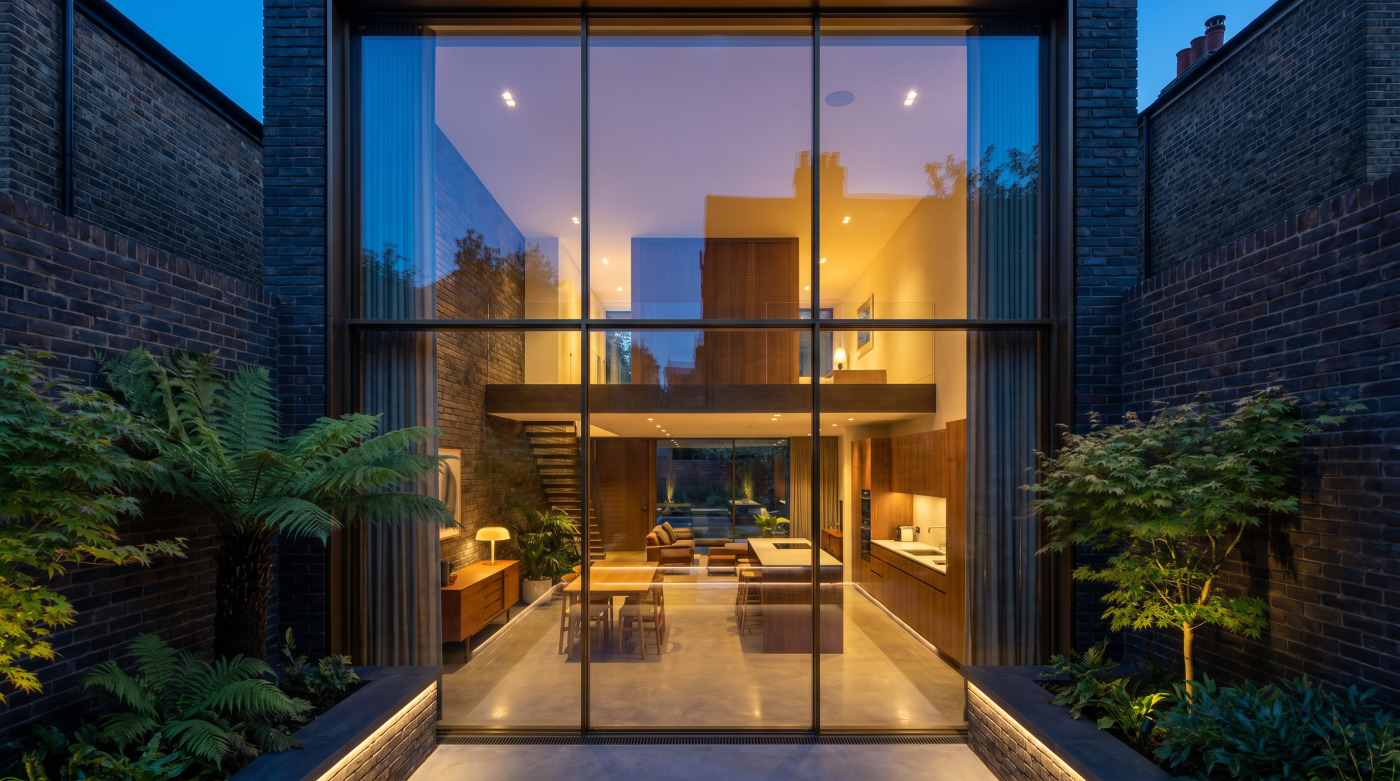
Glass, Frames and Hardware All Have an Impact
A window is not a single material. Even a relatively simple glazed opening is an assembly of different components, each with its own manufacturing and material implications. Depending on the system, that may include multiple panes of processed glass, coatings, spacers and seals, frame materials, hardware, handles, mechanisms, reinforcement and threshold components. Embodied-carbon thinking therefore needs to consider the glazing assembly rather than judging the window by one visible material.
This becomes increasingly relevant as glazing grows in scale or complexity. A large sliding system, for example, is materially different from a smaller fixed window. Different configurations can require different quantities of glass, framing, hardware and other system-specific components. That does not make complex architectural glazing inherently unjustifiable, but it does mean that its environmental impact cannot be separated from the amount of material required to create it.
The same caution applies when comparing frame materials. It is attractive to reduce the discussion to aluminium versus timber, or one material against another, and declare a universal winner. In reality, responsible comparison requires evidence relating to the actual products and systems being considered, alongside consistent assessment assumptions. Material choice matters, but it is only one part of the complete glazing specification.
There is another question architects can ask before reaching that level of comparison: how much of this material is actually contributing something valuable to the building? A substantial glazed opening that frames an important landscape view, transforms the relationship between a living space and garden or fulfils another clear architectural purpose has a reason for being there. Additional glazing introduced without a strong spatial, architectural or performance purpose deserves greater scrutiny.
This creates a useful distinction between more glass and more useful glass. Embodied-carbon awareness should not automatically lead to smaller windows or less ambitious architecture. It should encourage greater discipline about where materials are being used and what they achieve.
The objective is not to find a supposedly virtuous frame material and then stop asking questions. It is to consider the complete glazing assembly—and ensure that the materials invested in it are doing meaningful work for the building.
More Glazing Is Not Automatically Better — Even When Performance Is Excellent
Large areas of glass can transform a building. They can frame landscape views, bring daylight deep into a plan and create a powerful relationship between interior spaces and the outside. In the right place, glazing can be fundamental to the architectural concept. But embodied-carbon thinking introduces an important discipline: more glazing should not automatically be treated as better glazing.
Every additional area of glazing requires material, and its implications extend beyond embodied carbon alone. Orientation, solar exposure, privacy, thermal comfort, daylight and overheating can all influence whether a particular glazed opening improves the building. Shading and the wider building form may also become important. These relationships need to be considered together, with detailed energy, overheating or whole-life-carbon analysis undertaken by the appropriately appointed specialists where the project requires it.
This does not make large-format glazing inherently unsustainable. A carefully positioned opening overlooking a significant landscape may fundamentally change the experience of a home. Equally, a smaller window placed precisely around an important view may achieve more architecturally than a much larger area of indiscriminate glass. The question is not simply how much glazing the design contains, but how hard that glazing is working for the architecture.
There is a useful principle here: the lowest-impact square metre of glazing may be the square metre the building never needed. That should not be interpreted as an argument for making every opening smaller. It is an argument for removing glazing that exists without a convincing architectural or performance purpose, while concentrating investment where transparency, daylight, views or access genuinely improve the building.
For architects and self-builders, this shifts sustainability away from product labels and back towards design judgement. Before asking which glazing system has the lowest embodied impact, it is worth asking whether every significant opening has earned its place.
Sustainable design does not necessarily require abandoning architectural ambition. It requires making material work harder. The aim should not be maximum glass or minimum glass, but enough glazing, positioned intelligently, to deliver the qualities the architecture genuinely needs.
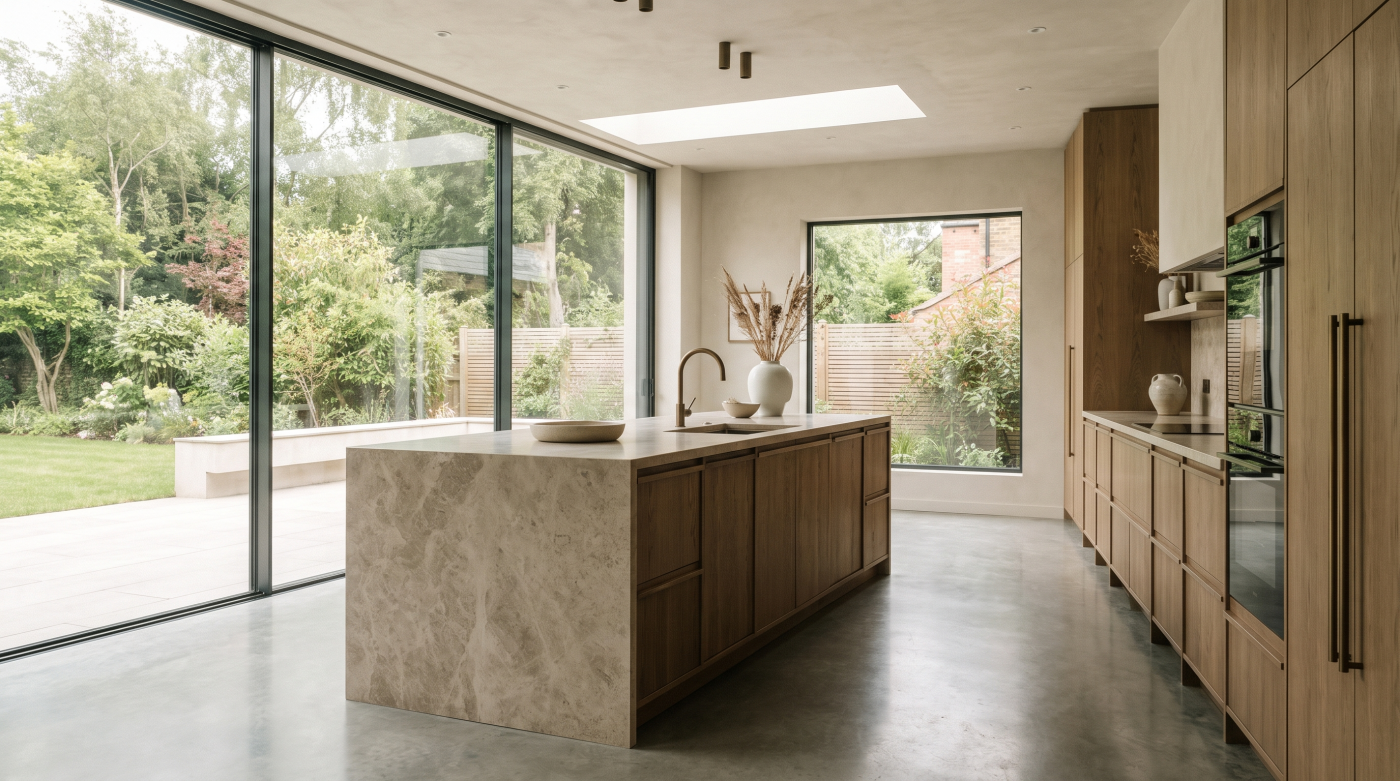
Performance and Embodied Carbon Need to Be Considered Together
Reducing embodied carbon is an important objective, but it should not be considered in isolation from how the glazing affects the building over its lifetime. Some specifications use additional materials or more sophisticated assemblies to achieve particular levels of thermal or other performance. That may increase impacts at the point of manufacture while influencing energy use and comfort once the building is occupied. The lowest initial embodied impact is therefore not automatically the lowest whole-life impact.
This is particularly relevant when comparing different glazing specifications. It can be tempting to assume that fewer panes, less material or a simpler construction must represent the more sustainable choice. Equally, it would be misleading to assume that a higher-performance product automatically justifies whatever additional embodied impact it carries. The appropriate balance depends on the building, its location and orientation, the intended performance strategy, expected energy demand, service life and the actual products being considered.
Claims about a simple carbon “payback” should therefore be treated cautiously. There is no universal point at which additional embodied carbon in one glazing specification can be assumed to have been recovered through operational savings. Establishing that relationship requires appropriate project-specific evidence and assumptions. Where whole-life carbon is an important design criterion, the relevant assessment should be undertaken by the appropriately appointed professional rather than inferred from generic product comparisons.
For architects and self-builders, the more useful principle is to optimise the building rather than optimise one carbon metric. A specification should be considered within the wider environmental strategy of the home: what performance is genuinely required, what materials are needed to achieve it, and what consequences will that decision have over the period the building is expected to remain in use?
Embodied and operational carbon are not competing arguments. They are different parts of the same whole-life question.
The objective is not simply to minimise what goes into the glazing today. It is to understand whether the material invested today is justified by what the glazing contributes to the building over time.
Longevity Changes the Carbon Conversation
Embodied carbon is often discussed as though the environmental impact of a building product occurs once, at the point of manufacture. In reality, buildings remain in use for decades, and components may require maintenance, repair or replacement during that period. How long glazing continues to perform its intended role can therefore influence how its embodied impact should be understood.
If a window or door is replaced prematurely, the consequences extend beyond removing the original product. New materials have to be manufactured, another product transported to the building and further work undertaken on site. The environmental implications of replacement can therefore become part of the wider whole-life picture. This is one reason durability and appropriate specification matter alongside the initial carbon associated with manufacture.
Longevity, however, should not be reduced to claims that one frame material or glazing system automatically lasts longer than another. Actual service life can depend on the particular product, exposure, maintenance, installation, use and other project-specific conditions. Where lifespan assumptions form part of a formal whole-life-carbon assessment, they should be established using appropriate evidence rather than generic expectations.
There is also a design dimension to longevity. Glazing that is closely integrated with the architectural character of a building may remain appropriate for longer than something selected primarily because it reflects a short-lived aesthetic trend. Designing for longevity therefore means considering not only whether a component can physically remain in service, but whether the architecture is likely to continue valuing what it provides.
Maintenance and the ability to repair or replace individual components may also deserve consideration where the selected system permits it. Keeping a functioning assembly in service can tell a different environmental story from replacing the complete product unnecessarily.
This leads to a broader way of thinking about embodied carbon. The question is not simply what environmental impact was associated with creating the glazing, but how much useful service the building receives from that investment of material over time.
A durable, appropriate specification does not erase embodied carbon. It makes longevity part of the judgement about whether that carbon was well spent.
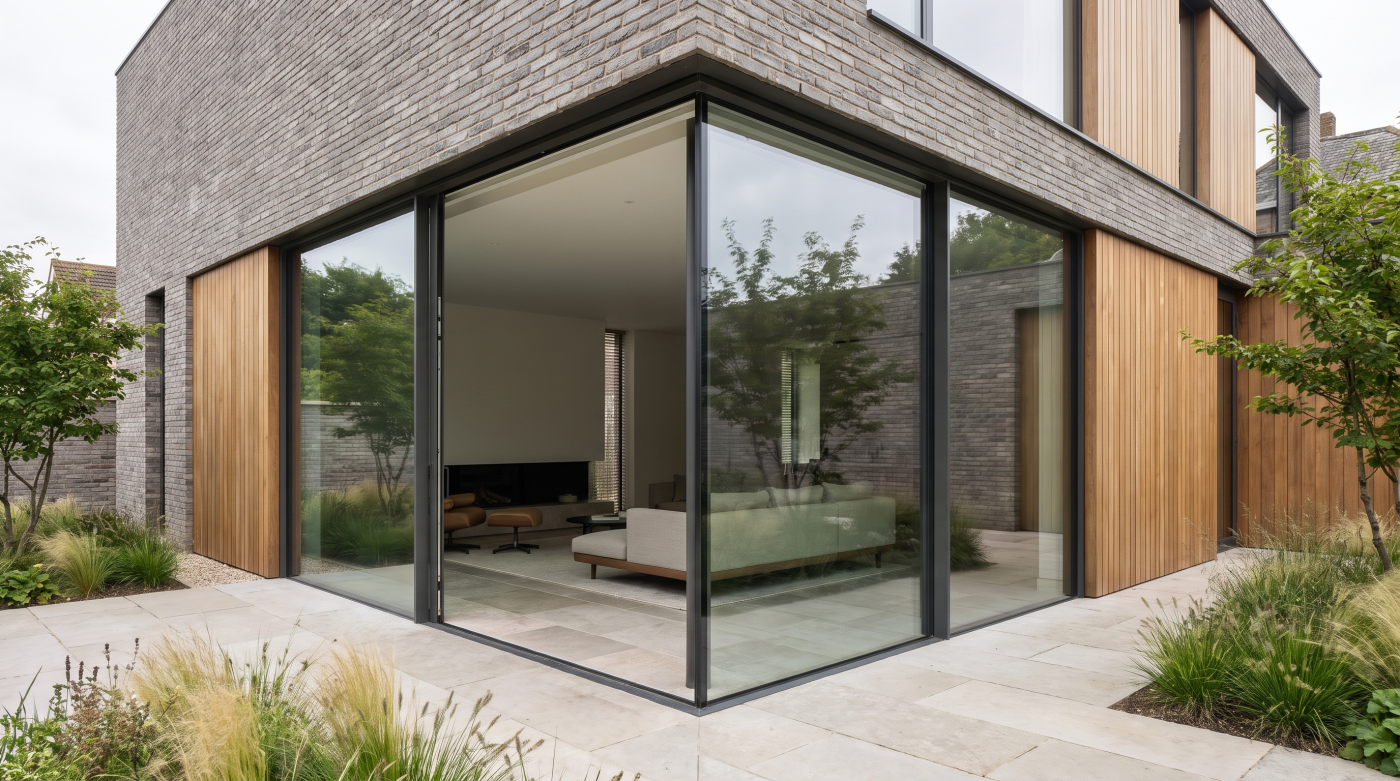
Recycling Helps, but It Does Not Make Material Impact Disappear
Recycling is an important part of the embodied-carbon conversation, particularly for materials that may potentially be recovered and used again. But claims about recyclability can easily make a product sound environmentally neutral when the reality is more complicated. A material being recyclable does not mean that its original environmental impact disappears, nor does it guarantee that it will actually be recycled at the end of the building’s life.
Three ideas are often blurred together: recyclable, recycled content and low embodied carbon. They are not interchangeable. A material may technically be recyclable while containing relatively little recycled material itself. Another may contain recycled content but still require significant processing during manufacture. And whether something is eventually recovered depends on factors such as how the product can be separated, the condition of the materials and the infrastructure available when it reaches the end of its useful life.
Glazing makes this particularly relevant because a window or door is an assembly rather than a single material. Glass, frames, seals, hardware and other components are brought together to perform as a system. Understanding what might happen to those materials decades later requires more than identifying one component as recyclable.
This does not diminish the importance of circularity. Recycled content, potential disassembly, material recovery and credible end-of-life strategies can all form part of a more responsible specification. The important point is that these characteristics should be supported by appropriate evidence rather than used as shorthand for sustainability. Where available, product-specific environmental information such as relevant EPDs can provide a more disciplined basis for assessment, with the project’s carbon or sustainability professional determining how that information should be interpreted.
For architects and self-builders, the practical lesson is to remain interested in recycling without allowing it to end the conversation.
Recyclability is one part of the evidence, not the conclusion.
The better objective is to use materials deliberately, keep useful products in service for an appropriate period and consider credible routes for their recovery when that service eventually ends. Circularity matters most when it reduces unnecessary material consumption—not when it becomes permission to consume more material without scrutiny.
A Better Question: How Much Glazing Does This Architecture Actually Need?
Embodied carbon ultimately brings the conversation back to one of the oldest architectural disciplines: deciding what the building actually needs. Product data, frame materials, glass specifications and environmental declarations can all inform that discussion, but none removes the need for design judgement. Before trying to make glazing lower carbon, it is worth asking whether the amount and type of glazing being proposed are justified in the first place.
A useful sequence is:
Purpose → Quantity → Performance → Material → Longevity → Evidence → Whole-life outcome
Purpose comes first deliberately. What is a particular glazed opening intended to achieve? It might frame an important view, improve daylight, provide access to a garden or establish the architectural relationship between an extension and the landscape. Once that purpose is clear, the design team can consider how much glazing is actually required to achieve it, what performance is appropriate and which systems and materials deserve investigation. Carbon evidence then has an architectural context rather than becoming an isolated competition between product figures.
For self-builders, this can be a valuable challenge. Large areas of glass have become strongly associated with contemporary residential architecture, but more glass does not automatically create a better home. A precisely positioned opening can sometimes contribute more than a much larger one. For architects, the equivalent question is whether every substantial area of glazing is earning its place through spatial quality, daylight, views, access or another clearly understood purpose.
The glazing specialist has a supporting role within that process. Where available, they can provide verified system and manufacturer information that helps the design team and relevant consultants assess the proposed solution. Formal embodied or whole-life-carbon assessment belongs with the appropriately appointed professional where required. Credibility comes from recognising that distinction rather than turning sustainability into another product claim.
There is no honest universal answer to the question, “What is the most sustainable glazing?” The answer depends on the building, the specification, the evidence and the boundaries of the assessment.
A better objective is therefore neither maximum glass nor automatically minimum glass.
It is the right glazing, in the right places, doing enough architectural and performance work to justify the material used to create it.