

Are Integral Blinds Worth It?
Integral blinds can be worth considering when protected blind surfaces and a clear space around the window are important to the household. Their value depends on the actual system, however. Privacy, darkness, operating controls, glazing suitability and future fault handling deserve as much attention as the neat appearance.
Compare the complete arrangement with suitable separate coverings before deciding. A blind inside a sealed glass unit is a different ownership proposition from an accessible blind or a conventional room-side treatment. Understanding that construction, along with the intended daily use, makes the additional commitment easier to assess without relying on promised savings or a universal lifespan.
What Are Integral Blinds, and Are All Systems Built the Same Way?
The term integral blind commonly describes a blind incorporated within the glazing arrangement. In a sealed-unit system, it sits inside the insulating glass unit rather than hanging on the room side. Pellini’s ScreenLine range illustrates this approach with Venetian, pleated and roller options. The category name alone does not identify the exact construction, controls or supported glass combination.
Other between-glass arrangements provide access through an additional opening sash. Pellini’s Air Series for 2+1 windows, for example, describes access for inspection, maintenance and cleaning. This is an important distinction. An accessible space between sashes should not be confused with the sealed cavity of an insulating glass unit when comparing ownership or repair possibilities.
Ask the person preparing the proposal to show where the blind, operating components and glass seals sit. Identify which parts remain accessible and which are enclosed. A simple sectional drawing can explain this more clearly than a general assurance that the blinds are integrated. It also provides a basis for discussing what future cleaning and servicing would involve.
Confirm the actual system rather than combining features from several examples. Different materials, cavity arrangements and controls may have different limitations. A photograph showing a blind within a window cannot establish whether the proposed model offers the same functions. The useful comparison starts with a clearly identified assembly that can be assessed against the room and household brief.
How Much Cleaning and Room-Side Clutter Can They Avoid?
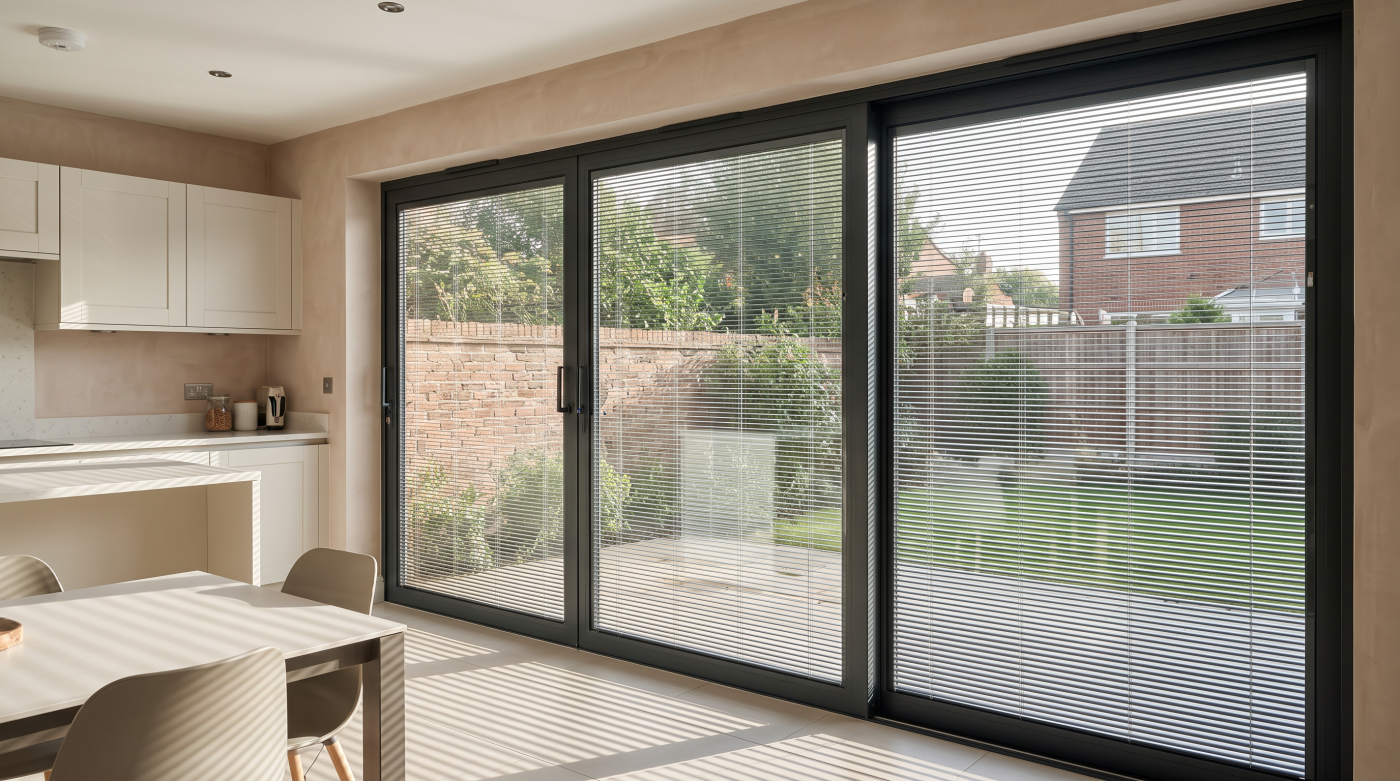
Protecting the blind within a sealed unit avoids an exposed room-side blind surface collecting ordinary household dust and splashes. That can be attractive beside a busy kitchen worktop or a frequently used garden door. It may also remove the need for a separate hanging treatment around the opening, leaving more space for the surrounding room layout.
The benefit needs to be described precisely. Glass surfaces still need appropriate cleaning, and external controls or other accessible components may have their own care requirements. A maintenance-free description for the enclosed blind is not a promise that the complete window, controls and glazing require no attention. Ask for the relevant care instructions rather than extending a marketing phrase to the whole assembly.
Consider what remains visible too. A stored blind, headrail or control may still affect the appearance of the opening, depending on the system. Compare the raised, lowered and tilted positions rather than judging one carefully chosen photograph. The household should understand how the arrangement looks during ordinary use and whether it preserves the clear view that matters to them.
These advantages may carry different weight in different rooms. Avoiding exposed slats could be valuable where cleaning is awkward, while a bedroom may place greater emphasis on darkness or changing fabrics later. Identify the practical problem being solved. An integral arrangement is easier to justify when its specific benefits match everyday needs, rather than neatness becoming the only criterion for a long-term decision.
Will They Provide the Privacy and Darkness You Need?
Privacy, light adjustment and room darkness are related but distinct requirements. A Venetian blind can alter the angle through its slats, while a fabric system has different characteristics. Ask what the actual model provides in its closed position and what remains visible from the relevant directions. A blind being inside glass does not itself establish the level of privacy.
Assess evening conditions if the room is occupied with lights on. Consider views from nearby gardens and higher neighbouring windows, not just directly opposite the pane. A demonstration should relate to the coverage and angles that matter in the home. Avoid assuming a daytime photograph establishes privacy under every lighting condition or that all closed slat arrangements behave identically.
Darkness needs a separate discussion, especially for sleeping. A fabric described as blackout does not, by itself, explain light passing around edges or through the complete installation. Request evidence or a suitable demonstration of the proposed system. Define whether the household needs reduced brightness, comfortable viewing or a much darker bedroom, rather than using blackout as shorthand for all three.
It may be appropriate to retain another room-side covering for a particular purpose, but include that in the comparison from the outset. If a second treatment is essential, it changes the space, appearance and overall cost being assessed. The integral blind can still have value, provided the proposal is judged as the complete arrangement the household will actually use.
Can Integral Blinds Help With Glare and Solar Heat Gain?
A blind changes how light enters the room and can contribute to managing glare or solar gain when appropriately specified. The result depends on the blind, glazing and operating position. A broad statement that integral blinds control the sun is not enough to predict comfort at a particular seat or the temperature of an entire glazed room.
Separate the objectives before requesting performance information. A reflected window on a television may need different measures from unwanted afternoon heat. Visible-light transmission, solar energy entering through the arrangement and thermal insulation describe different properties. Ask which figures relate to the proposed combination and whether the blind is raised, lowered or tilted when those figures apply.
Compare alternatives using relevant conditions. The opening’s orientation, room layout and wider shading strategy can affect what is useful. Do not assume every between-glass blind is equivalent to every external shade, or that adding one removes the need to consider ventilation and other comfort measures. The whole design should be assessed against the actual project rather than a generic category comparison.
Avoid treating a performance figure as a household bill-saving guarantee. Energy use depends on more than the blind and can vary with occupancy, controls and building conditions. For a homeowner, the useful evidence explains what the specified arrangement can contribute and its limits. That supports a realistic choice without inventing a universal percentage improvement, payback period or promise that overheating will disappear.
Which Controls Will Work Best for Everyday Use?
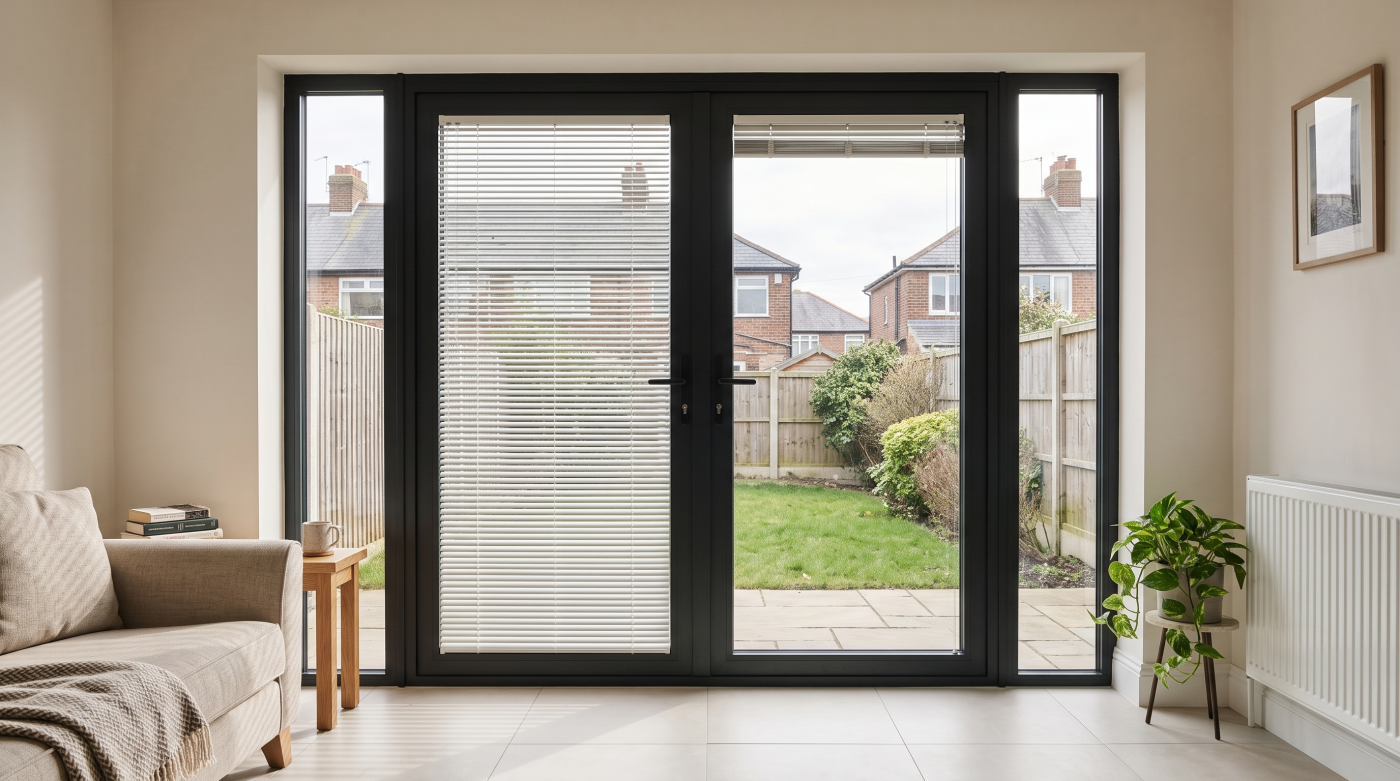
Establish the functions before choosing a control. Some arrangements tilt slats, while others also raise and lower the blind. Confirm what the actual proposed model does and how it is operated. A household wanting an unobstructed view when the blind is stored should not assume that a tilt-only option provides the same result as a raising mechanism.
Manual and powered arrangements have different practical requirements. Check reach, effort, access beside furniture and operation when an opening leaf is in its permitted positions. For motorised systems, establish the power supply, controls and any charging or servicing access. An app or remote handset should be assessed alongside the ordinary household routine rather than treated as automatic proof of convenience.
The Pellini C-system use manual distinguishes the enclosed blind from external magnetic devices, cords, tensioners and motors needing cleaning. It also gives model-specific operating requirements. This shows why enclosed slats do not make every system cord-free or every external component maintenance-free. Follow the instructions applicable to the exact arrangement.
Discuss appropriate child-safety provisions with the specialist and confirm that any required devices are installed. Consider visiting children as well as the current household. Ask how the system is operated if a control or power supply becomes unavailable, using supported instructions rather than an improvised bypass. A demonstration is valuable when it includes the actual controls and users’ practical access needs.
Can You Add Integral Blinds to Existing Windows or Doors?
An integral blind cannot simply be inserted into the sealed cavity of an existing insulating glass unit as an ordinary household alteration. A retrofit proposal needs to establish the appropriate manufactured assembly and how it relates to the existing frame. Retaining the frame may be possible in some circumstances, but that is a feasibility question requiring actual system information.
Check the proposed unit’s dimensions, thickness, weight and compatibility with the frame and hardware. Include relevant glass functions and any coatings in the assessment. A unit that fits the visible opening is not automatically suitable for the complete assembly. The person specifying the change should explain what has been checked and whether additional work is required.
For doors and opening windows, consider operation as well as appearance. Handles, control access and permitted use need to work together. Existing drainage, sealing and required safety functions should be preserved. Ask about applicable manufacturer support and warranty implications before work proceeds, rather than assuming a glass-only change has no effect on the rest of the opening.
Compare the complete alteration with a suitable separate covering. If the existing glazing is otherwise sound, replacing it solely to integrate a blind may be a substantial commitment. That can still be reasonable where the benefits justify it, but it deserves an explicit comparison. Include surrounding work, installation and future support rather than evaluating only the price of the blind mechanism.
What Happens If the Blind or Its Control Stops Working?
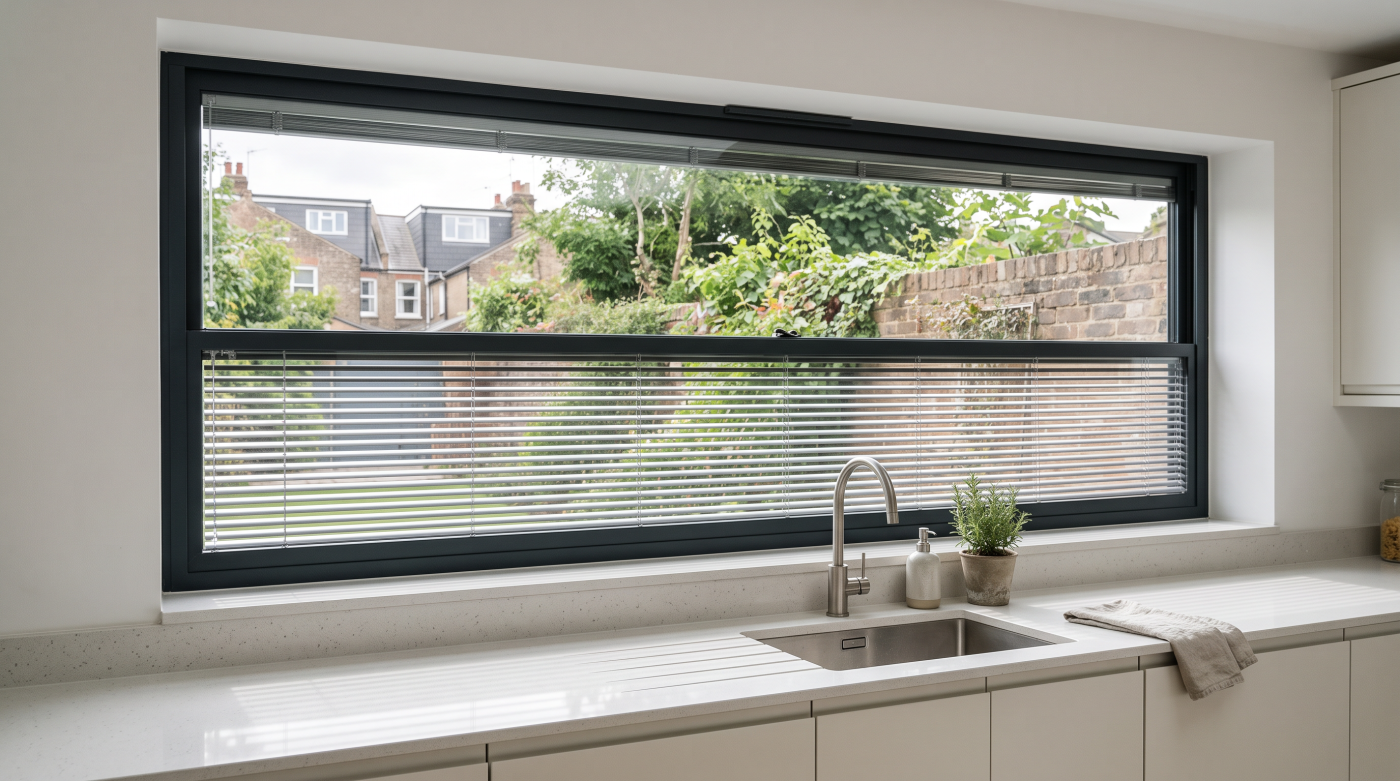
Ask about faults before ordering, while the system and responsibilities can still be chosen. An external control problem and an enclosed mechanism problem may lead to different repair routes. The first step is to identify the model and symptom, rather than assume every fault requires replacing the entire window or that every internal component can be reached easily.
Confirm who provides diagnosis and supported service for the completed installation. Ask what information will be needed and whether access requires specialist handling of the glazing. Keep product identification and handover records. If a problem develops, avoid forcing the mechanism or opening a sealed unit yourself; report the condition and follow the appropriate advice for that system.
Warranty information should distinguish the relevant components and work. Establish what applies to the blind, glass unit, external controls and installation, including any exclusions and associated costs. A headline warranty period may not describe all of those together. Do not transfer terms from an overseas accessory shop or another product range to the finished arrangement being purchased.
Future parts and appearance matter too. Ask how replacement controls or units would be identified, and what can reasonably be confirmed about current support. No supplier can turn a generic longevity claim into certainty about every future component. A clear service route and realistic explanation of limitations make the ownership commitment easier to understand than a broad assurance that the system will never need attention.
When Are Integral Blinds Worth the Additional Commitment?
Integral blinds are most persuasive when their particular advantages solve an established problem. Protected blind surfaces, reduced room-side clutter and coordinated light control may be valuable in a specific kitchen or garden connection. Weigh those benefits against the need for a particular appearance, darkness, future fabric changes and accessible servicing. The priorities should come from the household rather than a universal product ranking.
Request comparable proposals with clear scope. Include glazing, controls, power provision, installation, surrounding work and relevant support, alongside any separate coverings still required. Compare these with a conventional blind or another suitable treatment meeting the same brief. A lower initial figure or a longer list of features does not automatically make an option the better fit for the room.
In a Wiltshire self-build, early coordination can help resolve controls and glazing before ordering. A Bristol extension or Bath renovation may present different constraints around existing frames and interior finishes. The relevant lesson is to assess the actual project. Regional context should not be used to suggest identical products, permissions or performance outcomes across otherwise different homes.
CBP’s role as an architectural glazing and specification partner is relevant to that coordinated brief. Start with what the room needs, identify the complete system and understand the ownership implications. Integral blinds, separate coverings and retaining existing glazing can each be sensible choices. They are worth considering when the verified benefits justify the commitment for the people who will use and maintain them.