
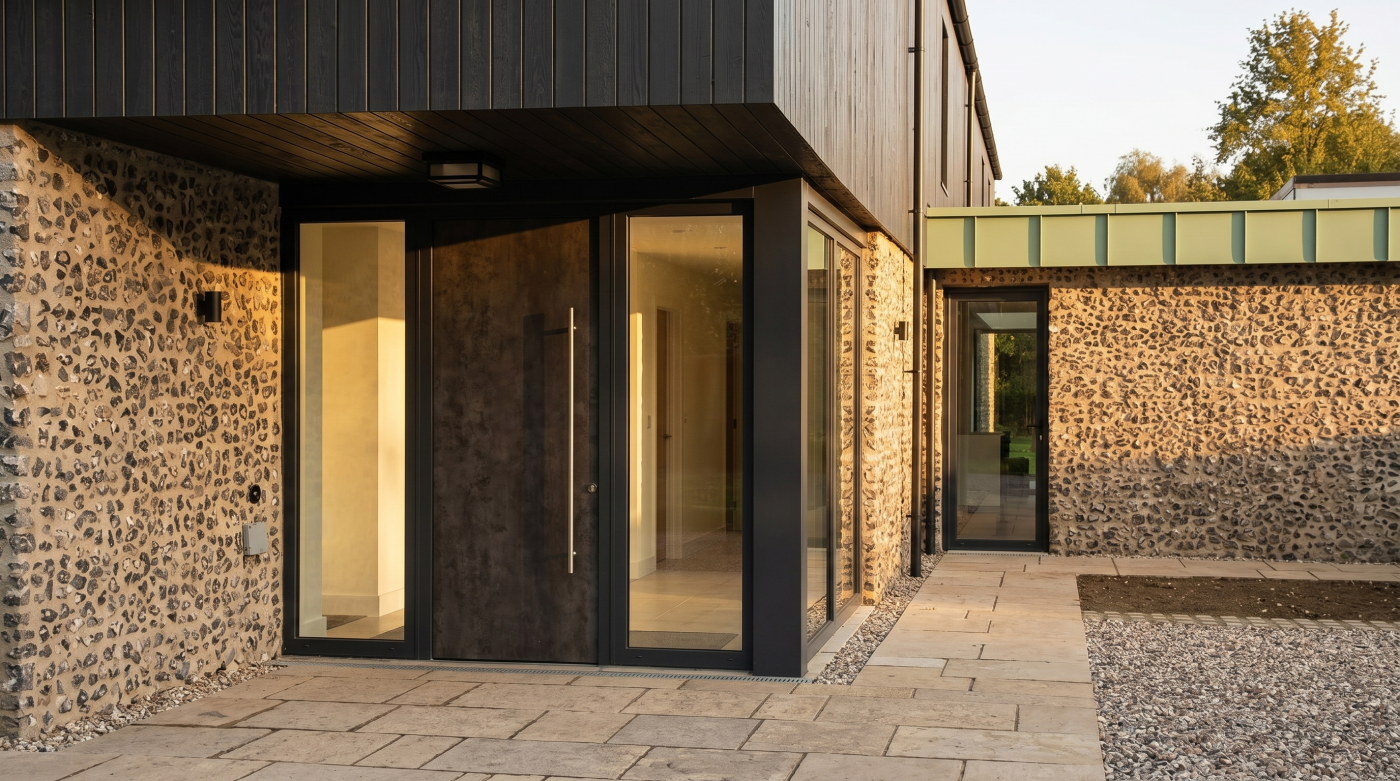
Why Your Front Door Shapes the Entire Arrival Experience
Long before anyone notices the flooring, the kitchen or the quality of the interior finishes, they experience the front door. It is the first physical interaction with a home and the point where expectations begin to form. This is why architects rarely think of a front door as an isolated product. Instead, they see it as the culmination of an arrival sequence that starts at the boundary of the property and continues through the landscape, pathway and entrance before a visitor ever steps inside.
The proportions of the entrance play a significant role in this experience. A well-designed front door feels appropriately scaled to the building, sitting comfortably within the façade rather than appearing either oversized or insignificant. Its relationship with surrounding materials, glazing, lighting and architectural detailing helps establish a sense of balance and permanence. When these elements work together, the entrance feels welcoming and confident without needing to rely on dramatic gestures or excessive decoration.
There is also a psychological dimension to arrival. A carefully considered entrance creates a subtle sense of anticipation, signalling that the same level of thought and craftsmanship is likely to continue throughout the home. Conversely, even an impressive interior can feel disconnected if the entrance lacks proportion, quality or coherence. The front door acts as the introduction to the architecture, quietly communicating the values of the building before a single room has been seen.
For homeowners, this means the decision extends beyond selecting a door style or colour. It involves considering how the entrance contributes to the overall character of the property and the experience of coming home every day. A genuinely premium front door is not memorable because it demands attention. It is memorable because it feels entirely appropriate to the architecture, creating an arrival that is calm, welcoming and effortlessly refined.
Materials: More Than Just Appearance
When people compare front doors, they often begin with appearance. They consider whether they prefer the warmth of timber, the clean lines of aluminium or the familiar look of composite materials. While aesthetics are undoubtedly important, architects know that materials influence far more than visual style. They shape how a door feels to the touch, how it responds to changing weather, how it ages over time and, ultimately, how it contributes to the experience of living in the home.
Aluminium has become increasingly popular in contemporary architecture because it combines exceptional strength with refined proportions. Its rigidity allows for larger door panels, slimmer detailing and crisp, minimalist lines that suit modern homes particularly well. Powder-coated finishes provide excellent durability while offering a wide range of colours, enabling the entrance door to integrate seamlessly with the wider architectural palette.
Timber offers a different kind of appeal. Its natural grain, texture and warmth create an immediate sense of craftsmanship that many homeowners value, particularly in period properties and architect-designed homes where natural materials play an important role in the overall design. Over time, timber develops character as it matures, rewarding owners who appreciate materials that evolve rather than remain unchanged.
Composite doors combine a variety of materials to balance appearance, insulation and durability, making them a practical choice for many properties. However, the experience they provide can vary considerably depending on the quality of their construction, reinforcing the point that material alone does not define whether a door feels genuinely premium.
Ultimately, premium materials appeal to more than just the eye. They influence the weight of the door as it opens, the texture beneath your hand, the confidence inspired by its construction and the way it continues to look and perform after years of daily use. It is this combination of visual quality, tactile experience and long-term durability that transforms a front door from a functional entrance into an integral part of the home’s architecture.
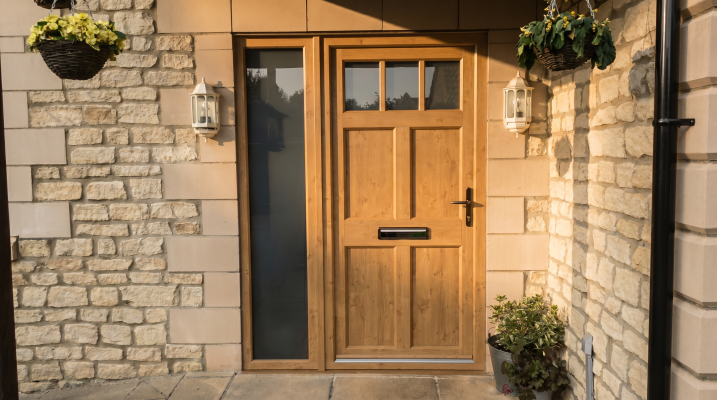
The Details That Quietly Signal Quality
The difference between a standard front door and a genuinely premium one is often found in the details that most people never consciously notice. While colour, material and overall design create the first impression, it is the precision of the craftsmanship that gives a door its lasting sense of quality. Architects and designers understand that exceptional products rarely rely on obvious statements. Instead, they reveal their quality through careful proportions, refined detailing and meticulous execution.
One of the first indicators is the consistency of the gaps surrounding the door. Even, narrow shadow lines create a sense of precision that immediately communicates careful engineering and installation. Flush surfaces, clean junctions and accurately aligned panels all contribute to an entrance that feels composed and intentional rather than assembled from individual components. These details may appear subtle, but together they influence how the entire façade is perceived.
Hardware also plays a significant role. A substantial handle, precisely integrated into the overall design, provides an immediate tactile impression before the door is even opened. Hinges, locking mechanisms and threshold details are typically concealed or carefully coordinated so that the visual focus remains on the architecture rather than the mechanics. High-quality glazing, where incorporated, sits seamlessly within the door, with slim sightlines and carefully considered proportions that reinforce the overall design rather than interrupt it.
These elements require a high degree of manufacturing accuracy. Premium entrance doors are engineered to exact tolerances so that every component fits together consistently, ensuring both visual refinement and reliable long-term performance. The result is a door that feels solid, balanced and effortless in operation because every detail has been carefully resolved.
Perhaps the defining characteristic of premium craftsmanship is that it rarely draws attention to itself. There are no unnecessary flourishes or decorative distractions. Instead, quality is expressed through restraint, precision and confidence, creating an entrance that feels quietly exceptional every time it is approached.
How a Door Feels Every Time You Use It
A premium front door is not defined solely by how it looks from the street. Its true quality is revealed through everyday use. Unlike many architectural features that are admired from a distance, a front door is experienced through touch, movement and sound. It is opened and closed thousands of times over its lifetime, making the physical experience of using it just as important as its appearance.
One of the first things people notice is weight—not simply heaviness, but a sense of solidity and control. A well-engineered entrance door moves with quiet confidence, opening smoothly and closing with reassuring precision. There is no rattling, twisting or unnecessary resistance. Instead, every movement feels deliberate, reflecting the quality of the engineering hidden within the frame, hinges and locking system.
The handle also plays an important role in this daily interaction. It is the one part of the entrance that is touched every day, so its proportions, finish and tactile quality matter far more than many homeowners initially realise. A substantial, well-crafted handle communicates durability and refinement, while its smooth operation reinforces the impression of careful design. These are small moments, but they are repeated every time someone returns home.
Sound is another subtle indicator of quality. The gentle, muted closing of a well-made door creates a very different impression from the hollow slam or vibration often associated with lower-quality products. Effective seals contribute not only to thermal performance and weather resistance but also to this quieter, more composed experience. Together, these details create an entrance that feels calm and reassuring rather than purely functional.
Architects understand that buildings are experienced through repeated rituals rather than occasional moments of admiration. A genuinely premium front door continues to reward those daily interactions, combining precise engineering with thoughtful design to create an entrance that feels just as satisfying after years of use as it did on the day it was installed.
Performance Beyond Security
When discussing front doors, security is often the first feature to dominate the conversation. Robust locking systems, reinforced construction and advanced security standards are undoubtedly important, but they represent only one aspect of what makes a premium entrance door. The best doors contribute to the overall performance of the home, improving comfort, energy efficiency and everyday living in ways that are less visible but no less valuable.
Thermal performance is a good example. A well-designed entrance door helps reduce heat loss by combining highly insulated cores, advanced sealing systems and precision-engineered frames. The result is a more consistent internal temperature, fewer draughts around the entrance and a home that feels comfortable throughout the changing seasons. While these improvements may not attract immediate attention, they become part of the daily experience of living in the property.
Airtightness also plays an important role. Premium doors are manufactured to tight tolerances, allowing seals to perform effectively without compromising the smooth operation of the door itself. This not only improves energy efficiency but also enhances acoustic comfort by reducing external noise. Whether the property overlooks a busy street or sits in a quieter rural setting, a well-sealed entrance helps create a calmer and more peaceful interior environment.
Weather resistance is equally significant. Exposure to driving rain, strong winds and fluctuating temperatures places considerable demands on an entrance door throughout its lifetime. High-quality materials, durable finishes and carefully engineered drainage systems help ensure that the door continues to operate reliably while maintaining its appearance year after year with minimal maintenance.
Security remains an essential part of this overall performance, but architects rarely consider it in isolation. A genuinely premium entrance door protects the home while also contributing to its comfort, efficiency and longevity. It is this combination of engineering, durability and everyday usability that distinguishes a carefully specified entrance system from one that simply meets the minimum requirements.
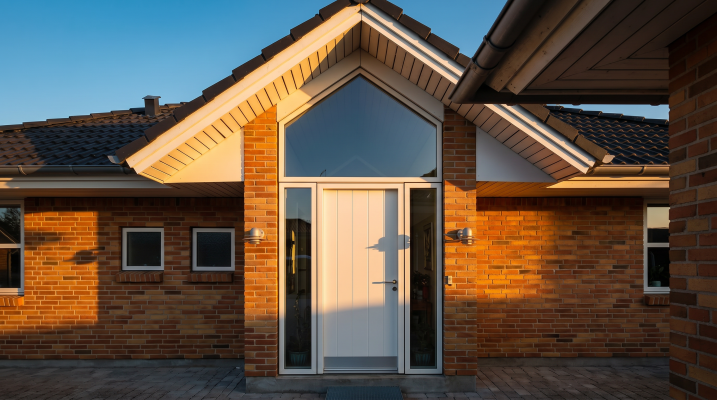
Why Architects Think About the Whole Entrance
A front door is rarely designed in isolation. While it may become the visual focal point of the façade, its success depends on the relationship it has with everything around it. Architects therefore think beyond the door itself, considering the entrance as a complete architectural composition. The pathway, landscaping, external lighting, glazing, materials and even the house number all contribute to the experience of arrival, working together to create an entrance that feels coherent rather than assembled from separate elements.
The approach to the front door is often the first opportunity to establish the character of a home. Changes in paving, planting and lighting subtly guide visitors towards the entrance, creating a sequence that feels intuitive and welcoming. A well-designed canopy can provide shelter while reinforcing the proportions of the façade, and carefully positioned glazing allows natural light to animate the entrance without compromising privacy. None of these elements are intended to compete for attention; their purpose is to support one another.
Material selection also extends beyond the door itself. The colour and finish of the entrance door should complement the surrounding brickwork, stone, timber cladding or render, creating a balanced composition rather than a collection of unrelated materials. Handles, external lighting, letterboxes and house numbers are selected with the same level of care, ensuring that every visible detail contributes to a unified architectural language. The result is often understated, yet it communicates a sense of permanence and quality that is immediately recognisable.
This holistic approach explains why some entrances feel effortlessly elegant while others appear visually disjointed, even when expensive products have been specified. The quality of the experience comes not from a single premium component but from the way each element supports the next. A genuinely premium front door succeeds because it belongs naturally within the wider architecture, completing the entrance rather than attempting to define it on its own.
Choosing a Front Door You’ll Still Love in Twenty Years
The best front doors are not necessarily the ones that make the strongest impression on the day they are installed. Instead, they are the ones that continue to feel appropriate year after year, quietly complementing the architecture as the home evolves around them. This long-term perspective is central to the way architects approach specification. They are not designing for the next trend or season, but for the decades that follow.
Timeless design rarely depends on bold statements or fashionable details. It is usually characterised by balanced proportions, restrained materials and careful craftsmanship that allow the architecture to remain the focus. While contemporary colours, oversized handles or dramatic glazing arrangements may be appealing today, the question worth asking is whether they will still feel equally comfortable in twenty years’ time. The most enduring entrance doors are those that avoid unnecessary complexity in favour of simplicity and confidence.
Material choice also contributes to longevity. High-quality aluminium, timber and other premium materials are selected not only for their appearance but for the way they age. Durable finishes, reliable engineering and low-maintenance construction help ensure the entrance continues to perform as well as it looks, reducing the likelihood of premature replacement or extensive refurbishment. A premium door should reward long-term ownership rather than simply create a strong first impression.
Personal taste inevitably plays a role, but the most successful projects balance individual preferences with architectural context. A front door should feel connected to the proportions, materials and character of the home rather than following a passing design trend. When these elements are considered together, the entrance becomes a natural extension of the building rather than a feature competing for attention.
Ultimately, a genuinely premium front door earns its value over time. It welcomes you home every day with the same quiet confidence, continues to perform through changing seasons and remains visually appropriate as fashions come and go. That lasting sense of quality—not simply its appearance on installation day—is what truly defines a premium entrance.