
The Problem Isn’t Black Frames. It’s the Formula
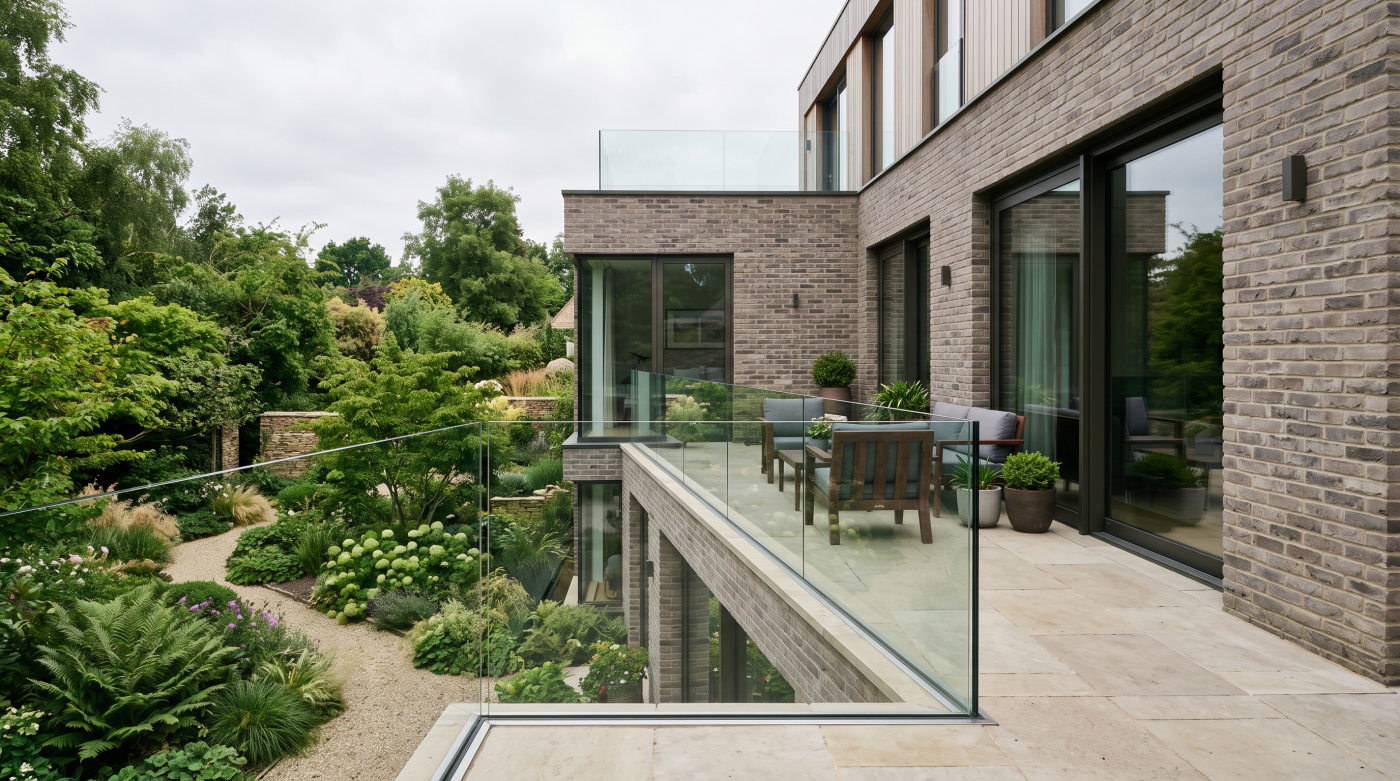
Black window frames are an obvious candidate whenever the conversation turns to design trends that might eventually date. They have become one of the most recognisable features of contemporary residential architecture, often appearing alongside large panes of glass, restrained materials and dark external detailing.
But black frames themselves are not the problem.
On the right building, they can provide contrast, definition and a clear relationship with other architectural elements. The same is true of expansive glazing, minimal profiles and deliberately limited material palettes. Each can be an entirely convincing design decision.
The risk appears when those decisions begin arriving as a package.
Dark windows lead to dark doors, which lead to matching cladding details, gutters, ironmongery and other finishes. Combined with familiar forms of contemporary glazing, the result can become immediately recognisable as belonging to a particular design moment. What began as several individual choices has turned into a formula.
Popularity alone does not make that formula bad architecture. Many widely used ideas remain useful precisely because they work. The more important question is whether each decision would still have been made if the wider trend did not exist.
That is the distinction between architecture and styling.
A house is more likely to age convincingly when its major visual decisions can be explained by its proportions, setting, materials and architectural intent. The danger is not choosing something fashionable. It is allowing fashion to make several architectural decisions at once.
Contemporary and Fashionable Are Not the Same Thing
Contemporary architecture and fashionable architecture are often treated as though they mean the same thing. They do not.
A contemporary home responds to the way people live now. Its rooms, openings and relationship with outside might reflect modern expectations around light, space and connection with the landscape. Its architecture can use current materials and ideas without needing to adopt every visual signal associated with contemporary design.
Fashion works differently. It depends on recognition.
Certain combinations become familiar enough that we immediately understand what they are trying to communicate. Dark frames, expansive glazing and minimal detailing can signal “modern” before we have considered whether those decisions have any particular relationship with the building itself.
That does not make them inappropriate. The same architectural language can be exceptional when it emerges naturally from the project.
The distinction is the reason behind the decision.
A contemporary house might have substantial areas of solid wall because the proportions require them. It might use visible window frames because they strengthen the elevation, or smaller openings because they frame particular views. A modern extension to an older property might deliberately acknowledge materials or proportions already present rather than pursuing complete visual contrast.
None of those decisions makes the architecture less contemporary.
Fashion describes what currently appeals to us. Architecture has to resolve something more enduring: how a building relates to its occupants, its setting and its own proportions.
A home can therefore feel unmistakably of its time without becoming defined by the visual trends of that time. That difference is one of the foundations of architectural longevity.
The More Decisions a Trend Controls, the Faster the House Can Date
A single fashionable decision rarely defines an entire building. The stronger risk appears when one aesthetic idea begins controlling everything around it.
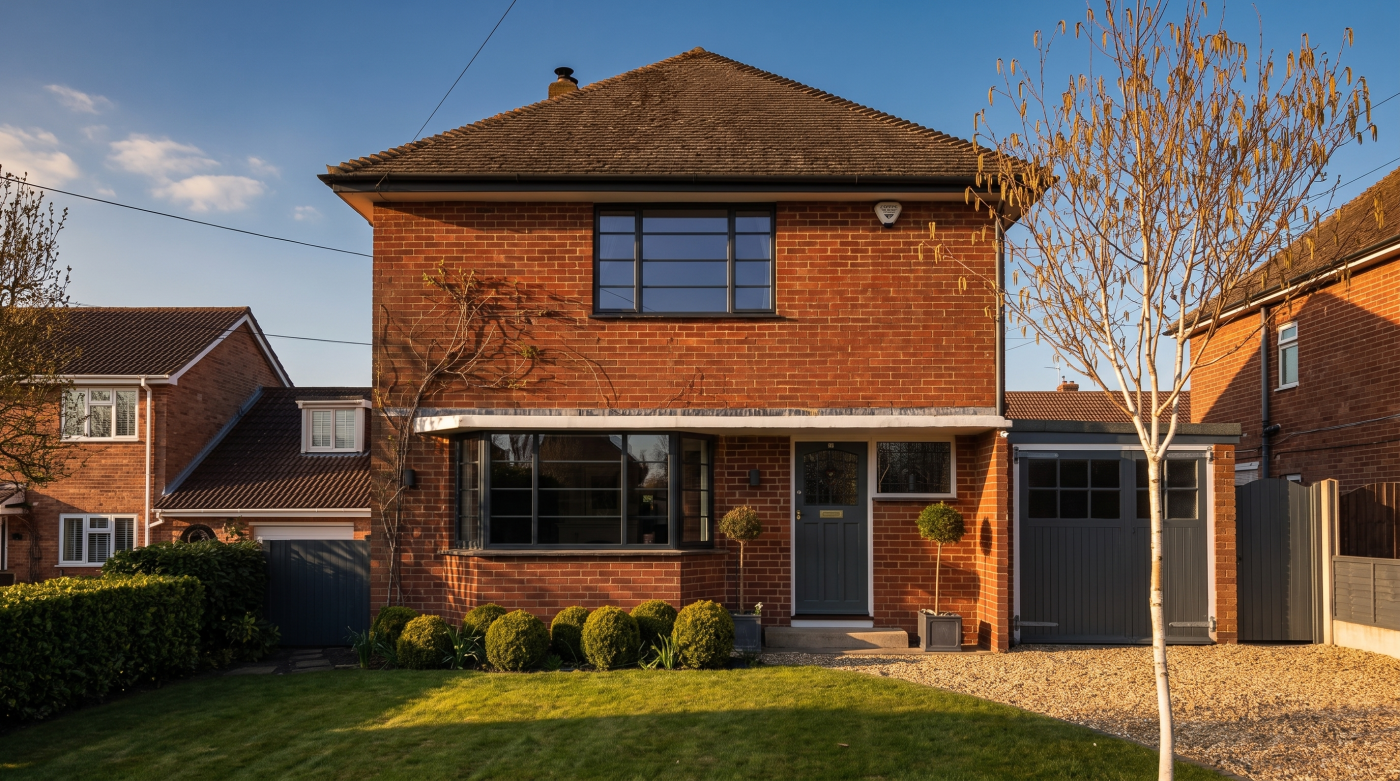
A dark window frame, for example, can be a considered response to the architecture. But once that choice automatically determines the doors, cladding details, gutters, ironmongery, lighting and interior finishes, the house begins to acquire a much more specific visual identity. Instead of containing one element associated with a particular period, it adopts an entire design vocabulary.
That concentration is what makes trends so visible.
Architecture with greater longevity often has more layers. Materials respond to where they are used. Openings respond to rooms and views. Colours relate to surfaces rather than simply matching one another. Individual decisions remain connected, but they are not all being controlled by the same aesthetic instruction.
This does not mean coordination is undesirable. A disciplined palette can create exceptional architecture, and repeating materials or colours can bring necessary order to a building. The distinction is whether that repetition strengthens an architectural idea or simply completes a fashionable look.
The more influence a trend acquires, the harder it becomes to separate the building from the moment in which it was designed.
A useful warning sign is therefore not that one element feels current. It is that the same current idea keeps answering unrelated design questions.
When one fashionable choice starts determining every finish and detail, it may be time to ask whether the architecture is still making the decisions.
Architecture Ages Better When It Belongs to Its Setting
One of the strongest defences against a building feeling dated is surprisingly simple: give its design decisions a reason to belong where they are.
Context provides that reason.
A Georgian townhouse in Bath, a stone property in the Cotswolds, a Victorian house in Bristol and a contemporary home overlooking the Wiltshire countryside begin with very different architectural conditions. Applying the same glazing aesthetic to each may create consistency with current fashion, but not necessarily with the buildings themselves.
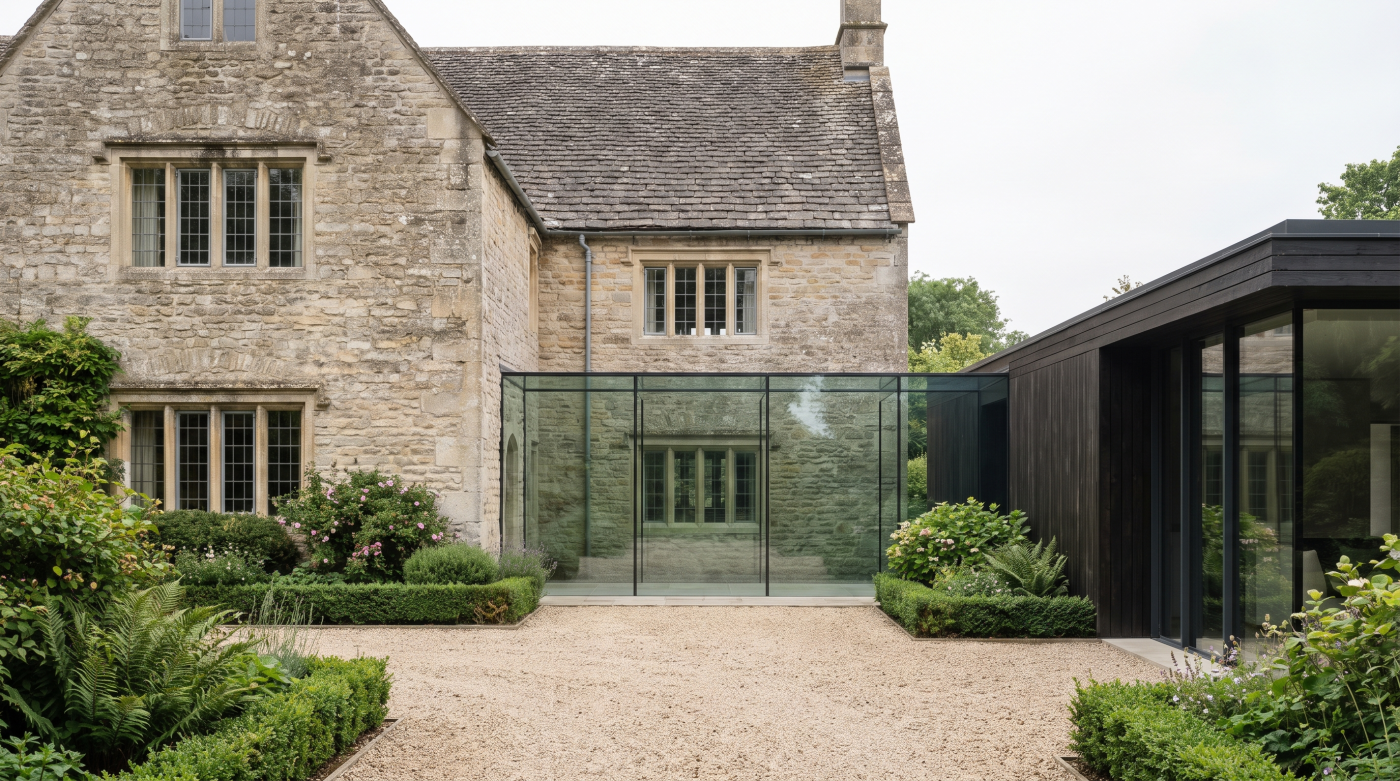
Responding to context does not mean copying the past. A contemporary extension can contrast clearly with an older property. Large areas of glass can sit alongside traditional materials. Modern window proportions can establish a deliberately different architectural language. What matters is that the relationship has been considered rather than imported wholesale from another project.
Landscape matters in the same way. An opening facing a significant countryside view has a reason to behave differently from one overlooking a neighbouring wall. Materials already present in the building may suggest relationships of texture, proportion or contrast that are more meaningful than whatever finish happens to be fashionable.
These contextual decisions tend to have greater resilience because their justification remains even as tastes change.
A trend may eventually lose its cultural relevance. The stone, street, landscape and proportions surrounding a building do not change nearly as quickly.
Architecture does not become timeless simply by responding to context. But when its major decisions belong convincingly to their setting, they have a stronger reason to endure beyond the moment in which they were designed.
Proportion Will Outlast Colour
Colour is one of the first things we notice about a window. It can create contrast, connect with surrounding materials or give an elevation a particular character. Inevitably, it is also one of the aspects most exposed to changing taste.
Proportion works more quietly.
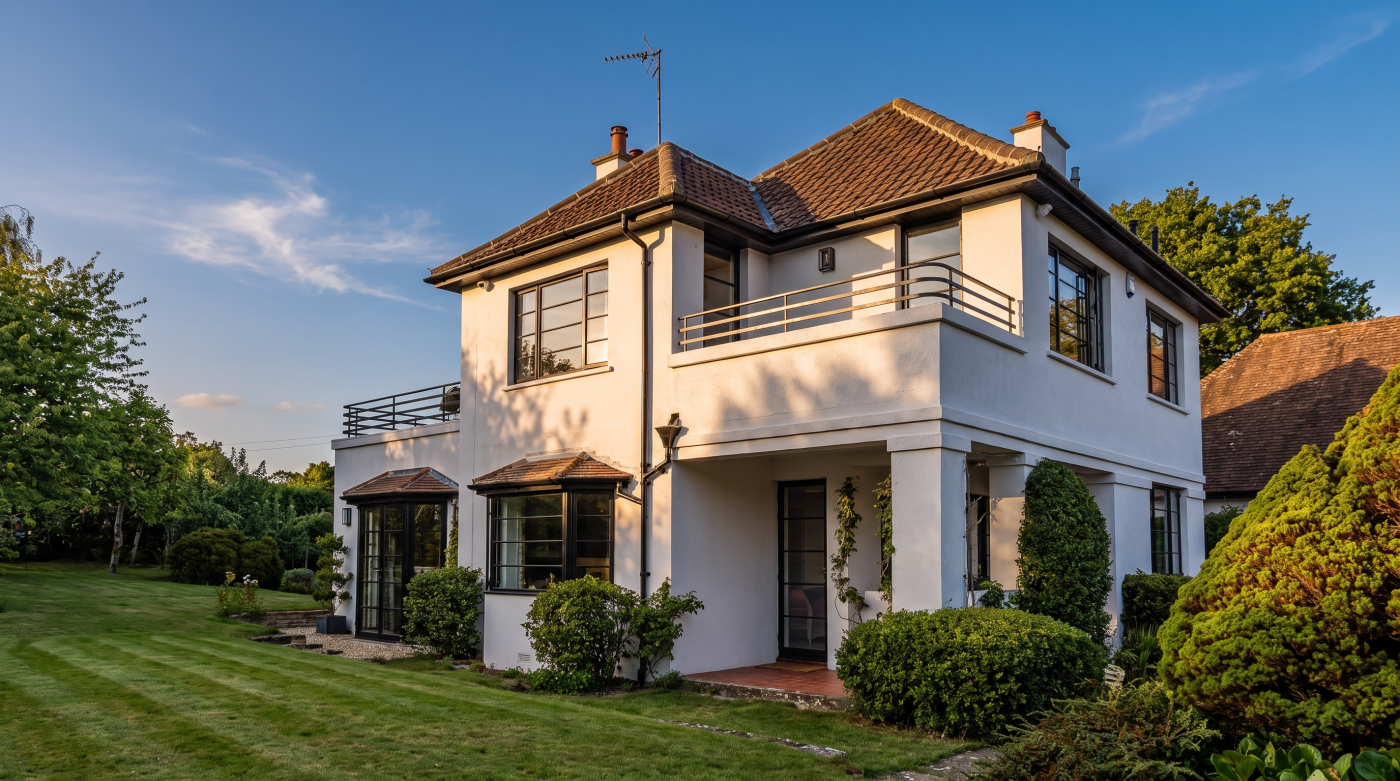
The relationship between the height and width of an opening, its position within the wall and the amount of solid architecture surrounding it all influence whether a window feels as though it belongs. Those relationships are less immediately fashionable, but they are often more important to the long-term success of the building.
A beautifully finished frame cannot rescue an opening that feels awkwardly positioned. Nor can a fashionable colour compensate for an elevation in which the balance between glass and solid wall has never been properly considered.
This is why decisions about size and position deserve to come before decisions about finish.
A window might align with another opening, frame a particular view or establish rhythm across an elevation. A larger area of glazing may be justified where the architecture opens towards a landscape, while a smaller window elsewhere provides the proportion the room and façade require.
None of these decisions depends on predicting which colour will remain fashionable.
Finishes will always influence how a building is perceived, and they should be chosen carefully. But beneath them sits something more durable.
Long after tastes in frame colours have changed, the fundamental composition remains. If the openings are well proportioned and belong convincingly to the architecture, the building has a stronger foundation on which changing tastes can settle.
Timeless Does Not Mean Playing It Safe
The desire to avoid a dated home can produce its own design problem. If every distinctive decision is rejected because it might eventually fall out of fashion, the result may be restrained, but it will not necessarily be timeless.
Bold architecture can age remarkably well.
A dramatic glazed opening, an unexpected material or a clearly contemporary addition can remain convincing long after the project was completed when the decision is rooted in a strong architectural idea. What matters is not how noticeable the choice is, but whether there is a reason for it beyond novelty.
This is the difference between originality and fashion.
A distinctive window might exist because it frames an exceptional view. A contrasting extension may deliberately distinguish new architecture from old. An unusual material might respond particularly well to the landscape or to something already present within the building. These choices can be visually assertive without being arbitrary.
Timelessness, in any case, cannot be guaranteed. Buildings inevitably reveal something about when they were designed, and attempting to erase every sign of their period can remove much of their character with it.
The better objective is longevity rather than anonymity.
Architecture should be allowed to have conviction. Restraint is valuable when the building calls for restraint, just as a bold gesture can be valuable when there is an architectural reason to make one.
The alternative to trend-led design is therefore not safer design. It is purposeful design: architecture whose strongest decisions can still explain themselves after the fashion that surrounded them has moved on.
Ask Whether You Would Still Choose It Without Instagram
Architectural inspiration has never been more accessible. Within minutes, a homeowner can collect hundreds of images showing extensions, glazing, interiors and entire houses from around the world. Used well, that exposure can expand what people believe is possible.
The difficulty is repetition.
When the same visual ideas appear repeatedly, familiarity can begin to feel like inevitability. A particular frame colour, glazing arrangement or material combination may start to seem like the obvious solution before the building itself has been properly considered.
The answer is not to stop looking at architectural imagery. It is to look more carefully.
Instead of asking how to recreate an image, identify what makes it appealing. Perhaps it is the uninterrupted view rather than the minimal frame. Perhaps it is the contrast between old masonry and new glazing rather than the colour of the windows. It might be the proportion of the opening, the warmth of the materials or simply the quality of daylight within the room.
Once that principle has been identified, it can be translated rather than copied.
This creates a useful test for any strongly fashionable decision: would you still choose it if you had not repeatedly seen it presented as desirable?
If the answer is yes because it belongs to the building, strengthens a view or supports the architectural composition, the decision has a reason beyond fashion.
Inspiration is valuable. But it becomes architecture only when the idea has been reconsidered through the particular house, room and setting in which it will actually exist.
Specify What Belongs to the House, Not the Decade
No one can guarantee that a design decision will feel timeless. Taste changes, materials acquire new associations and every building inevitably carries some evidence of the period in which it was created. The more useful ambition is to make those decisions defensible beyond fashion.
That begins with the architecture.
Consider the proportions of the building before the colour of the frames. Decide where openings belong before deciding how minimal they should appear. Understand which views deserve emphasis, how rooms relate to outside and how new materials should respond to those already present.
Only then do finishes become meaningful.
Black frames may be entirely appropriate. So might minimal glazing, large panes or a deliberately contrasting contemporary extension. None becomes a problem simply because it is popular. The question is whether the same decision would still make sense if its current fashionable associations disappeared.
This creates a useful hierarchy: architecture first, proportions and openings next, then materials and finishes. It allows the architect, glazing specialist and wider project team to make choices around the building rather than asking the building to accommodate a predetermined look.
The strongest defence against a home feeling dated is therefore not predicting what will be fashionable in twenty years. That prediction is unlikely to be reliable.
Instead, give the important visual decisions reasons that can survive changing taste.
Do not ask whether a particular window will still be fashionable decades from now. Ask whether its position, proportion, material and relationship with the building will still make architectural sense.