
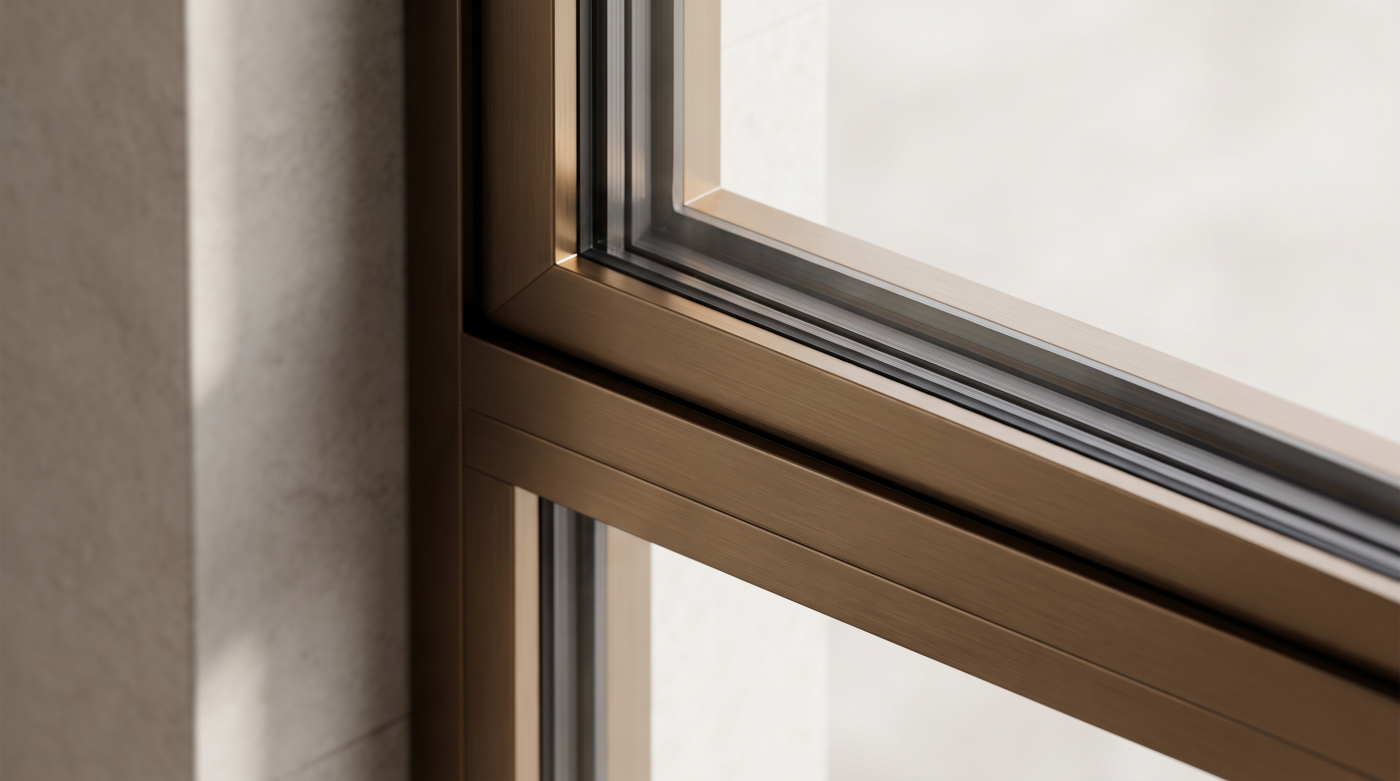
Why Two Similar-Looking Windows Can Cost Very Different Amounts
At first glance, the difference between a moderately priced window and one costing £1,200 can be surprisingly difficult to see. Both may have double or triple glazing, similar dimensions and frames that appear broadly comparable. Once installed, particularly when viewed from several metres away, there may be little to suggest why one required substantially greater investment. The explanation is that much of what determines the cost of a window is not immediately visible.
Behind the glass and frame sits a collection of engineering decisions. Frame construction, glazing specification, hardware, seals, coatings, opening mechanisms, manufacturing tolerances and finishes can all vary considerably. Larger panes may require stronger profiles and more capable hardware. Narrower frames can demand more sophisticated engineering to retain sufficient strength. Particular configurations, colours or finishes may introduce additional manufacturing complexity. None of these characteristics necessarily makes a window better in isolation; their value depends on what the architecture requires.
This is why comparing windows by size and appearance alone can be misleading. A straightforward opening in a secondary room may place relatively modest demands on the window. A large opening forming an important part of an elevation may need to satisfy very different structural, visual and performance expectations. Two units occupying similar areas of wall can therefore be doing quite different jobs.
The useful comparison is not simply whether one window costs £700 and another £1,200. It is whether the additional engineering, performance or design flexibility behind the more expensive specification produces an outcome that matters to the project. Only then does the price difference begin to have architectural meaning.
What Are You Actually Buying When You Spend More?
Spending more on a window can buy better performance, greater design freedom or more sophisticated engineering, but it does not automatically buy greater value. The distinction matters. A premium specification is worthwhile only when its additional qualities contribute something meaningful to the building, rather than simply increasing the cost of an element that already performs its intended role adequately.
Some differences are relatively straightforward. Higher-performing glazing and frame construction can reduce heat transfer, while specialist glass can address solar gain or acoustic requirements. More sophisticated hardware may enable larger opening elements, and stronger frame systems can make ambitious dimensions possible without compromising their operation. At the architectural end of the spectrum, additional investment may also allow slimmer sightlines, larger areas of uninterrupted glass, particular finishes or greater flexibility in the relationship between fixed and opening sections.
These characteristics can be valuable, but their importance varies considerably from one project to another. An acoustic glazing specification may be entirely rational beside a busy road and largely unnecessary in a quiet rural setting. Exceptional thermal performance may be central to the strategy of a highly insulated self-build, while producing less meaningful benefit where the surrounding building fabric performs relatively poorly. Similarly, paying for exceptionally slender profiles makes most sense when frame proportions are genuinely important to the architectural composition.
This is where good specification differs from simply choosing the most expensive option available. The objective is not to maximise every measurable characteristic. It is to identify which characteristics matter to the building and invest accordingly. A £1,200 window begins to justify itself when the additional expenditure solves a genuine architectural, performance or practical problem that a less expensive specification cannot solve as successfully.
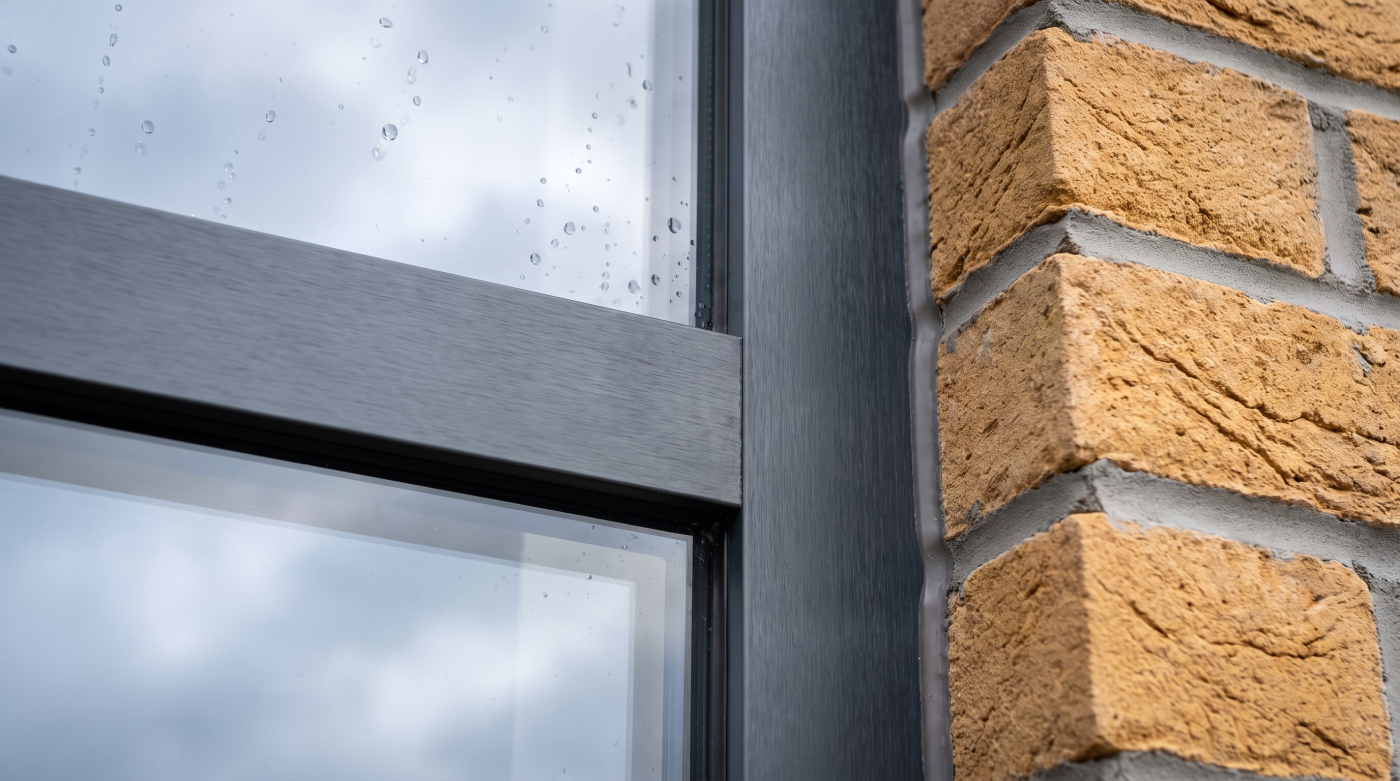
The Difference Between Energy Efficiency and Thermal Comfort
Energy efficiency is often the first justification given for spending more on windows. It is an understandable starting point: better-performing frames and glazing can reduce heat loss through the building envelope, and specifications are frequently compared using U-values. Yet energy efficiency alone does not fully explain what a higher-performing window can contribute to a home. Just as important, particularly where glazing occupies a significant proportion of a room, is thermal comfort.
A window influences comfort partly through the temperature of its internal surfaces. On a cold day, poorly performing glazing can remain noticeably cooler than the surrounding walls and room air. The result is not simply greater heat loss; occupants sitting close to the glass may experience a sense of cold even when the thermostat suggests that the room itself is warm. Better-performing glazing can raise those internal surface temperatures, making spaces adjacent to windows considerably more comfortable.
The significance of this changes with the architecture. A modest window in a traditionally proportioned room presents a different challenge from a large glazed elevation beside a dining table or living area. As glazing becomes larger and more integral to the way a space is occupied, its thermal characteristics become correspondingly more important. Orientation, exposure and the performance of the wider building fabric also influence what level of specification is appropriate.
This is why judging a premium window purely through predicted savings on an energy bill can miss part of its value. In some projects, the more meaningful return is a room that remains comfortable throughout the year while still achieving the generous areas of glazing the architecture demands. Performance, in that context, is not simply a number on a specification sheet. It affects how successfully the building can actually be lived in.
When Architecture Makes the Window More Important
Not every window in a house carries the same architectural importance. A small opening serving a utility room may primarily need to provide daylight, ventilation and dependable performance. A window overlooking a landscape, forming part of a principal elevation or occupying much of the wall of a living space has a different responsibility. In these situations, the window is no longer simply an opening in the building envelope. It becomes part of the architecture itself.
This is where details such as frame proportions, mullion positions, sightlines and glass dimensions begin to matter more. A poorly considered frame can interrupt a carefully composed view or introduce visual weight where the architect intended lightness. Conversely, a well-proportioned window can reinforce the geometry of an elevation, frame a particular outlook and influence how natural light enters the interior. The difference may appear subtle when individual products are viewed in isolation, yet become much more apparent once they are incorporated into the building.
That does not mean every architecturally significant opening requires the most expensive specification available. It suggests something more useful: glazing budgets can be allocated selectively. Greater investment may be justified in the principal kitchen, living space or feature elevation, while simpler windows perform perfectly well elsewhere. Treating every opening identically can be just as questionable as automatically specifying premium products throughout.
A £1,200 window therefore becomes easier to assess when considered in context. If it enables proportions, dimensions or visual qualities that materially improve an important part of the architecture, the additional expenditure may be entirely rational. Where the window has little influence on the character or experience of the building, the same investment may achieve more elsewhere.
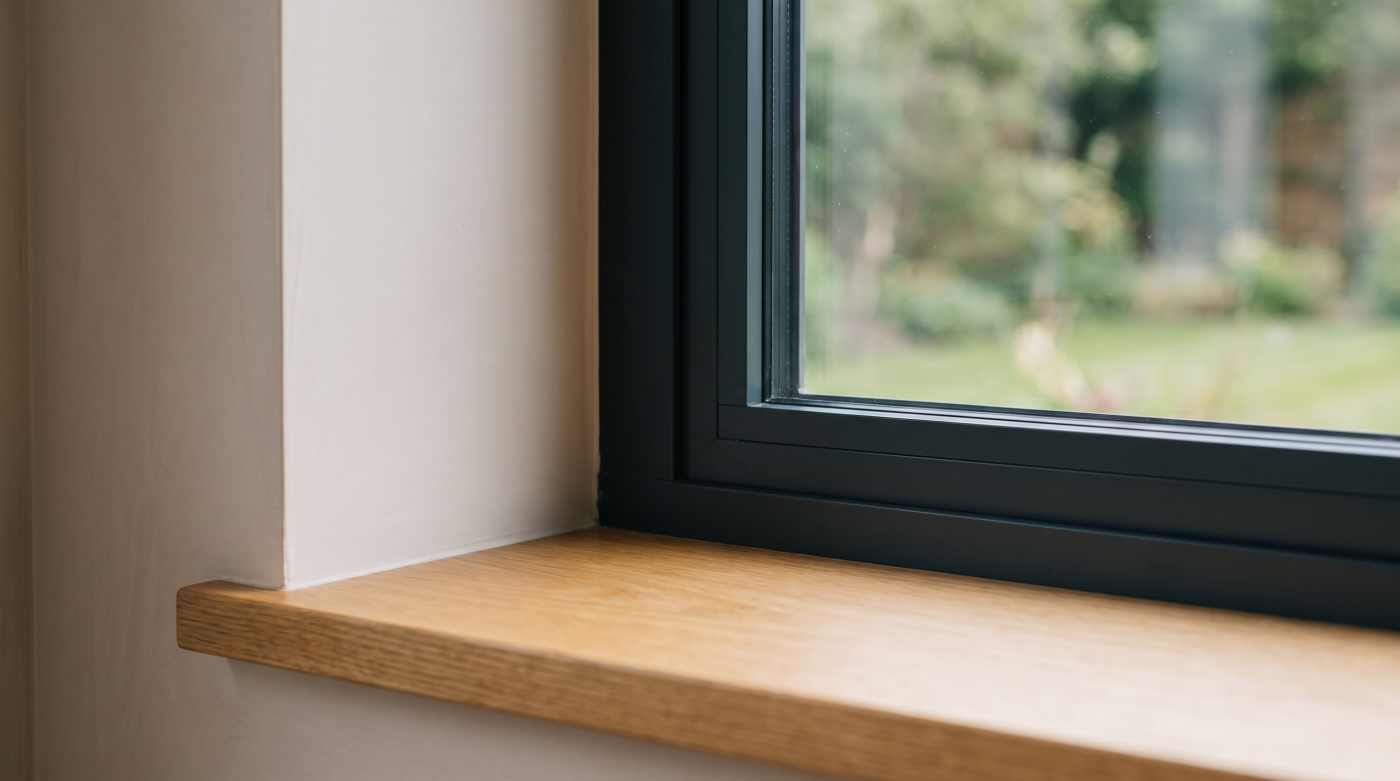
Why Durability and Maintenance Change the Value Equation
The purchase price of a window is easy to measure because it appears as a single figure at the beginning of a project. Its cost over the life of the building is less obvious. Windows are exposed components, expected to withstand sunlight, rain, temperature changes and repeated operation for many years. How materials, finishes, seals and hardware respond to those conditions can therefore be as relevant to value as the amount originally paid for them.
This does not mean that a more expensive window will automatically last longer. Durability depends on specification, manufacturing quality, exposure, maintenance and how the window is used. Material choice matters too. A finish that performs comfortably in a sheltered elevation may face very different conditions on an exposed façade, while components that require regular maintenance introduce an ownership commitment that should be understood before they are specified.
The consequences of deterioration also extend beyond the price of replacement parts. Repairing or replacing windows after a building is complete can involve disruption to decorations, finishes and surrounding construction. On larger or less accessible openings, the practical implications can become considerably greater. A modest difference in initial cost may look different when considered against twenty or thirty years of maintenance and intervention.
For that reason, value is better considered over time rather than at the point of purchase alone. The worthwhile window is not necessarily the one with the lowest initial price, nor the one carrying the highest specification. It is the one whose materials, construction and maintenance requirements are appropriate to its location and expected life within the building.
Installation Can Matter as Much as the Window
A high-performance window does not operate independently of the building around it. However sophisticated the frame or glazing may be, its eventual performance depends partly on how successfully it is incorporated into the wall, roof or façade. This is one reason why concentrating heavily on the specification of the window while treating installation as a secondary consideration can produce disappointing results.
The critical areas are often the junctions. The opening needs to be correctly prepared, the window accurately positioned and the interfaces around the frame considered in relation to weather protection, insulation and airtightness. Tolerances also matter. On a straightforward replacement project these issues may be relatively familiar, but larger openings and more ambitious architectural glazing can require much closer coordination between the glazing specialist, architect, builder and other trades.
This has an important implication when assessing value. There is little benefit in paying for excellent thermal performance if poorly considered installation creates weaknesses around the perimeter of the frame. Equally, carefully engineered sightlines and proportions can be undermined by inaccurate setting out or unresolved relationships with surrounding finishes. The product may have been capable of delivering the intended result, yet the completed construction does not allow it to do so.
For a £1,200 window to represent good value, therefore, attention cannot stop with the window itself. Specification and installation need to be considered as parts of the same architectural decision. The more demanding the performance or design ambition becomes, the more important that relationship is. Good glazing is ultimately not just manufactured well; it has to become part of the building well.
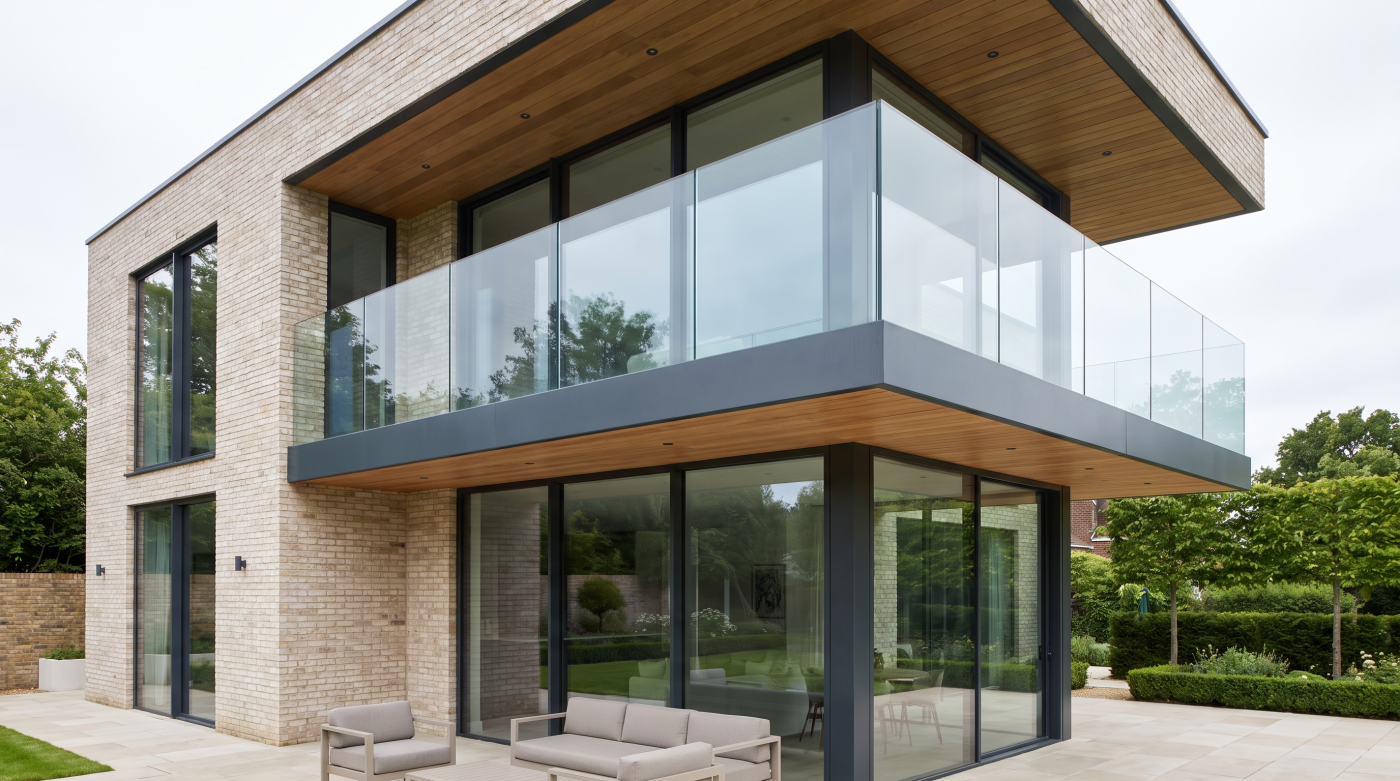
When a £1,200 Window Probably Is Not Worth It
There is a tendency in premium building projects to assume that a higher specification is inherently a better specification. In practice, good design is rarely about maximising every component. It is about understanding where additional performance, refinement or engineering will materially improve the finished building. There are circumstances in which spending £1,200 on a window provides little meaningful advantage over a less expensive alternative.
Over-specification is one example. Exceptional thermal performance may have limited practical value if the surrounding walls, roof and existing building fabric perform to a much lower standard. Specialist acoustic glazing is difficult to justify where external noise is negligible. Likewise, paying substantially more for exceptionally slender frames may make sense on a principal elevation or beside an important view, but considerably less on a secondary bedroom window where the difference has little architectural consequence.
The same principle applies across the project budget. Money committed to an unnecessary enhancement cannot be invested elsewhere. On a constrained project, protecting insulation continuity, improving airtightness, resolving installation details or investing in the glazing that defines the main living spaces may produce a more meaningful outcome than specifying the same premium window throughout the house.
This is the more useful interpretation of value engineering. It should not mean reducing quality indiscriminately. It means identifying what the architecture genuinely requires, protecting those qualities and removing expenditure that contributes little to the finished result. Sometimes a £1,200 window will be justified. Sometimes the more intelligent specification is the £700 alternative. Knowing the difference is more important than assuming that either price point represents better value.
How to Decide What a Window Is Really Worth
The question of whether a £1,200 window is worth the money cannot be answered by price alone. It depends on what that window is being asked to contribute to the building. Its architectural importance, dimensions, thermal performance, comfort, durability, maintenance requirements and relationship with the surrounding construction all influence whether the additional expenditure represents thoughtful investment or unnecessary specification.
This is why glazing is better considered as part of the overall project rather than as a collection of identical units with individual prices attached. Some openings deserve greater investment because they define an elevation, frame an important view or form part of a heavily glazed living space. Others perform a simpler role and may require considerably less. A well-resolved specification can accommodate both. Consistency does not necessarily mean spending the same amount everywhere; it means making decisions according to a coherent architectural and performance strategy.
The same perspective helps when comparing quotations. Rather than asking only why one window costs £500 more than another, it is more useful to identify precisely what the additional expenditure provides. If it delivers better proportions, necessary performance, greater comfort, appropriate durability or engineering that enables the architecture to work as intended, the premium may be entirely justified. If those benefits are irrelevant to the project, it may not be.
A £1,200 window can therefore be excellent value, just as it can be an unnecessary expense. The price tells us remarkably little on its own. What matters is whether the specification is appropriate to the building, because the best window is not necessarily the most expensive one. It is the one that allows the architecture to perform as intended without paying for qualities the project does not need.