
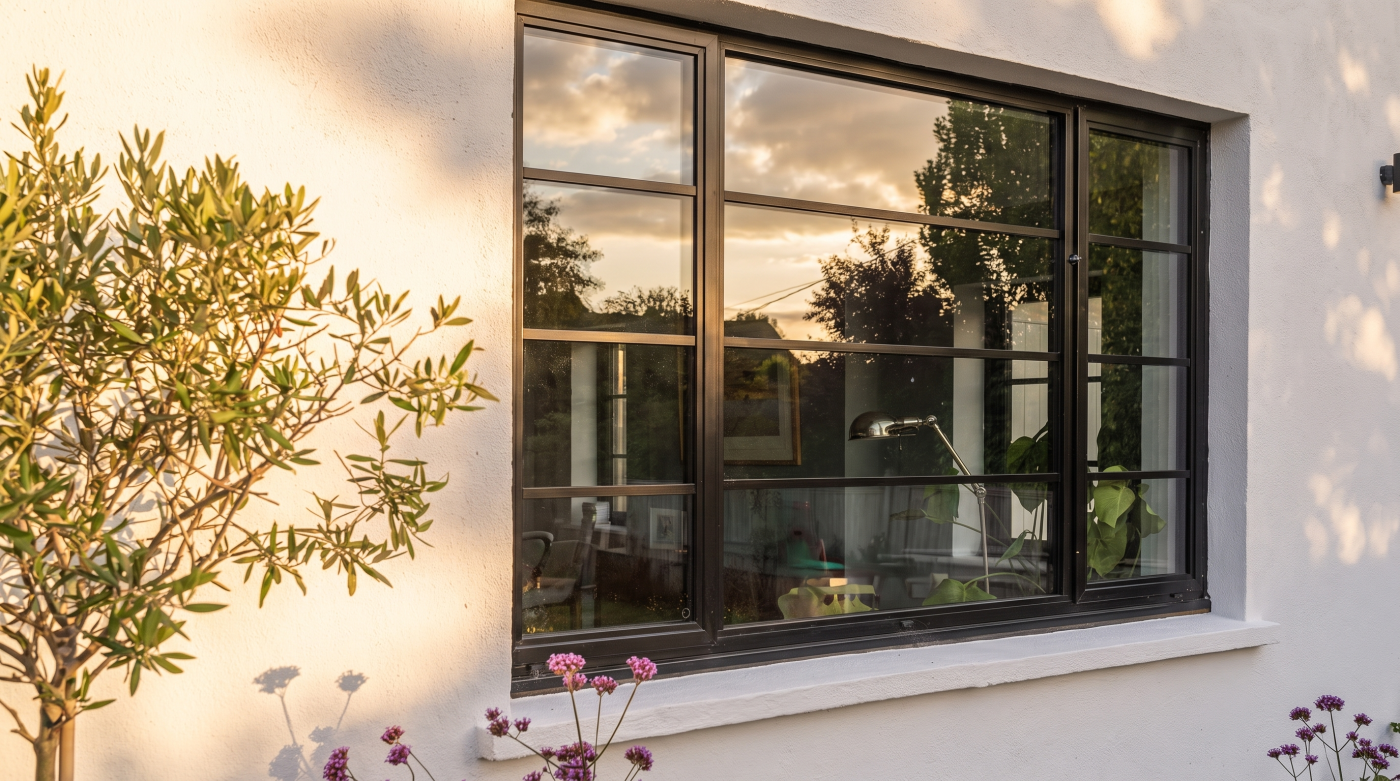
Steel-Look Is an Aesthetic. Steel Is a Material.
The phrase “steel-look glazing” can make a complicated design decision sound surprisingly simple.
It is often used to describe dark-framed windows and doors with narrow-looking profiles, strong glazing divisions and the distinctive geometric character associated with traditional metal glazing.
But there is an important distinction to make from the beginning:
Steel-look is an aesthetic. Steel is a material.
A window or door can borrow some of the visual language associated with steel without actually being manufactured from steel. Aluminium systems can also be configured to create dark frames, divided panes and strongly defined proportions that reference the same architectural character.
That does not make the two solutions interchangeable.
Nor does it mean one is automatically better than the other.
The useful question is what the project is actually trying to achieve.
For one homeowner, the objective may be to introduce a steel-inspired screen between a kitchen and living space.
For another, it may be to create a strongly divided glazed elevation within a contemporary extension.
A period property might already contain historic metal windows whose character forms part of the architectural identity of the building.
An architect designing a new home may want genuine steel because the material itself, its profiles and its visual character are fundamental to the design.
Those are very different briefs.
This is where comparisons based purely on appearance can become misleading.
If the requirement is simply for slim-looking, dark-framed glazing with a steel-influenced character, an appropriate aluminium system may provide the architectural language the project requires.
If the requirement depends on genuine material character, particular profile geometry, an existing metal-window language or historical authenticity, steel may need to be considered on its own terms.
The distinction becomes especially important on heritage projects. Where existing windows have historic significance, or where a listed building or conservation context is involved, the decision cannot responsibly be reduced to which modern product looks most similar. The relevant architect, heritage professionals and authorities may need to inform what is appropriate.
For contemporary projects, there can be considerably more freedom.
And that freedom creates a better question than:
“Which looks more like steel?”
Ask instead:
“Does this project actually need steel, or does it need some of the architectural characteristics we associate with steel?”
Once that distinction is clear, the comparison becomes much more useful.
Because the objective should not be to reproduce an inspiration photograph as closely as possible.
The material decision should follow the architectural intent—not the other way around.
Why the Steel Look Came Back
The renewed interest in steel-style glazing is easy to dismiss as another design trend.
Dark frames, narrow-looking profiles and repeated glazing bars have become highly recognisable features of contemporary renovations, extensions and interiors.
But the appeal goes deeper than appearance.
Steel-inspired glazing does something that much contemporary glazing has spent years trying to avoid: it makes the frame visible.
Minimal-frame systems pursue an almost opposite architectural objective. The frame is reduced wherever possible so that glass, views and landscape dominate.
Steel-inspired glazing deliberately brings structure back into the opening.
Vertical divisions create rhythm. Horizontal bars establish proportion. Repeated panes can give a large opening a human scale. Instead of attempting to make the glazing disappear, the frame becomes part of the architectural composition.
That difference helps explain why the aesthetic works particularly well in certain projects.
A large opening within a brick or stone extension can sometimes benefit from stronger visual structure. An internal glazed screen can separate spaces without creating the visual weight of a solid wall. Tall, narrow panes can reinforce vertical proportions within an elevation.
The appeal can also come from contrast.
Steel-inspired frames can sit convincingly alongside materials with very different characteristics: textured brick, natural stone, timber, plaster or concrete. The precision of the frame provides a counterpoint to materials that are warmer, softer or more irregular.
Importantly, none of this requires the architecture to be genuinely industrial.
That association is certainly part of the aesthetic’s history, but contemporary applications can be considerably more restrained. A finely divided glazed door within a warm residential interior can feel very different from the factory-style imagery often associated with traditional steel windows.
This is where proportion becomes more important than simply choosing black frames.
A dark aluminium door with arbitrary glazing bars does not automatically acquire convincing steel character.
The placement of those divisions, the proportions of the panes and their relationship with the surrounding architecture determine whether the result feels considered or merely decorative.
That is why the revival is better understood as a renewed interest in visible structure.
After years in which premium glazing has often been associated with making frames increasingly unobtrusive, some architecture is moving confidently in the opposite direction.
The frame is allowed to participate again.
And sometimes that is exactly what the building needs.
Not all premium glazing needs to disappear. Sometimes the frame is supposed to be seen.
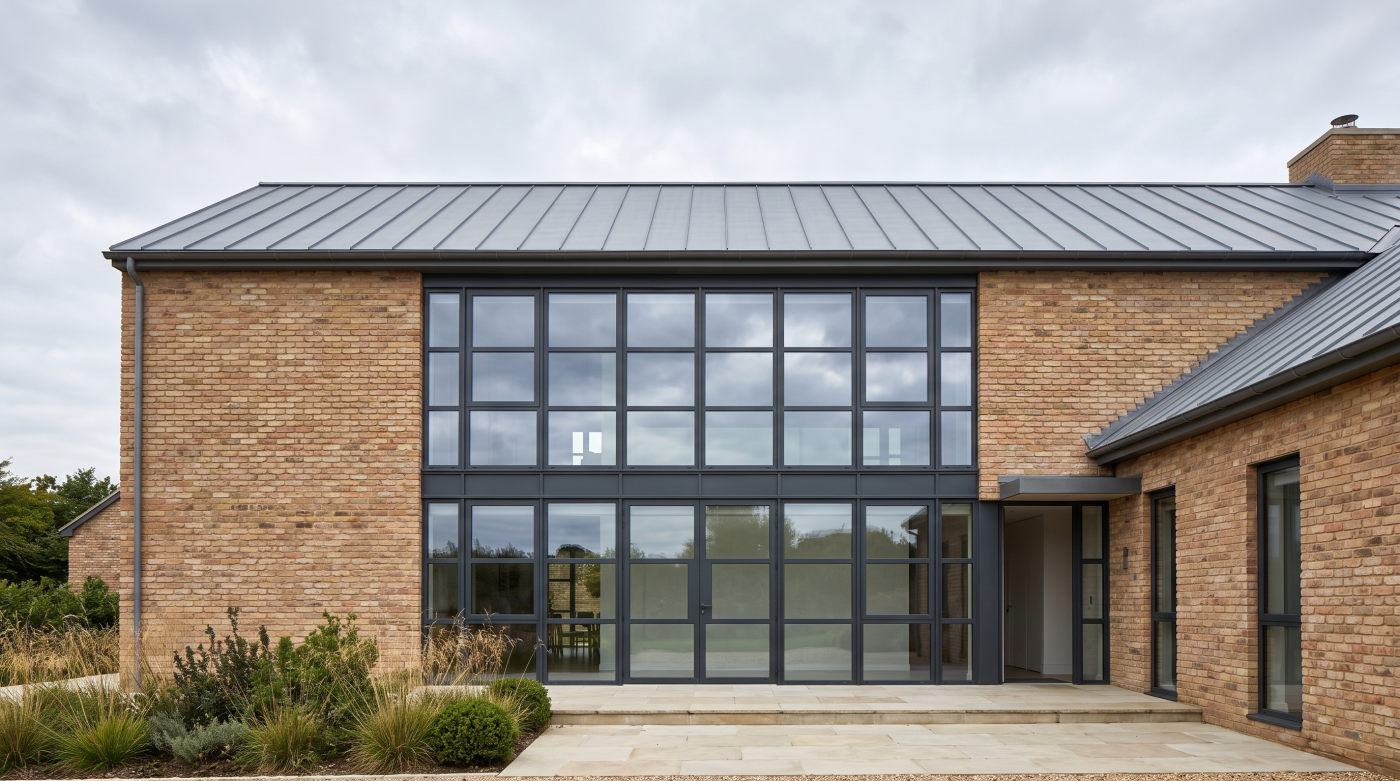
Genuine Steel Has a Material Character of Its Own
If aluminium can reproduce some of the visual characteristics associated with steel, an obvious question follows:
Why specify genuine steel at all?
The answer is that architecture is not always about achieving a similar appearance from a distance.
Sometimes the material itself matters.
Genuine steel systems have their own profile geometry, junctions, proportions and material presence. Where those characteristics form part of the architectural intention, reducing the decision to whether aluminium can create a broadly similar visual effect misses the point.
This becomes particularly relevant when a building already has a relationship with metal windows.
An older property may contain original or historically significant steel windows. An industrial conversion may derive part of its character from existing metal glazing. An architect may be working with an established pattern of narrow openings and repeated divisions that contributes to the identity of the building.
In those situations, the question may not simply be:
“Can we achieve the steel look?”
It may be:
“What role does genuine steel play in the character of this architecture?”
That distinction matters.
Material authenticity can carry architectural value in its own right. The way a profile meets the glass, the visual weight of a junction and the relationship between repeated sections can contribute to an appearance that is difficult to understand from frame colour alone.
This does not mean genuine steel is automatically the correct choice for every period property or every project seeking a traditional metal-window character.
Nor should assumptions be made about relative performance, maintenance, cost or suitability simply from the material name. Those questions need to be assessed against the actual systems and project requirements being considered.
Heritage projects require particular care.
Where existing metal windows contribute to the significance of a listed building or historically important property, replacing them with something that looks broadly similar cannot automatically be assumed to be appropriate. The architect, heritage consultant and relevant authorities may need to establish what should be retained, repaired, replicated or replaced.
That is a different conversation from choosing glazing for a contemporary extension.
And it illustrates why genuine steel should not be treated merely as the reference aesthetic against which aluminium alternatives are judged.
Sometimes steel being steel is part of the design intent.
If that authenticity matters to the architecture, then an alternative material that produces a similar photograph may still be answering a different brief.
The closer material authenticity sits to the heart of the project, the less useful a purely visual comparison becomes.
Aluminium Can Interpret the Look Without Pretending to Be Steel
Calling an aluminium system a “steel alternative” can create the impression that it is attempting to be a substitute for something more authentic.
That is not always the most useful way to think about it.
For many contemporary projects, the objective is not to reproduce a historic steel window precisely. It is to use some of the architectural language associated with steel—defined frames, repeated divisions, slender-looking proportions and a stronger sense of rhythm within the opening.
An aluminium system can interpret that language without pretending to be something it is not.
This distinction matters because interpretation and replication are different design objectives.
Consider a contemporary extension to a stone or brick property.
The architect may want a large glazed opening divided into a series of tall panes. The purpose might be to introduce rhythm to the elevation, provide a stronger counterpoint to the existing masonry or create a more structured transition between the house and garden.
There may be no requirement for anyone to believe the glazing is historic steel.
In that context, the success of the design depends less on imitation and more on whether the aluminium system delivers the proportions and composition the architecture requires.
The same applies internally.
A glazed screen between a kitchen and another living space may use dark framing and repeated panes to create separation without losing light or visual connection. Its reference to traditional steel glazing can be clear without requiring literal reproduction.
This is a more confident architectural position.
Rather than asking:
“How do we make aluminium look exactly like steel?”
ask:
“Which characteristics of steel-inspired glazing are important to this design?”
Perhaps it is the vertical emphasis.
Perhaps it is the rhythm of smaller panes.
Perhaps it is the stronger visual presence of the frame.
Perhaps it is the contrast between precise dark glazing and softer materials such as timber, plaster, brick or stone.
Once those characteristics are identified, the actual systems being considered can be evaluated against them.
That evaluation still needs to be specific.
Aluminium systems vary significantly in visible profiles, glazing-bar arrangements, opening configurations, hardware, finishes and other characteristics. Those capabilities should be established from verified manufacturer information rather than assumed simply because a product is marketed as “steel-look.”
And there will be projects where the aluminium interpretation does not satisfy the architectural brief.
If the profile geometry, material authenticity or relationship with existing historic steel is fundamental to the project, genuine steel may remain the more appropriate material to investigate.
But where the objective is contemporary interpretation, aluminium should not automatically be viewed as an imitation.
Good architecture does not always need to reproduce its references literally.
Sometimes understanding the architectural language—and interpreting it deliberately—is the more convincing approach.
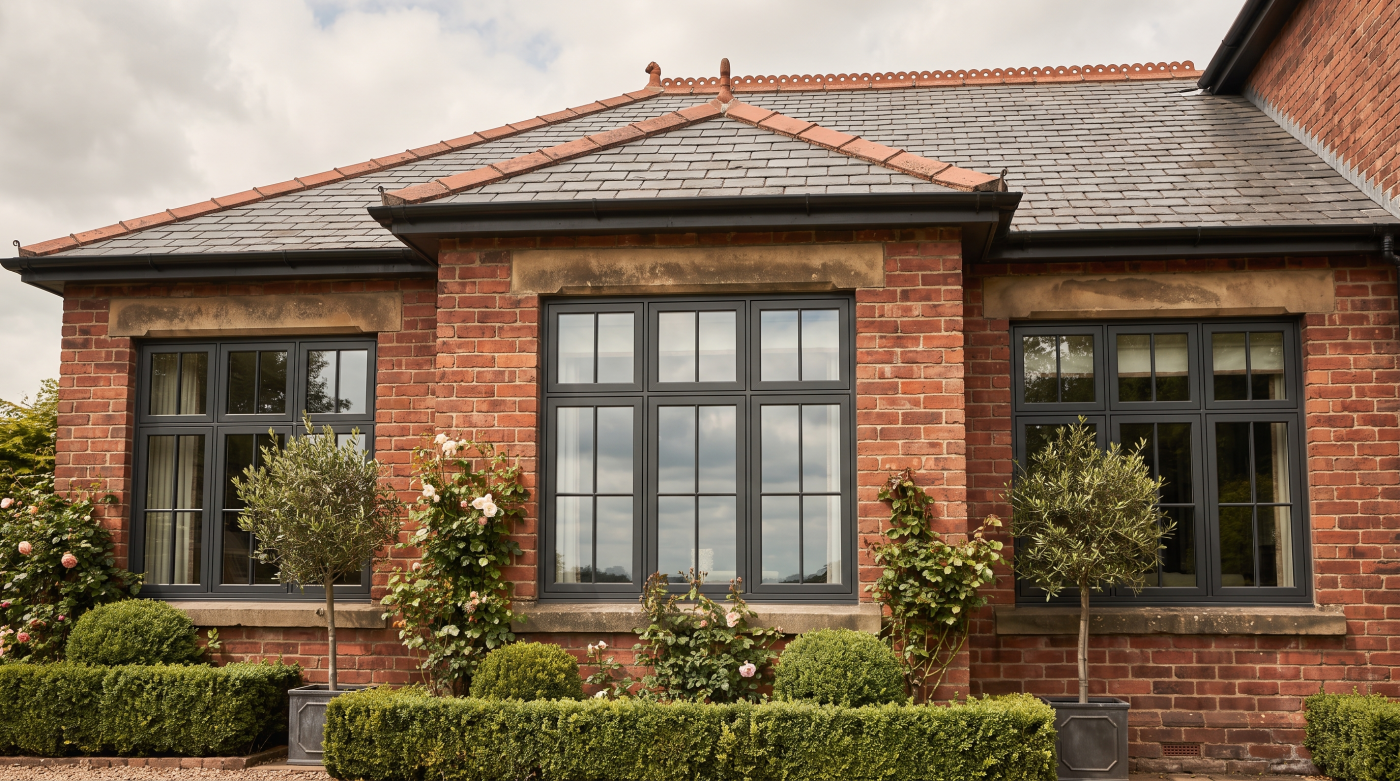
The Glazing Bars Can Make—or Break—the Effect
One of the easiest ways to misunderstand steel-look glazing is to assume that the effect comes primarily from the frame colour.
Choose a dark frame, add glazing bars and the result will look like steel.
In practice, the proportions matter far more than that formula suggests.
Steel-inspired glazing derives much of its architectural character from rhythm. The relationship between vertical and horizontal divisions, the width and height of individual panes, and the way those divisions continue across adjacent doors and windows all influence how convincing the finished composition feels.
This means glazing bars should not be treated simply as decoration added after the opening has been designed.
They are part of the architecture.
A tall opening, for example, may benefit from vertical divisions that reinforce its proportions. A wide glazed elevation may need a different rhythm entirely. Where several openings sit together, inconsistent divisions can create unnecessary visual noise even when each individual window looks perfectly acceptable in isolation.
There is also a temptation to add more divisions because a stronger grid appears more recognisably “steel-look.”
But more is not necessarily better.
Too many bars can make a large opening feel unnecessarily busy, particularly where the glazing is intended to frame an important garden or landscape view. Too few may leave the composition without the character that attracted the homeowner to steel-inspired glazing in the first place.
The correct balance depends on the building.
Look at the width and height of the opening.
Consider the proportions of nearby windows and doors.
Look at existing architectural rhythms within the elevation.
Think about how the glazing will appear from inside the room as well as outside the building.
And consider what happens beyond the glass.
A grid that looks attractive on an elevation drawing may become frustrating if its most prominent vertical division sits directly through an important view.
This is why copying a glazing-bar arrangement from an inspiration photograph can be unreliable. The proportions that worked beautifully on one building were responding to that opening, that elevation and that architecture.
The construction and appearance of glazing bars also vary between systems. How divisions are formed, their visible dimensions and which configurations are available should therefore be established from verified information for the specific products being considered.
The design principle, however, remains consistent.
Black frames do not create convincing steel character on their own.
The real work is being done by proportion, repetition and visual rhythm.
Get those relationships right and the glazing can feel like an integral part of the architecture.
Get them wrong and even an expensive system can look as though a grid has simply been drawn across the glass.
Period Property, Contemporary Extension or New Build?
The same steel-inspired glazing can communicate something completely different depending on the building it sits within.
Context changes the meaning of the frame.
On a period property, divided metal glazing may already form part of the building’s architectural language. On a contemporary extension, similar proportions might be introduced deliberately as a contrast with older masonry. On a new build, there may be no historical reference at all—the divisions exist simply because they strengthen the composition.
That distinction should influence how literally the steel aesthetic is interpreted.
In a period property, the first question is not necessarily whether steel or aluminium looks better.
It is what already exists.
Original metal windows, established glazing patterns and historically significant details may influence what is appropriate. Where listed status, conservation considerations or historically important fabric are involved, decisions about retention, repair, replication or replacement may require input from the architect, heritage consultant and relevant authorities.
A contemporary extension presents a different opportunity.
Here, steel-inspired glazing does not necessarily need to imitate the original building. In fact, its strength may come from creating a deliberate distinction between old and new.
Against Bath stone, Cotswold limestone, brick or other traditional masonry, a strongly divided glazed elevation can introduce precision and rhythm without attempting to disguise the extension as historic architecture.
An aluminium interpretation may therefore be entirely appropriate where genuine material authenticity is not central to the brief.
A contemporary new build removes the historical question almost completely.
Now the grid has to justify itself architecturally.
Does it improve the proportions of the elevation?
Does it create useful rhythm across a large opening?
Does it relate to other windows and doors?
Does it strengthen the interior?
Or has the grid been introduced simply because steel-look glazing is currently desirable?
That last question matters.
A fashionable aesthetic can be convincing when it reinforces the architecture. It becomes much more vulnerable to dating when the building provides no reason for it to be there.
This is particularly relevant across the types of projects found throughout Bath, the Cotswolds, Wiltshire, Somerset and Bristol, where contemporary glazing frequently meets older buildings, natural stone, converted structures and architect-designed additions.
There is no single correct level of historical reference across those projects.
Some require authenticity.
Some benefit from contrast.
Others need no historical reference whatsoever.
The same glazing language can represent heritage, contemporary contrast or pure architectural composition.
The building determines which one it becomes.
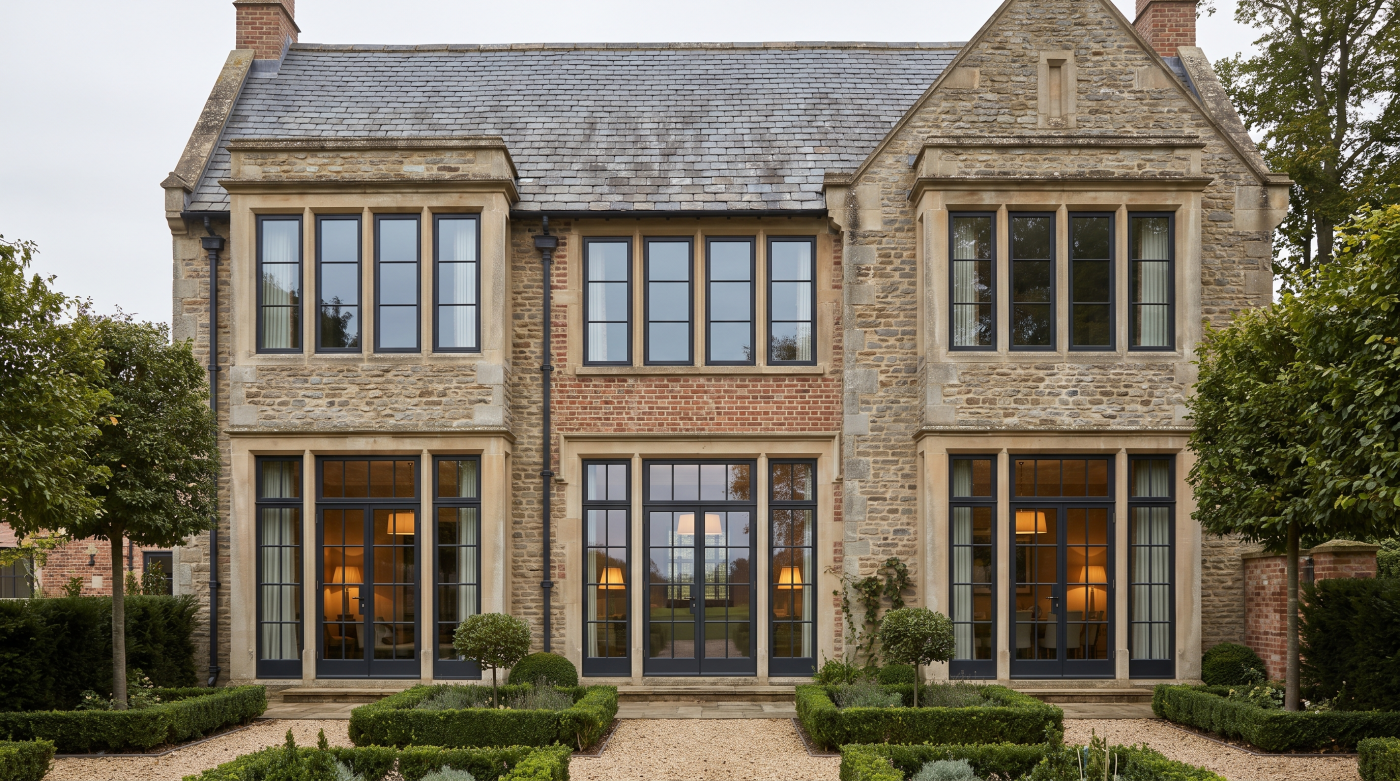
Compare Systems, Not Material Stereotypes
Once the architectural direction is established, the steel-versus-aluminium question becomes more practical.
This is also where comparisons can become misleading.
Broad claims are easy to make:
Steel is slimmer.
Aluminium performs better.
Steel lasts longer.
Aluminium costs less.
But statements like these are rarely useful without knowing which actual systems, configurations and project requirements are being compared.
A material category is not a specification.
Two systems manufactured from the same material can differ significantly in their profiles, opening arrangements, glazing options, hardware, finishes and declared performance. Comparing “steel” with “aluminium” in the abstract can therefore hide the differences that actually matter to the project.
A better comparison begins with the shortlisted systems.
First, look at what the architecture will actually see.
What are the visible frame proportions? How do mullions, transoms and glazing bars appear? What happens where doors meet fixed glazing? How are corners and junctions resolved? Does the system produce the rhythm established in the architectural design?
Then look at what the project requires the glazing to do.
Which opening configurations are available? What glazing options can the system accommodate? Which finishes are offered? What hardware is used? Where doors meet internal and external floor levels, what threshold arrangements are available?
Performance should be treated with the same discipline.
Rather than assuming that one material is inherently superior, examine the relevant declared information for the actual products under consideration and assess it against the requirements established for the project.
The same principle applies to maintenance, warranties and manufacturer support.
These should be verified rather than inferred from the words steel or aluminium.
Cost deserves similar caution.
A meaningful comparison needs to consider equivalent project requirements, configurations and scope. A generic statement that one material is always more or less expensive tells the homeowner very little about what two genuinely comparable solutions will mean for their project.
This approach also prevents appearance from dominating everything else.
A system may produce exactly the steel-inspired character shown in an inspiration image but prove unsuitable for the opening configuration the architecture requires.
Another may satisfy the practical brief but create proportions that fundamentally change the intended elevation.
Neither outcome is resolved by arguing about materials in general.
The useful question is much narrower:
Which actual system best satisfies the architectural and project requirements established for this opening?
That is where specification becomes meaningful.
Not:
steel versus aluminium.
But:
this steel system versus this aluminium system, for this building, against this brief.
Choose Authenticity Where It Matters—and Interpretation Where It Doesn’t
So, genuine steel or an aluminium alternative?
There is no useful universal winner.
The right choice depends on whether the architecture requires genuine steel itself or the architectural language associated with it.
That distinction should sit at the centre of the decision.
On a project where existing steel windows contribute to the character of the building, where particular profile geometry is important, or where the architect deliberately wants steel as part of the material palette, genuine steel deserves to be considered on those terms.
The material is part of the architectural intent.
An aluminium alternative answers a different brief.
It can be entirely appropriate where the objective is to introduce steel-inspired proportions, darker framing, repeated panes or stronger visual rhythm without attempting to reproduce historic steel construction.
That might apply to a contemporary extension, a new-build home or an internal glazed screen where the reference to traditional metal glazing is intentional but interpretive.
Neither approach is inherently more architecturally sophisticated.
What matters is whether the decision is honest about what it is trying to achieve.
If the brief is replication, authenticity becomes important.
If the brief is interpretation, there can be considerably more freedom.
And if the brief is simply “we like steel-look doors”, the design process needs to go one stage further before a system is selected.
Ask what specifically creates the appeal.
Is it the narrow-looking profiles?
The vertical emphasis?
The repeated panes?
The dark frame?
The relationship with brick or stone?
The industrial reference?
The way the glazing divides an interior without closing it off?
Once those characteristics are understood, the design team can decide how literally they need to be reproduced.
That also provides a better defence against fashion.
Steel-inspired glazing may be enjoying renewed attention now, but a successful project should not depend on the phrase “steel-look” remaining fashionable.
The proportions should still work.
The divisions should still belong to the elevation.
The frame should still establish the right relationship with the surrounding materials.
And the selected system should still satisfy the practical requirements established for the project.
That is ultimately more important than winning an abstract argument about materials.
There will be projects where genuine steel is fundamental to the architectural answer.
There will be others where aluminium provides a deliberate contemporary interpretation.
The mistake is assuming those projects are trying to achieve exactly the same thing.
If the architecture needs genuine steel, specify steel for a reason. If it needs a steel-inspired language, aluminium may provide a convincing interpretation.
The important part is knowing which brief you are actually trying to solve.