
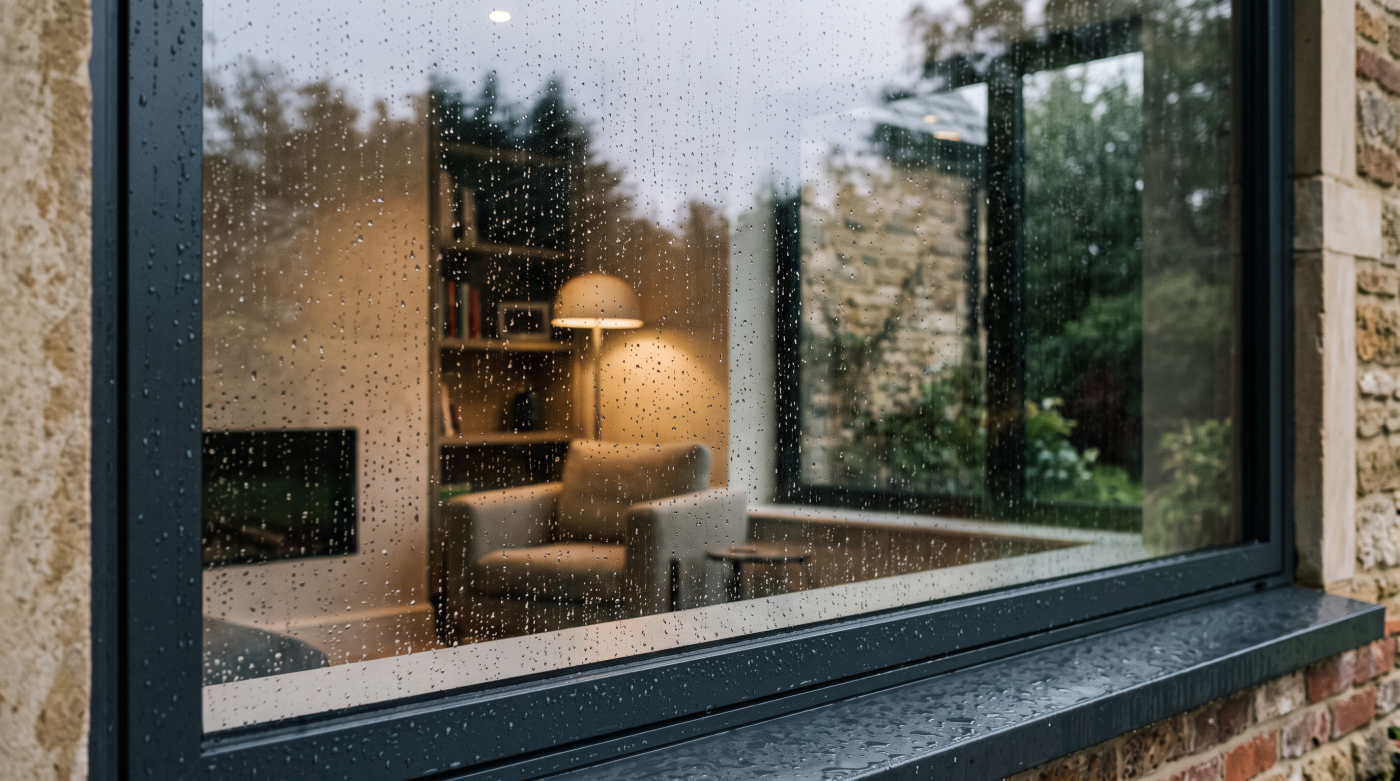
1. Weather tests the whole opening
A window can seem entirely sound through a dry week and then admit air or water during a single period of driving rain. This is not mysterious. Wind changes the pressure across an elevation and pushes rain against surfaces it may barely touch in calmer weather. Orientation, shelter, height and the shape of adjacent walls all affect what a particular opening experiences.
Autumn and winter often bring the stronger low-pressure systems associated with UK storms, though there is no fixed period in which problems can appear. The Met Office describes how the autumn and winter jet stream can intensify such systems. For a homeowner, the important question is more local: which elevation was exposed, and what happened there?
Even matching windows on the same house can behave differently. One may sit beneath a deep overhang; another may face open countryside. An upper window and a low garden door meet different rain and drainage conditions. A defect revealed by one storm should therefore be understood in its setting rather than treated as proof that every window is failing.
Weather is a demanding test of the whole opening, including its seals, sill, perimeter and surrounding construction. It gives valuable evidence, but that evidence needs interpreting before a remedy is chosen.
2. Decide whether the problem is air or water
The first distinction is simple and consequential. A draught felt around a frame, water running onto a sill, staining within a reveal and condensation on a pane are different observations. They may occasionally share a cause, but they should not be combined under the vague description of a “leaky window”.
Note when the symptom begins. Does air move whenever the wind rises, or only when the sash is not fully latched? Does water appear during prolonged rain, or only when wind comes from a particular direction? Does moisture sit on the room-facing surface of the glass and clear later in the day? The pattern can point toward an opening joint, a frame-to-wall junction, drainage, or indoor humidity.
Look for a path without dismantling the opening. Water can travel behind finishes and emerge at a point some distance from where it entered. A dark mark below a frame may be old damage or an active route. Photographing it at the start and end of an event can help establish the difference.
Where water is entering, protect vulnerable interior finishes and seek prompt assessment. Where the problem is uncertain, a precise record of the weather and symptom will make any later investigation more productive. Diagnosis begins with describing what the building actually did.
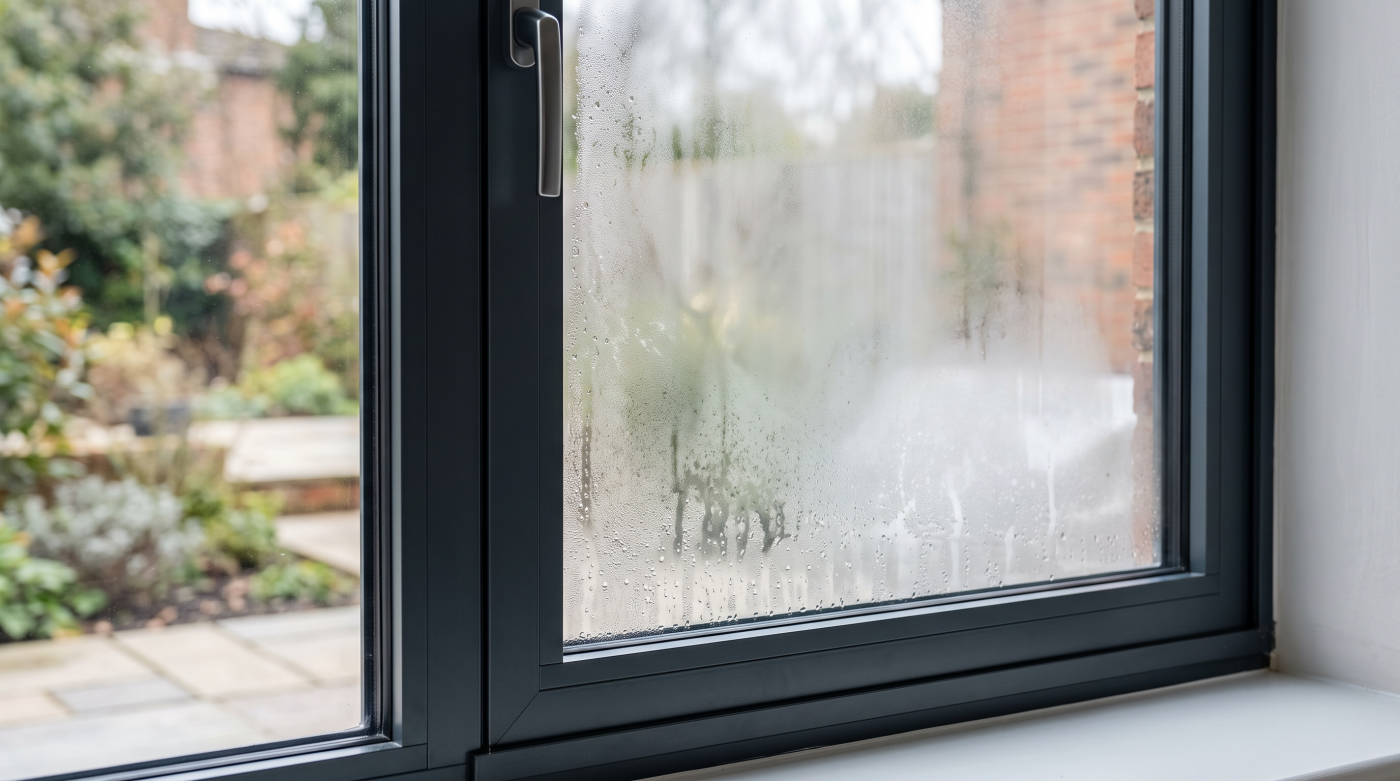
3. Look at seals, hardware and moving parts
An opening window depends on its moving parts meeting the fixed frame consistently. A worn gasket, loose hinge or sash that sits slightly out of alignment may be barely noticeable on a still day. Under wind pressure, the same imperfection can become a clear route for air and, in some conditions, rain.
When it is safe to do so, check whether the window closes without force and latches as intended. Observe whether seals are visibly displaced, torn or compressed unevenly. Do not assume that pushing harder on a handle is a satisfactory adjustment; excessive force can damage hardware and obscure the underlying problem. A competent repair may be considerably more appropriate than replacing the entire opening.
Fixed glazing has fewer moving parts, but the surrounding seals and glazing detail still deserve inspection. A door threshold adds regular foot traffic and a close relationship with external ground levels. The context changes what should be examined, even when the symptom sounds similar.
The architectural lesson is that performance is built from connections, not only from glass and frame material. Each joint has a specific purpose. Repair should restore that purpose, with replacement considered when the condition of the assembly or the wider design makes a limited intervention inadequate.
4. Examine the junction between frame and wall
The perimeter of a window is where two systems meet. The frame has its own movement and drainage arrangements; the wall may be masonry, timber construction or a mixture of materials and previous repairs. Their connection must resist weather while allowing the opening to remain sound over time.
During a storm, a weakness at this joint may look exactly like a window failure from inside the room. Air or water can pass behind trim and appear beside the frame. Cracks in external finishes, damaged pointing, failed perimeter seals or a problem higher on the wall can all deserve investigation. The visible exit point is not necessarily the entry point.
A new window inserted into the same poorly understood junction can inherit the same problem. For that reason, an assessment should consider the reveal, sill, head and surrounding façade, not simply the sash and glazing unit. The detail is especially important when a replacement frame has a different depth or position from the one removed.
Look at the opening as a small piece of architecture. Its proportions, shadow and finish matter, but so do the less visible layers that keep the interior dry. Good diagnosis traces the path through those layers before choosing a surface repair or a new product.
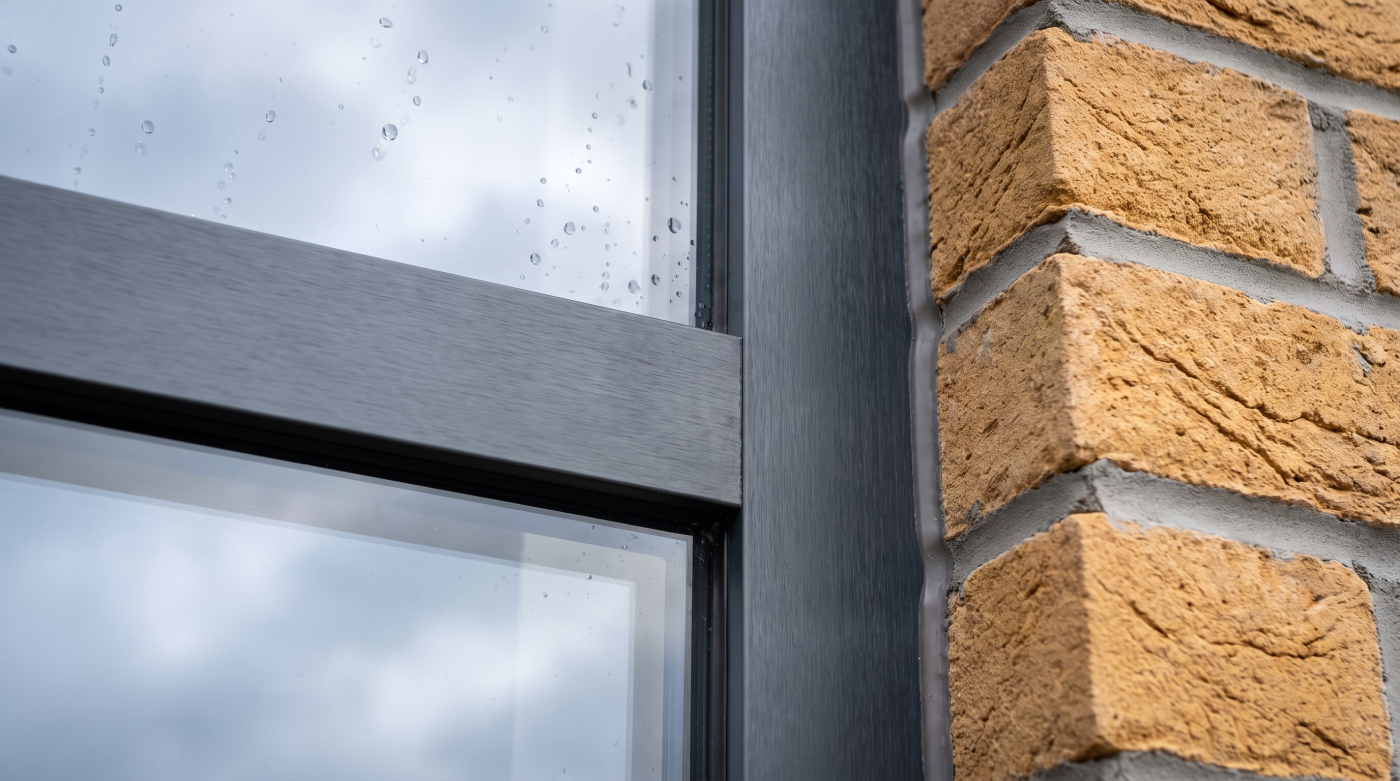
5. Follow the water downwards
Rain should be directed away from vulnerable joints and interiors. Sills, drainage routes and thresholds are designed around that principle, yet their effectiveness depends on how they meet the wall and the ground outside. Leaves and debris can obstruct accessible drainage. A changed terrace level can bring water closer to a door than the original detail anticipated.
Observe where water gathers during heavy rain. Does it run away from the sill or linger against the frame? Does paving slope toward a threshold? Is splashback from a hard surface reaching a low joint? These questions are particularly useful for garden doors and exposed ground-floor openings. They may explain why a problem occurs only during a combination of wind and prolonged rain.
Water management is not the same as trying to make every visible gap disappear. Some designed routes carry incidental water back outside. Blocking them can create a new problem. Repairs should be based on an understanding of the opening’s drainage arrangement and the surrounding construction.
On a new project, coordinate external levels, drainage and the desired threshold appearance from the start. A visually quiet transition can be achieved only if it also deals credibly with rain. On an existing house, tracing water downwards often reveals a simpler and more durable remedy than another bead of sealant.
6. Treat older buildings with particular care
Older buildings may contain windows that have been repaired, painted and adapted over many decades. Their walls and openings may be irregular, and previous changes can alter how rain and air move around them. A storm may reveal a failed recent repair as readily as a worn original component.
Begin by understanding what is significant and what is actually defective. A timber sash might need local joinery repair and draught-proofing. A surrounding reveal might be the source of water entry. A later, unsympathetic replacement might be responsible for both an awkward appearance and a poor junction. These situations call for different decisions, even when the immediate symptom is described as a leak.
Historic England’s guidance on draught-proofing sets out the case for examining traditional windows and doors carefully and improving them where appropriate. Retaining sound historic fabric can preserve the detail that gives an elevation its character. Any work on a listed building should also follow the relevant consent requirements.
The building’s age is not an argument for tolerating damaging water ingress. It is a reason to diagnose the failure accurately and choose a repair compatible with its construction. A well-judged intervention can improve comfort and weather protection without erasing the architecture that makes the house distinctive.

7. Know when the evidence calls for a specialist assessment
A single event can leave uncertainty. Several clear observations begin to form a pattern. Record the weather direction if known, the duration of rain, the location of moisture or air movement and any change in the opening’s operation. Photographs taken during and after the event can help an assessor distinguish fresh ingress from old staining.
Seek prompt help when water is actively damaging finishes, an opening is insecure, glass is damaged or materials appear loose. Recurrent symptoms also justify a fuller inspection, particularly when simple maintenance has not resolved them. The inspection may need to extend beyond the window to masonry, roof edges or external ground levels. Guessing at the cause from an interior mark alone can lead to repeated, ineffective repairs.
Ask the assessor to explain the likely entry route and how the proposed remedy deals with it. Where the evidence is incomplete, a staged approach may be sensible: make the opening safe, carry out a focused repair, then observe how it performs in comparable weather. A recommendation to replace should be supported by the condition of the opening and the expected improvement to the whole detail.
Storms provide useful tests, but diagnosis still requires judgement. A clear record allows that judgement to rest on what the building has shown rather than on the urgency of the moment.
8. Specify for exposure, not just appearance
If a wider change is justified, let the conditions that revealed the problem inform the next specification. An exposed elevation, a low terrace door and a sheltered upper window do not need identical details simply because they belong to the same house. Their design should respond to view and proportion while accounting for wind, rain, access, drainage and maintenance.
Consider how the new frame will sit in the wall, where water will be shed, how the sill or threshold will meet external surfaces and who is responsible for the perimeter detail. Review operation in everyday conditions as well as the appearance of the closed window. A beautiful elevation is a poor outcome if a frequently used opening is awkward to secure or weatherproof.
There is room for restraint. The remedy may be a repaired sash, a redesigned sill or a better installation joint rather than a different window throughout the house. Where replacement is appropriate, it should improve the building as a whole, not merely provide a new surface at the point where water appeared.
Storm weather reveals how an opening behaves under pressure. Its lasting value is the chance to specify with greater knowledge: of the exposure, the building fabric and the architectural role the glazing is meant to fulfil.