
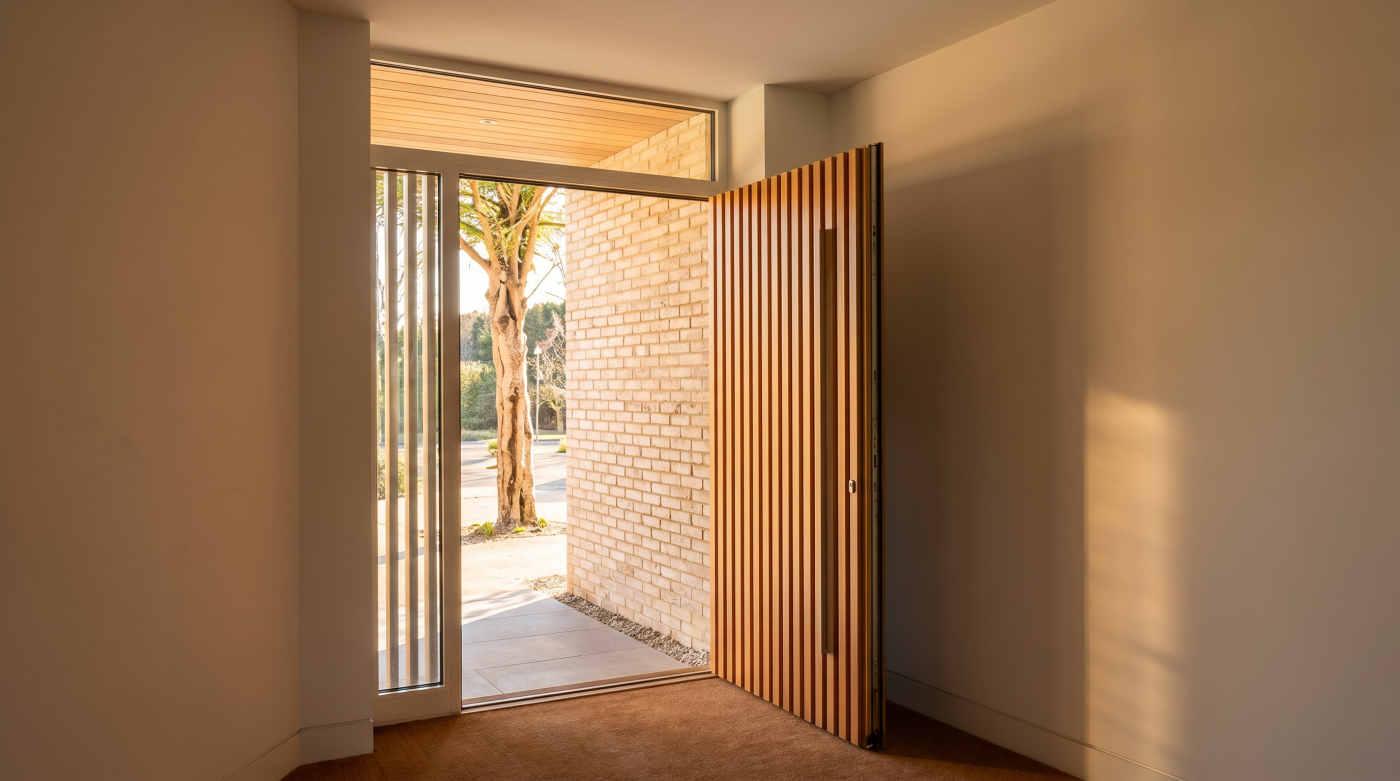
Section 1: The Entrance Door Should Belong to the Architecture
When homeowners begin looking for a new entrance door, the search often starts with colours, finishes or security features. While these are all important considerations, architects usually begin somewhere entirely different. Before discussing the door itself, they first study the building it will become part of. The entrance is not an isolated feature added at the end of a project; it is an integral element of the home’s architectural composition. A successful entrance feels as though it has always belonged there, supporting the character of the building rather than drawing attention away from it.
This is because the entrance door plays a unique role within residential architecture. Unlike many other building components, it is experienced repeatedly by both occupants and visitors. It forms the point of arrival, creates the first impression of the property and establishes expectations before anyone steps inside. Whether the house is a Georgian townhouse, a rural farmhouse or a contemporary self-build, the entrance communicates something about the building’s identity. Its proportions, materials and detailing all contribute to that narrative.
Scale and proportion are often among the first aspects architects evaluate. A wide contemporary façade with generous glazing may require a substantial entrance that provides visual balance, while a traditional cottage with carefully proportioned openings often benefits from a more restrained approach. An oversized statement door can appear uncomfortable within a modest period property, just as an undersized entrance may feel insignificant on a larger architectural home. Successful specification is rarely about making the entrance larger or more dramatic; it is about achieving harmony with the surrounding architecture.
Materiality also deserves careful consideration. Brick, natural stone, render, timber cladding and glazing each possess their own visual character, and the entrance door should respond to these surrounding materials rather than compete with them. Architects often think in terms of relationships rather than individual products. The colour of the frame, the texture of the surface, the depth of the reveal and the detailing around the doorway all influence how comfortably the entrance sits within the façade. The most successful entrances usually feel composed rather than decorative.
Architectural style influences these decisions just as strongly. A contemporary home may embrace clean lines, concealed hardware and minimal detailing to reinforce a modern design language. A heritage property may instead rely on carefully considered proportions, traditional panel arrangements or sympathetic finishes that respect the building’s original character. Neither approach is inherently better than the other. Each succeeds because it responds to the architecture rather than following current trends or showroom fashions.
The surrounding landscape can also shape the design of an entrance. A front door approached through a formal courtyard creates a different experience from one opening directly onto a rural driveway or a quiet residential street. Lighting, pathways, planting and shelter all contribute to how welcoming and legible the entrance feels. Architects therefore consider the journey towards the door as carefully as the door itself, recognising that arrival begins well before a handle is touched.
When viewed in this wider context, the entrance door becomes more than a product selected from a catalogue. It is one element within a carefully considered architectural composition, contributing to proportion, materiality and the experience of arrival. Choosing the right entrance therefore begins not with the question, “Which door do I like?”, but with a far more valuable one: “What does this building need?” Once the architecture provides the answer, the most appropriate entrance door often becomes much easier to identify.
Section 2: Appearance Matters—But Performance Matters More
The visual appeal of an entrance door is often what captures attention first. Colour, material, handle design and glazing all contribute to its character, making it one of the most expressive features of a home’s exterior. Yet while appearance is naturally important, it is only one part of a much broader architectural conversation. The qualities that determine whether a door continues to satisfy its owners over the next twenty or thirty years are often the ones that remain largely invisible once it has been installed.
Thermal performance is one of the clearest examples. The entrance door occupies a relatively small proportion of the building envelope, yet it sits at one of the home’s most frequently used openings. A well-specified entrance helps maintain consistent internal temperatures, reduces unwanted draughts and contributes to the overall energy performance of the property. Conversely, poor thermal detailing around the frame or an inadequately engineered door can create cold spots and discomfort that become noticeable every winter, regardless of how attractive the entrance appeared in the showroom.
Weather resistance is equally important, particularly in exposed locations. Driving rain, strong winds and fluctuating temperatures place continual demands on an entrance door throughout its lifetime. Architects therefore look beyond surface finishes to consider frame construction, weather seals, threshold detailing and drainage. These elements work together to keep the building dry and comfortable in conditions that many homeowners may never consciously think about—precisely because they have been specified correctly.
Acoustic performance can also influence the everyday experience of a home. Properties located on busy roads, within urban environments or close to transport routes often benefit from entrance doors designed to reduce external noise. This is achieved not through the door leaf alone but through the combined performance of the frame, seals, glazing where incorporated and the overall quality of installation. The result is not simply a quieter hallway, but a calmer atmosphere throughout the home.
Security is another characteristic that extends far beyond visible hardware. While locking systems understandably receive considerable attention, architects recognise that security depends upon the integrity of the complete entrance assembly. The strength of the frame, the engineering of the hinges, the quality of the hardware and the precision of installation all contribute to how well the entrance performs. A visually impressive handle or sophisticated locking mechanism cannot compensate for weaknesses elsewhere within the system.
Usability is often overlooked during the selection process, despite being experienced every day. The weight of the door, the smoothness of its operation, the quality of its closing action and the confidence it inspires with every use all shape how the entrance feels over time. These subtle qualities are difficult to appreciate from photographs or brochures, yet they often distinguish a carefully engineered entrance from one designed primarily around appearance.
Perhaps the greatest compliment an entrance door can receive is that it performs so consistently its occupants rarely think about it. It opens effortlessly, closes securely, excludes wind and rain, remains comfortable throughout the seasons and continues to look appropriate within the architecture year after year. These are not dramatic qualities, but they are precisely the outcomes that thoughtful specification seeks to achieve.
For this reason, architects rarely separate aesthetics from performance. An entrance should undoubtedly enhance the appearance of the home, but its lasting success depends on far more than visual impact alone. The finest entrance doors combine architectural presence with engineering, comfort and durability, allowing beauty and performance to support one another rather than compete.
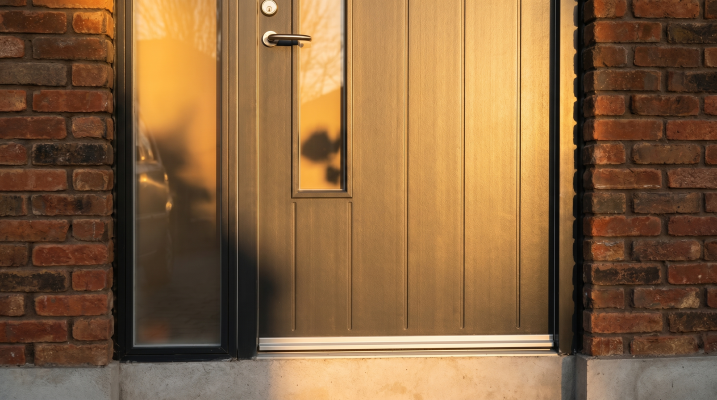
Section 3: Why Materials Are Only Part of the Decision
One of the first questions homeowners often ask is whether they should choose an aluminium, timber or composite entrance door. While each material offers distinct characteristics, architects rarely begin the specification process by comparing materials alone. Instead, they consider what the entrance is expected to achieve and then evaluate which construction is best suited to support those objectives. The material becomes a response to the project rather than the starting point of the conversation.
Aluminium has become increasingly popular within contemporary residential architecture because it combines structural strength with exceptional dimensional stability. This allows manufacturers to create large entrance doors with crisp detailing, slim profiles and excellent long-term durability. Powder-coated finishes also provide considerable design flexibility, offering an extensive range of colours and textures that can complement both restrained modern architecture and more expressive contemporary homes. For projects where clean lines and minimal maintenance are priorities, aluminium often proves to be a highly effective solution.
Timber presents a different set of qualities. Its natural warmth, texture and craftsmanship can make it particularly appropriate for traditional homes, rural properties and heritage renovations where authenticity and material character play an important role. Many architects continue to specify timber because of the way it ages, its visual richness and its ability to sit comfortably within historic architectural settings. However, maintaining its appearance over the long term generally requires a greater level of care than some alternative materials, particularly where the entrance is exposed to harsh weather conditions.
Composite and hybrid entrance doors occupy an increasingly important place within the market by combining multiple materials to achieve a balance of performance, durability and appearance. Different manufacturers approach this in different ways, but the objective is often the same: to draw upon the strengths of several materials while minimising their individual limitations. For many homeowners, these systems provide an attractive compromise between aesthetics, thermal performance and ongoing maintenance requirements.
Yet the material itself tells only part of the story. The engineering behind the door is often just as significant. Internal construction, insulating cores, frame design, weather seals, hardware integration and manufacturing precision all influence how well an entrance performs throughout its lifetime. Two doors manufactured from the same material can deliver very different levels of comfort, security and durability depending on the quality of their design and construction. Looking only at the surface material risks overlooking the characteristics that matter most once the door is in daily use.
Context also shapes the decision. A contemporary self-build with expansive glazing and minimalist detailing may naturally favour an aluminium entrance that reflects the wider architectural language of the building. A carefully restored Georgian townhouse may instead benefit from a solution that respects traditional proportions and complements the existing façade. Neither approach is universally correct. Each succeeds because it responds to the architecture rather than following assumptions about which material is considered premium.
This is why experienced architects avoid making recommendations based solely on materials. They evaluate the relationship between appearance, performance, maintenance, longevity, planning requirements and the broader design intent of the project. Material selection becomes one component within a carefully balanced specification rather than the defining objective.
Ultimately, homeowners do not experience aluminium, timber or composite construction in isolation. They experience a welcoming entrance, reliable security, year-round comfort and confidence that the door will continue to perform beautifully for decades. Those outcomes depend far more on thoughtful specification than on the material alone.
Section 4: Security Is About More Than Locks
When choosing a new entrance door, security is often one of the first topics homeowners consider. Manufacturers understandably highlight locking systems, security ratings and advanced hardware, leading many people to believe these features alone determine how secure a door will be. In reality, architects and building professionals tend to view security rather differently. Rather than focusing on individual components, they consider the entrance as a complete system in which every element contributes to the overall level of protection.
The door leaf itself forms the foundation of that system. Its construction, internal reinforcement and structural integrity determine how well it resists impact, twisting and forced entry. Equally important is the frame surrounding it. Even the most sophisticated locking mechanism cannot perform as intended if the frame lacks sufficient strength or has been poorly installed. Security is therefore designed into the relationship between the door, the frame and the building itself, rather than relying on any single feature.
Modern multi-point locking systems have undoubtedly improved residential security, distributing locking points across the height of the door rather than concentrating resistance at a single location. However, these systems are only as effective as the engineering supporting them. Architects often consider how locking mechanisms interact with hinges, keeps, frame construction and installation tolerances to ensure the door continues to operate securely throughout many years of regular use. Precision matters because even minor movement over time can influence both performance and ease of operation.
Glazed entrance doors introduce another important consideration. Large areas of glass can create welcoming, light-filled entrance halls while strengthening the relationship between the exterior and interior of the home. Yet successful specification balances openness with security. The type of glazing, its position within the door and its integration with the surrounding frame all influence how the entrance performs. Rather than viewing glazing as a compromise, architects seek solutions that provide natural light without diminishing confidence in the overall entrance system.
Visibility also forms part of a well-considered security strategy. The approach to the property, external lighting, landscaping and sightlines all influence how safe an entrance feels, particularly during the evening. A thoughtfully designed arrival sequence allows homeowners to identify visitors comfortably while ensuring the entrance remains welcoming rather than defensive. Good security often works quietly in the background, creating reassurance without dominating the architectural experience.
Installation is another factor that deserves greater attention. Even a high-quality entrance door can underperform if it is not correctly fitted within the structure of the building. Secure fixings, accurate alignment, properly sealed joints and careful detailing all contribute to the integrity of the complete system. Architects therefore place considerable importance on workmanship, recognising that specification and installation are inseparable when long-term performance is the objective.
Perhaps the most valuable perspective is that security should enhance everyday living rather than create inconvenience. A well-designed entrance feels solid without being difficult to operate, reassuring without appearing intimidating and robust without compromising architectural elegance. The homeowner experiences confidence every time the door closes—not because they are constantly thinking about security, but because the entrance simply performs as expected.
This wider understanding explains why architects rarely judge an entrance door by the lock it contains. They evaluate the complete system, considering engineering, construction, installation and the experience of using the entrance over many years. The strongest front door is not necessarily the one with the most impressive specification sheet; it is the one in which every component works together to provide lasting security while remaining entirely at ease within the architecture of the home.
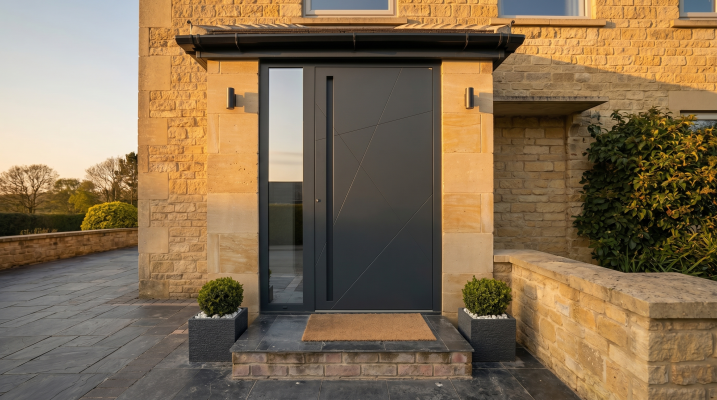
Section 5: The Small Details That Transform Everyday Living
An entrance door is opened and closed thousands of times over its lifetime. It marks the beginning and end of every working day, welcomes family and friends, receives deliveries and provides shelter from the weather. Despite this constant interaction, many of the features that influence the experience of using an entrance door receive surprisingly little attention during the specification process. Architects often focus on these seemingly modest details because they understand that they shape everyday living long after the excitement of a renovation or self-build has passed.
The threshold is one such example. At first glance, it may appear to be little more than the point where inside meets outside. In reality, it plays several important roles simultaneously. It contributes to weather protection, influences accessibility, affects thermal performance and determines how comfortably people move between exterior and interior spaces. A carefully designed low threshold can improve access for children, older occupants and anyone carrying shopping or luggage, while still maintaining the weather resistance expected of a high-performance entrance.
The way a door operates also has a surprisingly strong influence on daily experience. A well-engineered entrance should open smoothly, close with reassuring precision and require little physical effort despite its substantial construction. These characteristics rarely feature prominently in product brochures, yet they are among the qualities homeowners appreciate most over time. The confidence inspired by a door that feels balanced, refined and effortless often reflects the quality of its engineering rather than its outward appearance.
Hardware deserves similar consideration. Handles are among the few architectural elements touched every day, making both their design and functionality important. Beyond appearance, architects consider ergonomics, durability and how comfortably the hardware can be used by people of different ages and abilities. A carefully selected handle contributes quietly to the overall experience of the entrance, reinforcing the impression of quality through repeated daily interaction rather than visual impact alone.
The entrance should also be considered within its wider setting. Lighting, external shelter and the approach to the doorway all influence how welcoming and practical the entrance feels throughout the year. Thoughtfully positioned lighting improves both safety and the experience of arriving home after dark. A modest canopy or recessed entrance can provide valuable protection from rain while creating a stronger sense of arrival. These architectural details often work together to elevate an ordinary doorway into a carefully composed entrance sequence.
Modern patterns of living introduce further considerations that were less significant only a decade ago. Online shopping has transformed the role of the front entrance, with parcels arriving almost daily for many households. Space for deliveries, smart access systems and sheltered locations where packages can be left securely are increasingly influencing entrance design. These practical realities demonstrate how architecture continues to respond to changing lifestyles rather than remaining fixed around traditional assumptions.
Maintenance is another everyday consideration that quietly affects long-term satisfaction. Easy-to-clean finishes, durable hardware, accessible hinges and robust surface treatments all reduce the effort required to keep an entrance looking and performing at its best. These qualities may seem relatively minor during specification, but over many years they contribute significantly to the overall ownership experience.
When architects speak about quality, they are often referring to these accumulated details rather than any single dramatic feature. An entrance that is comfortable to use, resilient in poor weather, welcoming after dark and intuitive throughout daily life becomes part of the rhythm of the home. Its success lies not in attracting constant attention, but in performing so naturally that its design almost disappears.
For this reason, the finest entrance doors are rarely defined solely by their appearance. Their lasting value comes from the countless small decisions that improve everyday living in subtle but meaningful ways. Individually, these details may seem insignificant. Together, they shape the experience of coming home every single day.
Section 6: Why the Cheapest Door Often Costs More in the Long Run
When comparing entrance door quotations, it is entirely natural to focus on the price. A new entrance represents a significant investment, and the differences between competing quotations can sometimes appear substantial. Yet experienced architects and specification professionals rarely evaluate proposals on cost alone. Instead, they seek to understand what is included, what has been prioritised and how each solution is likely to perform throughout the life of the building. The initial purchase price is only one part of a much longer story.
From a distance, two entrance doors can appear almost identical. They may share similar dimensions, comparable colours and even a broadly similar design. What cannot be seen quite so easily is the quality of their engineering. The construction of the door leaf, the rigidity of the frame, the precision of manufacturing, the performance of the seals and the durability of the hardware all influence how the entrance will perform after years of daily use. These characteristics often account for differences in price, yet they become apparent only after the door has been in service for some time.
Surface finishes provide another useful example. A premium finish is designed to retain its colour, resist weathering and remain visually consistent despite continual exposure to sunlight, moisture and changing temperatures. Less durable finishes may begin to fade, discolour or deteriorate far sooner than expected, gradually affecting the appearance of the entrance and increasing maintenance requirements. What initially appeared to be a modest saving can therefore become an ongoing responsibility throughout ownership.
Hardware follows a similar pattern. Hinges, handles, cylinders and locking mechanisms are subjected to constant use over many years, making their quality particularly important. A carefully engineered door should continue to open and close smoothly long after installation, maintaining precise alignment and consistent operation despite thousands of opening cycles. Lower-quality components may require adjustment, repair or replacement far earlier than anticipated, affecting both convenience and long-term reliability.
Installation also has a direct influence on value. Even the most carefully manufactured entrance door depends upon accurate fitting if it is to achieve its intended levels of weather resistance, thermal performance and security. Correct alignment, appropriate structural fixings, carefully sealed junctions and well-executed threshold detailing all contribute to how effectively the entrance performs. A high-quality product installed poorly may fail to deliver its potential, while expert installation allows a well-specified system to perform as it was designed.
Long-term ownership places these decisions into perspective. The entrance door is one of the most frequently used elements of any home, often remaining in service for several decades. During that time, its performance influences comfort, energy efficiency, maintenance requirements, security and everyday satisfaction. When considered across such a lifespan, the difference between choosing purely on price and choosing on long-term value becomes far more significant than the initial quotation might suggest.
Architects therefore tend to evaluate entrance doors through the principle of lifecycle value rather than purchase cost. They ask how the entrance will perform after ten years, twenty years or even longer. Will the finish continue to complement the architecture? Will the hardware still operate smoothly? Will replacement components remain available if required? Will the door continue to provide the same confidence, comfort and reliability it offered on the day it was installed? These questions are often far more revealing than the figure at the bottom of a quotation.
For homeowners, this provides a more balanced way of assessing competing proposals. Price undoubtedly matters, but lasting value is created through thoughtful engineering, careful installation and dependable long-term performance. An entrance door is not simply a purchase made for today. It is an architectural investment that should continue to welcome its occupants with the same confidence and quality for many years to come.
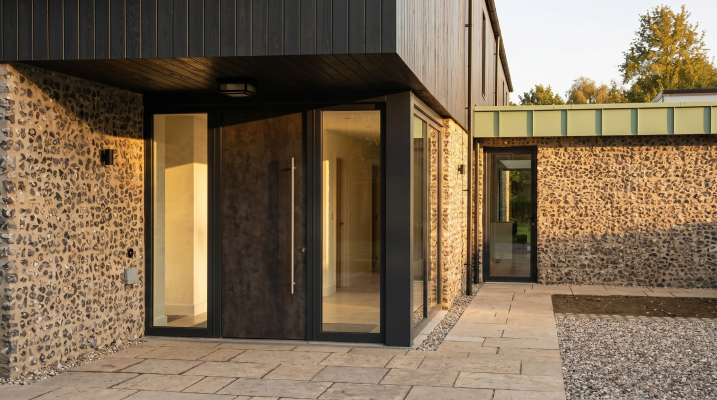
Section 7: The Questions Architects Ask Before Recommending an Entrance Door
Although homeowners often begin by comparing products, architects usually begin by asking questions. Not questions about colours, handles or manufacturers, but about the building itself and the people who will live within it. This shift in perspective is fundamental to the specification process. A successful entrance door is not chosen because it is popular or visually impressive; it is selected because it supports the architecture, responds to everyday life and continues to perform long after the project has been completed.
One of the first considerations is architectural intent. Every home has a design language, whether it is consciously recognised or not. Some projects aim to create a calm, understated façade where every element feels carefully balanced. Others seek a stronger sense of arrival, allowing the entrance to become a focal point within the composition. Understanding this intention helps determine whether the entrance should quietly integrate with the surrounding architecture or provide a deliberate point of emphasis. The decision is driven by the character of the building rather than current design trends.
Architects also spend time understanding the people who will use the entrance every day. A family with young children may place particular importance on durability, security and ease of access. A retired couple planning their long-term home may prioritise low-maintenance materials, accessible thresholds and dependable operation. A contemporary self-builder may focus on integrating smart access systems with a minimalist façade. The entrance should reflect not only the architecture of the house but also the way its occupants intend to live within it.
The surrounding environment introduces another layer of complexity. An entrance facing prevailing winds or exposed to driving rain requires different detailing from one protected beneath a deep porch or sheltered courtyard. Coastal locations demand materials capable of resisting harsher environmental conditions, while urban properties may place greater emphasis on acoustic performance and privacy. Architects recognise that the building’s setting influences specification just as much as its appearance.
Planning considerations may also shape the final decision. Properties within conservation areas or those possessing architectural significance often require careful attention to scale, proportion and external character. In these situations, the entrance door contributes to the broader identity of the building rather than acting as an isolated feature. Respecting that architectural context frequently leads to more successful and enduring outcomes than pursuing the latest design fashion.
Equally important is considering how the entrance will perform over time. Architects think beyond the excitement of completion and imagine how the door will feel after years of regular use. Will it continue to operate smoothly? Will the finish age gracefully? Will replacement hardware remain available if required? Will it continue to complement the building as both the property and its occupants evolve? These long-term questions often influence specification as much as immediate appearance or cost.
Throughout this process, collaboration plays an essential role. Homeowners bring an understanding of how they wish to live, architects interpret those aspirations within the wider design of the building, builders contribute practical construction knowledge and specialist door advisers provide technical expertise relating to performance, engineering and installation. Each perspective strengthens the final specification, reducing the likelihood of decisions being made in isolation or based solely on aesthetics.
Seen together, these questions reveal that specifying an entrance door is less about choosing a product and more about understanding a project. Once the architecture, environment, lifestyle and long-term ambitions have been carefully considered, the most appropriate solution often becomes much clearer. In many respects, the quality of the final entrance is determined not by the answers alone, but by the thoughtfulness of the questions that were asked at the very beginning.
Section 8: An Entrance Door Is More Than a Product
It is easy to think of an entrance door as a finishing touch. By the time it is installed, much of the structural work has been completed, the windows are in place and the overall form of the building has already emerged. Yet from an architectural perspective, the entrance is far more significant than its position in the construction programme might suggest. It is one of the defining elements of a home, shaping both its outward identity and the everyday experience of those who live within it.
The entrance creates a transition between public and private space. It marks the moment of arrival, providing the first physical interaction with the building and establishing expectations before the interior is even revealed. A thoughtfully designed entrance can communicate warmth, confidence, restraint or contemporary elegance without relying on dramatic gestures. It achieves this through careful proportion, considered detailing and an understanding of how the entrance relates to the architecture as a whole.
This is why successful entrance doors rarely demand attention for their own sake. Instead, they contribute to a balanced composition in which every architectural element supports the others. The door complements the façade, responds to the surrounding materials and reinforces the overall design intent. It neither competes with the building nor disappears entirely. Its success lies in feeling entirely appropriate, as though it could never have been designed any other way.
The experience of using the entrance continues long after the visual impression has faded. The reassuring weight of the door, the precision of its closing action, the comfort it provides during winter and the confidence inspired by its security all become part of everyday life. These qualities are rarely appreciated in isolation because they work quietly in the background, allowing the building to perform naturally and effortlessly. Good architecture often reveals itself through experiences that occupants notice only when they are absent.
Long-term ownership reinforces the value of thoughtful specification. Trends inevitably change, colours rise and fall in popularity and design fashions evolve. A carefully considered entrance, however, remains appropriate because it was selected in response to the architecture rather than to contemporary taste alone. Durability, comfort, security and timeless design continue to provide value long after short-lived trends have disappeared, making the entrance a lasting investment in the quality of the home rather than simply its appearance.
For homeowners, this changes the way the decision can be approached. Rather than searching for the most impressive product or the latest innovation, it becomes more valuable to consider how the entrance supports the building, responds to its surroundings and contributes to everyday living. Questions of proportion, performance, longevity and architectural consistency ultimately prove more significant than isolated features or marketing claims.
An entrance door is therefore best understood not as an individual product but as part of a carefully integrated architectural strategy. It contributes to first impressions, everyday comfort, long-term durability and the character of the building itself. When these elements are considered together, the choice of entrance door becomes less about buying a door and more about completing the architecture.
The finest homes are rarely remembered because they feature a particular manufacturer or material. They are remembered because every design decision feels thoughtful, coherent and purposeful. The entrance door is no exception. When specified with the same care as every other architectural element, it becomes more than a point of access—it becomes the beginning of the experience of home.