
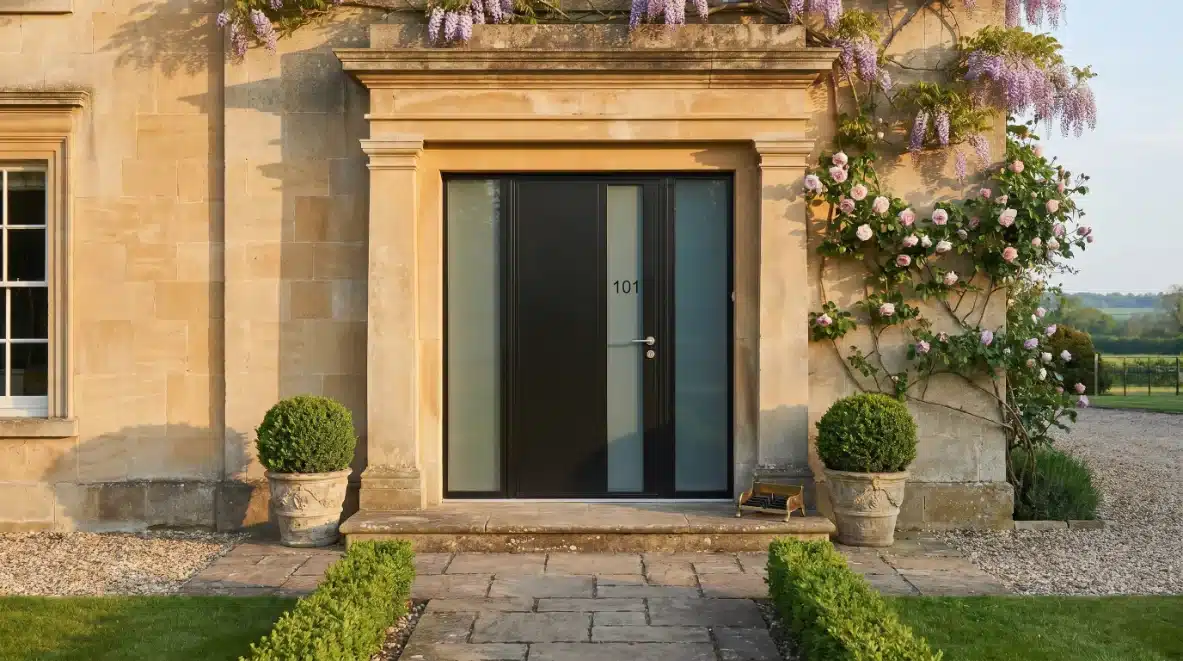
Inspired by Traditional Steel Doors
The appeal of the Aluco Avero entrance door begins long before its technical specification. Its design takes inspiration from the elegant steel doors that became popular during the early twentieth century, particularly within Art Deco architecture and later industrial-style buildings. Characterised by slim glazing bars, balanced proportions and understated detailing, these original steel doors introduced a sense of refinement that continues to influence residential architecture today. Rather than simply recreating a historic design, the Avero range interprets these principles for contemporary living.
One of the defining characteristics of traditional steel doors is their restraint. They rely on proportion rather than ornament, allowing carefully arranged glazing, fine framing and clean lines to create visual interest. This understated approach gives them remarkable versatility. Whether incorporated into a period renovation, a barn conversion or a contemporary extension, steel-look doors often feel as though they belong naturally within the architecture rather than appearing as an obvious modern addition.
The challenge with original steel doors, however, is that they were designed for a different era. While admired for their appearance, they typically fall short of modern expectations for thermal efficiency, weather resistance and everyday comfort. The Aluco Avero range seeks to preserve the visual character that made these doors so enduring while overcoming many of the practical limitations through contemporary aluminium engineering. The result is an entrance door that captures the elegance of traditional steel without requiring homeowners to compromise on performance.
This distinction is important. Successful steel-look products do not imitate the past through decorative styling alone. Instead, they respect the architectural principles that made the originals so compelling—balanced proportions, slender detailing and timeless simplicity. The Avero entrance door follows this philosophy, offering homeowners and architects a way to celebrate classic design while meeting the practical demands of modern living. It is this thoughtful reinterpretation, rather than nostalgia alone, that sets it apart.
Aluminium Engineering Behind the Design
While the Aluco Avero door takes its visual inspiration from traditional steel entrances, its performance is rooted in modern aluminium engineering. This combination is central to its appeal. Rather than replicating historic construction methods, the Avero range uses contemporary materials to achieve the elegant proportions of classic steel doors while delivering the levels of comfort, durability and efficiency expected in today’s homes.
Aluminium offers an exceptional strength-to-weight ratio, allowing slim profiles without compromising structural integrity. This makes it possible to create the refined glazing bars and balanced sightlines associated with traditional steel doors while maintaining the rigidity needed for a large entrance door that will perform reliably over many years. The result is an entrance that feels substantial and reassuring in use without becoming unnecessarily heavy or cumbersome.
Modern aluminium also addresses many of the practical limitations associated with historic steel doors. Advanced thermal break technology helps reduce heat transfer through the frame, improving insulation and contributing to a more comfortable home throughout the year. Precision manufacturing allows tight tolerances, enhancing weather resistance and ensuring the door opens and closes with the smooth, controlled movement expected from a premium entrance system. Combined with durable powder-coated finishes, the aluminium construction also requires relatively little maintenance while offering excellent resistance to corrosion, fading and everyday wear.
Perhaps most importantly, the engineering remains largely invisible. The Avero door does not celebrate technology for its own sake; it uses it to support the architectural character of the design. Homeowners experience the benefits through quieter operation, improved thermal comfort and long-term reliability rather than obvious technical features.
This balance between heritage-inspired aesthetics and contemporary engineering is what gives the Avero range its distinctive appeal. It demonstrates that modern materials do not have to compete with traditional design. When used thoughtfully, they allow architects and homeowners to enjoy the timeless elegance of steel-look architecture without sacrificing the performance standards required for contemporary living.
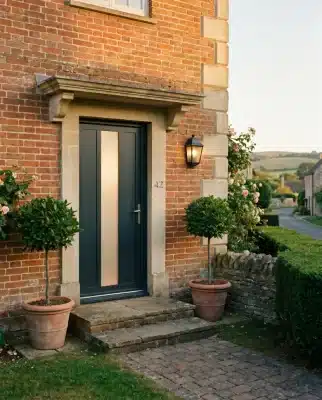
The Details That Create Authenticity
The success of a steel-look entrance door depends less on its overall style than on the precision of its details. From a distance, many doors may appear similar, but it is only on closer inspection that genuine craftsmanship becomes apparent. Architects understand that authenticity is rarely achieved through decorative additions. Instead, it comes from the careful balance of proportions, refined detailing and manufacturing accuracy that allows a contemporary door to capture the character of traditional steel architecture without feeling like an imitation.
One of the defining characteristics of the Aluco Avero entrance door is its attention to proportion. The glazing bars are carefully scaled to echo the elegance of classic steel doors, while the relationship between the frame, glass and surrounding panels creates a balanced composition that feels visually comfortable. These proportions are essential. If glazing bars are too wide, or the framing too heavy, the subtle refinement that defines steel-look design can quickly be lost.
Hardware also contributes significantly to the overall impression. Thoughtfully selected handles, hinges and furniture should complement the architecture rather than dominate it. Likewise, flush detailing, crisp shadow lines and neatly integrated glazing all reinforce the sense of precision that distinguishes premium entrance systems. These are the kinds of details that most visitors may never consciously identify, yet they instinctively recognise the quality they communicate.
Manufacturing accuracy plays an equally important role. Consistent joints, clean intersections and carefully applied finishes ensure that every element works together as a single architectural composition. Nothing appears forced or overly decorative; instead, each detail supports the restrained elegance that defines the steel-look aesthetic.
This is what gives the Avero entrance door its authenticity. It is not trying to replicate history through superficial styling. Rather, it respects the design principles that made traditional steel doors so enduring—simplicity, balance and precision—while using modern craftsmanship to achieve a level of consistency and refinement that supports both the architecture and the everyday experience of living with the door.
Performance for Contemporary Living
The visual appeal of a steel-look entrance door is often what captures attention first, but its lasting value depends on how well it performs every day. Original steel doors were admired for their elegant proportions, yet they were designed at a time when expectations for thermal comfort, weather resistance and security were very different. A contemporary entrance door inspired by that heritage must therefore offer far more than authentic styling. It needs to meet the demands of modern living without compromising the architectural character that makes it so distinctive.
The Aluco Avero entrance door achieves this balance by combining heritage-inspired design with contemporary engineering. Advanced sealing systems help reduce draughts and improve airtightness, contributing to a more comfortable indoor environment throughout the year. Modern insulated construction also enhances thermal performance, helping to minimise heat loss while supporting the overall energy efficiency of the home. These improvements remain largely invisible, yet they have a significant influence on everyday comfort.
Security is another area where modern expectations have evolved considerably. Today’s premium entrance doors are designed to integrate robust locking systems and high-quality hardware without disrupting the clean, understated appearance of the architecture. Rather than making security a visible design feature, the engineering works discreetly in the background, allowing homeowners to enjoy confidence and peace of mind alongside refined aesthetics.
Long-term durability is equally important. Powder-coated aluminium provides excellent resistance to weathering, corrosion and fading, allowing the entrance to retain its appearance with relatively little maintenance. Precision manufacturing also ensures smooth, reliable operation over many years, so the door continues to open and close with the same reassuring quality long after installation.
This combination of authentic design and contemporary performance is what distinguishes the Avero range. It demonstrates that homeowners no longer need to choose between architectural character and modern comfort. By respecting the visual language of traditional steel doors while embracing current engineering standards, the Avero entrance door offers a solution that feels both timeless and entirely suited to contemporary living.
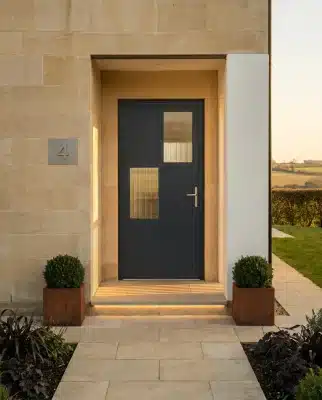
Where the Avero Door Works Best
Like any well-designed architectural product, the Aluco Avero entrance door is not intended to suit every property. Its strength lies in how naturally it complements certain styles of architecture, particularly those that value clean proportions, refined detailing and a connection to the timeless elegance of traditional steel glazing. When specified in the right context, it feels entirely at home, enhancing the building rather than drawing unnecessary attention to itself.
Period properties are an obvious example. Victorian and Edwardian homes often feature generous ceiling heights, carefully balanced façades and decorative detailing that benefit from slender-framed entrance doors. The steel-look aesthetic can introduce contemporary performance while respecting the rhythm and proportions that define these buildings. Similarly, Art Deco homes, with their emphasis on geometry and elegant glazing patterns, provide an ideal architectural setting for the Avero range.
The design is equally effective in more contemporary projects. Modern extensions frequently seek to create a dialogue between old and new, combining traditional materials with contemporary forms. A steel-look entrance door can act as a visual bridge between these two architectural languages, complementing both the original building and the new intervention. Barn conversions and architect-designed new builds also benefit from this understated character, particularly where natural materials, large areas of glazing and restrained detailing are central to the overall design.
What matters most is not the age of the property but the architectural intent behind it. The Avero entrance door is best suited to homes where proportion, craftsmanship and material quality are valued over decoration or short-lived design trends. Rather than becoming a statement piece in isolation, it contributes to a cohesive architectural composition that feels balanced from the moment visitors approach the entrance.
Ultimately, the most successful specification is one that supports the character of the home. In the right setting, the Avero entrance door does exactly that, bringing together heritage-inspired elegance and contemporary performance in a way that feels both timeless and entirely appropriate.
How Architects Integrate Avero Doors into a Home
An entrance door is never an isolated design decision. While it may serve as the focal point of a façade, its success depends on how well it relates to the wider architecture. Architects therefore think beyond the door itself, considering how it interacts with glazing, materials, landscaping and lighting to create a cohesive arrival experience. The Aluco Avero entrance door is particularly well suited to this holistic approach because its refined steel-look detailing complements a broad range of architectural compositions without dominating them.
One of the most effective ways to integrate an Avero door is by establishing visual continuity with the surrounding glazing. Matching steel-look windows, side screens or fixed glazed panels can reinforce the rhythm of the façade, creating a balanced composition that feels intentional rather than pieced together. This consistency is especially valuable in contemporary extensions and heritage-inspired renovations, where the entrance should feel like a natural continuation of the building’s architectural language.
Material selection is equally important. The slim proportions and understated detailing of the Avero door pair comfortably with brick, natural stone, timber cladding and rendered finishes, allowing the entrance to support the wider material palette rather than compete with it. Colour choices, external lighting, door furniture and house numbers can then be coordinated to strengthen this sense of harmony, ensuring that every visible element contributes to the same design narrative.
Landscaping also forms part of the entrance experience. Carefully designed pathways, planting and lighting guide visitors naturally towards the front door, creating a sequence that feels welcoming before the entrance is even reached. The door itself becomes the culmination of this journey rather than a standalone feature demanding attention.
This is how architects typically approach specification. They do not ask how to make the front door stand out; they ask how it can complete the architecture. When integrated thoughtfully within the wider composition, the Aluco Avero entrance door achieves exactly that, creating an arrival that feels elegant, balanced and entirely appropriate to the home.
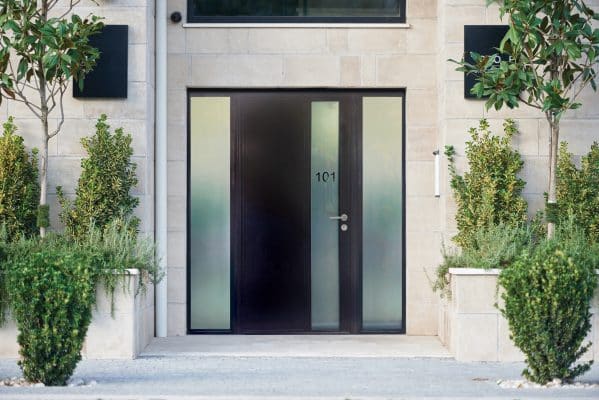
Is an Aluco Avero Entrance Door Worth the Investment?
Whether an entrance door is worth the investment depends less on its purchase price than on the ambitions of the project. For homeowners seeking a simple replacement door, there may be perfectly suitable alternatives at a lower cost. However, for those creating a carefully considered home—whether through a heritage renovation, architect-designed extension or premium self-build—the entrance becomes a significant architectural feature. In these situations, the value of a door like the Aluco Avero lies not only in its appearance but in the way it contributes to the character and long-term quality of the building.
Throughout this guide, one principle has remained consistent: premium products justify their position when they combine thoughtful design with enduring performance. The Avero entrance door captures the proportions and elegance of traditional steel doors while incorporating the advantages of modern aluminium construction, including improved thermal efficiency, weather resistance, security and reduced maintenance. Rather than asking homeowners to compromise between heritage-inspired aesthetics and contemporary expectations, it brings both together in a single architectural solution.
That does not mean it is the right choice for every property. Homes where architectural authenticity, craftsmanship and design coherence are less central to the project may be equally well served by other entrance systems. Good specification is always about selecting the product that best supports the building rather than assuming the most premium option is automatically the correct one.
For homeowners and architects who value timeless design, carefully considered detailing and materials that will continue to perform for decades, the Aluco Avero entrance door represents more than an entrance. It becomes part of the architecture itself, shaping the experience of arriving home every day while contributing quietly to the lasting quality of the building. Viewed through that lens, its value is measured not simply by its initial cost, but by the confidence, comfort and architectural integrity it continues to provide long into the future.