
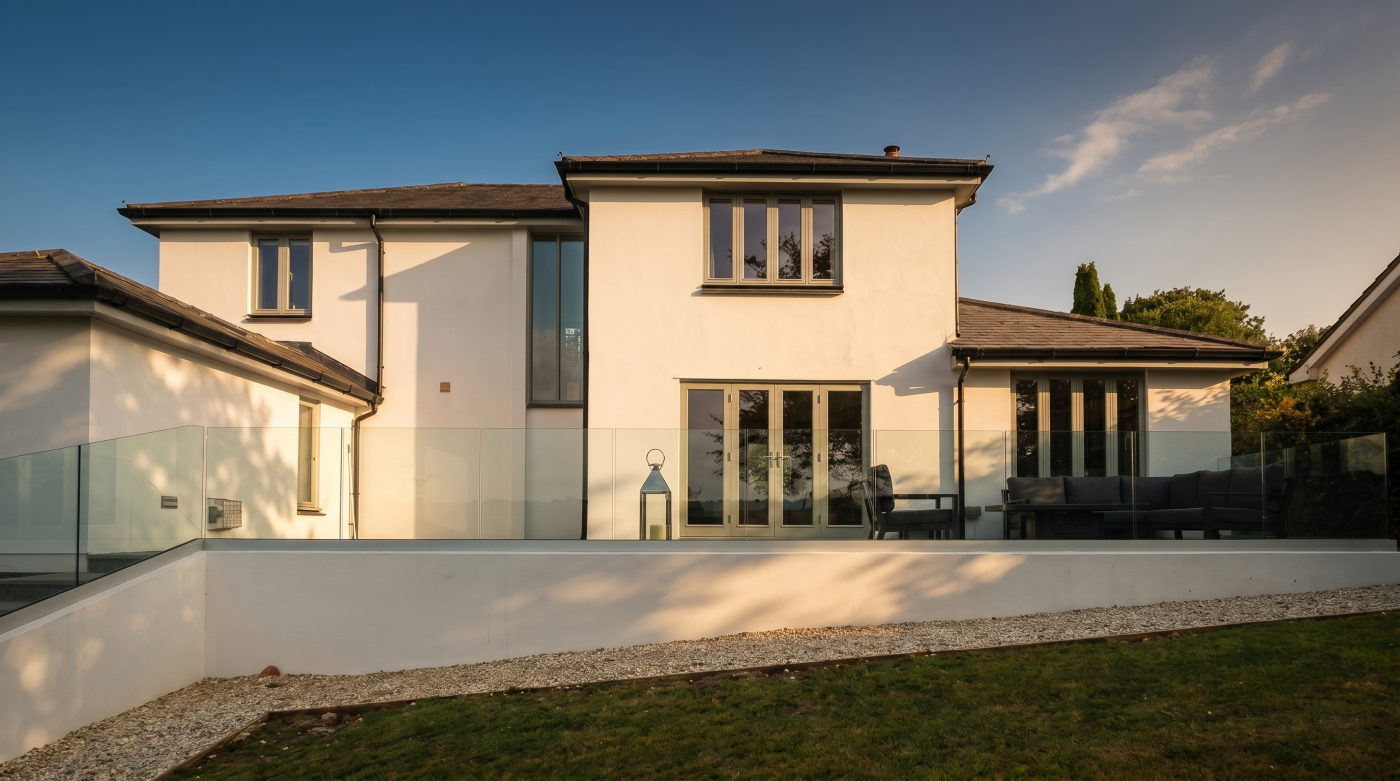
Powder Coating Is More Than Just A Colour Choice
When homeowners begin selecting aluminium windows and doors, one of the first decisions they encounter is colour.
Anthracite grey, black, white and an increasingly wide range of contemporary shades dominate brochures and showroom displays. As a result, many people naturally view powder coating as little more than a decorative finish — the equivalent of choosing a paint colour for the exterior of their home.
In reality, powder coating plays a much more important role.
While colour is certainly part of the decision, powder coating is first and foremost a protective system designed to help preserve the appearance and durability of aluminium over many years of exposure to the elements. The finish homeowners see is only one aspect of a process that has a significant influence on long-term performance.
Understanding this distinction is important because it changes how powder-coated finishes should be evaluated.
Unlike traditional liquid paint systems, powder coating involves applying a dry powder to the aluminium surface using an electrostatic process. The coated components are then cured at high temperatures, creating a hard, durable finish that bonds closely to the metal beneath. The result is a coating designed to resist weathering, corrosion and everyday wear while maintaining its appearance over an extended lifespan.
This is one of the reasons powder coating became the industry standard for architectural aluminium.
Modern aluminium systems are expected to perform for decades in challenging environments. They must withstand rain, ultraviolet exposure, temperature fluctuations and environmental pollutants while continuing to look appropriate within the architecture of the building. Powder coating helps make this possible by providing a protective layer between the aluminium substrate and the outside world.
For homeowners, the key point is that the finish is doing far more than adding colour.
It is helping to protect the investment itself.
This becomes particularly relevant when comparing products. Two aluminium window systems may appear similar when viewed from a distance, especially if they share the same colour. Yet differences in preparation, coating quality and manufacturing standards can have a significant impact on how those finishes perform over time.
Architects often understand this instinctively.
When specifying aluminium systems, they rarely think about colour in isolation. Instead, they consider durability, environmental exposure, texture, sheen and long-term visual performance alongside aesthetic preferences. The finish becomes part of the overall specification strategy rather than a purely decorative choice.
This is why powder coating deserves more attention than it often receives during the buying process.
The colour may be the most visible aspect of the finish, but it is not the most important one.
A well-executed powder-coated finish helps protect aluminium from the challenges of daily exposure while preserving the architectural intent of the building for years to come.
In that sense, powder coating is not simply about how a window looks on the day it is installed.
It is about how it continues to look ten, twenty or even thirty years later.
Not All Powder-Coated Finishes Are Created Equal
One of the most common assumptions homeowners make is that powder coating is a standardised product.
The thinking is understandable. If two aluminium windows are supplied in the same colour, many buyers naturally assume the finish quality will be broadly identical. After all, anthracite grey should be anthracite grey regardless of who manufactures the frame.
The reality is more complicated.
While colour may appear consistent, the quality of the finish can vary significantly depending on how the aluminium is prepared, how the coating is applied and the standards followed during manufacturing. In many cases, these differences remain invisible on the day of installation but become increasingly important over the lifespan of the product.
Preparation is one of the most critical stages.
Before powder coating can be applied, the aluminium surface must be thoroughly cleaned and treated. This process removes contaminants and prepares the substrate to receive the coating. If preparation standards are poor, even a visually attractive finish may be more vulnerable to premature deterioration, adhesion issues or long-term cosmetic problems.
The coating process itself also matters.
Factors such as coating thickness, curing temperatures and application consistency all influence the final result. High-quality powder-coated finishes are carefully controlled throughout production to ensure uniform coverage and reliable performance. Small variations during manufacturing can affect durability even when the finished product initially appears identical.
This is one reason reputable manufacturers invest heavily in quality assurance.
The visible colour is only the final layer of a much larger process. What determines long-term performance is often the work homeowners never see.
Certification standards provide another useful indicator.
Within the architectural glazing industry, various quality benchmarks and accreditation schemes exist to help verify coating performance and manufacturing standards. While homeowners do not necessarily need to become experts in powder coating technology, understanding that such standards exist can be helpful when comparing products.
Architects frequently pay close attention to these details.
For a homeowner, a powder-coated finish may simply need to look attractive. For an architect, the finish must continue to look attractive years after completion while supporting the broader architectural vision of the project. Longevity therefore becomes just as important as initial appearance.
The implications become particularly significant on premium residential projects.
Large glazed elevations, contemporary architectural details and carefully curated material palettes place considerable emphasis on visual consistency. A finish that weathers unevenly or ages poorly can have a disproportionate effect on the overall appearance of the building.
This does not mean homeowners need to scrutinise every technical aspect of the coating process.
However, it does highlight the importance of looking beyond colour samples alone. Choosing a powder-coated finish is not simply about selecting a shade from a chart. It is also about understanding the quality of the manufacturing behind that finish.
Two windows may look identical in a showroom.
What often separates them is how they continue to look after years of exposure to sunlight, weather and everyday use.
And that difference frequently comes down to the quality of the powder-coated finish itself.
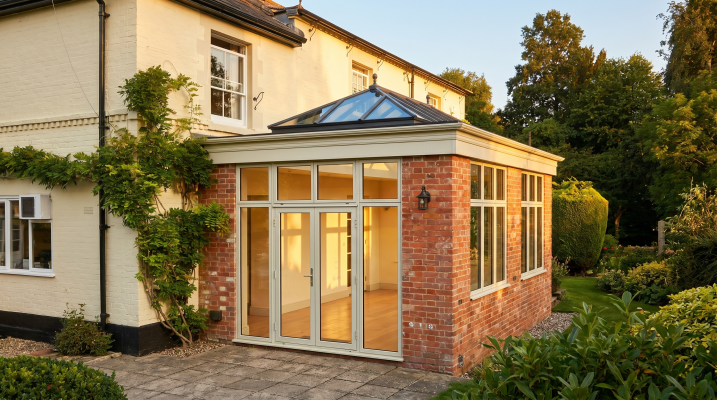
The Environment Around Your Home Matters More Than You Think
One of the reasons powder-coated aluminium has such a strong reputation is its durability.
Modern finishes are designed to withstand years of exposure to the elements while retaining their appearance and protective qualities. This leads many homeowners to assume that once a colour and finish have been chosen, the environment around the property becomes largely irrelevant.
In reality, location can have a significant influence on how a powder-coated finish ages over time.
The same window system installed in two different settings may experience very different conditions throughout its lifespan. While high-quality powder coating is engineered to cope with these challenges, environmental factors still play an important role in determining how the finish looks and performs over the coming decades.
Coastal properties are perhaps the most obvious example.
Homes located near the sea are exposed to salt-laden air that can be considerably more demanding than inland environments. Salt particles carried by wind can settle on external surfaces, increasing the importance of regular cleaning and maintenance. This does not mean powder-coated aluminium is unsuitable for coastal locations—far from it—but it does mean the specification and maintenance strategy may deserve additional attention.
Rural environments create their own challenges.
Properties surrounded by farmland, woodland or open countryside are often exposed to higher levels of organic debris, pollen and airborne particles. Over time, these materials can accumulate on external surfaces and influence the appearance of the finish if left unaddressed. Again, this is not a flaw in the coating itself, but a reminder that environmental conditions affect all external building materials.
Urban locations introduce a different set of considerations.
Traffic pollution, industrial emissions and general airborne contaminants can contribute to surface deposits that gradually alter the appearance of windows and doors. While modern powder-coated finishes are highly resilient, they still benefit from occasional cleaning to preserve their original appearance.
Sunlight is another factor homeowners rarely consider.
All exterior materials are exposed to ultraviolet radiation throughout their lifespan. High-quality powder-coated systems are specifically developed to resist fading and colour degradation, but long-term UV exposure can still influence how finishes age. This is particularly relevant on elevations that receive intense sunlight for much of the day.
Colour choice can affect perceptions as well.
Certain colours may reveal environmental deposits more readily than others. Darker finishes often conceal some forms of dirt while highlighting others. Lighter colours can behave differently. The practical appearance of a finish is therefore influenced not only by the coating itself but by the environment in which it exists.
Architects often consider these variables during the specification process.
When evaluating materials, they think beyond how a product will look immediately after installation. They consider how it will weather, how it will interact with local conditions and how it will contribute to the appearance of the building over time. Durability is measured in years and decades rather than months.
For homeowners, the key lesson is simple.
A powder-coated finish does not exist in isolation. It becomes part of the environment surrounding the property and will respond to that environment throughout its lifespan.
The best finishes are designed with this reality in mind.
And understanding the conditions around your home can be just as important as choosing the right colour in the first place.
Colour Choice Influences More Than Appearance
For most homeowners, choosing a powder-coated finish begins and ends with colour.
The decision is often driven by aesthetics. Which colour suits the architecture? Which finish complements the brickwork, stone or cladding? Which option feels contemporary without looking dated?
These are all important considerations.
However, colour selection influences far more than appearance alone.
One of the most overlooked factors is heat absorption.
Darker colours naturally absorb more solar energy than lighter shades. On a warm summer day, a black or dark grey aluminium frame can reach significantly higher surface temperatures than a white or light-coloured alternative exposed to the same conditions. Modern aluminium systems are engineered to accommodate this thermal movement, but colour still influences how much heat the surface absorbs throughout the year.
This becomes particularly relevant on south-facing elevations where prolonged exposure to direct sunlight is common.
The effect is not usually a cause for concern, but it is one of the reasons manufacturers invest heavily in testing and engineering. Powder-coated finishes must perform reliably under a wide range of environmental conditions, including substantial temperature fluctuations created by solar exposure.
Colour also influences how people perceive ageing.
Interestingly, some homeowners assume darker colours will fade more quickly. In reality, modern architectural powder coatings are specifically developed to resist ultraviolet degradation and maintain their appearance over long periods. High-quality finishes perform exceptionally well, but perception still matters.
A slight change in tone may be more noticeable on certain colours than others.
Similarly, environmental deposits, water marks or surface contamination can become more visible depending on the chosen finish. The practical ownership experience of a colour is therefore influenced by factors that extend beyond simple aesthetics.
Design trends introduce another consideration.
Anthracite grey has dominated the UK residential glazing market for many years and remains enormously popular. Black finishes continue to appeal in contemporary architecture, while softer tones and heritage-inspired colours are becoming increasingly common within renovation projects.
The challenge with trends is that architecture often outlasts fashion.
A window system may remain in place for thirty years or more. During that time, design preferences inevitably evolve. Architects therefore tend to think carefully about whether a colour supports the long-term character of the building rather than simply reflecting current market trends.
This does not mean homeowners should avoid fashionable colours.
Rather, it highlights the importance of considering colour within the context of the architecture itself. A finish that complements the proportions, materials and setting of a property is often more enduring than one chosen solely because it happens to be popular at the time of specification.
Architects frequently approach colour in this way.
Instead of viewing it as an isolated choice, they consider how it interacts with roofing materials, external cladding, stonework, landscaping and interior design elements. The goal is not merely to select an attractive colour, but to create a cohesive visual language across the entire project.
For homeowners, this broader perspective can be valuable.
The colour of an aluminium window influences not only how it looks on installation day, but how it interacts with the building, responds to environmental conditions and ages over the decades that follow.
In that sense, colour is not simply a cosmetic decision.
It is an architectural one.
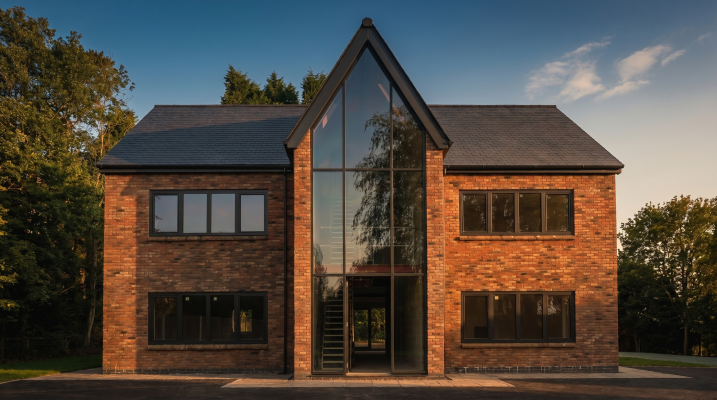
Texture, Sheen And Finish Often Matter More Than Colour
When homeowners choose powder-coated aluminium, colour usually receives most of the attention.
Discussions focus on anthracite grey versus black, contemporary tones versus heritage colours, or whether a particular shade will complement the surrounding architecture. While colour is undoubtedly important, it is often not the element that has the greatest impact on how a window or door is ultimately perceived.
In many cases, texture and sheen matter more.
This is something architects have understood for years.
Two window systems can be finished in exactly the same colour yet create completely different visual impressions depending on the surface finish applied. The way light interacts with the coating, the texture of the surface and the level of reflectivity can all influence how the material is experienced within the wider architectural composition.
Matt finishes have become particularly popular in contemporary residential design.
Their subdued appearance tends to reduce reflections and create a softer visual presence. Rather than drawing attention to themselves, matt surfaces often allow the architecture, landscaping and surrounding materials to become the focus. This quality makes them especially appealing in modern homes where restraint and simplicity are central design principles.
Satin finishes occupy a middle ground.
They provide a subtle level of reflectivity without appearing overly glossy. Many homeowners find satin coatings offer an attractive balance between practicality and aesthetics, combining a refined appearance with a degree of visual depth that changes gently throughout the day as lighting conditions evolve.
Textured finishes introduce another dimension.
These coatings create a tactile surface that can add character and visual richness to aluminium systems. Textured finishes often perform particularly well in residential architecture because they soften the appearance of the metal and can help disguise minor surface marks, dust or environmental deposits. For this reason, they have become increasingly common in premium glazing applications.
Gloss finishes, by contrast, create a very different aesthetic.
Their reflective qualities can make colours appear more vibrant and visually prominent. In certain architectural contexts, this can be highly effective. However, gloss finishes tend to attract more attention and can sometimes emphasise imperfections or environmental marks more readily than lower-sheen alternatives.
This is why architects rarely evaluate colour in isolation.
When specifying glazing systems, they often begin by considering the desired character of the material itself. Should the aluminium feel understated or expressive? Should it blend quietly into the architecture or provide a stronger visual contrast? The answers to these questions frequently influence the choice of texture and sheen as much as the colour selection.
Light plays an important role as well.
The same colour can appear dramatically different depending on the finish applied. A matt black frame may feel restrained and sophisticated, while a gloss black version of the same colour can appear far more assertive. Similarly, textured finishes often create subtle variations in shadow and depth that are impossible to achieve through colour alone.
For homeowners, this presents an opportunity.
Rather than focusing exclusively on colour charts, it is worth considering how the finish itself contributes to the overall architectural vision. Texture, reflectivity and surface character often influence the final result more profoundly than many people expect.
Because ultimately, people do not experience colour in isolation.
They experience materials.
And the way those materials interact with light is often what determines whether a building feels timeless, contemporary, elegant or ordinary.
“Maintenance-Free” Doesn’t Mean “Ignore It”
One of the most appealing aspects of powder-coated aluminium is its reputation for low maintenance.
Compared with many traditional materials, the upkeep requirements are modest. There is no routine repainting, no sanding and no regular refinishing schedule. For homeowners seeking long-term durability without significant ongoing effort, this is one of aluminium’s strongest advantages.
Over time, however, this benefit has often been simplified into a phrase that can be slightly misleading:
“Maintenance-free.”
The reality is that powder-coated finishes are low maintenance, not no maintenance.
This distinction matters because even the most durable architectural materials are exposed to environmental conditions every day. Rain, airborne particles, pollution, pollen, salt deposits and general dirt gradually accumulate on external surfaces. While powder coating is specifically designed to resist deterioration, preserving its appearance over the long term still benefits from occasional care.
Fortunately, that care is usually straightforward.
For most properties, periodic cleaning with clean water and a mild detergent is sufficient to remove surface contaminants and maintain the appearance of the finish. The objective is not intensive maintenance but preventative maintenance — removing deposits before they have an opportunity to build up over time.
The requirements become more important in certain environments.
Coastal properties are a good example. Salt carried by sea air can settle on aluminium surfaces and remain there if not periodically removed. High-quality powder-coated systems are designed to perform in demanding conditions, but manufacturers often recommend more frequent cleaning schedules for properties located near the coast.
Urban environments can create similar considerations.
Traffic pollution, industrial emissions and airborne contaminants may gradually accumulate on external surfaces. While these deposits rarely damage a properly specified finish, regular cleaning helps preserve the appearance homeowners originally invested in.
Even rural properties have their own challenges.
Pollen, organic matter and agricultural dust can collect on windows and doors throughout the year. Left unattended, these deposits may affect the visual appearance of the finish even though the coating itself remains fully intact.
Architects and manufacturers often view maintenance through a slightly different lens than homeowners.
Rather than asking whether a product requires maintenance, they ask what level of care is necessary to preserve performance and appearance over decades. In this context, occasional cleaning is simply part of responsible ownership rather than a sign of material weakness.
This mindset becomes particularly important on premium residential projects.
Large glazed elevations, carefully selected colour palettes and refined architectural detailing place significant emphasis on appearance. A small amount of preventative maintenance helps ensure the windows continue contributing positively to the overall design long after installation.
The encouraging reality is that powder-coated aluminium remains one of the easiest architectural materials to maintain.
The effort required is modest, especially when compared with many alternatives.
The important point is simply that low maintenance should not be confused with complete neglect.
Because the best way to preserve a finish for thirty years is not to ignore it.
It is to give it a small amount of attention occasionally so it can continue looking as good as it was designed to.
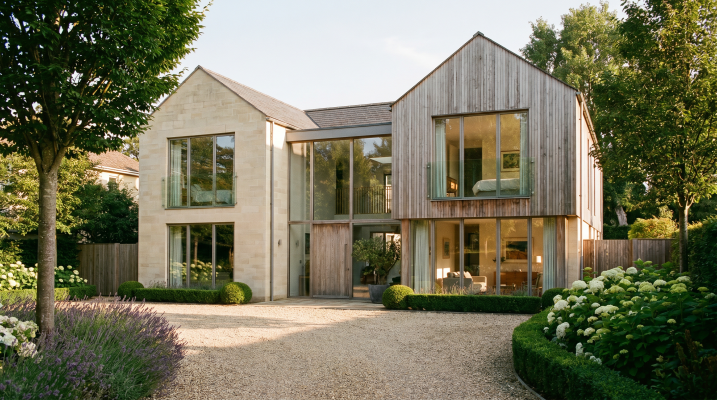
Why Architects Often Specify Finishes Before Colours
Most homeowners choose a colour first.
The process usually begins with a colour chart, a Pinterest board or a collection of project photographs. Anthracite grey, black, bronze, white or one of hundreds of other options quickly becomes the focus of the conversation.
Architects often work in the opposite direction.
Rather than beginning with colour, they frequently start by considering the character of the finish itself. Texture, sheen, reflectivity and material expression are evaluated before a final colour is selected.
At first glance, this may seem like an unusual approach.
After all, colour is usually the most obvious visual characteristic of a window or door. Yet when viewed within the context of an entire architectural project, finish selection often has a greater influence on the final outcome than homeowners realise.
This is because architects rarely think about windows as isolated products.
Instead, they consider how glazing systems interact with every other material within the project. Roofing, stonework, brickwork, timber cladding, render, landscaping and interior finishes all contribute to the overall visual language of a building. The role of the aluminium finish is therefore to support a wider composition rather than simply introduce colour.
Texture plays a major role in this process.
A textured matt finish may complement natural stone beautifully by creating a subtle and understated appearance. The same colour in a high-gloss finish could feel entirely different, introducing reflections and visual prominence that alter the balance of the façade.
Similarly, the sheen level can influence how materials relate to one another.
Matt and satin finishes tend to absorb and diffuse light differently, creating softer transitions between materials. Gloss finishes often introduce sharper reflections and stronger visual contrast. Neither approach is inherently right or wrong, but each contributes to a different architectural outcome.
Architects also think carefully about longevity.
Buildings are expected to last for decades. During that time, materials weather, landscaping matures and design trends evolve. A finish that feels sophisticated and appropriate today should ideally continue to feel appropriate twenty years from now.
This is one reason why many architects favour restrained finishes.
Subtle textures and lower-sheen coatings often age gracefully because they allow the architecture itself to remain the primary focus. Highly reflective or trend-driven finishes can sometimes feel more closely tied to a particular moment in design history.
The surrounding material palette influences decisions as well.
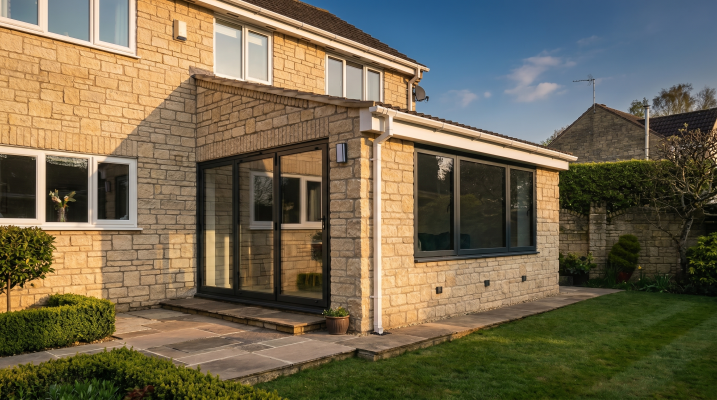
For example, a contemporary home featuring charred timber cladding may call for a completely different finish strategy than a Cotswold stone renovation or a Georgian townhouse extension. The aluminium finish must support the architectural story being told by the building.
This is why professional specification discussions frequently revolve around material relationships rather than colour preferences alone.
The objective is not simply to find an attractive shade.
The objective is to create harmony between all the elements that make up the project.
For homeowners, this perspective can be extremely useful.
Rather than asking, “What colour should my windows be?”, it can be more valuable to ask, “How should the aluminium feel within the architecture of the home?”
Once that question is answered, the right colour often becomes much easier to identify.
Because great design is rarely the result of choosing the perfect colour.
It is usually the result of choosing the right material character and allowing colour to support it.
The Best Powder-Coated Finish Is Not Always The Most Popular One
Spend enough time browsing architectural magazines, social media or glazing brochures and it is easy to believe there is a universally correct finish for aluminium windows and doors.
At various points over the last decade, anthracite grey has appeared to be that answer. More recently, black, bronze and a range of softer contemporary tones have gained popularity. Trends emerge, gain momentum and quickly become the default recommendation for countless projects.
The challenge is that architecture lasts much longer than trends.
A powder-coated finish may remain part of a building for thirty years or more. During that time, design fashions inevitably evolve. Colours that feel contemporary today may become strongly associated with a particular period, while more restrained choices often continue to look relevant long after trends have changed.
This is one reason architects rarely select finishes based purely on popularity.
Instead, they evaluate whether a particular finish is appropriate for the architecture itself.
A contemporary countryside self-build may benefit from a completely different approach than a Georgian townhouse renovation. Likewise, a minimalist modern extension might call for a finish that would feel entirely out of place on a traditional stone property. The goal is not to follow fashion but to strengthen the relationship between the glazing and the building as a whole.
Material compatibility is often more important than colour trends.
For example, dark aluminium can work exceptionally well alongside contemporary materials such as zinc, charred timber and modern cladding systems. In contrast, softer colours may sit more comfortably against natural stone, traditional brickwork or heritage-inspired architecture. The most successful finish is often the one that feels naturally integrated into the wider material palette.
Context matters just as much.
The surrounding landscape, the quality of natural light and the character of neighbouring buildings can all influence how a finish is perceived. A colour that looks striking in an urban architectural project may feel unnecessarily dominant in a rural setting. Equally, a subtle finish that works beautifully within a heritage environment may not provide the visual definition desired in a contemporary home.
This is why architects frequently think in terms of timelessness rather than popularity.
Timeless design does not necessarily mean playing safe. It means selecting materials and finishes that support the architecture so effectively that they continue to feel appropriate regardless of changing fashions. The finish becomes part of the building’s identity rather than a reflection of a particular design trend.
Homeowners can benefit from adopting a similar perspective.
Instead of asking which finish is most popular, it can be more useful to ask which finish will still feel right in ten, twenty or thirty years. Will it complement the materials of the home as they weather and mature? Will it continue to support the architectural character of the property? Will it still feel intentional long after current trends have passed?
These questions often lead to better decisions than popularity alone.
The reality is that many of the most successful glazing projects do not feature the most fashionable colours or finishes. They feature finishes that are carefully matched to the architecture, the location and the long-term vision for the home.
Because ultimately, the best powder-coated finish is not the one everyone else is choosing.
It is the one that makes the building feel complete.
Conclusion
Powder-coated finishes are often treated as a minor specification detail.
In reality, they play a significant role in both the appearance and long-term durability of aluminium windows and doors. While homeowners naturally focus on colour, the quality of the coating, the chosen texture, the surrounding environment and the way the finish is maintained can all have a lasting impact on how the product performs over time.
This is why powder coating deserves more attention than it often receives during the buying process.
The finish is not simply decorative.
It is a protective system designed to help preserve the appearance of the aluminium while supporting the architectural character of the building for decades. The colour visible on installation day is only one part of a much larger story.
Understanding that story helps explain why two seemingly similar window systems can age very differently.
Preparation standards, coating quality, environmental exposure and maintenance practices all influence long-term outcomes. What appears identical in a showroom may not remain identical after years of exposure to sunlight, weather and everyday use.
Architects tend to recognise this instinctively.
They rarely choose finishes in isolation. Instead, they consider how colour, texture and sheen contribute to the wider material palette of the project. They think about how the finish will interact with stone, timber, brickwork and landscaping. Most importantly, they think about how it will look years into the future rather than simply how it appears today.
For homeowners, this offers a valuable perspective.
The best powder-coated finish is not necessarily the most fashionable colour or the most popular option on social media. It is the finish that complements the architecture, responds appropriately to its environment and continues to feel relevant long after design trends have evolved.
Fortunately, modern powder-coated aluminium remains one of the most durable and low-maintenance finishing systems available.
When properly specified and cared for, it can retain its appearance for decades while helping aluminium windows and doors continue to perform exactly as intended.
The key is understanding that powder coating is not just about choosing a colour.
It is about making a long-term architectural decision.
And like most successful architectural decisions, the best results come from looking beyond what appears attractive today and considering what will still look right many years from now.