
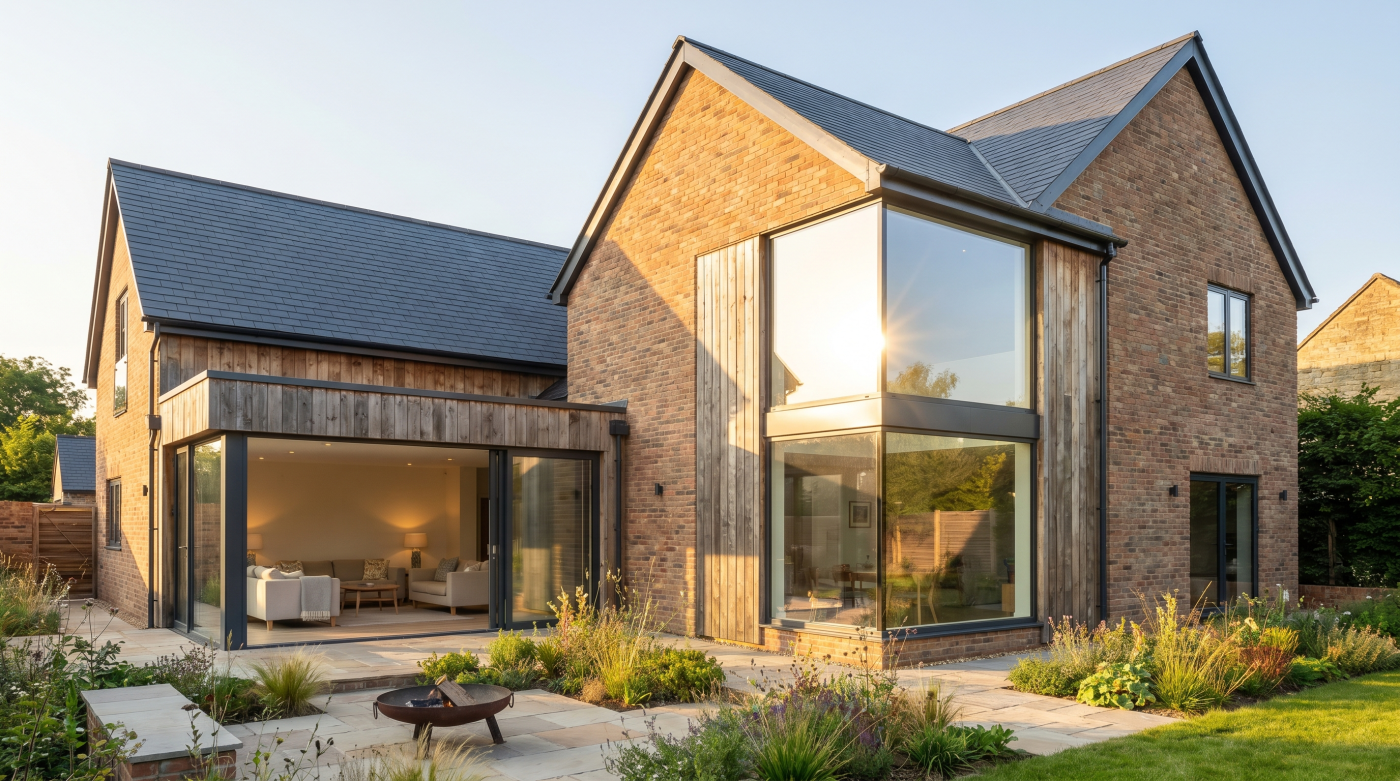
Error #1: Specifying Performance Figures Instead Of Occupant Comfort
Few aspects of glazing specification receive as much attention as performance figures.
U-values, solar gain coefficients, energy ratings and thermal performance data are now central to most glazing discussions. These metrics are important and provide valuable information when comparing systems. However, problems can arise when specification decisions become focused on performance figures themselves rather than the experience those figures are intended to create.
This is one of the most common specification errors that only becomes apparent after occupation.
During procurement, a lower U-value often appears to represent a better outcome. Marketing materials reinforce this assumption, encouraging homeowners to compare products based on increasingly small differences in thermal performance. Yet several years after completion, occupants rarely talk about U-values.
They talk about comfort.
They notice whether rooms feel consistently warm during winter. They notice whether seating areas near glazing feel inviting. They notice whether certain spaces overheat during summer afternoons or remain pleasant throughout the day. In other words, they experience the building rather than the specification.
The distinction is important because comfort is influenced by far more than a single performance metric.
Orientation plays a role. Solar gain plays a role. Installation quality, ventilation strategy, shading and the wider thermal performance of the building all contribute to the way occupants experience a space. A glazing system with excellent published figures may still fail to deliver the expected level of comfort if these wider considerations have not been addressed.
Architects understand this because they tend to begin with the desired outcome rather than the numerical target. Their objective is not simply to achieve a particular U-value. It is to create rooms that feel comfortable throughout the year, support the way occupants live and contribute positively to the overall performance of the building.
This approach often leads to different conversations during specification. Rather than asking which product achieves the lowest figure, the discussion becomes focused on how the building will behave during winter mornings, sunny afternoons and changing seasonal conditions. The glazing is evaluated as part of a complete environmental strategy rather than as an isolated component.
The reason this error often takes years to reveal itself is that performance figures are easy to evaluate during procurement, while comfort can only be assessed through occupation. Homeowners may not fully understand the consequences of a specification decision until they have lived through several heating seasons and experienced the building under a range of conditions.
By that stage, the original specification process is long forgotten.
What remains is the lived experience of the home.
The lesson is not that performance data should be ignored. Far from it. Good specification depends on accurate technical information. The challenge is recognising that technical data is a means to an end rather than the end itself.
People do not buy glazing to achieve impressive numbers.
They buy glazing to create homes that are comfortable, enjoyable and resilient over the long term.
The most successful specifications never lose sight of that distinction.
Error #2: Choosing Glazing Systems Without Considering Serviceability
Most glazing systems are evaluated at the point of purchase.
Homeowners compare aesthetics, performance, warranties and price. Manufacturers present technical specifications, visualisations and case studies designed to demonstrate how a system will perform when new.
What is discussed far less frequently is what happens ten or fifteen years later.
Every glazing system, regardless of quality, will eventually require some form of maintenance, adjustment or component replacement. Hinges wear. Locks require servicing. Handles reach the end of their lifespan. Gaskets age. Moving parts experience thousands of operating cycles over years of use.
None of this indicates a poor product.
It is simply the reality of long-term ownership.
The specification error occurs when serviceability is treated as an afterthought rather than a design consideration.
This issue rarely becomes apparent during procurement because all systems are effectively new. Hardware operates smoothly. Components are readily available. Manufacturer support appears straightforward. At this stage, the long-term support network behind a glazing system can feel largely irrelevant.
Several years later, the situation may look very different.
A homeowner requiring replacement hardware may discover that a particular component is no longer manufactured. A door requiring adjustment may depend on specialist knowledge that is difficult to access. A discontinued system may create challenges that were impossible to anticipate during the original specification process.
Architects and experienced specifiers often consider these issues from the outset.
They recognise that glazing should be evaluated not only as a product, but as a long-term asset within the building. This means considering factors such as manufacturer stability, availability of replacement components, support infrastructure and the expected service life of critical hardware.
The importance of this becomes more apparent as projects age.
A glazing system that continues to operate smoothly after fifteen years is rarely benefiting from product quality alone. It is also benefiting from thoughtful engineering, accessible maintenance pathways and a supply chain capable of supporting the system throughout its lifespan.
This is particularly important for large opening systems, specialist glazing products and highly customised installations. While bespoke solutions can deliver exceptional architectural outcomes, they may also create future maintenance considerations that deserve attention during specification.
The challenge is that serviceability offers little immediate gratification.
It is difficult to appreciate on installation day. It rarely appears prominently in marketing materials. Homeowners are naturally more interested in how a system looks and performs today than how easily replacement parts might be sourced in a decade’s time.
Yet long-term satisfaction is often shaped by precisely these issues.
The most successful glazing projects are not simply those that look impressive when completed. They are projects that continue functioning reliably, remain maintainable and can be supported throughout their operational life.
Good specification is not only about selecting a system that performs well today.
It is also about ensuring that the system can continue performing well tomorrow.
And in many cases, that distinction only becomes visible years after the original decision has been made.

Error #3: Designing Around Trends Instead Of Architecture
Few specification decisions date a project more quickly than those driven primarily by fashion.
This is not unique to glazing. Every area of residential design experiences trends. Materials, colours, layouts and detailing all move through cycles of popularity. The challenge is that buildings typically remain in use for decades, while design trends often evolve within a matter of years.
This mismatch creates one of the most common long-term specification errors.
At the time a project is completed, trend-driven decisions can feel entirely justified. They are visible in architectural publications, widely adopted across the industry and frequently presented as indicators of contemporary design. Homeowners naturally take confidence from this popularity, assuming that widespread adoption signals a safe and sensible choice.
In many cases, those choices may continue working well.
The difficulty arises when the decision was made because of the trend rather than because it supported the architecture.
Architects tend to distinguish carefully between these two motivations.
A contemporary colour, frame style or glazing configuration may be entirely appropriate if it strengthens the design intent of the building. The same specification may become problematic when it is applied simply because it happens to be fashionable at that moment in time.
Window colour provides an obvious example.
The widespread adoption of anthracite grey transformed the appearance of residential glazing over the past decade. For many projects, it remains an excellent choice. Yet the projects that continue to feel successful are often those where the colour complements the architecture, materials and setting of the building. The projects that age less successfully are often those where the colour was selected primarily because it was popular.
The same principle applies to frame aesthetics, sightline priorities and glazing configurations.
When a specification is rooted in architectural objectives, it tends to remain relevant even as wider design preferences evolve. When it is rooted primarily in fashion, its justification often weakens as trends change.
Architects therefore place considerable emphasis on permanence.
They understand that good buildings must continue functioning and feeling appropriate long after the cultural context around them has shifted. This does not mean avoiding contemporary design. Rather, it means ensuring that contemporary decisions are supported by architectural reasoning rather than market momentum.
One useful test is to imagine the project ten or fifteen years into the future.
Will the specification still feel connected to the building?
Will it continue supporting the design intent?
Will it look considered rather than dated?
These questions are rarely easy to answer, but they encourage a different type of decision-making.
The reason this specification error often takes years to reveal itself is that trends are most convincing when they are at their peak. During that period, almost every reference point reinforces the decision. It is only when the trend begins to fade that the distinction between fashionable and appropriate becomes visible.
By then, the building remains.
The trend does not.
The most successful glazing specifications are not necessarily those that ignore contemporary design. They are the ones that ensure every contemporary choice serves the architecture first.
Because while trends come and go, the building must continue performing long after they have disappeared.
Error #4: Treating Installation As A Procurement Exercise
Many glazing discussions focus heavily on products.
Manufacturers are compared.
Specifications are analysed.
Performance figures are scrutinised.
Quotations are evaluated.
These activities are all important, but they can create the impression that the quality of the outcome is determined primarily by the product selected.
In reality, installation quality often has an equally significant influence on long-term performance.
The difficulty is that installation is frequently viewed as a procurement exercise rather than a specification exercise. Once a product has been chosen, attention naturally shifts towards programme, logistics and cost. The installation phase can begin to feel like a practical process of fitting an already-defined solution.
Architects typically see things differently.
They recognise that installation is not separate from performance.
It is one of the factors that creates performance.
This distinction becomes increasingly important as buildings age.
A glazing system may leave the factory meeting every published performance standard. However, the real-world behaviour of that system depends heavily on how it is integrated into the building envelope. Air tightness, moisture management, thermal continuity and structural movement are all influenced by installation decisions that may receive relatively little attention during procurement.
The consequences are rarely immediate.
Most installations look successful when completed. The glazing operates correctly, the finishes appear clean and the project is signed off without issue. It is only after years of occupation that certain problems begin to emerge.
Minor air leakage may become more noticeable during winter.
Building movement may reveal weaknesses in detailing.
Water management strategies may be tested repeatedly by seasonal weather conditions.
Thermal bridging can influence comfort in ways that were not apparent during the first year of occupation.
None of these issues necessarily indicate poor products.
More often, they highlight the importance of execution.
Experienced architects and contractors understand that installation details are not simply technical drawings. They are the mechanism through which design intent is translated into building performance. Small decisions made during installation can have consequences that remain invisible for years before gradually affecting comfort, durability or occupant satisfaction.
This is particularly relevant in contemporary projects where glazing forms a substantial proportion of the building envelope. Large openings, slim sightlines and ambitious architectural detailing frequently demand a high degree of precision. As design complexity increases, the quality of installation becomes even more influential.
The reason this specification error often remains hidden for so long is that installation quality is difficult to judge visually once the project is complete. Homeowners naturally evaluate what they can see. The most important installation details are often concealed behind finishes and only reveal their value through long-term performance.
Good specification therefore extends beyond product selection.
It includes careful consideration of how those products will be installed, detailed and integrated into the wider construction strategy.
Because when problems emerge years later, they are often traced not to what was specified, but to how that specification was executed.
And by that stage, correcting the issue is invariably more difficult than preventing it in the first place.
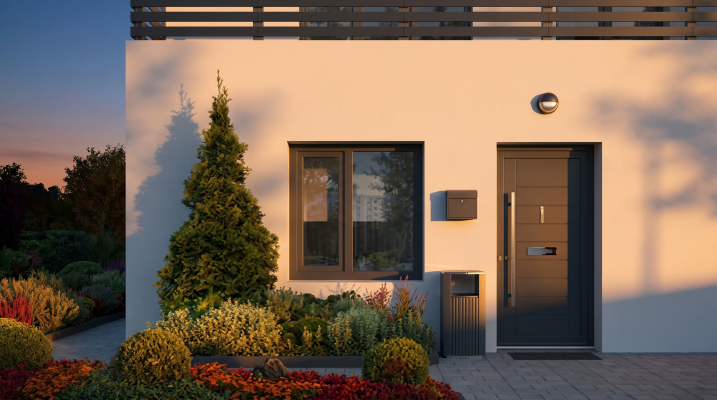
Error #5: Specifying Products In Isolation
One of the less obvious specification errors is also one of the most common.
Individual glazing decisions are often made in isolation from one another.
Windows are specified separately from doors.
Sliding systems are considered independently of fixed glazing.
Future extensions are not taken into account.
Interior and exterior design decisions evolve along different paths.
At each stage, the individual choice may appear entirely reasonable. The problem only becomes visible when the building is viewed as a whole.
Architects rarely approach specification in this way.
They understand that glazing is not simply a collection of products. It is a collection of architectural elements that must work together to support the overall design of the building. Sightlines, proportions, frame aesthetics, material relationships and occupant experience are all interconnected.
This broader perspective becomes increasingly valuable over time.
Many projects look successful immediately after completion because each individual component performs its intended function. The windows work well. The doors operate correctly. The glazing meets the original brief.
Several years later, however, the cumulative effect of fragmented decision-making can become more apparent.
Sightlines may feel inconsistent across different elevations.
Extensions completed at a later date may struggle to integrate visually with earlier phases of work.
New glazing elements may appear disconnected from the architectural language established elsewhere in the property.
The building functions, but it lacks cohesion.
This is particularly common in renovation projects, where decisions are often made incrementally over many years. Homeowners naturally prioritise immediate requirements, specifying products to solve specific problems as they arise. While understandable, this approach can make it difficult to maintain a clear architectural strategy across the lifespan of the project.
Architects seek to mitigate this risk by thinking beyond individual procurement decisions.
They consider how glazing contributes to the identity of the building as a whole. Decisions about windows are evaluated alongside doors, façade composition, material palettes and potential future alterations. The objective is not simply to solve today’s problem but to create a framework capable of accommodating tomorrow’s decisions as well.
This approach is closely linked to long-term value.
Buildings that feel coherent tend to age more successfully. They are easier to adapt, easier to maintain and often more satisfying to occupy. The architectural logic remains clear because the various elements continue working together rather than competing for attention.
The challenge is that integration can be difficult to appreciate during procurement.
Individual products are easy to compare.
Architectural cohesion is harder to quantify.
It does not appear on a specification sheet and rarely features prominently in marketing literature.
Yet over time, it often becomes one of the defining characteristics of a successful project.
The most enduring glazing schemes are rarely the result of a single outstanding product.
They are the result of multiple decisions working together towards a shared architectural objective.
And that is something that only becomes more valuable as the years pass.
Why These Problems Rarely Appear During The Buying Process
One of the reasons long-term specification errors are so common is that the procurement process is not designed to reveal them.
Most glazing decisions are made within a relatively compressed timeframe. Homeowners, architects and contractors evaluate products, compare quotations and assess technical information based on what can be known before the building is occupied. This is entirely rational, but it inevitably creates limitations.
Many of the factors that determine long-term satisfaction cannot be fully tested at the point of purchase.
Comfort cannot be experienced through a specification sheet.
Serviceability cannot be assessed while every component is new.
Architectural longevity cannot be measured while current design trends remain popular.
Installation quality may not reveal its importance until the building has experienced years of seasonal movement and weather exposure.
The buying process therefore places significant emphasis on what is visible today rather than what may become apparent tomorrow.
Showrooms reinforce this tendency.
Products are presented in pristine conditions, operating exactly as intended. Visual appearance, opening mechanisms and immediate impressions naturally dominate attention. These factors matter, but they represent only a small part of the ownership experience.
Marketing materials create similar biases.
Manufacturers understandably focus on performance metrics, design features and differentiating characteristics that can be communicated clearly during procurement. Long-term considerations such as maintenance pathways, lifecycle performance and architectural ageing are often more difficult to explain, despite their importance.
There is also a human dimension to the problem.
People are naturally better at evaluating immediate outcomes than distant ones. A homeowner can easily imagine how a new glazing system will look when installed. It is much harder to imagine how the same system will perform after ten years of daily use.
Psychologists sometimes refer to this as present bias — the tendency to prioritise visible short-term benefits over less tangible future consequences. While entirely understandable, it can lead to decisions that feel sensible during procurement but prove less successful during long-term ownership.
Architects are trained to challenge this tendency.
Much of architectural specification involves considering risks and outcomes that may not become apparent until years after a project has been completed. This future-focused mindset encourages a broader evaluation of performance, durability and adaptability alongside more immediate concerns.
The result is not necessarily a different product.
Often it is simply a different way of assessing the same product.
The most important specification questions are frequently the ones that cannot be answered immediately. They relate to ageing, maintenance, comfort, resilience and long-term suitability rather than installation-day performance.
This is why many specification errors remain hidden during procurement.
The buying process naturally rewards what can be seen.
The ownership experience ultimately reveals what matters.
And the two are not always the same thing.
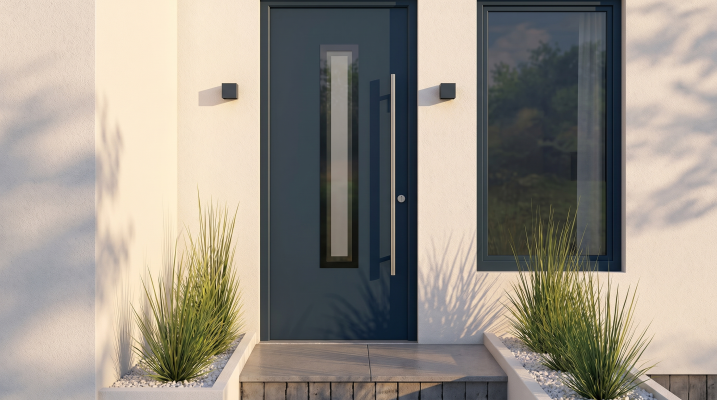
How Architects Evaluate Glazing Differently
Architects are often perceived as focusing primarily on aesthetics.
While visual quality is undoubtedly important, the reality is that architectural specification is frequently an exercise in long-term risk management.
Every major decision is evaluated not only in terms of how it will look when completed, but how it will perform, age and contribute to the building over many years of occupation.
This perspective fundamentally changes the way glazing is assessed.
A homeowner may naturally focus on appearance, performance figures and immediate value. An architect is likely to consider those factors as well, but they are also asking a different set of questions.
How will this system perform after a decade of use?
How will it respond to changing environmental conditions?
Can it be maintained effectively?
Will replacement parts remain available?
How will the specification influence comfort, usability and building performance over time?
These questions rarely dominate product marketing, yet they often determine whether a project continues to feel successful years after completion.
One of the defining characteristics of architectural thinking is lifecycle evaluation.
Buildings are expected to endure.
Materials weather.
Components age.
Occupancy patterns change.
A specification that appears highly effective when new may become less successful if it fails to accommodate these realities.
This is why architects tend to view glazing as part of a broader building system rather than as an isolated product category.
Performance is evaluated in context.
How does the glazing interact with insulation strategies?
How does it influence solar gain?
How does it contribute to occupant comfort throughout the year?
How does it support the wider architectural intent of the project?
By considering these relationships, architects are often able to identify potential weaknesses long before they become visible during occupation.
Maintenance is another area where architectural thinking differs.
Rather than assuming a product will remain unchanged throughout its lifespan, architects acknowledge that all building components require some level of stewardship. The goal is not to eliminate maintenance entirely, but to ensure that maintenance can be undertaken efficiently and predictably when required.
This same philosophy applies to aesthetics.
Architects are generally less interested in whether a design feels fashionable today and more interested in whether it will remain appropriate in ten or twenty years. The emphasis is placed on architectural longevity rather than immediate visual impact.
This approach does not guarantee perfection.
No specification process can eliminate every future challenge.
However, it significantly improves the likelihood that decisions made today will continue supporting the building long into the future.
Ultimately, architects evaluate glazing differently because they are solving a different problem.
The objective is not simply to complete a project.
The objective is to create a building that performs successfully throughout its life.
And that requires looking beyond installation day towards the years that follow.
The Ten-Year Specification Test
Most glazing decisions are made within the context of a project timeline.
Planning approvals need to be secured.
Products need to be ordered.
Installation dates need to be coordinated.
Budgets need to be managed.
In the midst of these practical considerations, it is easy to evaluate decisions according to their immediate impact.
Yet one of the simplest ways to improve specification quality is to change the timeframe through which decisions are assessed.
Rather than asking whether a choice appears attractive today, ask whether it is likely to remain successful ten years from now.
This shift in perspective often produces remarkably different conversations.
A colour that feels compelling because it is currently fashionable may deserve further scrutiny.
A system that appears inexpensive initially may warrant closer examination of its serviceability and long-term support.
A specification driven by performance figures alone may benefit from a wider discussion about occupant comfort and building behaviour.
The ten-year test is not intended to predict the future with certainty.
Its purpose is to encourage decisions that are resilient rather than reactive.
Several practical questions can help guide this process.
Will this glazing system still feel appropriate in ten years?
Will it continue supporting the architecture if current design trends change?
Will the occupants still value the qualities that influenced the original decision?
Can the system be maintained efficiently throughout its lifespan?
Are replacement components likely to remain available?
Will the installation strategy continue supporting performance as the building settles and ages?
Most importantly, does the specification solve a genuine architectural requirement or simply respond to a short-term preference?
Architects frequently evaluate projects through questions like these because they understand that buildings are long-term assets. Decisions made during specification can influence performance, usability and satisfaction for decades.
The value of the ten-year test lies in its ability to reveal priorities.
Some decisions continue looking sensible regardless of timeframe.
Others appear less compelling when viewed through the lens of long-term ownership.
This does not mean every specification must prioritise permanence above all else. Contemporary architecture can be highly successful, and innovation remains essential to progress within the industry.
The objective is simply to ensure that decisions are made consciously, with an understanding of how they may be experienced in the future.
Many of the specification errors discussed throughout this article become problematic because they were evaluated too narrowly.
The focus remained on procurement rather than ownership.
On installation rather than occupation.
On immediate outcomes rather than lifecycle performance.
The most successful glazing projects tend to avoid this trap.
They are specified not only for how they will look when completed, but for how they will continue serving the building in the years that follow.
That is ultimately what good specification seeks to achieve.
Not short-term satisfaction.
Long-term confidence.
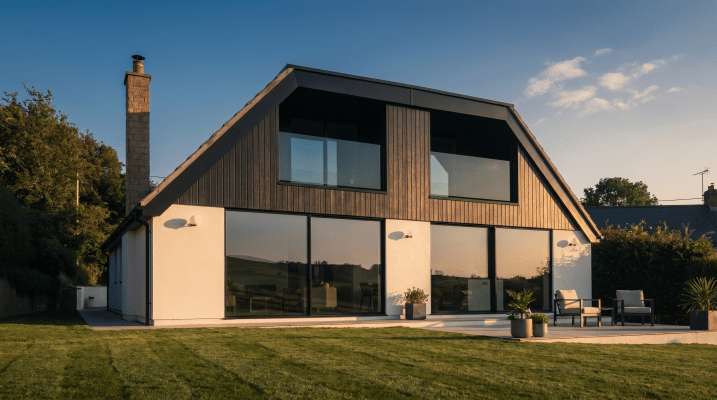
Conclusion
The specification decisions that create the greatest frustration are rarely the ones that fail immediately.
More often, they are the decisions that appear entirely successful at first, only revealing their limitations after years of occupation.
A glazing system may look exceptional on completion day.
It may achieve impressive technical performance.
It may satisfy every requirement outlined during procurement.
Yet long-term satisfaction depends on factors that extend far beyond the point of installation.
Occupant comfort.
Serviceability.
Architectural longevity.
Installation quality.
Integrated design thinking.
These considerations are often less visible during procurement precisely because their importance emerges gradually over time.
This is why architects tend to evaluate glazing through a lifecycle perspective. They recognise that specification is not simply about selecting products. It is about understanding how those products will contribute to the building throughout their operational life.
The five errors explored in this article share a common theme.
Each involves prioritising what is immediately visible over what becomes important during ownership.
Performance figures are mistaken for comfort.
Initial functionality is mistaken for long-term serviceability.
Current trends are mistaken for enduring architectural value.
Product selection is separated from installation quality.
Individual decisions are made without reference to the wider building strategy.
None of these mistakes are unusual.
In fact, they are often the natural consequence of a procurement process focused on immediate outcomes.
The challenge is that buildings are not experienced immediately.
They are experienced over years and decades.
The most successful glazing projects acknowledge this reality from the outset.
They are specified not only for completion day, but for the years that follow. Their success is measured not simply by how they look when new, but by how effectively they continue supporting comfort, performance and architectural quality throughout their lifespan.
Ultimately, the most useful specification question is also one of the simplest.
Will this still feel like the right decision ten years from now?
When that question sits at the centre of the specification process, many future regrets can be avoided before they ever have the opportunity to appear.