
Section 1: The Best Window Colour Is Usually the One You Notice Least
Choosing a window colour is often one of the most enjoyable parts of a renovation or self-build. It is the stage where homeowners begin to imagine how the finished property will look, comparing anthracite grey, black, white and an ever-growing range of bespoke finishes. Yet while colour naturally attracts attention during the specification process, architects often approach it rather differently. Rather than searching for the most striking option, they usually look for the one that allows the architecture itself to take centre stage.
This may seem surprising at first. After all, windows occupy a significant proportion of the external façade and their colour has a lasting influence on the appearance of the home. However, the objective of good architectural design is rarely to make individual elements stand out in isolation. Instead, every component should contribute to a balanced composition in which materials, proportions and detailing work together. The window colour is therefore selected to support the architecture rather than become its defining feature.
One of the reasons this approach is so effective is that buildings are experienced as complete compositions rather than collections of individual products. When someone arrives at a house, they do not consciously evaluate the colour of the window frames before noticing the brickwork, roofline or entrance. Their impression is formed by the relationship between all of these elements. A carefully chosen window colour strengthens that relationship, creating harmony across the façade without demanding attention for its own sake.
Architects often describe this as visual restraint. Restraint does not mean avoiding bold decisions or limiting creativity. It means ensuring that every design choice serves the wider architecture rather than competing with it. A subtle window colour can allow natural stone to become the dominant material on one property, while on another it may reinforce the clean geometry of a contemporary extension. In both cases, the colour succeeds because it quietly supports the overall composition instead of becoming the focal point.
Proportion also plays an important role. Window frames outline every opening, influencing how the eye reads the rhythm and balance of the elevations. Colours that are too visually dominant can exaggerate the presence of the frames, drawing attention away from the glazing and altering the perceived proportions of the building. More restrained choices often allow the architecture to feel calmer and more cohesive because the eye naturally focuses on the building as a whole rather than individual details.
This explains why many of the most admired buildings appear so effortlessly composed. Their success rarely depends on dramatic colour choices. Instead, their materials work together with quiet confidence, allowing the architecture to communicate through proportion, light and craftsmanship. The window colour becomes one carefully considered element within that wider palette rather than a statement in its own right.
Timelessness is another reason architects approach colour with caution. Unlike interior decoration, replacing window frames simply because tastes have changed is neither practical nor desirable. A colour that feels fashionable today should ideally continue to complement the building twenty or thirty years from now. Selecting a finish that belongs naturally to the architecture often proves to be a far more enduring decision than following current design trends.
For homeowners, this offers a valuable shift in perspective. Instead of asking which window colour is the most popular, it becomes more useful to ask which colour allows the building to look its best. The finest architectural colour choices are rarely those that attract immediate attention. They are the ones that quietly strengthen the character of the home, allowing every other design decision to work together with clarity, balance and lasting confidence.
Section 2: Stop Looking at the Windows—Look at the Whole House
One of the easiest mistakes to make when choosing a window colour is viewing the frames in isolation. Samples are often examined under showroom lighting or compared on a computer screen, making it easy to focus entirely on the finish itself. Architects rarely work this way. Before selecting a colour, they step back and consider the building as a whole, recognising that windows form just one element within a much larger architectural composition.
The exterior of a home is created from many different materials working together. Brick, natural stone, render, timber cladding, roof tiles, gutters, fascias and landscaping all contribute to its overall character. The entrance door, external lighting and even driveway materials influence how the property is perceived. A window colour that looks exceptional in isolation may feel entirely different once placed alongside these surrounding elements. The goal is therefore not to choose the most attractive finish on its own, but the one that sits most naturally within the wider material palette.
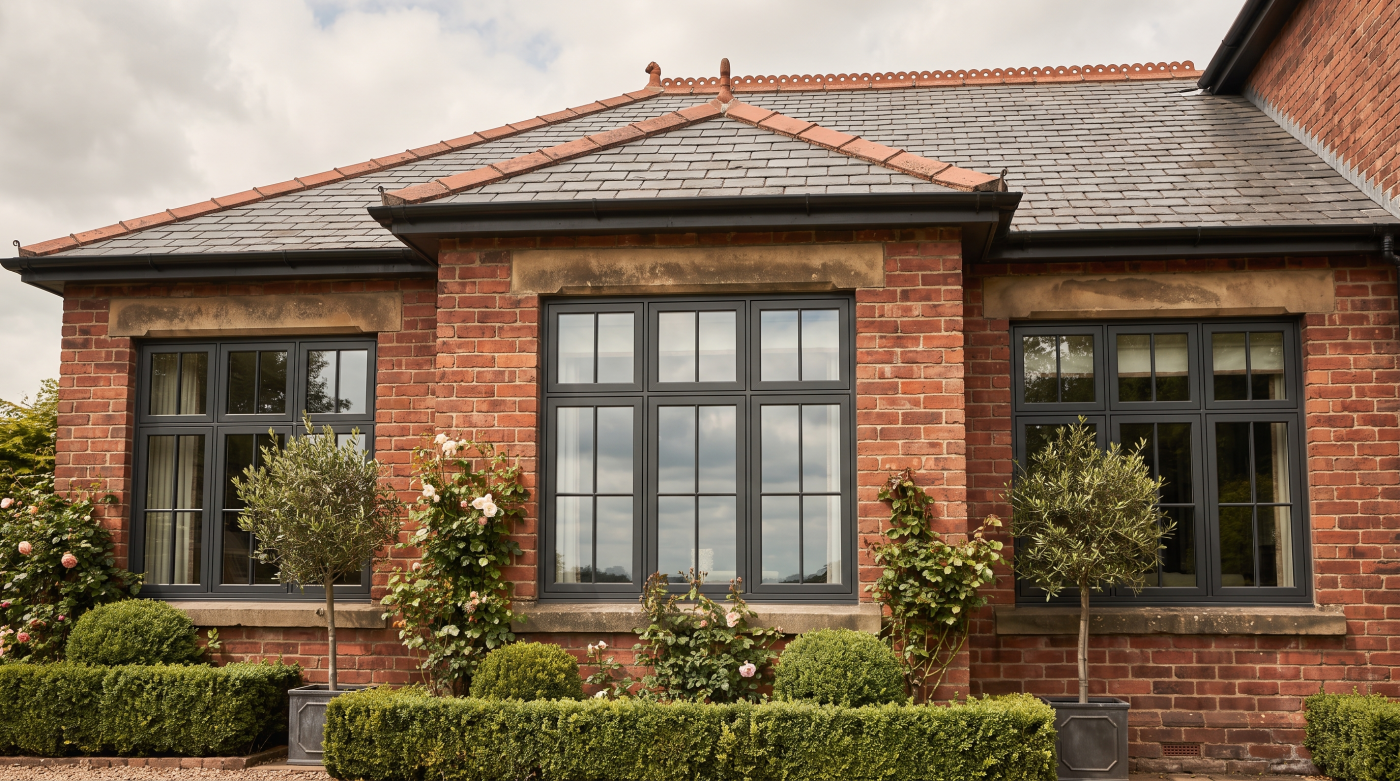
Brickwork provides a useful example. A warm red brick creates a very different architectural setting from pale limestone or crisp white render. The same window colour may appear bold and contemporary against one material while feeling understated and timeless against another. Architects understand that colour is always experienced through contrast and context. The surrounding materials influence how every frame is perceived, making it impossible to judge a finish accurately without considering the building around it.
Roof materials deserve similar attention. Slate, clay tiles, zinc roofing or standing seam metal all introduce different tones and textures that contribute to the architectural identity of the home. Window frames should work comfortably alongside these elements rather than creating unnecessary visual tension. In many successful projects, the relationship between the roof and the windows is subtle enough that it is never consciously noticed—yet it plays an important role in creating a balanced façade.
The entrance door is another element that should never be considered separately. As one of the most prominent features of the exterior, it naturally attracts attention and often establishes the visual character of the property’s main elevation. Architects therefore think carefully about how the colour of the windows relates to the entrance. Sometimes the intention is to create consistency through closely related finishes. In other cases, the entrance door provides a deliberate point of emphasis while the windows remain more restrained. The decision depends on the architecture rather than any predetermined design rule.
Landscaping also influences colour in ways that are easily overlooked. Mature trees, hedging, climbing plants and seasonal planting all become part of the visual environment surrounding the house. A window colour viewed during winter may appear quite different when framed by abundant greenery during summer. Architects recognise that buildings exist within living landscapes rather than static environments, making it important to consider how colours will respond throughout the changing seasons.
Even seemingly minor details contribute to the overall composition. Rainwater goods, external lighting, balustrades and boundary walls all introduce additional materials and finishes that influence how the eye reads the building. Individually these elements may appear insignificant, but together they create the visual context in which the windows are experienced. Good colour specification acknowledges these relationships instead of treating the window frames as isolated products.
This is why architects often encourage homeowners to stop looking at the windows and start looking at the house. When every external element is considered together, colour becomes much easier to judge because it is evaluated within the architecture rather than outside it. The result is usually a home that feels more coherent, more balanced and more timeless because every material supports the same overall design intention.
Ultimately, the best window colour is rarely selected by comparing paint samples alone. It emerges from understanding the complete composition of the building and choosing a finish that quietly strengthens every other architectural decision. When the whole house is viewed as one carefully considered design, the right colour often becomes surprisingly obvious.
Section 3: Why Popular Colours Aren’t Always the Right Choice
Window colour trends change surprisingly quickly. A finish that dominates new developments and architectural magazines today may feel far less contemporary a decade later. This is one of the reasons architects are cautious about making colour decisions based purely on popularity. While current trends can provide useful inspiration, they are rarely the deciding factor. The more important question is whether a particular colour genuinely belongs to the architecture of the building.
Anthracite grey is perhaps the clearest example of this. Over the past decade it has become one of the most widely specified colours for aluminium windows, appearing on everything from contemporary extensions to traditional family homes. Its popularity is understandable. It provides a refined, neutral appearance that complements many materials and often works well within modern architecture. However, popularity alone does not guarantee suitability. On some buildings, anthracite grey reinforces the architectural language beautifully. On others, it can feel unnecessarily heavy or visually disconnected from the surrounding materials.
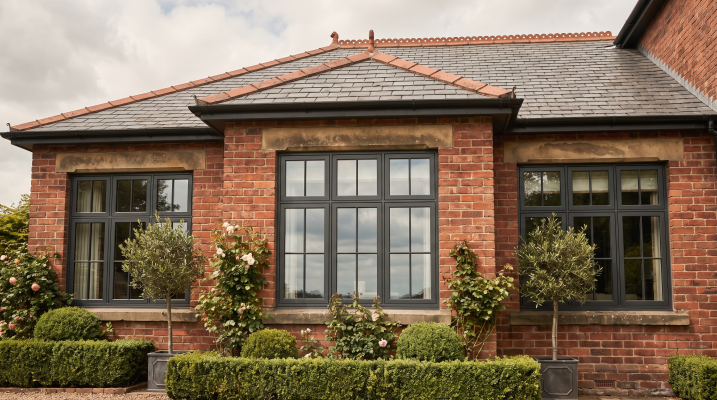
Black frames have followed a similar path, particularly within contemporary design. They can create striking contrast against pale render or crisp white façades while emphasising clean architectural lines. Yet black also has a strong visual presence. On certain properties, this can strengthen the composition by defining the openings with confidence. On others, particularly where the architecture is more delicate or traditionally proportioned, the same treatment may dominate the façade rather than supporting it. The success of black depends less on the colour itself and more on the context in which it is used.
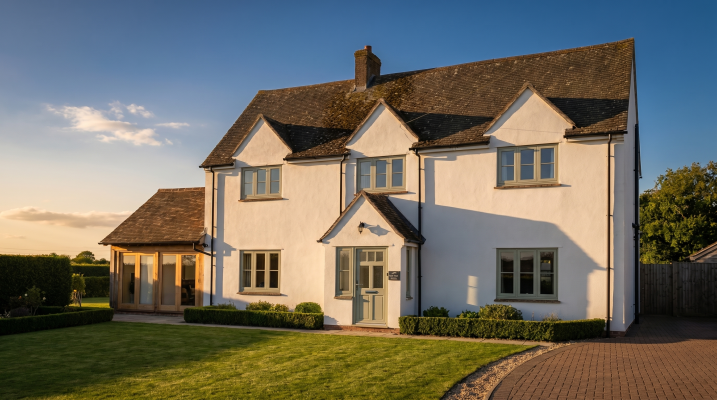
White, meanwhile, is often overlooked because of its familiarity. Yet it remains one of the most enduring architectural finishes precisely because it can adapt to so many different styles of building. White frames frequently allow glazing to feel lighter and less visually intrusive, particularly on traditional homes or properties where subtle detailing is central to the design. Far from being an uninspiring choice, white often succeeds because it quietly supports the architecture without competing for attention.
Other finishes, including bronze, muted metallics and bespoke colours, demonstrate how architectural colour is becoming increasingly diverse. These options can introduce warmth, softness or individuality when carefully integrated into the wider material palette. However, architects rarely specify unusual colours simply because they are different. Instead, they ask whether the finish strengthens the relationship between the windows, the façade and the surrounding landscape. Originality is valuable only when it contributes positively to the architecture as a whole.
Regional context also deserves consideration. A contemporary coastal home may comfortably accommodate darker architectural colours that complement modern materials and expansive glazing. A period property within a historic town or a rural stone cottage may call for a much more restrained approach that reflects its established character. The same colour can therefore feel entirely appropriate in one location while appearing disconnected in another. Good specification responds to the building and its setting rather than applying the same solution everywhere.
This is one of the reasons architects are cautious about trend-led decision making. Design fashions inevitably evolve, but buildings often remain for generations. A window colour chosen today should continue to feel comfortable alongside the architecture many years from now, regardless of changing preferences or the latest magazine features. Colours selected because they belong naturally to the building tend to age far more gracefully than those chosen primarily because they are currently fashionable.
Ultimately, there is nothing inherently right or wrong about anthracite grey, black, white or any other finish. Each can contribute to exceptional architecture when specified thoughtfully. The important lesson is that popularity should never replace suitability. The finest colour choices are not those that follow trends most closely, but those that quietly reinforce the identity of the building long after those trends have passed.
Section 4: Colour Looks Different on Every Home
One of the greatest misconceptions about choosing a window colour is that the finish will look exactly as it does on a sample card or showroom display. In reality, colour is never experienced in isolation. It changes according to light, surrounding materials, weather conditions and the environment in which the building sits. Architects understand that colour is something people experience rather than something they simply select, which is why context plays such an important role in the specification process.
Natural light has perhaps the greatest influence of all. The same window frame can appear noticeably different on a bright summer afternoon compared with an overcast winter morning. Strong sunlight often emphasises texture and surface detail, while softer daylight can make darker colours appear more muted and understated. Throughout the course of a single day, the appearance of the frames will continue to evolve as the position of the sun changes, subtly altering the relationship between the windows and the rest of the façade.
The orientation of the building also affects how colours are perceived. South-facing elevations typically receive more direct sunlight, making finishes appear brighter and more defined during much of the day. North-facing façades experience softer, more diffuse light, often giving darker colours a deeper, calmer appearance. East and west elevations change dramatically between morning and evening, meaning the same colour may feel entirely different depending on the time of day it is viewed.
Surrounding materials further influence the way colour is interpreted. A dark grey frame against pale render creates a stronger visual contrast than the same frame set within warm red brick or natural stone. Likewise, subtle colours that appear understated alongside timber cladding may become more prominent when placed against crisp white walls. Architects therefore consider the interaction between every material on the façade, recognising that colour is always influenced by what surrounds it.
Landscaping introduces another layer of complexity. Trees, hedging, lawns and planting create constantly changing backdrops that alter throughout the seasons. A home surrounded by mature greenery may soften darker window colours during spring and summer, while the same building can appear more defined during winter when foliage has receded. These seasonal changes become part of the architecture itself, affecting how the building is experienced over many years rather than at the moment it is photographed.
Surface texture also deserves attention. Smooth aluminium finishes reflect light differently from textured coatings, and both respond differently depending on weather conditions. Rain can deepen certain colours, bright sunshine may introduce subtle reflections and overcast skies often produce softer, more even tones. These variations are entirely natural, yet they reinforce the idea that colour should never be judged from a single sample viewed under artificial lighting.
The wider setting of the property also shapes perception. A contemporary home within an urban environment often sits alongside modern materials such as steel, concrete and glass, creating one type of visual relationship. A rural house surrounded by fields, mature trees or traditional stone buildings presents a very different architectural context. The same colour may feel perfectly balanced in one location while appearing unexpectedly prominent in another because the surrounding environment changes the way it is perceived.
This is why architects rarely finalise colour choices without considering the building itself. They imagine the windows under different weather conditions, across changing seasons and alongside the materials that will define the completed home. Colour becomes part of a living architectural composition rather than a fixed product decision.
For homeowners, this offers an important reminder. The right window colour is not simply the one that looks best on a sample card. It is the one that continues to complement the architecture throughout the changing light of every day, the changing seasons of every year and the changing character of the home over many decades. When colour is judged in context rather than isolation, the result is almost always more timeless, more balanced and more satisfying to live with.
Section 5: Inside and Outside Don’t Need to Feel the Same
When homeowners think about window colour, they often imagine a single finish applied to every surface of the frame. While this remains a popular choice, modern window systems increasingly allow the interior and exterior to be specified independently. Architects often take advantage of this flexibility because the inside and outside of a home perform very different architectural roles. Treating them as identical can sometimes overlook opportunities to create spaces that feel more refined and more appropriate to their individual settings.
The exterior of the building must respond to its surroundings. It sits alongside brick, stone, render, roof materials and landscaping, contributing to the architectural identity of the property within its wider environment. The interior, however, exists within an entirely different context. Here, the window frame becomes part of the rooms people occupy every day, interacting with flooring, joinery, furniture, wall finishes and changing natural light. It is therefore perfectly reasonable for the two sides of the frame to serve different design objectives.
Many contemporary homes provide a good example of this approach. Externally, darker architectural finishes may reinforce the clean lines of the façade and complement other external materials. Internally, however, homeowners often prefer lighter or more neutral finishes that reflect daylight, create a softer atmosphere and integrate comfortably with evolving interior design choices. This allows the architecture to remain strong on the outside while creating calm, adaptable living spaces within.
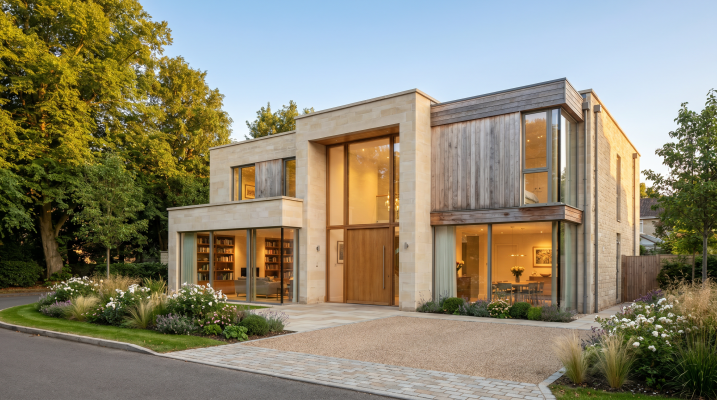
Homes featuring natural materials frequently benefit from a different strategy. Timber interiors, whether created through engineered timber frames or carefully selected internal finishes, can introduce warmth and texture that enrich everyday living. Architects sometimes specify these finishes because they strengthen the relationship between windows, flooring, cabinetry and other natural materials throughout the home. The objective is not simply to create visual interest, but to establish a coherent interior material palette that feels comfortable throughout the changing seasons.
Dual-colour systems also recognise an important practical reality: interior design changes more frequently than architecture. Furniture, paint colours, flooring and decorative finishes often evolve over time as homeowners refresh different rooms. Choosing an interior window finish that remains adaptable allows those future changes to take place without conflicting with the permanent architectural elements of the building. A restrained internal palette often provides greater flexibility while allowing the external appearance to remain closely aligned with the architecture.
Natural light influences these decisions as well. Internal frame colours affect how daylight is perceived within a room, subtly influencing the atmosphere throughout the day. Lighter finishes can create a brighter visual impression by reflecting more light back into the space, while darker finishes may provide stronger definition around views and reinforce more contemporary interiors. Neither approach is inherently preferable; each contributes to a different architectural character depending on the wider design intentions.
Architects therefore think carefully about how occupants experience the windows from inside the home rather than focusing exclusively on kerb appeal. After all, homeowners spend far more time looking at the interior face of their windows than they do standing outside admiring the façade. Comfort, materiality and the relationship with surrounding finishes often become just as important as the external appearance of the property.
This broader perspective explains why colour specification is rarely reduced to choosing a single finish. The interior and exterior each contribute to different aspects of the home’s architecture, and modern glazing systems provide the flexibility to acknowledge those differences thoughtfully. Rather than asking what colour the windows should be, it often becomes more useful to ask what each side of the window is expected to contribute to the overall experience of the home.
Ultimately, the best colour strategy is not always the simplest one. By considering the interior and exterior independently while ensuring they remain part of the same architectural vision, homeowners can create spaces that feel more harmonious, more adaptable and more enjoyable to live in for many years to come.
Section 6: What Architects Consider Before Finalising a Colour
By the time a window colour is selected, architects have usually made most of the important design decisions already. The architecture has been established, the material palette has been developed, the glazing system has been specified and the relationship between the building and its surroundings has been carefully considered. Colour is therefore rarely the starting point of the design process. More often, it is one of the final refinements that brings every other decision together into a coherent architectural composition.
The material palette is usually the first point of reference. Brick, stone, render, timber cladding, roofing materials and external paving all contribute to the visual language of the home. Rather than introducing a colour that competes with these materials, architects seek one that reinforces them. Sometimes this means selecting a finish that blends quietly into the overall composition. On other projects, it may involve creating a subtle contrast that defines the window openings without overwhelming the architecture. In either case, the colour is chosen in response to the building rather than independently of it.
The aspirations of the homeowner also influence the decision. Some projects are intended to feel calm, understated and timeless, while others embrace a more contemporary or expressive architectural language. Architects spend time understanding how clients want their home to feel because colour contributes to atmosphere as much as appearance. The objective is not simply to satisfy current preferences but to create a home that continues to feel appropriate as tastes evolve over many years.
Context is another important consideration. A contemporary self-build overlooking open countryside presents a very different architectural setting from a Victorian townhouse within a historic streetscape. Neighbouring buildings, local materials, landscape and regional character all influence how a colour will be perceived. Architects recognise that buildings are never viewed in isolation; they exist within wider environments that shape the success of every design decision.
Planning requirements may also play a role, particularly in conservation areas or on properties of architectural significance. While modern colour options offer considerable flexibility, certain projects require finishes that respect the established character of the building or its surroundings. Even where planning restrictions do not apply, architects often favour colours that acknowledge the history and identity of the property rather than introducing unnecessary visual contrast.
Longevity remains one of the strongest influences on colour selection. Unlike paint inside the home, window frames are expected to remain in place for decades. Architects therefore ask whether a chosen finish will continue to complement the architecture not only today but also twenty or thirty years into the future. Colours that rely heavily on current design fashions may eventually feel dated, whereas finishes rooted in the character of the building often retain their appeal regardless of changing trends.
Future resale is sometimes considered as well, although not in the sense of designing purely for the next owner. Instead, architects recognise that homes with balanced, timeless architectural decisions often appeal to a wider range of people because the design feels coherent rather than fashion-led. Window colour becomes part of that broader architectural quality, contributing quietly to the overall impression of care and thoughtful specification.
Maintenance also influences the final decision. Different finishes respond differently to changing weather conditions, surrounding vegetation and the practical realities of everyday life. While modern coatings are exceptionally durable, architects still consider how colours will age, how easily they can be maintained and how they will continue to sit alongside materials that naturally weather over time. Good specification anticipates these changes rather than treating the building as a static object.
This professional process explains why architects rarely ask homeowners which colour they prefer before discussing the architecture itself. Colour is not ignored; it is simply considered in its proper place within the design process. Once the building, materials, context and long-term aspirations are fully understood, the most appropriate colour often becomes remarkably clear. It is no longer an isolated design decision but the final element that quietly completes the architectural composition.
Section 7: The Colour You Love Today Should Still Feel Right in Twenty Years
Choosing a window colour often feels like one of the final creative decisions within a renovation or self-build. It is easy to imagine how the completed home will look once the scaffolding has gone and the landscaping has matured. Yet while colour trends can change within just a few years, the windows themselves are expected to remain part of the building for decades. This difference in timescale is one of the main reasons architects approach colour with such care. They are not simply designing for today; they are designing for the long-term life of the home.
Architectural quality has always been closely linked with longevity. The most admired buildings are rarely those that captured a passing design trend. Instead, they continue to feel appropriate because their materials, proportions and detailing remain in harmony with the architecture as fashions evolve around them. Window colour contributes to this same sense of permanence. A finish that quietly belongs to the building often retains its appeal long after more trend-driven choices begin to feel dated.
This does not mean avoiding contemporary colours altogether. Anthracite grey, black and other modern architectural finishes can all provide outstanding results when they genuinely complement the building. The question is not whether a colour is fashionable, but whether it derives its success from the architecture itself. If a finish feels appropriate because it strengthens the composition of the house, it is far more likely to remain satisfying over many years than one selected primarily because it is currently popular.
The surrounding materials of the home will also continue to evolve with time. Brick develops character, natural stone weathers gently, timber silvers, planting matures and the landscape changes through every season. A carefully chosen window colour should sit comfortably alongside these natural processes rather than appearing increasingly disconnected from them. Architects often imagine how the property will look not only when newly completed but also after ten or twenty years of occupation, recognising that graceful ageing is part of successful architectural design.
Maintenance forms part of this long-term perspective as well. Modern powder-coated finishes are exceptionally durable, yet every external material experiences years of sunlight, rainfall and changing weather conditions. Choosing a finish that ages consistently alongside the rest of the building often creates a more enduring architectural appearance than one that relies heavily on contrast or visual impact. Good colour specification acknowledges that buildings are living environments rather than static objects.
Changing personal tastes are equally important to consider. Interior decoration can be refreshed relatively easily through new paint colours, furniture or flooring, but replacing window frames purely because aesthetic preferences have changed is neither practical nor desirable. Architects therefore encourage homeowners to think about colours they are likely to appreciate well into the future rather than those that simply reflect current design inspiration. Timeless choices often provide greater freedom because they continue to support evolving interior styles without becoming visually restrictive.
Long-term ownership also extends beyond the current occupants. Whether a home remains within the same family for generations or is eventually sold, thoughtful architectural decisions tend to retain broader appeal because they feel balanced rather than fashion-led. Window colour may seem like a relatively small detail, but it contributes to the overall impression of quality and permanence that defines the character of the property.
Ultimately, the most successful window colour is not necessarily the one that generates the strongest reaction on the day it is installed. It is the one that continues to feel entirely appropriate after thousands of mornings watching the changing light, countless seasons observing the garden mature and many years of everyday life unfolding within the home. When colour is chosen to support the architecture rather than temporary trends, it becomes part of a building that grows more comfortable and more beautiful with time rather than less.
Section 8: Better Architecture Is Rarely About Colour Alone
By the time homeowners reach the point of choosing a window colour, it can feel as though they are making one of the most important design decisions of the entire project. After all, the frames will remain part of the building for decades and will influence its appearance every single day. Yet architects rarely see colour as an isolated decision. Instead, they view it as the final layer within a much broader architectural process in which proportion, materials, light and context have already established the character of the home.
This is why successful architecture is rarely remembered because of a particular colour. The buildings that continue to inspire people many years after completion are admired for their balance, simplicity and coherence. Every element feels as though it belongs, from the roofline and wall materials to the landscaping and glazing. Colour contributes to this harmony, but it does so quietly, supporting the architecture rather than competing with it.
When colour is allowed to dominate the design process, it can unintentionally distract from the qualities that make a building successful. A fashionable finish may attract immediate attention, but if it feels disconnected from the materials, proportions or setting of the home, it can quickly become the most noticeable feature for the wrong reasons. Architects therefore strive for the opposite outcome: a colour that feels so naturally integrated that it almost disappears into the wider composition.
This approach also reinforces the idea that buildings are experienced as complete environments rather than collections of individual products. Occupants do not live with window frames in isolation. They experience the changing quality of daylight, the relationship between interior spaces and the garden, the texture of natural materials and the atmosphere created by every architectural decision working together. Colour forms part of this experience, but it is only one contributor among many.
The same principle explains why timeless homes rarely depend upon dramatic design statements. Their success comes from the consistency with which every material, proportion and detail supports the same architectural vision. Window colour becomes one carefully considered element within that larger framework, helping to strengthen the identity of the building without demanding continual attention. The result is architecture that feels calm, confident and enduring rather than driven by short-lived trends.
For homeowners, this offers a reassuring way to approach the decision. Rather than searching for the perfect colour in isolation, it becomes more valuable to ask how the colour contributes to the building as a whole. Does it complement the materials? Does it reinforce the proportions of the façade? Will it continue to feel appropriate as the home and its surroundings mature? These questions often lead to decisions that remain satisfying long after contemporary fashions have changed.
Ultimately, choosing a window colour is not about selecting the most fashionable finish or following the latest architectural trend. It is about supporting the character of the building, respecting its materials and ensuring that every element contributes to a coherent and lasting design. When colour is considered as part of the architecture rather than apart from it, the result is a home that feels balanced, timeless and quietly confident.
The finest window colours are therefore rarely the ones people comment on first. Instead, they help create homes that simply feel right. The architecture takes centre stage, the materials work together effortlessly and the building continues to age with dignity and character. In the end, that is what thoughtful colour specification has always been about—not making the windows stand out, but helping the entire home stand the test of time.