
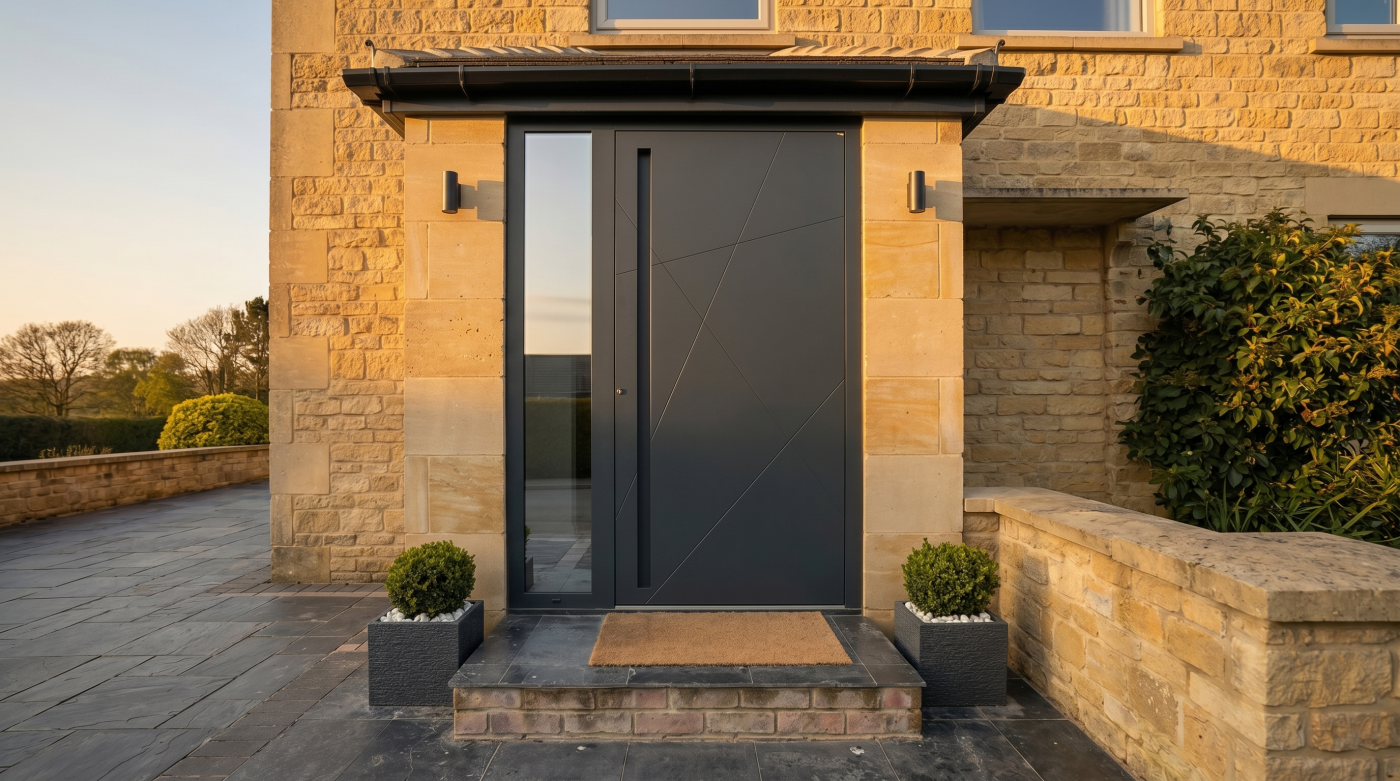
Why Front Door Regrets Usually Appear After Installation
Most front door buying decisions happen in a showroom, a brochure or on a website.
Most front door regrets happen six months later.
This is not because homeowners make poor decisions. It is because the factors that influence a purchase are often very different from the factors that determine long-term satisfaction. When choosing a new entrance door, people naturally focus on what they can see immediately. Colour, style, glazing details, handles and kerb appeal are all highly visible features. They are easy to compare and often play an important role in how a property presents itself.
The challenge is that a front door is not simply something you look at.
It is something you live with.
Every day, it is opened and closed multiple times. It is exposed to changing weather conditions. It influences comfort in entrance halls, contributes to security, affects energy performance and plays a role in the overall experience of arriving home. These qualities are far more difficult to evaluate during the buying process because they only become apparent through ownership.
Many homeowners are surprised by this. A door that looked exceptional in a showroom may feel heavier than expected in daily use. A colour that appeared perfect on a sample board may behave differently when exposed to full sunlight throughout the year. A locking system that seemed reassuring during a demonstration may become frustrating if it proves awkward to operate repeatedly.
Architects often understand this distinction because they evaluate products through the lens of long-term use rather than initial appearance. They recognise that successful specification is rarely about selecting the feature that creates the strongest first impression. It is about understanding how the product will perform over years of everyday life.
This difference between first impressions and ownership experience explains why front door regrets tend to emerge gradually rather than immediately. Very few people stand back on installation day and feel disappointed by their new entrance door. The regrets usually develop over time as practical realities begin to outweigh the excitement of the purchase.
The most satisfied homeowners are often not those who chose the most striking design.
They are the ones who chose a door that continues to perform well long after the novelty has disappeared.
This is why the best front door decisions are rarely based on appearance alone. The qualities that create lasting satisfaction are often the qualities that receive the least attention during the buying process.
Regret #1: Prioritising Appearance Over Everyday Practicality
There is a reason entrance doors receive so much attention during a renovation or self-build project. They are highly visible, contribute significantly to kerb appeal and often become one of the defining features of a home’s exterior. It is entirely natural for homeowners to focus on aesthetics when making a selection.
The difficulty is that a front door is not experienced primarily as a design feature.
It is experienced as a functional part of daily life.
This is where many regrets begin.
A door that looks exceptional in photographs may not always prove as practical as expected once it becomes part of a busy household. Large entrance doors, for example, can create a striking architectural statement and work beautifully within the right setting. However, they are also heavier, require more robust hardware and can feel less convenient when used multiple times each day.
Similarly, homeowners sometimes become focused on achieving a particular aesthetic without fully considering how the door will be used. A highly contemporary design may complement the architecture perfectly but offer less privacy than anticipated. Extensive glazing can introduce welcome natural light into an entrance hall while also creating visibility that some occupants later find uncomfortable. What feels like an obvious design decision at the specification stage can feel rather different once the home is occupied.
Practical considerations are often overlooked because they are difficult to visualise. How will the door feel when carrying shopping bags? How easy will it be for children to operate? Will older family members find it comfortable to use in ten years’ time? Does the threshold arrangement support accessibility? These questions rarely dominate showroom conversations, yet they often have a greater influence on long-term satisfaction than colour or styling details.
Architects frequently approach entrance doors with this broader perspective. While appearance remains important, they recognise that successful design balances aesthetics with usability. A front door should enhance the architecture of a home while also functioning effortlessly within everyday life.
This is not an argument against ambitious design. Some of the most impressive entrance doors combine architectural presence with outstanding practicality. The key is ensuring that one objective does not come at the expense of the other.
The most common regret is not choosing a door that looks unattractive.
It is choosing a door that looks beautiful but becomes less enjoyable to live with over time.
The best entrance doors achieve both goals. They create a strong first impression while continuing to perform comfortably, conveniently and reliably every day thereafter.
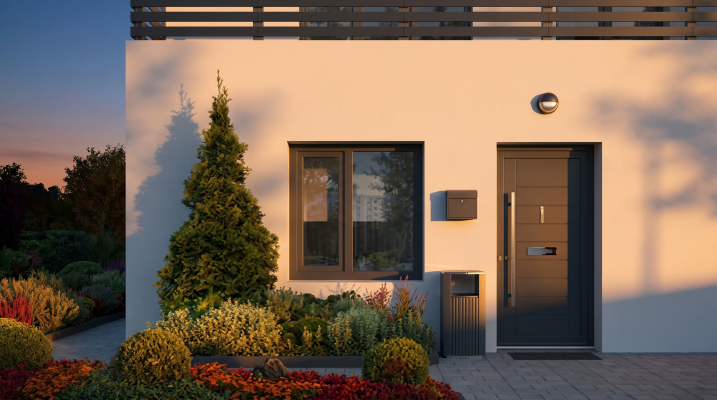
Regret #2: Underestimating The Importance Of Thermal Performance
When homeowners think about a new front door, thermal performance is rarely the first consideration.
Style, colour, glazing details and security features tend to dominate the conversation. Comfort is often assumed rather than actively evaluated. After all, a front door is only one part of the building envelope. How much difference can it really make?
The answer is often more than people expect.
Many entrance halls, vestibules and circulation spaces are located close to the front door and are used multiple times every day. If the door performs poorly, occupants may experience cold spots, draughts or noticeable temperature differences around the entrance area. These issues are not always severe enough to be described as faults, but they can subtly influence how comfortable the home feels.
The challenge is that thermal performance is difficult to assess before installation. A front door may look substantial and well-built while delivering very different real-world results depending on its construction, insulation, seals and installation quality. Two doors that appear almost identical from the outside can provide noticeably different levels of comfort once they become part of a finished home.
This is particularly relevant in modern properties where expectations around energy efficiency have increased significantly. As walls, roofs and glazing become more thermally efficient, weaknesses elsewhere in the building envelope can become more noticeable. A poorly performing entrance door may have been less apparent in an older, less efficient property. In a contemporary home, the contrast can be much more obvious.
Architects often understand that thermal performance should not be viewed solely through technical figures. Occupants do not experience specification sheets. They experience how a space feels. A well-performing entrance door contributes to a sense of comfort and consistency throughout the home, helping entrance areas feel as considered as the main living spaces.
This is one reason professional specification often focuses on the complete door system rather than isolated performance claims. The door leaf, frame, seals, threshold and installation details all influence the final outcome. A strong headline performance figure means little if the overall system fails to deliver comfort in practice.
Many homeowners only begin to appreciate this after living with their new front door through a winter season. The absence of draughts, cold surfaces and temperature fluctuations often goes unnoticed because everything simply feels as it should. Conversely, when thermal performance falls short, it can become a source of ongoing frustration.
The regret is rarely that a homeowner chose the wrong colour.
It is that they overlooked a feature they interact with every time they enter the home.
A front door is not simply an architectural statement.
It is part of the comfort strategy of the building itself.
Regret #3: Focusing On Security Claims Rather Than Security Design
Security is one of the first topics raised when homeowners begin researching a new front door.
Manufacturers promote advanced locking systems, reinforced cores, security certifications and a wide range of protective features. For most buyers, this is reassuring. A front door is the primary point of entry to the home, and naturally people want confidence that it will provide appropriate protection.
The problem is that security is often presented as a collection of individual features rather than as a complete system.
As a result, homeowners can become focused on specific claims without fully understanding how security is actually achieved in practice.
A locking mechanism provides a useful example. High-quality locks are undoubtedly important, but the overall security of a door depends on much more than the lock itself. Door construction, frame strength, hardware quality, installation standards and ongoing reliability all contribute to the effectiveness of the system. A strong lock installed within a poorly specified door does not necessarily create a highly secure entrance.
Long-term performance also matters.
Many doors feel robust when they are first installed. The real test comes years later, after thousands of opening and closing cycles, exposure to changing weather conditions and normal daily use. Hardware that becomes misaligned, locking mechanisms that become difficult to operate or components that wear prematurely can gradually reduce both convenience and security.
This is one reason architects and experienced building professionals tend to think about security differently from many homeowners. They recognise that security is not a product feature that can be added at the end of the specification process. It is the result of careful design decisions working together.
The relationship between security and usability is also frequently overlooked. A front door should feel secure, but it should also be easy and intuitive to operate. Systems that become frustrating in everyday use sometimes encourage occupants to adopt habits that undermine security altogether. Good design balances protection with practicality.
Installation plays a significant role as well. Even a well-engineered entrance door can underperform if it is poorly fitted or incorrectly integrated into the building structure. Security is not created solely in the factory. It is created through the combination of specification, manufacturing and installation quality.
Many homeowner regrets stem from assuming that security can be reduced to a checklist of features. The reality is more sophisticated. A truly secure entrance door is the product of thoughtful engineering, durable components and long-term reliability rather than a single headline claim.
The most secure doors are rarely those with the most impressive marketing language.
They are the doors where every part of the system has been designed to work together effectively.
That distinction often becomes far more important after installation than it appears during the buying process.
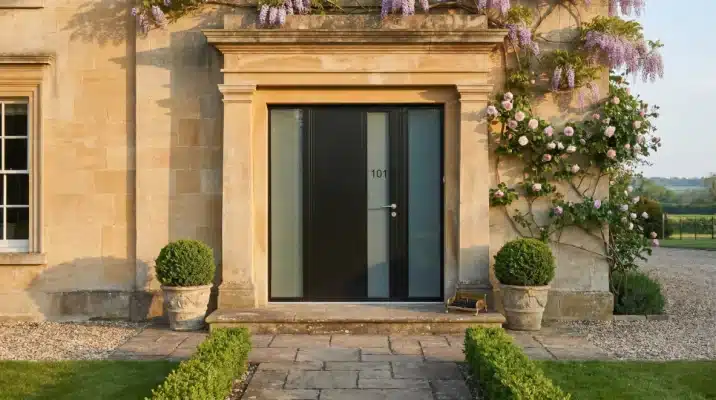
Regret #4: Choosing A Finish Without Considering Long-Term Exposure
When selecting a new front door, homeowners often focus on how the finish looks on installation day.
This is entirely understandable.
Colour samples, showroom displays and product photography are designed to showcase a door at its absolute best. At that stage, every finish appears pristine, every surface looks flawless and every colour feels full of potential.
The difficulty is that a front door spends very little of its life in showroom conditions.
Instead, it faces years of exposure to sunlight, rain, changing temperatures and daily use. The way a finish responds to these conditions can have a significant impact on long-term satisfaction, yet it is rarely a major focus during the buying process.
Orientation plays an important role. A front door exposed to strong sunlight throughout the day may experience very different conditions from a door protected by a porch or shaded entrance. Darker colours, in particular, can absorb more solar energy and become significantly warmer during summer months. While modern finishes are designed to cope with these demands, exposure levels remain an important consideration when evaluating long-term appearance and performance.
Environmental conditions matter too. Homes in coastal locations, exposed countryside settings or areas subject to severe weather often place greater demands on external finishes than more sheltered properties. A specification that performs exceptionally well in one environment may require additional consideration in another.
This is one reason architects often think beyond colour selection alone. They consider the quality of the finish, the exposure of the building and how the entrance door will age as part of the overall architectural composition. A front door should not only look impressive when new; it should continue complementing the property many years into the future.
Homeowners sometimes assume that appearance is a static decision.
In reality, appearance is something that evolves over time.
As discussed in our article on powder-coated finishes, the durability of a finish is influenced by far more than colour choice. Manufacturing quality, coating standards, maintenance practices and environmental conditions all contribute to long-term performance. Two doors that look identical when installed may age quite differently depending on these factors.
The most common regret is not choosing the wrong colour.
It is choosing a finish without fully understanding how it will behave in the specific conditions of the property.
A finish should be evaluated not only for how it looks today, but for how it is likely to look after years of exposure and use.
The most successful entrance doors are not simply those that create a strong first impression.
They are the ones that continue looking appropriate, attractive and well-maintained long after the excitement of installation has faded.
Regret #5: Thinking Only About Today’s Needs
Most homeowners choose a front door based on their current circumstances.
That seems entirely reasonable. The door is being purchased for the home they live in today, not for a future version of their life that may or may not materialise. Yet this short-term perspective is one of the most common sources of long-term regret.
A front door is rarely a temporary purchase.
Unlike furniture, decoration or even certain aspects of a renovation, an entrance door is expected to remain in place for many years. During that time, families grow, children become older, lifestyles change and priorities evolve. A door that feels perfectly suited to a household today may feel less appropriate a decade later.
Accessibility is a good example.
Many homeowners pay little attention to thresholds, opening forces and ease of operation when they are young and active. However, these details can become increasingly important over time. A door that is difficult to operate, awkward to access or unnecessarily heavy may create challenges that were never anticipated during the original specification process.
Family life can influence requirements as well. A young couple may prioritise aesthetics above all else, while a growing family may place greater value on practicality, durability and convenience. Equally, homeowners planning to remain in a property for the long term often benefit from considering how the entrance will function as they age.
Architects frequently think about these issues because good design is not only concerned with present needs. It also considers future use. The most successful homes are often those that remain comfortable, practical and adaptable throughout changing stages of life.
Future-proofing does not necessarily require compromise. It simply requires broader thinking. A beautifully designed entrance door can still provide excellent accessibility. Strong architectural character can coexist with practicality. The objective is not to design around unlikely scenarios but to avoid creating unnecessary limitations that become apparent later.
Long-term ownership also brings another consideration: maintenance and support. Homeowners often assume that if a door functions well when new, it will continue doing so indefinitely. In reality, serviceability, replacement parts and ongoing reliability become increasingly important as the years pass. Thinking beyond the installation date helps ensure the chosen solution continues to deliver value well into the future.
This is one reason many of the best entrance door decisions feel relatively unremarkable after installation.
The door simply works.
Year after year, it remains comfortable to use, appropriate for the property and capable of adapting to changing circumstances.
The regret is rarely choosing a door that fails immediately.
It is choosing a door that only works perfectly for a very specific moment in time.
The best entrance doors are designed not just for today’s homeowner, but for the person they will become in the years ahead.
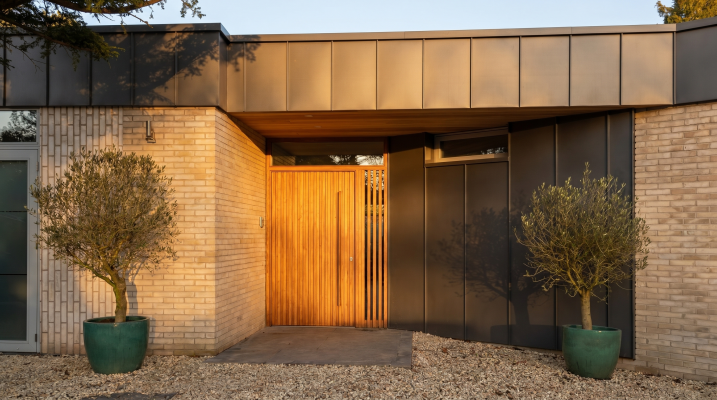
Why Premium Entrance Doors Often Deliver Better Long-Term Value
Many of the regrets discussed in this article share a common theme.
They are not usually caused by obvious mistakes.
They are often the result of prioritising short-term considerations over long-term ownership.
This is one reason premium entrance doors frequently deliver better value than their initial purchase price might suggest. The additional investment is not simply paying for a different appearance. In many cases, it supports better engineering, improved durability, stronger thermal performance and a more refined ownership experience.
Durability is perhaps the most obvious example.
A front door is one of the hardest-working elements of a home. It is opened and closed thousands of times, exposed to weather throughout the year and expected to perform consistently regardless of conditions. Higher-quality systems are typically designed with this reality in mind, using more robust materials, better construction methods and components intended to withstand long-term use.
Hardware quality also has a significant influence on ownership satisfaction. Locks, hinges, handles and operating mechanisms are often overlooked during procurement because they are relatively small details. Yet these are the components homeowners interact with every day. Better hardware can contribute to smoother operation, improved reliability and fewer maintenance issues over the life of the door.
Thermal performance is another area where long-term value becomes apparent. As discussed earlier, comfort is often experienced rather than measured. A well-insulated entrance door can help maintain consistent temperatures around entrance halls and circulation spaces, contributing to the overall feeling of quality within the home.
Serviceability matters too.
Architects and experienced homeowners frequently consider whether a system can be maintained effectively over the long term. The availability of replacement parts, manufacturer support and ongoing service infrastructure can have a significant impact on ownership costs and convenience many years after installation.
This is not an argument that every homeowner should buy the most expensive front door available.
Different projects have different priorities and budgets. There are many situations where a mid-range solution may be entirely appropriate. The important point is that value should be assessed over the lifespan of the product rather than solely at the point of purchase.
Architects often evaluate entrance doors in this way. They understand that the most successful specifications are not necessarily those with the lowest upfront cost. They are the ones that continue delivering performance, reliability and satisfaction long after installation.
A premium entrance door may cost more on day one.
The more important question is what it costs to own over the next ten or twenty years.
That is often where the true value becomes visible.
The Questions Architects Ask Before Choosing A Front Door
Homeowners often begin the front door selection process by asking practical questions.
Which style looks best?
What colour should I choose?
Which material is most popular?
These are perfectly reasonable considerations, particularly given the visual importance of an entrance door. However, architects tend to approach the decision from a different starting point.
Rather than focusing first on appearance, they usually focus on outcomes.
How should the door perform?
How will it contribute to the overall experience of the home?
How will it age over time?
Will it continue meeting the needs of the occupants many years into the future?
These questions encourage a broader perspective.
Architects consider how a door will feel in everyday use, not just how it will look in photographs. They evaluate thermal performance, security, durability, maintenance requirements and how the entrance integrates with the architecture of the building as a whole. The objective is not simply to create a strong visual statement but to ensure the door supports the wider goals of the project.
Longevity is often a major consideration. A front door should complement the property on installation day, but it should also continue looking and functioning appropriately years later. This requires thinking about exposure, material quality, hardware durability and the practical realities of long-term ownership.
Security is viewed in a similarly holistic way. Rather than concentrating solely on individual features, architects typically assess the complete system, including the construction of the door, frame design, locking mechanisms and installation quality. They understand that security is created through multiple elements working together.
Perhaps most importantly, architects consider how the entrance door supports the character of the building. A contemporary self-build, a Georgian townhouse and a countryside renovation may all require very different approaches. The best specification is not the one that follows current trends. It is the one that feels appropriate to the architecture and remains appropriate as fashions change.
This mindset explains why architects often make different decisions from homeowners navigating the market alone. They are less interested in individual product features and more interested in how those features contribute to long-term outcomes.
The result is not necessarily a more expensive door.
It is often a more considered one.
Because the right front door is not simply the most attractive option available.
It is the door that continues delivering comfort, reliability, security and architectural value long after installation has been forgotten.
Conclusion
A front door is one of the most visible investments homeowners make, which is why so many purchasing decisions begin with appearance.
The irony is that the things people admire most on installation day are rarely the things they remember years later.
Long-term satisfaction is usually shaped by factors that receive far less attention during the buying process. Comfort on a cold winter morning. A door that operates smoothly every day. Hardware that remains reliable. A finish that continues looking appropriate after years of exposure. Security that inspires confidence without becoming inconvenient to use.
These are the qualities that define ownership.
This is why many homeowner regrets emerge gradually rather than immediately. The door itself may still look attractive, but practical shortcomings become increasingly noticeable through daily use. Small frustrations repeated thousands of times often have a greater influence on satisfaction than any design feature ever could.
Architects understand this because they tend to evaluate entrance doors as part of a wider building strategy. They consider performance, durability, security, maintenance and long-term suitability alongside aesthetics. Their objective is not simply to choose a door that looks impressive today, but one that continues supporting the home for many years to come.
For homeowners, the lesson is straightforward.
Appearance matters.
But appearance alone is rarely enough.
The best front doors combine architectural character with comfort, practicality, reliability and long-term value. They enhance the property visually while quietly performing their role day after day without demanding attention.
Ultimately, the most successful entrance door is not the one that generates the strongest reaction when it is first installed.
It is the one that still feels like the right decision ten years later.
That is the difference between buying a front door and specifying one well.