

What A U-Value Actually Measures
A U-value is one of the most commonly quoted performance figures in the glazing industry. It appears in brochures, technical documents, building regulation discussions and sales conversations. Yet despite how often it is used, many homeowners are never given a clear explanation of what the number actually means.
In simple terms, a U-value measures how easily heat passes through a building element. With windows, it is used to describe the rate of heat loss through the glazing and frame. The lower the U-value, the less heat is being transferred through that part of the building fabric.
This is why lower U-values are generally associated with better thermal performance. A window with a lower U-value should, in principle, allow less heat to escape from a heated room than a window with a higher U-value. For homes where energy efficiency, comfort and heat retention matter, this is an important consideration.
The issue is not that U-values are irrelevant. They are genuinely useful. They help architects, energy assessors, builders and homeowners compare one aspect of performance in a measurable way. Without them, discussions about heat loss would be vague and difficult to assess.
The problem begins when the U-value is treated as if it explains everything.
A U-value does not tell you how much sunlight a window will allow into a room. It does not explain whether a space will overheat in summer. It does not measure daylight quality, acoustic performance, frame sightlines, air leakage, installation quality or how comfortable a room will feel in everyday use.
It is a heat-loss figure, not a complete description of window performance.
Architects often understand this distinction clearly. They recognise that a U-value is an important technical measure, but it is only one part of the specification process. A window needs to be considered in relation to the building, the orientation, the room, the size of the opening and the way the space will be used.
For homeowners, this is the first important shift in understanding. Asking for the U-value is sensible. Relying on the U-value alone is not.
A lower number may indicate better heat retention, but it does not automatically mean a better window, a better room or a better home. To make a good glazing decision, the U-value needs to be understood in context.
Why The Industry Became Obsessed With U-Values
If U-values are only one part of the performance picture, it raises an obvious question. Why do they receive so much attention?
The answer is partly practical and partly commercial.
Building regulations increasingly focus on energy efficiency, and U-values provide a simple way to measure heat loss. Regulators need objective standards, manufacturers need measurable targets and designers need a common language for discussing thermal performance. In that context, U-values are extremely useful.
The challenge is that what begins as a technical measurement can easily become a marketing message.
A single number is easy to communicate. It fits neatly into brochures, websites and sales presentations. It allows products to be compared quickly and creates a clear narrative: lower is better. For homeowners trying to navigate a complex market, that simplicity can feel reassuring.
Unfortunately, buildings rarely behave in simple ways.
Many aspects of window performance are difficult to summarise in a single figure. Comfort, solar gain, daylight quality, ventilation and overheating risk all depend on multiple variables working together. These factors are harder to explain than a U-value, which is one reason they often receive less attention during the buying process.
There is also a natural tendency for consumers to compare measurable numbers. This happens across many industries. People compare fuel economy figures when buying cars, megapixels when buying cameras and processor speeds when buying computers. The glazing industry is no different. Once a metric becomes widely recognised, it can begin to dominate decision-making, even when it does not tell the whole story.
Architects are often cautious of this kind of simplification. They understand that performance metrics are valuable tools, but they also recognise their limitations. A building is not a collection of isolated numbers. It is a system made up of materials, spaces, occupants and environmental conditions that interact with one another in complex ways.
This is why experienced professionals rarely chase the lowest U-value simply for the sake of achieving the lowest number. They understand that improving one performance metric does not automatically improve every aspect of the building. In some situations, prioritising a single measurement can even lead to unintended compromises elsewhere.
That does not mean U-values are unimportant. They remain a critical part of modern building design and an essential benchmark for thermal performance. The issue is not the existence of the metric itself. The issue is the assumption that the metric tells the entire story.
The glazing industry’s obsession with U-values is understandable because numbers create clarity. The difficulty is that clarity can sometimes become oversimplification.
A useful performance measure becomes far less useful when it is mistaken for a complete specification strategy.

The Difference Between Window U-Values And Glass U-Values
One of the most confusing aspects of U-values is that not all U-values measure the same thing.
This may sound surprising, particularly given how frequently performance figures are used in marketing and product comparisons. Yet many homeowners unknowingly compare numbers that represent entirely different measurements.
The most common example is the difference between a glass U-value and a whole-window U-value.
A glass U-value refers only to the performance of the glazed unit itself, typically measured at the centre of the pane. Because the glass is often the most thermally efficient part of a modern window, these figures can appear impressively low. It is not uncommon to see exceptionally attractive performance numbers used prominently in product literature and promotional materials.
A whole-window U-value measures something very different.
Instead of looking only at the centre of the glass, it assesses the performance of the complete window assembly, including the frame, glazing, spacer bars and the interaction between these components. This provides a much more realistic indication of how the finished product is likely to perform once installed in a building.
The distinction matters because frames typically perform differently from glass. A highly efficient glazed unit may be combined with a less efficient frame system, resulting in a whole-window performance figure that is significantly different from the glass specification alone.
Spacer bars also play an important role. These components sit around the perimeter of the sealed glass unit and help separate the panes. Modern warm-edge spacer technology can improve thermal performance around the edges of the glass, reducing heat loss and helping to maintain more consistent internal surface temperatures. While relatively small, these details contribute to the overall performance of the system.
This is one reason architects tend to look beyond headline figures. They understand that the performance of a window depends upon how all the components work together rather than how one element performs in isolation. A glazing specification should be evaluated as a complete system rather than as a collection of individual numbers.
Installation introduces another layer of complexity. Even an excellent window can underperform if it is poorly installed or incorrectly integrated into the building envelope. Thermal bridging, air leakage and inadequate detailing can all influence real-world performance in ways that are not reflected by laboratory test data.
For homeowners, the practical lesson is straightforward. Whenever comparing products, it is worth understanding exactly what figure is being quoted. Is it the centre-pane value? Is it the whole-window value? Were the products tested using the same methodology?
Without that context, two numbers that appear directly comparable may in fact be describing entirely different things.
This is why U-values should always be interpreted carefully. A performance figure can be useful, but only when you understand what it is actually measuring. Otherwise, there is a risk of drawing conclusions from numbers that were never intended to be compared in the first place.
Why Lower Heat Loss Does Not Always Mean Better Comfort
One of the biggest misconceptions surrounding U-values is the assumption that lower heat loss automatically creates a more comfortable home.
At first glance, this seems perfectly logical. If less heat is escaping through the windows, the house should feel warmer and more pleasant to live in.
The reality is more nuanced.
Comfort and thermal performance are closely related, but they are not the same thing. A building can achieve excellent performance figures on paper while still failing to deliver the level of comfort occupants expect. Equally, some homes feel remarkably comfortable despite not having the absolute lowest U-values available.
The reason is that people do not experience buildings through technical data. They experience buildings through sensation.
Occupants notice whether a room feels warm on a winter morning. They notice whether seating areas near large glazed openings feel comfortable. They notice whether certain spaces feel draughty, cold or difficult to heat. These experiences shape perceptions of comfort far more than any specification sheet ever will.
Surface temperature plays an important role in this process. During colder weather, poorly performing windows can create cooler internal surfaces around the glazing. Even when the room air temperature is relatively high, people sitting nearby may still feel uncomfortable because the surrounding surfaces are radiating less heat back into the space. This phenomenon is often mistaken for a draught, even when no significant air movement is present.
Modern glazing systems have improved this considerably, but the principle remains relevant. Comfort depends not only on how much heat is retained within the building but also on how that heat is experienced by the people using the space.
Air leakage provides another example. A window may achieve an impressive U-value in laboratory testing, yet if installation quality is poor or air tightness is compromised, occupants may still experience discomfort. Small air leaks can create localised cold spots that affect the usability of a room regardless of the published thermal performance figures.
Architects often think about comfort in broader terms. Rather than focusing exclusively on heat loss, they consider how a space will feel throughout the year. They evaluate internal temperatures, solar gain, ventilation, shading, glazing orientation and occupant behaviour. Their objective is not simply to minimise heat transfer but to create spaces that are genuinely pleasant to occupy.
This is one reason professional specification rarely revolves around a single number. A window with a marginally better U-value may not necessarily create a noticeably more comfortable room. Other factors can have an equal or even greater influence on the lived experience of the building.
For homeowners, this distinction is important. Chasing the lowest available U-value may seem like the obvious route to better performance, but comfort is influenced by a much wider range of variables.
People do not experience U-values.
They experience warm living rooms, comfortable seating areas, stable temperatures and spaces that feel enjoyable to spend time in.
Ultimately, that is what good glazing design is trying to achieve.

The Solar Gain Factor Most Homeowners Never Consider
When discussing window performance, most conversations focus on preventing heat from escaping. U-values are designed to measure heat loss, so it is understandable that attention naturally gravitates in that direction.
However, heat loss is only half of the equation.
Buildings do not simply lose heat. They also gain heat, particularly through glazing exposed to direct sunlight. This process, known as solar gain, can have a significant influence on comfort, energy use and overall building performance.
During colder months, solar gain can be highly beneficial. Sunlight entering through south-facing glazing can contribute meaningful amounts of free heat, reducing heating demand and helping spaces feel brighter and more comfortable. On sunny winter days, well-positioned glazing can become an asset rather than a liability.
This is where an exclusive focus on U-values can become misleading.
A window may achieve an exceptionally low U-value, but if the glazing specification significantly reduces solar gain, the overall performance outcome may not be as favourable as expected. In some situations, the reduction in useful solar energy can offset a portion of the thermal benefit gained through lower heat loss.
The balance becomes even more complex during summer.
While solar gain can be welcome in winter, excessive solar gain may contribute to overheating during warmer periods. Large areas of glazing facing south or west can create uncomfortable internal temperatures if shading, ventilation and glazing performance are not carefully considered. The most successful specification often involves balancing winter benefits against summer risks.
Architects spend considerable time evaluating this relationship. Rather than simply asking how much heat a window loses, they also ask how much solar energy it admits into the building. The answer varies depending on the orientation of the property, the size of the openings, the surrounding landscape and the way the building is used throughout the year.
This is one reason why identical glazing specifications are not always appropriate across every elevation of a building. A solution that performs exceptionally well on a north-facing elevation may not necessarily be ideal for a south-facing façade receiving significant solar exposure.
For homeowners, solar gain is often an unfamiliar concept because it receives far less attention than U-values in marketing materials. Yet it can have a substantial impact on comfort and energy performance. A home that captures useful winter sunlight while controlling excessive summer heat will often outperform one that has been specified solely around minimising heat loss.
Architects understand that buildings operate as complete systems. Heat loss and heat gain are constantly interacting, and good design seeks to balance both. Focusing on only one side of that equation risks overlooking opportunities to improve overall performance.
This is why the lowest U-value does not automatically represent the best glazing strategy.
A window that loses less heat is not always the window that helps the building perform best.
Sometimes, the smartest specification decision involves understanding how to make the most of the heat the building receives as well as the heat it retains.
Why Orientation Changes Everything
One of the reasons U-values can be misleading when viewed in isolation is that windows do not operate in identical conditions.
The same window can perform very differently depending on where it is located within a building.
Orientation plays a major role in determining how much sunlight reaches the glazing, how much heat enters the home and how the space feels throughout the year. Yet this is rarely reflected in the simple performance comparisons homeowners are often encouraged to make.
A north-facing elevation provides a useful example. In the UK, north-facing glazing receives very little direct sunlight. As a result, solar gain is limited and heat retention becomes a particularly important consideration. In these locations, improving thermal performance can have a meaningful impact on comfort and energy efficiency because there is relatively little solar energy available to offset heat loss.
South-facing glazing presents a very different scenario.
Large south-facing windows may receive substantial amounts of sunlight throughout the year. During winter, this can provide welcome solar gain that contributes to internal comfort and reduces heating demand. During summer, however, the same glazing may create overheating risks if shading, ventilation and solar control measures have not been considered carefully.
East- and west-facing elevations introduce their own challenges. Morning sun can quickly warm east-facing spaces, while west-facing glazing often experiences intense afternoon and evening solar exposure. In some homes, these orientations create greater overheating concerns than south-facing elevations because the sun is lower in the sky and more difficult to control with roof overhangs or external shading.
This is why architects rarely think about windows as isolated products. They think about where those windows are located and how they interact with the building as a whole. The specification process often involves balancing thermal performance, solar gain, daylight, shading and occupant comfort across multiple elevations simultaneously.
In practice, this means that the same performance target may not be appropriate everywhere. A specification that works exceptionally well on a shaded north-facing elevation may not deliver the best outcome on a heavily glazed south-facing façade. The objective is not simply to maximise one performance metric but to optimise the overall behaviour of the building.
Homeowners are often surprised by how much context influences performance. There is a natural assumption that the “best” window should perform equally well in every situation. The reality is that successful specification is usually more site-specific than that.
Architects understand that buildings respond to their environment. Orientation, surrounding landscape, neighbouring structures, glazing proportions and room usage all influence how a window performs once installed.
This is why two seemingly similar projects may require very different glazing strategies.
The most effective specification is rarely the one with the most impressive headline figures.
It is the one that responds intelligently to the conditions in which the building actually exists.
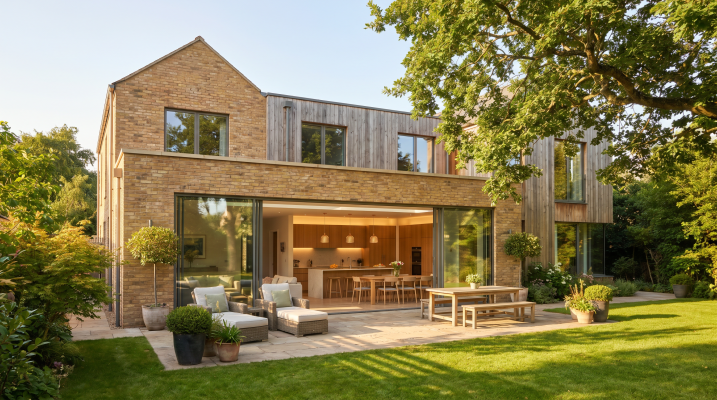
What Architects Look At Beyond U-Values
If homeowners spend a great deal of time discussing U-values, architects tend to spend surprisingly little.
That is not because architects consider thermal performance unimportant. Quite the opposite. It is because they understand that a successful building depends upon a combination of factors working together rather than a single metric outperforming all others.
When architects evaluate glazing, U-values are usually one item on a much longer list.
Daylight is often a major consideration. The amount of natural light entering a space can influence mood, wellbeing, perceived spaciousness and the overall quality of the interior environment. A specification that slightly improves thermal performance but significantly reduces daylight may not necessarily improve the overall outcome of the project.
Frame design is another important factor. Sightlines influence how a building looks and how occupants experience views. Slimmer frames can increase visible glass area and strengthen the connection between interior and exterior spaces. In design-led projects, these considerations can be just as important as thermal performance figures.
Ventilation also plays a critical role in building comfort. Even highly insulated homes can become uncomfortable if fresh air is not managed effectively. Architects consider how windows contribute to airflow, purge ventilation and overall indoor environmental quality. A room that is thermally efficient but poorly ventilated may still fail to provide a comfortable living environment.
Overheating has become an increasingly important topic in modern residential design. As buildings become more airtight and better insulated, controlling excess heat during warmer periods becomes a greater challenge. Architects often assess glazing specifications through the lens of summer comfort as well as winter efficiency, recognising that a building must perform throughout the entire year.
Acoustic performance may also influence specification decisions. For properties near roads, flight paths, urban centres or busy environments, sound insulation can have a profound effect on quality of life. U-values provide no indication of how effectively a glazing system manages external noise.
Building use matters as well. The requirements of a contemporary self-build may differ significantly from those of a listed building renovation, a countryside extension or a highly glazed architectural home. The most appropriate glazing strategy depends upon how the building is intended to function, who will occupy it and what outcomes the project is trying to achieve.
This broader perspective explains why architects rarely ask a single question such as, “What is the U-value?” Instead, they ask a series of interconnected questions about comfort, performance, aesthetics, usability and long-term value.
The objective is not to optimise one number.
The objective is to create a building that works exceptionally well as a whole.
U-values contribute to that outcome, but they do not define it. They are one tool within a much larger design process that seeks to balance multiple priorities simultaneously.
This is why professional specification is rarely driven by metrics alone.
Architects evaluate outcomes.
The numbers simply help inform the journey.
The Better Question To Ask About Window Performance
For many homeowners, the conversation about glazing performance begins and ends with a single question.
“What is the U-value?”
It is a reasonable question to ask. U-values are widely recognised, frequently promoted and genuinely useful when comparing heat loss performance. The problem is not the question itself. The problem is assuming that the answer provides everything needed to make a good specification decision.
Architects typically approach the issue from a different angle.
Rather than focusing immediately on a performance figure, they begin by considering the outcome they are trying to achieve. How should the building feel? How will the spaces be used? What environmental conditions will affect the property? What compromises are acceptable and which are not?
These questions often lead to a more meaningful discussion.
How comfortable will the room feel during winter?
Will large glazed areas contribute to overheating during summer?
How much natural light will enter the space throughout the day?
Will the glazing support ventilation and indoor air quality?
How will the specification influence views, aesthetics and the overall architectural experience?
What role does solar gain play in the building’s performance strategy?
These considerations move beyond individual metrics and towards the broader objective of creating a successful home.
This does not mean U-values become irrelevant. They remain an important part of the conversation. However, they become one factor among many rather than the sole basis for decision-making.
A homeowner focused exclusively on achieving the lowest U-value may miss opportunities to improve daylight, comfort or solar performance. Conversely, a homeowner who understands the wider performance picture is more likely to arrive at a balanced solution that supports the project as a whole.
This is one of the reasons glazing specification can be more complex than it first appears. Buildings are systems. Every decision influences multiple outcomes simultaneously. Improving one aspect of performance may affect another, which is why experienced professionals spend so much time evaluating context rather than relying on isolated figures.
Ultimately, the goal is not to achieve the lowest number on a technical data sheet.
The goal is to create a home that performs well, feels comfortable and supports the way people actually live.
That is a much more useful benchmark than any U-value alone can provide.
The best question is therefore not:
“What is the U-value?”
It is:
“What glazing strategy will help this home perform at its best?”
Conclusion
U-values have become one of the most influential numbers in the glazing industry.
They appear in product brochures, technical specifications, building regulations and sales conversations. For many homeowners, they have become the primary benchmark used to judge window performance.
The problem is not that U-values matter too much.
The problem is that they are often expected to explain more than they actually can.
A U-value tells us how much heat passes through a building element. It is a useful measure of thermal performance and an important part of modern building design. However, it does not tell us how comfortable a room will feel, how much solar gain a building will receive, how effectively a space will resist overheating or how the glazing contributes to the overall architectural experience.
This is why architects rarely select windows on the basis of U-values alone.
They consider orientation, daylight, ventilation, solar gain, acoustics, aesthetics and the way a building will be used over time. They recognise that successful specification is about balancing multiple factors rather than optimising a single number.
For homeowners, this perspective can be extremely valuable.
Instead of viewing window performance as a competition to achieve the lowest possible U-value, it becomes an opportunity to think more broadly about how a home should function. The objective is not simply to reduce heat loss. The objective is to create comfortable, efficient and enjoyable living environments that perform well throughout the year.
A lower U-value may contribute to that outcome.
It may not.
The answer depends on the building, the design and the wider performance strategy.
Ultimately, the most successful glazing decisions are rarely driven by a single specification figure. They are driven by a clear understanding of the outcome the project is trying to achieve.
So rather than asking:
“Which window has the lowest U-value?”
A more useful question is:
“Which glazing strategy will help this home perform at its best?”
That is the question architects tend to ask.
And it is often the question that leads to better decisions.