
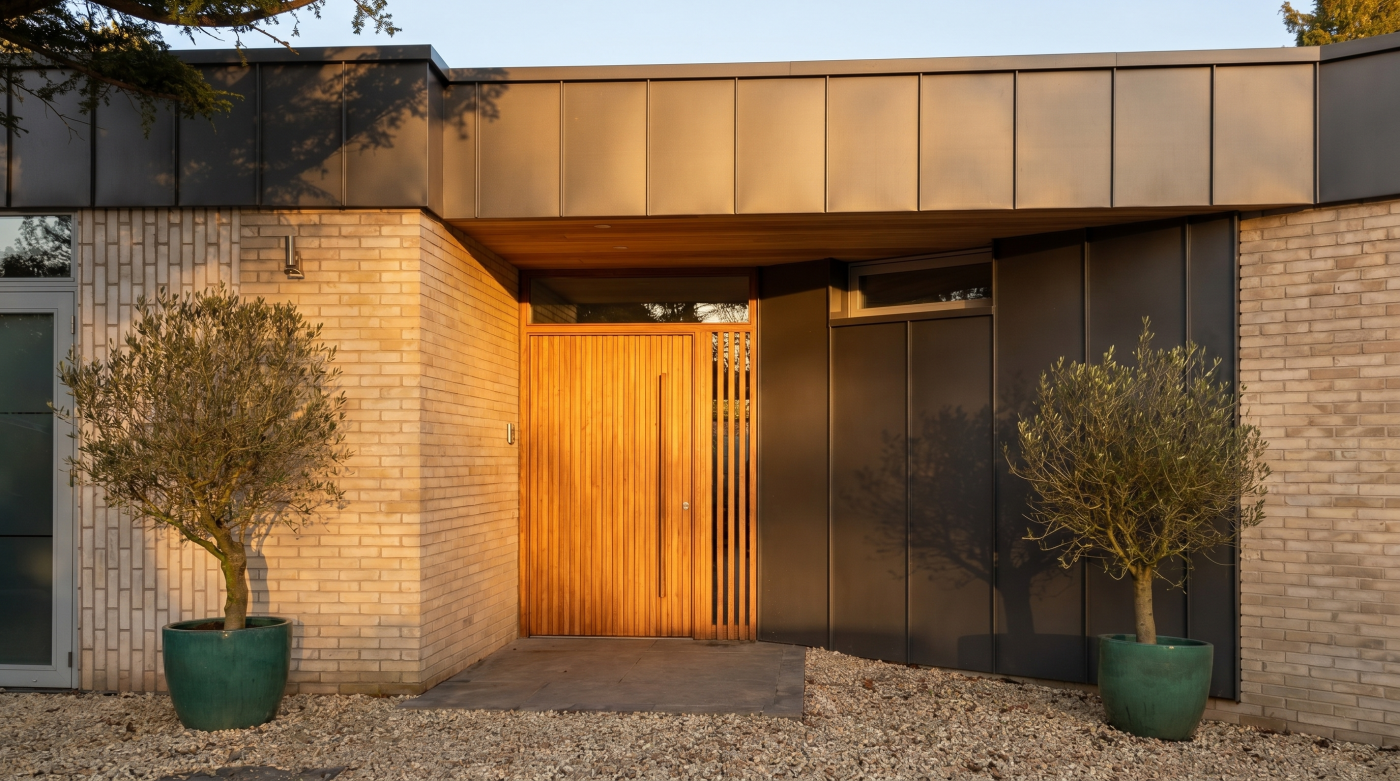
Mistake #1: Leaving The Door Until The End Of The Project
Among all the major specification decisions within a building project, the front door is surprisingly often left until the final stages. By this point, planning approvals have been secured, structural work is underway and attention has naturally shifted towards completing the project. As programme pressures increase, the entrance door can become another item that simply needs to be ordered.
From a procurement perspective, this approach appears logical.
From a specification perspective, it can introduce unnecessary compromise.
Unlike internal finishes, the entrance door is not an isolated component that can be selected independently of the wider design. It influences the appearance of the façade, contributes to the building’s thermal envelope, forms part of its security strategy and defines the way occupants and visitors first experience the property. Decisions of this significance generally benefit from being considered early, when there is still flexibility to coordinate them with the wider architectural intent.
Late specification often reduces that flexibility.
Lead times may eliminate preferred products from consideration. Structural openings may already have been finalised. External materials and façade details may have progressed beyond the point where meaningful design adjustments can be made. Rather than selecting the most appropriate solution, homeowners can find themselves choosing from the options that remain practical within the construction programme.
This shift from specification to procurement is subtle but important.
Good specification begins by asking what the entrance should contribute to the building. Should it create a strong focal point or sit quietly within the façade? How should it relate to the glazing, surrounding materials and architectural proportions? What level of thermal performance, security and durability is appropriate for the project? These questions establish the objectives before products are ever compared.
When the decision is delayed until construction is nearing completion, those conversations often become secondary to more immediate concerns such as manufacturing times, installation dates and budget pressures. The result may still be a perfectly competent front door, but not necessarily the one that would have been selected if time had allowed the decision to be approached more strategically.
Architects typically avoid this situation by identifying key architectural elements early in the design process. The entrance is rarely treated as a finishing item because it influences numerous aspects of the building that extend beyond appearance alone. Early coordination also allows the door to be considered alongside windows, external cladding, lighting and landscaping, helping to create a more cohesive architectural composition.
This does not mean every detail must be finalised at the beginning of a project.
Rather, it means recognising which decisions have a disproportionate influence on the quality of the finished building. The entrance door is one of those decisions.
A well-specified entrance rarely attracts attention because everything feels considered and coherent. The proportions work, the materials complement one another and the door performs reliably as part of the building rather than simply filling an opening.
For that reason, leaving the front door until the end of a project is rarely a time-saving measure.
More often, it is a decision that narrows the range of possibilities and makes compromise increasingly likely.
The most successful entrance doors are seldom chosen quickly.
They are chosen early enough to become an integral part of the architecture rather than a response to the construction programme.
Mistake #2: Prioritising Appearance Over Everyday Performance
The appearance of a front door naturally attracts attention during the specification process.
It is one of the most visible features of a property’s exterior, contributes significantly to kerb appeal and often becomes a defining element of the façade. Colour, glazing details, handle design and proportions are all important considerations because they influence the architectural character of the home.
However, appearance is only one part of the ownership experience.
Unlike many architectural elements, a front door is interacted with every single day. It is opened and closed thousands of times throughout its life, exposed continually to changing weather conditions and expected to perform consistently regardless of season. The qualities that determine long-term satisfaction therefore extend well beyond aesthetics.
This is where specification decisions often become unbalanced.
Homeowners understandably spend considerable time comparing finishes, colours and styles, yet comparatively little attention is given to the aspects that shape daily use. How smoothly does the door operate? Does it provide a reassuring sense of solidity? How effectively does it contribute to thermal comfort? Will the hardware continue performing reliably after years of regular use?
These questions become increasingly important once the initial excitement of the project has passed.
Architects rarely separate visual design from functional performance.
The entrance door is viewed as an architectural element that must satisfy both requirements simultaneously. It should complement the building aesthetically, but it should also provide security, weather resistance, thermal performance and ease of operation throughout its service life. Success is measured by how well these qualities work together rather than by any individual feature.
Thermal comfort provides a useful example.
Modern entrance doors can achieve impressive performance standards, but published figures alone do not define the experience of using the building. The quality of seals, installation detailing, threshold design and the relationship between the door and the surrounding construction all influence how comfortable the entrance feels during colder months. Occupants are unlikely to remember a particular thermal performance figure, but they will remember whether the hallway feels comfortable every winter.
Hardware deserves similar consideration.
Handles, hinges, locking systems and operating mechanisms experience continual use. Their quality influences not only security but also the tactile experience of entering and leaving the home. A well-engineered door often communicates its quality through consistency of operation rather than through visual appearance alone.
Durability is equally significant.
Surface finishes should retain their appearance over many years, while components exposed to frequent operation and changing weather conditions should continue performing without unnecessary adjustment or premature replacement. These characteristics are rarely obvious during a showroom visit, yet they have a profound influence on long-term ownership.
This is why architects typically begin by defining the performance requirements of the entrance before refining its appearance.
The objective is not to compromise design.
It is to ensure that visual quality is supported by functional quality.
The most successful front doors achieve both.
They contribute positively to the architecture while continuing to perform reliably through years of everyday use.
Ultimately, homeowners stop noticing how attractive a front door looks remarkably quickly.
They never stop noticing how well it performs.
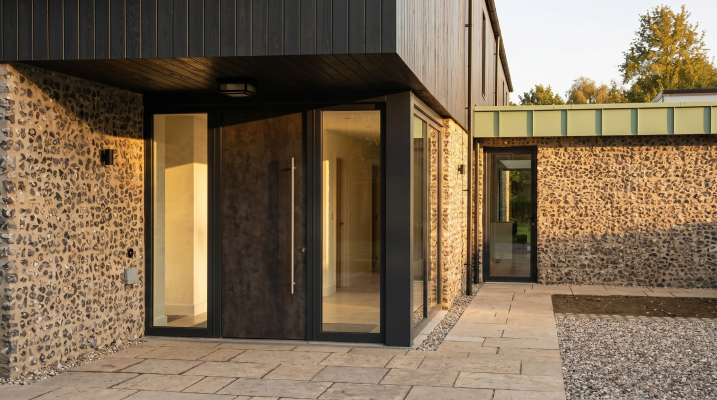
Mistake #3: Treating The Entrance As A Separate Element
A front door is often viewed as an individual product.
Homeowners compare colours, materials, glazing options and hardware before selecting the design they find most attractive. While this is a perfectly natural way to approach the decision, it can overlook a more important consideration.
The entrance is not an isolated feature.
It is part of the architecture.
Architects rarely specify a front door without considering the wider composition of the building. They assess how the entrance relates to the proportions of the façade, the rhythm of the windows, the surrounding materials and the overall architectural language. The objective is not simply to select an attractive door, but to ensure that it contributes positively to the identity of the property.
This distinction has a significant influence on the finished result.
A beautifully manufactured entrance door can appear surprisingly uncomfortable if it feels disconnected from the rest of the building. Equally, a relatively restrained design can become highly effective when its proportions, materials and detailing reinforce the architectural composition.
The relationship between the entrance and the glazing is particularly important.
Windows and doors are often specified at different stages of a project, sometimes by different people or even different suppliers. If these decisions are made independently, inconsistencies can begin to emerge. Frame profiles may differ noticeably, sightlines may lack continuity and colour selections may compete rather than complement one another.
Individually, each choice may appear successful.
Collectively, the façade can begin to feel fragmented.
Architects generally seek to avoid this outcome by considering glazing and entrance design as parts of the same architectural system. They examine how vertical and horizontal lines align across the elevation, how frame proportions relate to one another and how the entrance contributes to the visual hierarchy of the building.
Material relationships are equally important.
The entrance should respond to the surrounding brickwork, stone, render or timber cladding rather than existing independently of them. In many of the most successful projects, the front door appears neither dominant nor insignificant. Instead, it feels proportionate to the architecture, providing a clear point of arrival without overwhelming the façade.
This principle extends beyond appearance.
The entrance establishes expectations about the building before anyone steps inside. A carefully integrated entrance creates a sense of coherence that continues throughout the project, reinforcing the impression that each architectural decision has been made with a common purpose.
When the entrance is treated as a standalone purchase, that continuity can easily be lost.
The door may still function well.
It may still be visually appealing.
Yet it may never feel entirely connected to the building around it.
Good architectural specification is rarely about making individual elements stand out.
It is about ensuring that every element strengthens the composition as a whole.
The most successful entrance doors are remembered not because they dominate the architecture, but because they make the architecture feel complete.
Mistake #4: Underestimating Long-Term Durability
A front door experiences a demanding working life.
Unlike many architectural elements that remain largely static once installed, the entrance door is in constant use. It is opened and closed multiple times each day, exposed to changing weather conditions throughout the year and expected to perform consistently for decades with little interruption.
This level of use makes durability a specification issue rather than simply a product feature.
At the point of purchase, however, durability can be difficult to assess.
A new entrance door invariably looks impressive in a showroom. The finish is flawless, the hardware operates smoothly and every moving component feels precise. While these first impressions are important, they reveal relatively little about how the door will perform after ten or fifteen years of daily use.
Architects recognise that longevity depends upon a combination of factors rather than a single characteristic.
Material selection is one consideration, but it is only part of the equation. Surface finishes, hardware quality, manufacturing tolerances, weather sealing and installation detailing all contribute to how successfully a door ages over time. A weakness in any one of these areas can gradually affect the ownership experience, even if the door initially appeared to perform well.
Weather exposure provides a good example.
The entrance is often one of the most exposed parts of a building, regularly subjected to rain, ultraviolet light, fluctuating temperatures and repeated cycles of expansion and contraction. Over time, these environmental conditions place demands on coatings, seals and operating mechanisms that may not become apparent during the early years of ownership.
Hardware is subjected to equally demanding conditions.
Locks, hinges, handles and closing mechanisms perform thousands of operating cycles during their service life. Consistent engineering and high-quality components become increasingly valuable as this repeated use accumulates. The quality difference between two systems may be almost impossible to detect on installation day, yet entirely obvious after years of regular operation.
This is one reason architects often consider maintenance alongside durability.
No building component is entirely maintenance-free. The objective is not to eliminate future maintenance but to ensure that it remains predictable, proportionate and straightforward to undertake when required. Durable products are generally those that continue performing reliably while allowing routine servicing to preserve their long-term performance.
The financial implications are also worth considering.
Replacing a front door is rarely a simple exercise. Manufacturing, installation, making good surrounding finishes and coordinating associated trades can make premature replacement considerably more expensive than the original purchasing decision might suggest. Investing in durability during specification therefore has implications that extend well beyond initial cost.
Ultimately, the quality of a front door is not measured solely by how it looks when first installed.
It is measured by how effectively it continues serving the building after years of everyday use.
The most successful entrance doors are those that gradually become part of the background of daily life.
They continue operating smoothly, maintaining their appearance and performing their role without demanding unnecessary attention.
In many respects, that quiet reliability is the strongest indication that the original specification decision was the right one.
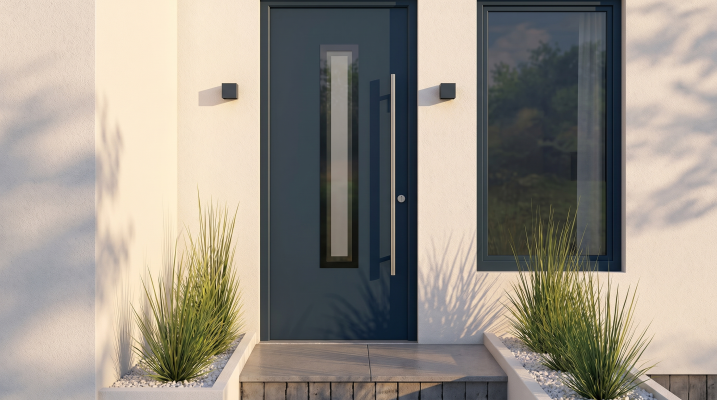
Mistake #5: Comparing Products Instead Of Outcomes
Most front door buying journeys begin with products.
Homeowners compare manufacturers, frame materials, colours, glazing options, security features and prices before gradually narrowing the shortlist. This approach is entirely understandable because products are tangible. They can be viewed in showrooms, compared online and discussed with suppliers.
The difficulty is that products are only one part of the specification process.
Architects typically begin somewhere else.
Rather than asking which door is best, they ask what the entrance is expected to achieve.
Should it create a strong architectural focal point or integrate quietly into the façade? How important is thermal comfort within the entrance hall? What level of security is appropriate for the property? How should the entrance contribute to the experience of arriving home? How will it perform after years of regular use?
These questions establish the desired outcomes before individual products are considered.
This distinction has practical consequences.
Two doors with similar technical specifications may create very different experiences once installed because they respond differently to the architectural objectives of the project. One may strengthen the proportions of the façade, while another feels visually disconnected. One may complement the surrounding materials, while another competes with them. Both may be well-manufactured products, yet only one truly belongs to the building.
The same principle applies to performance.
A homeowner comparing brochures may naturally focus on thermal figures, locking systems or warranty periods. These are all valuable points of comparison, but they represent individual characteristics rather than the complete ownership experience.
The occupants will not experience the specification sheet.
They will experience the door itself.
They will notice how it feels to operate on a cold winter morning. They will appreciate the sense of security when leaving the house. They will form an opinion every time they return home and every time visitors approach the entrance. These daily interactions ultimately define whether the specification has been successful.
Architects therefore evaluate products within a broader framework.
Performance.
Durability.
Architecture.
Comfort.
Maintenance.
Daily usability.
Each of these factors contributes to the overall outcome, and none should dominate the decision in isolation.
This is one reason the most appropriate entrance door is not always the one with the most impressive individual feature.
The highest security rating, the lowest thermal value or the boldest appearance may each be desirable, but good specification involves understanding how those qualities work together in support of the building as a whole.
The front door is not simply another product to compare.
It is one of the defining elements of the home.
When specification begins with the desired outcome rather than the product catalogue, the decision often becomes clearer.
Not because there are fewer options.
But because every option is evaluated against a more meaningful set of objectives.
The best front doors are rarely chosen because they won a comparison.
They are chosen because they solved the right problem.
Why Architects Spend More Time On Entrance Design Than Homeowners Expect
For many homeowners, the front door is viewed as one component within a much larger project.
By the time the entrance is being specified, attention is often divided between kitchens, flooring, lighting, landscaping and countless other decisions competing for time and budget. Against this backdrop, it is understandable that the front door can appear to be a relatively straightforward choice.
Architects tend to see it rather differently.
The entrance is not simply an access point.
It is the point at which people first experience the building.
Every arrival creates an impression before the door has even been opened. The approach to the property, the proportions of the entrance, the relationship between the doorway and the surrounding façade, and the way materials, glazing and landscaping work together all contribute to a sequence that shapes how the architecture is perceived.
This is often referred to as the arrival experience.
Like any successful architectural sequence, it is rarely the result of a single design feature. Instead, it emerges from the careful coordination of multiple elements that guide movement, frame views and establish a sense of welcome.
The entrance door naturally plays a central role within this composition.
Its scale influences the perceived proportions of the façade. Its material and finish contribute to the building’s character. Its relationship with adjacent glazing helps establish rhythm and balance across the elevation. Even details such as the handle, external lighting and threshold design affect how occupants interact with the building on a daily basis.
These considerations extend beyond aesthetics.
The entrance also performs an important wayfinding function. A clearly expressed entrance allows visitors to understand instinctively where to approach and how to move through the site. Good architectural design often feels intuitive because these decisions have been resolved carefully during the specification process.
Context is equally important.
A contemporary rural home may benefit from an entrance that feels restrained and integrated within its landscape. An urban townhouse may require a stronger sense of definition to establish presence within a more complex streetscape. Historic properties often demand a different architectural response again, balancing modern performance requirements with the established character of the building.
For this reason, architects rarely specify entrance doors in isolation.
They evaluate how the entrance contributes to the wider architectural narrative of the project. The objective is not simply to create an attractive doorway, but to strengthen the experience of arriving at the building as a whole.
Interestingly, many of the most successful entrances are not those that immediately draw attention to themselves.
They feel proportionate.
They feel considered.
They feel entirely appropriate for the architecture around them.
Occupants may never consciously analyse why the entrance works so well, yet they experience its quality every time they return home.
This is why architects often devote more time to entrance design than homeowners initially expect.
They understand that the entrance is more than a door.
It is the beginning of the building’s story.
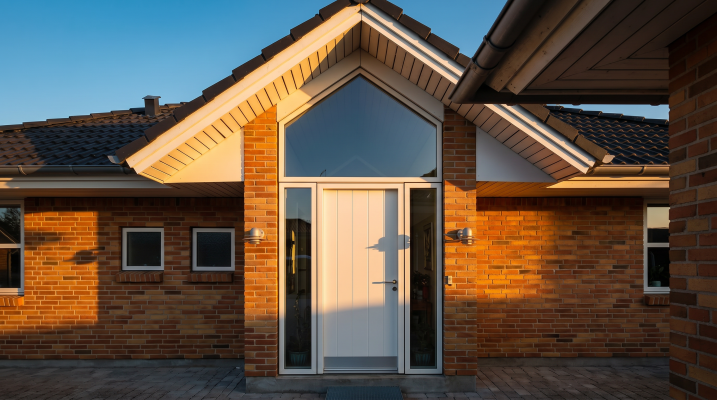
The Questions Worth Asking Before You Choose A Front Door
A successful front door specification rarely begins with the question:
“Which door should we buy?”
While understandable, this approach immediately narrows the conversation to products, manufacturers and individual features. It assumes the solution before the objectives have been properly defined.
Architects typically reverse this sequence.
Before comparing products, they establish what the entrance is expected to achieve and how it should contribute to the wider architecture of the building. This process often reveals priorities that might otherwise remain hidden until after the project has been completed.
One of the first questions concerns the role of the entrance itself.
Should it provide a strong visual focal point or should it integrate more quietly into the façade? Neither approach is inherently correct. The answer depends on the architectural character of the building and the experience the design is intended to create.
The relationship between the entrance and the surrounding materials deserves equal attention.
How does the door sit alongside the glazing, brickwork, stone or timber cladding? Does it reinforce the overall composition or introduce an element that feels visually disconnected? A front door rarely succeeds because it is attractive in isolation. It succeeds because it feels entirely appropriate within its setting.
Long-term ownership should also influence the specification.
How will the door perform after years of daily use?
Will its finish continue to complement the building as materials weather naturally?
Can hardware be maintained or replaced if required?
Will the entrance still feel appropriate if design trends change over the next decade?
These questions encourage decisions that extend beyond installation day.
Daily experience is another important consideration.
The front door is one of the few architectural elements that occupants interact with every day. It should operate effortlessly, contribute positively to thermal comfort and provide confidence in both its security and durability. These practical qualities often become more valuable over time than purely aesthetic features that initially attracted attention.
Finally, there is perhaps the most important question of all.
Does this entrance strengthen the architecture of the building?
If the answer is yes, many of the other specification decisions tend to become clearer. Product comparisons become easier because they are measured against a defined objective rather than personal preference alone.
This is why architects spend so much time asking questions before discussing solutions.
The questions establish the brief.
The products fulfil it.
By approaching the decision in this order, homeowners are more likely to arrive at an entrance that continues feeling appropriate long after the construction programme has finished and the design trends of the day have moved on.
Good specification is rarely about finding the perfect product.
It is about asking the right questions before choosing one.
A Better Way To Specify A Front Door
The specification of a front door does not need to be complicated.
It does, however, benefit from being approached in the right order.
Many procurement decisions begin by comparing products. Different manufacturers, materials, colours and prices are evaluated before a preferred option gradually emerges. While this process is understandable, it can encourage homeowners to optimise individual features without first establishing what the entrance is expected to achieve.
Architects generally work through a different hierarchy.
The architecture comes first.
Before considering products, they establish the role of the entrance within the building. Is it intended to become a defining architectural feature or a quieter element within the façade? How should it relate to the proportions, glazing and material palette of the property? These questions create the framework within which every later decision is made.
Performance follows.
The entrance should contribute to thermal comfort, weather protection, security and everyday usability throughout its service life. These requirements are fundamental because they influence the way occupants experience the building long after the initial excitement of the project has passed.
Daily use comes next.
Unlike many architectural components, a front door is experienced repeatedly. It should feel reassuring to operate, perform consistently throughout the seasons and require only proportionate levels of maintenance. Ease of use is not a luxury; it is one of the defining characteristics of a well-specified entrance.
Appearance then becomes part of a much broader conversation.
Rather than asking which design is most attractive in isolation, the emphasis shifts towards selecting a door that complements the architecture and strengthens the overall composition of the building. Colour, material and detailing remain important, but they are evaluated within context rather than independently.
Only then does price become meaningful.
Cost should always be considered, but it is most useful when assessed alongside performance, durability and long-term value. A lower initial purchase price may represent excellent value if it satisfies the wider objectives of the project. Equally, a more expensive option may prove difficult to justify if its additional features offer little practical benefit within the context of the building.
This sequence does not guarantee that every project will arrive at the same solution.
Different buildings have different requirements.
Different homeowners have different priorities.
The value of the process lies in ensuring that every decision supports a clearly defined architectural objective.
The most successful entrance doors are rarely selected because they excel in one category alone.
They succeed because they balance architecture, performance, durability and daily experience in a way that feels entirely appropriate for the home they serve.
That is ultimately the difference between choosing a door and specifying an entrance.
Conclusion
The front door is one of the hardest-working elements of any home.
It shapes first impressions, contributes to security, influences thermal comfort and becomes part of the daily routine of everyone who lives in the building. Few architectural components are seen, used and relied upon as frequently.
Yet despite its importance, the entrance is often specified under increasing programme pressure, when attention has shifted towards completing the project rather than refining it.
This is where compromise can begin.
As this article has explored, the most costly shortcuts rarely involve choosing an obviously poor product. They arise when important architectural questions are never asked. Decisions become driven by availability rather than suitability, appearance rather than performance, or procurement rather than long-term ownership.
Architects approach the process differently because they understand that the entrance is not simply another building component.
It is part of the architecture.
It influences how the property is experienced, how it performs and how successfully it will continue serving its occupants over many years.
For that reason, the best entrance doors are rarely selected in haste.
They emerge from a specification process that considers architecture, performance, durability, everyday use and long-term value together rather than independently.
The result is not simply a more attractive front door.
It is an entrance that feels entirely appropriate for the building, performs reliably throughout its lifespan and continues reinforcing the quality of the architecture every time someone arrives home.
Ultimately, the costliest shortcut is not spending too much time choosing a front door.
It is assuming that one of the home’s most important architectural elements deserves any less consideration than the rest of the building itself.