
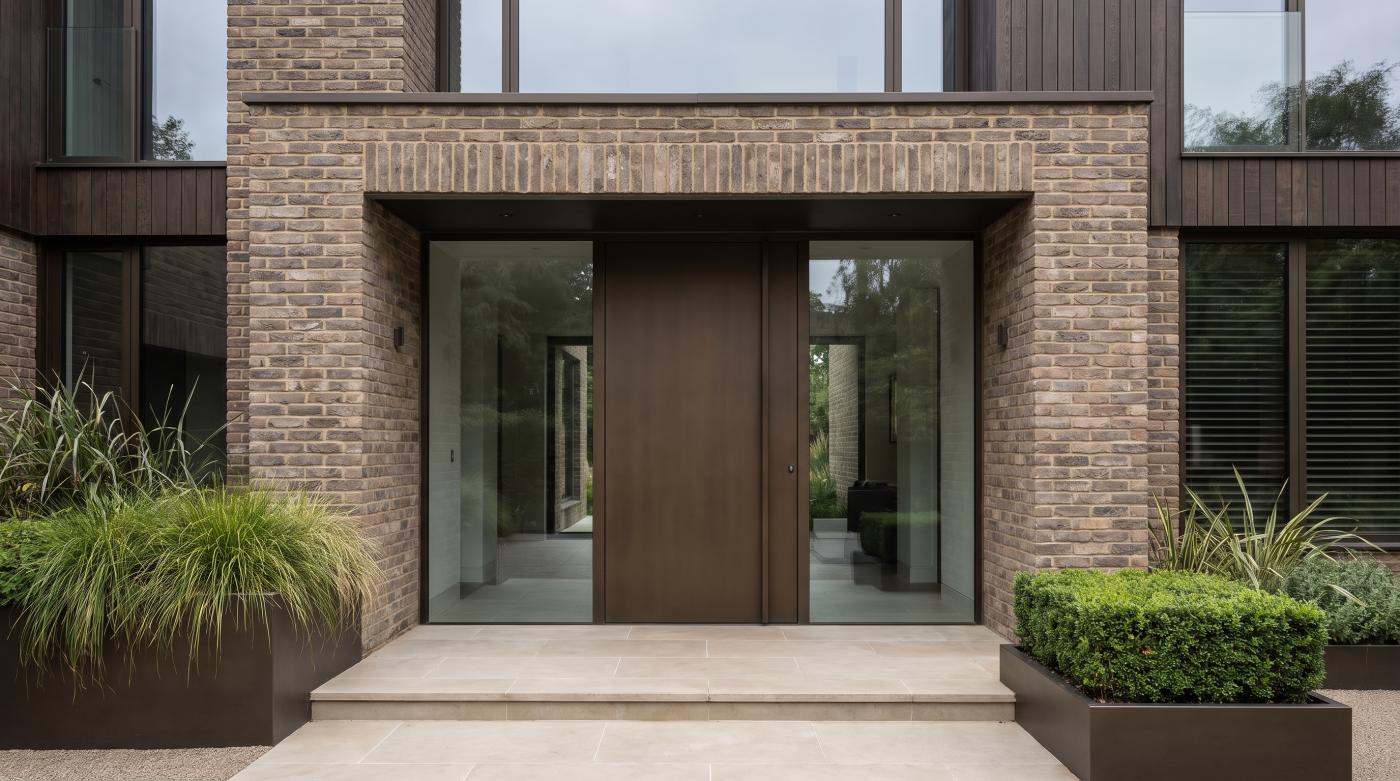
Bigger Doesn’t Always Mean Better
Oversized entrance doors have become one of the defining features of contemporary residential architecture. Their scale creates an immediate sense of arrival, giving homes a confident and distinctive presence from the street. It is easy to understand their appeal. A larger entrance can make a building feel more welcoming, reinforce clean architectural lines and create a memorable first impression. However, architects rarely specify oversized doors simply because they are impressive. They specify them when their proportions genuinely enhance the building.
Size alone does not create good architecture. An entrance that is too large for the façade can quickly overwhelm the composition, drawing attention away from the qualities that make the building successful. Instead of feeling elegant and considered, it can appear disconnected from the scale of the house. Architects therefore evaluate the relationship between the entrance, the windows, the roofline and the surrounding materials before deciding whether an oversized door is appropriate. The goal is to achieve visual balance rather than maximum impact.
Human scale also plays an important role. Although an oversized entrance should feel generous, it should never feel intimidating. The most successful designs create a subtle sense of occasion while remaining comfortable and inviting for everyday use. Carefully proportioned side panels, glazing, recessed entrances and thoughtfully designed pathways all help soften the scale of a larger door, ensuring it feels like a natural part of the home rather than an isolated statement piece.
Context is equally important. A contemporary self-build with clean geometric forms may comfortably accommodate a large-format aluminium entrance, while a traditional property or sensitive renovation may benefit from more restrained proportions. The architectural language of the building should always guide the size of the entrance rather than current design trends or personal preference.
This is why architects rarely begin by asking how large an entrance door can be. Instead, they ask how large it should be. When the proportions are right, an oversized door creates a sense of confidence and permanence that feels entirely natural. When they are wrong, even the most expensive entrance can feel out of place. In architecture, it is proportion—not scale alone—that creates lasting elegance.
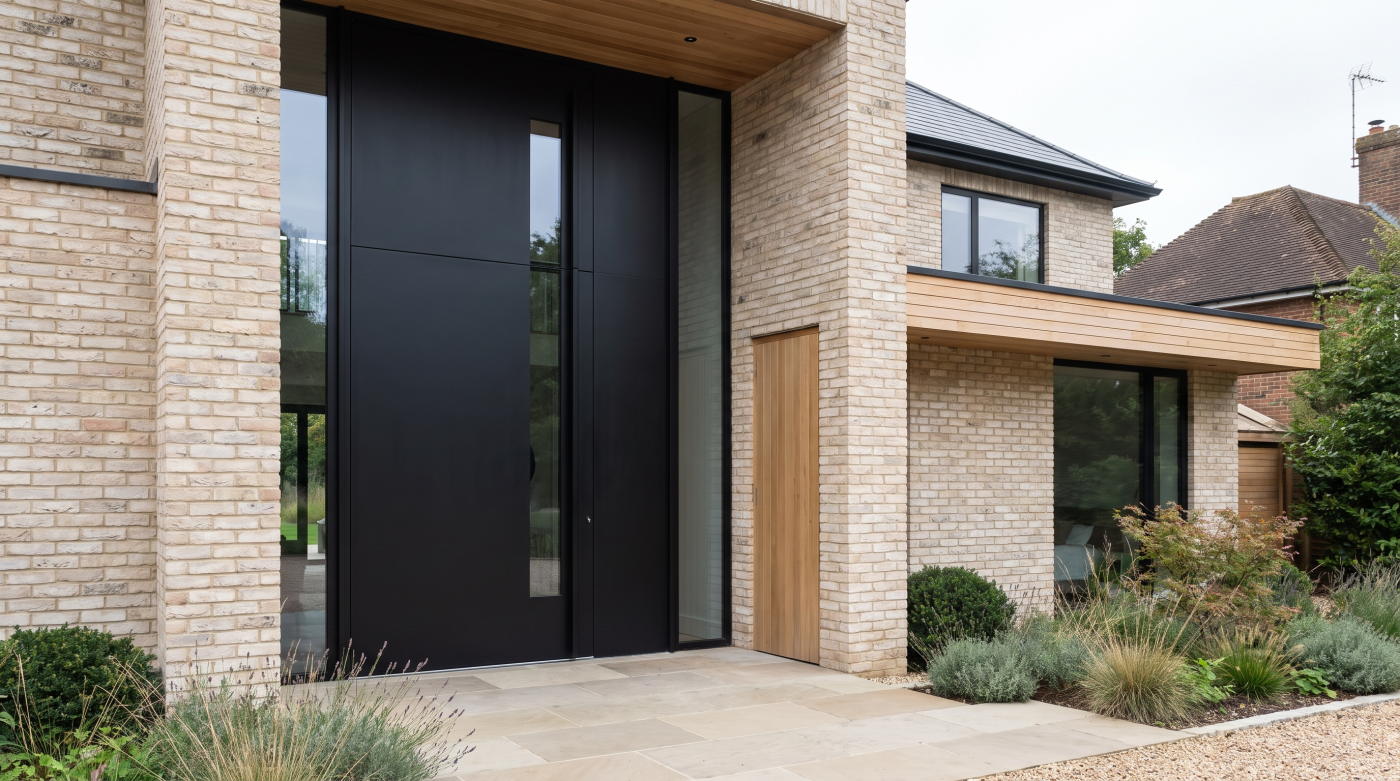
The Engineering Behind Large Entrance Doors
An oversized entrance door may appear simple from the outside, but behind its clean lines lies a remarkable amount of engineering. As doors increase in size, every aspect of their design becomes more demanding. Greater height and width introduce additional weight, larger structural loads and tighter manufacturing tolerances, meaning an oversized entrance cannot simply be viewed as a standard door scaled up. It is a specialist architectural component designed to perform reliably despite its impressive dimensions.
The door leaf itself must be engineered to remain rigid over many years of daily use. Without sufficient structural strength, larger doors can become susceptible to movement, affecting alignment, weather sealing and smooth operation. Modern aluminium systems are particularly well suited to oversized entrances because they combine exceptional strength with relatively low weight, allowing expansive designs without compromising precision or durability. This balance of performance is one of the reasons aluminium has become the preferred material for many architect-designed homes.
Hardware also takes on a far more significant role. Hinges, locking systems and handles must be capable of supporting increased loads while continuing to operate effortlessly throughout the life of the door. Every movement places forces on these components, making precision engineering essential to maintaining smooth opening, reliable closing and consistent security. The objective is for the homeowner to experience an entrance that feels effortless, even though the door itself may weigh considerably more than a conventional entrance system.
Manufacturing accuracy is equally critical. Larger doors allow less margin for error, with even small variations in fabrication potentially affecting long-term performance. Premium manufacturers therefore rely on advanced production techniques and rigorous quality control to ensure oversized doors are assembled with exceptional precision. This attention to detail allows the door, frame, seals and hardware to work together as a single engineered system rather than as separate components.
For architects, these technical considerations are not secondary to the design—they are what make the design possible. The visual simplicity of an oversized entrance is supported by sophisticated engineering that remains largely invisible once the project is complete. When that engineering is executed well, homeowners experience nothing more than a beautifully proportioned entrance that opens smoothly, performs reliably and continues to make an impression for decades to come.
Why Structure Matters Before the Door Arrives
Long before an oversized entrance door is delivered to site, architects and structural engineers have already made a series of decisions that determine whether it will perform successfully. Unlike standard entrance doors, large-format systems place greater demands on the building itself. The surrounding structure must be designed to support the additional weight, maintain precise alignment and accommodate the forces generated through years of daily use. In many respects, the building is designed around the entrance just as much as the entrance is designed for the building.
One of the most important considerations is the structural opening. Larger doors often require wider or taller apertures, which in turn influence lintels, supporting walls and load paths throughout the building. These structural elements must safely transfer loads above the opening without introducing movement that could affect the operation of the door. Even slight deflection in the surrounding structure can influence how an oversized entrance performs, making early coordination between the architect, structural engineer and glazing specialist essential.
Foundation movement and natural building settlement also play a role. Every building experiences small amounts of movement over time as materials respond to seasonal changes in temperature, moisture and loading. Oversized entrance doors are manufactured with exceptionally tight tolerances, so architects carefully consider how the surrounding structure will behave throughout the life of the building. Allowing for these movements during the design stage helps ensure the door continues to operate smoothly years after installation.
Installation tolerances become equally important. Because large entrance systems are engineered with such precision, the structural opening must be accurately prepared before the door arrives on site. Correct dimensions, level thresholds and properly aligned fixing points all contribute to the long-term performance of the entrance. This is why architects often coordinate door specifications early in the construction programme rather than treating them as finishing items towards the end of the project.
For homeowners, much of this work remains invisible. They see a beautifully proportioned entrance that opens effortlessly and closes with reassuring precision. Behind that experience, however, lies careful structural planning that began months before the door was installed. It is a reminder that the most successful architectural features are supported by engineering that is rarely seen but always felt.
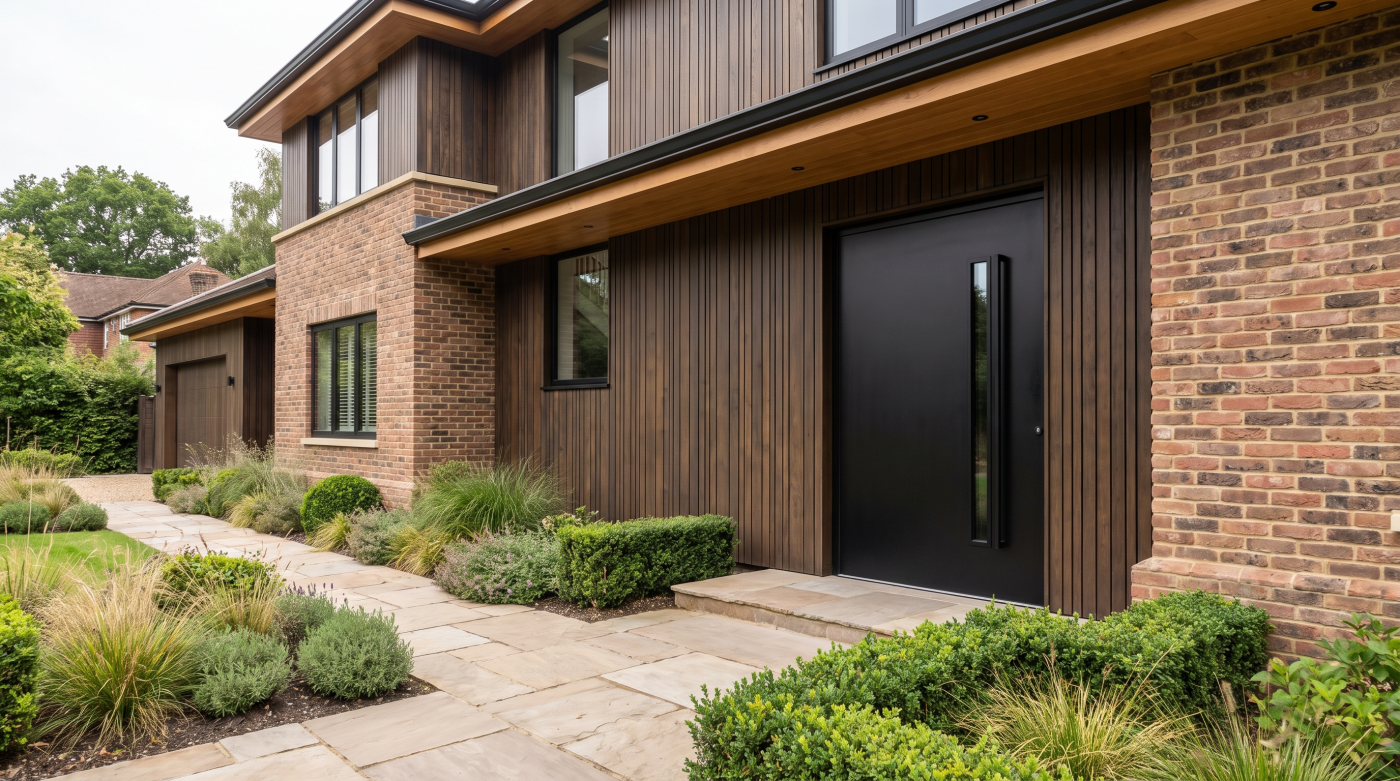
Living With an Oversized Door Every Day
An oversized entrance door can create a dramatic first impression, but its success is ultimately measured by something much simpler: how it feels to use every day. Architects understand that a statement entrance should never become an inconvenience. No matter how impressive its dimensions, the door must open smoothly, close precisely and integrate naturally into everyday life. The best oversized entrances combine architectural presence with effortless usability, making their scale feel entirely natural rather than intimidating.
Opening a large-format door should inspire confidence rather than require excessive effort. Advances in engineering allow premium oversized doors to move with remarkable ease despite their substantial size and weight. Carefully designed hinges, precision-balanced hardware and high-quality locking systems ensure the door operates smoothly while maintaining the reassuring sense of solidity expected from a premium entrance. For homeowners, this means experiencing quality through the movement of the door rather than simply admiring its appearance.
Daily routines also influence the specification. A family carrying shopping, welcoming visitors, managing young children or accommodating changing mobility needs interacts with the entrance in very different ways from someone viewing it for the first time. Architects therefore consider how the door will function in everyday situations, ensuring the opening width, handle placement and threshold design all contribute to a comfortable and intuitive experience. The entrance should feel generous without becoming cumbersome.
For particularly large entrance systems, automation may also become part of the conversation. Discreet motorised opening systems can improve accessibility and convenience while preserving the clean architectural lines of the design. Whether automated or manually operated, however, the objective remains the same: the technology should quietly support everyday living rather than becoming the defining feature of the entrance.
Long-term ownership is equally important. Oversized doors should continue to perform consistently through years of regular use with routine maintenance and professional servicing where appropriate. High-quality materials, precision engineering and accurate installation all contribute to this reliability, allowing homeowners to enjoy the architectural impact of a large entrance without compromising comfort or practicality.
Ultimately, the best oversized entrance doors are those that quickly become part of the daily rhythm of the home. They create a memorable arrival for guests while remaining effortless for the people who use them every day. That balance between architectural drama and everyday simplicity is what transforms a large entrance from an impressive feature into a genuinely successful piece of design.
Materials, Finishes and Long-Term Performance
As entrance doors become larger, the importance of material quality increases significantly. Greater dimensions place higher demands on every component, from the structural frame and surface finish to the hardware and weather seals. Architects therefore select materials not simply for their appearance but for their ability to deliver reliable performance over many years. A beautifully proportioned oversized entrance should continue to look and function as intended long after the excitement of installation has passed.
Aluminium has become the material of choice for many oversized entrance doors because it combines exceptional structural strength with relatively low weight. This allows manufacturers to produce larger door leaves without sacrificing stability or precision. The inherent rigidity of aluminium also helps maintain alignment over time, supporting smooth operation and consistent weather sealing despite the increased scale of the entrance. These qualities make it particularly well suited to contemporary homes where large-format openings are central to the architectural design.
Surface finishes deserve equal attention. An oversized entrance naturally attracts the eye, meaning any imperfections or signs of wear become more noticeable than they might on a smaller door. High-quality powder-coated finishes provide excellent durability while offering a wide range of colours that complement both contemporary and traditional architecture. Their resistance to fading, corrosion and everyday weathering helps preserve the visual quality of the entrance for many years with relatively little maintenance.
Hardware and seals also play a critical role in long-term performance. Hinges, locking systems and handles must be engineered to cope with greater loads while continuing to operate with the same smooth precision expected from a premium entrance. At the same time, high-performance weather seals help protect against draughts, rain and external noise, ensuring the impressive scale of the door never comes at the expense of comfort or energy efficiency.
Architects view these specification decisions as investments rather than upgrades. A large entrance door places every material under greater scrutiny because its size amplifies both strengths and weaknesses. Choosing premium materials, durable finishes and carefully engineered components ensures the entrance continues to reflect the quality of the architecture year after year. In oversized door design, long-term performance is not an optional extra—it is fundamental to creating an entrance that remains as impressive in daily use as it is on the day it is installed.
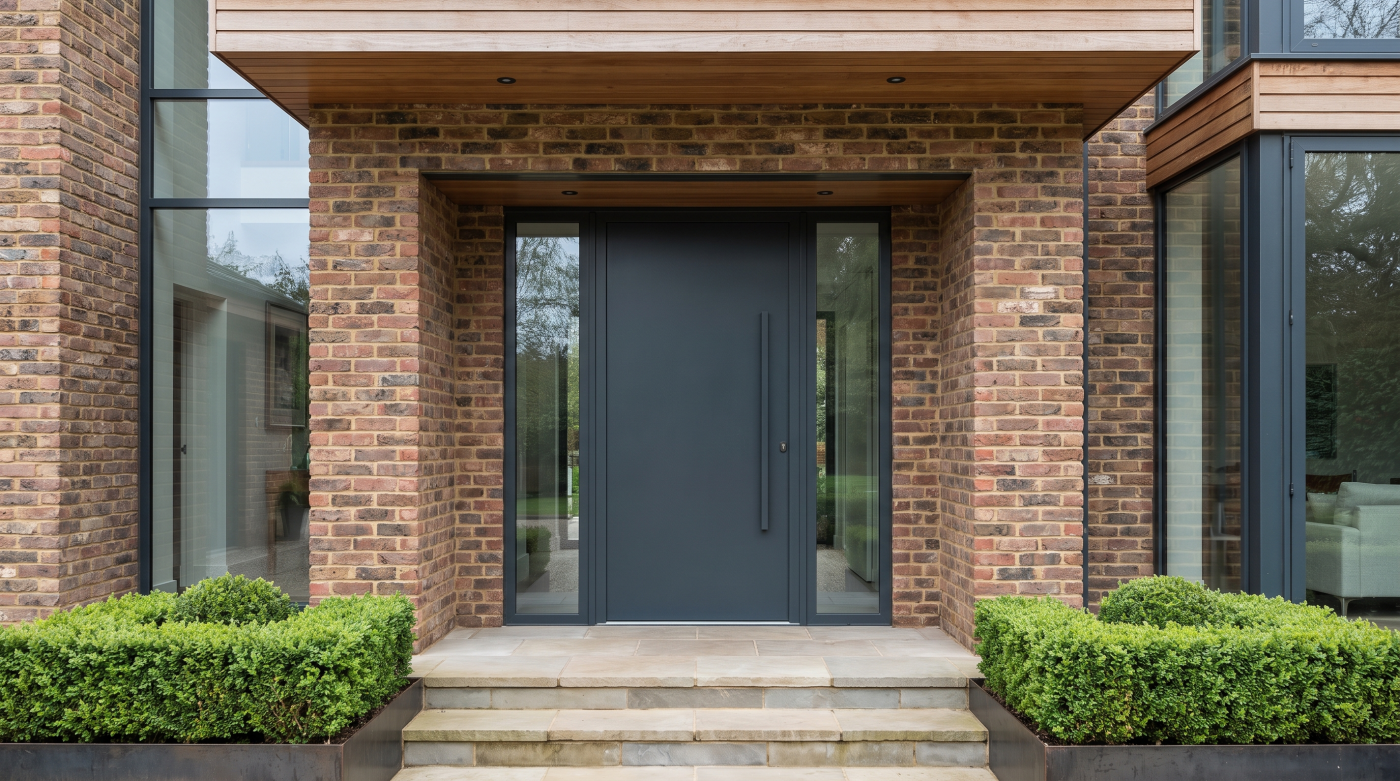
How Architects Decide When an Oversized Door Is Appropriate
Oversized entrance doors have become synonymous with luxury residential architecture, but architects do not regard them as essential features of every premium home. In fact, one of the most important parts of the specification process is deciding whether a larger entrance genuinely strengthens the design or simply makes a visual statement. The decision is rarely based on the size of the budget or the availability of larger products. Instead, it is guided by the character of the building and the experience the architecture is intended to create.
The proportions of the house are often the starting point. A contemporary home with generous ceiling heights, wide façades and strong geometric forms can comfortably accommodate a large-format entrance because its scale feels consistent with the rest of the architecture. Conversely, an oversized door on a more modest property may dominate the façade, making the entrance feel disconnected from the overall composition. Architects therefore consider the relationship between the door, surrounding glazing, rooflines and external materials before determining the appropriate scale.
The journey towards the entrance is equally important. Landscaping, pathways, lighting and the approach to the building all influence how the front door is experienced. A carefully designed entrance sequence can make even a relatively restrained door feel significant, while a poorly considered approach can reduce the impact of a much larger one. Architects often view the entrance as a progression rather than a single feature, ensuring each element contributes to a coherent sense of arrival.
Internal spaces also influence the decision. An oversized entrance should lead into a hallway or reception space capable of supporting its scale. If visitors step through an impressive doorway into a confined entrance hall, the architectural experience can feel unbalanced. Successful homes maintain a consistent relationship between the exterior and interior, allowing the proportions of the entrance to prepare visitors for the spaces beyond.
Budget naturally plays a role, but architects rarely consider it in isolation. Rather than directing investment towards size alone, they balance proportion, engineering, materials and craftsmanship to achieve the greatest long-term value. In many projects, a slightly smaller entrance executed with exceptional precision creates a more refined result than the largest possible door.
Ultimately, architects specify oversized entrance doors only when they contribute meaningfully to the architecture. The objective is never to impress through scale alone but to create an entrance that feels entirely appropriate to the home, welcoming in everyday use and memorable for all the right reasons.
Creating an Entrance That Feels Impressive for the Right Reasons
An oversized entrance door has the potential to become one of the defining architectural features of a home. It can establish a memorable sense of arrival, reinforce the proportions of the building and express the confidence of the overall design. Yet, as with every aspect of good architecture, its success is rarely determined by size alone. The most impressive entrances are those where proportion, engineering and everyday usability work together so naturally that the door feels as though it has always belonged to the building.
Throughout this guide, one principle has remained consistent: architecture should always lead the specification process. An oversized entrance should respond to the scale of the façade, the sequence of arrival, the surrounding materials and the experience of moving through the home. When these relationships are carefully considered, the entrance becomes more than a statement feature—it becomes an integral part of the building’s identity.
The engineering behind these doors is equally important. Large-format entrance systems demand exceptional structural design, precision manufacturing, carefully coordinated installation and premium materials to perform reliably over many years. Much of this expertise remains invisible once the project is complete, yet it is precisely this hidden engineering that allows the door to feel effortless in everyday use. True quality is often measured not by what homeowners notice, but by what they never have to think about.
Daily life should always remain at the centre of the decision. An entrance is used countless times throughout the year, welcoming family home, greeting visitors and quietly supporting everyday routines. A successful oversized door combines its architectural presence with smooth operation, lasting comfort and dependable performance, ensuring it feels just as satisfying after years of ownership as it did on the day it was installed.
Ultimately, the finest oversized entrance doors do not seek attention through scale alone. They create a lasting impression because every aspect of their design has been carefully resolved—from proportion and craftsmanship to engineering and usability. When those elements come together, the result is an entrance that feels confident without being excessive, distinctive without appearing fashionable and timeless because it was designed to serve the architecture rather than overshadow it.