
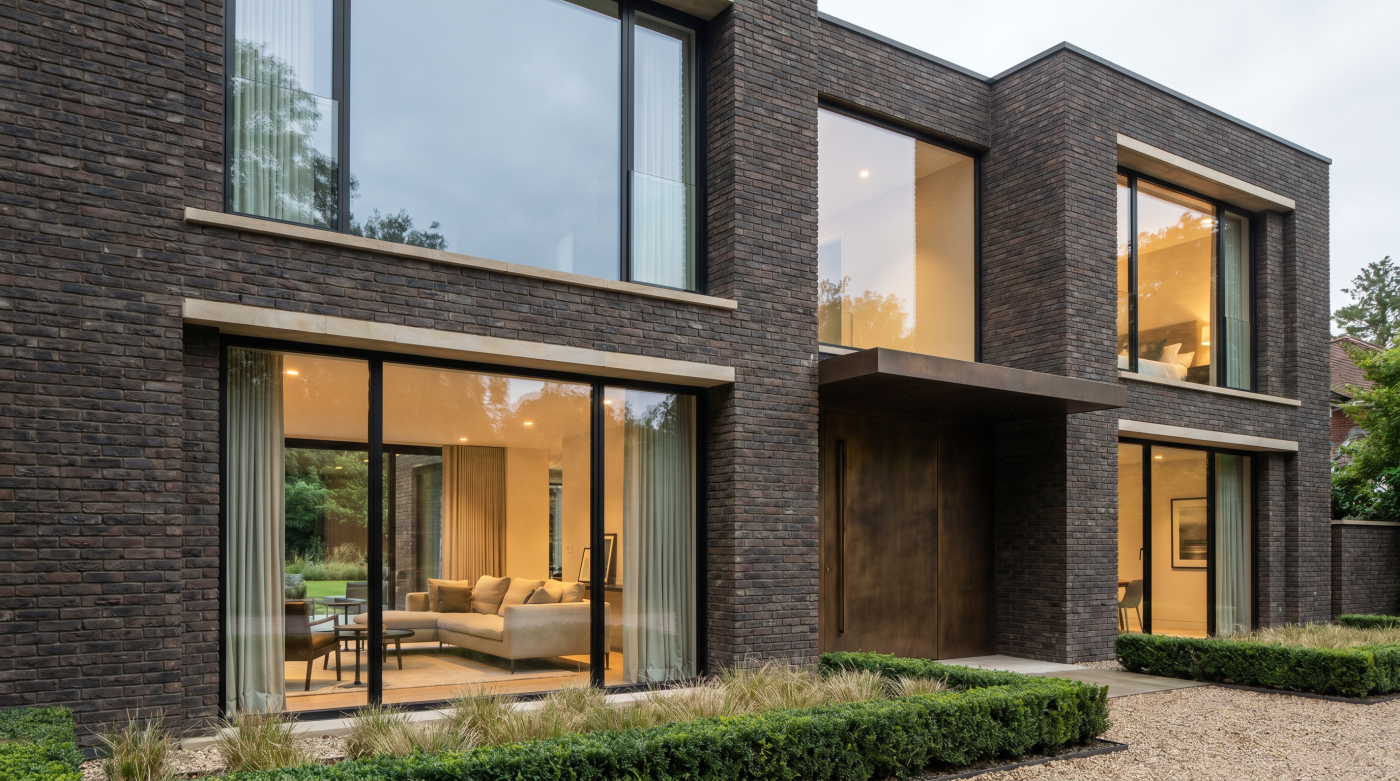
Section 1: What Are Window Sightlines?
When homeowners begin comparing aluminium windows, conversations usually focus on frame colours, glazing performance, security or energy efficiency. Sightlines are rarely the first topic discussed, yet architects often notice them almost immediately. In fact, the width and proportion of a window’s visible frame can have a greater influence on the appearance and experience of a home than many of the specifications that receive far more attention.
The term sightline simply refers to the visible width of a window or door frame once it has been installed. It is the part of the frame that remains in view from either inside or outside the building, surrounding the glass and defining the edge of every opening. Although measured in millimetres, sightlines shape how much glass is visible, how daylight enters a room and how the architecture is ultimately perceived.
This is an important distinction because the structural frame hidden within the wall is rarely seen once construction has been completed. What homeowners experience every day is the visible profile surrounding the glass. Whether standing in a kitchen overlooking the garden or approaching the home from the driveway, it is these visible frame widths that influence first impressions, not the concealed engineering behind them.
Sightlines exist throughout the entire window system. The perimeter frame creates the outer edge of the glazing, while mullions—the vertical members separating adjacent panes—and transoms—the horizontal divisions—introduce additional visible lines across larger window arrangements. Opening windows also have their own sash profiles, meaning an opening casement often presents different sightlines from a fixed pane positioned alongside it. Architects carefully consider each of these elements because together they create the overall visual rhythm of the façade.
This explains why two aluminium window systems of similar overall size can look surprisingly different once installed. One may appear lighter and more refined because the visible frame widths have been reduced through careful engineering. Another may present a heavier appearance despite using the same opening dimensions. The amount of glass has not necessarily changed dramatically, but the proportions between glass and frame create an entirely different architectural impression.
It is tempting to assume that slimmer sightlines are always preferable, but architects approach the subject with greater nuance. While contemporary homes often benefit from elegant, minimal frames, sightlines are ultimately about proportion rather than simply reducing every visible profile to its smallest possible dimension. The objective is not to make the window disappear entirely—it is to achieve visual balance between the glazing, the surrounding building and the wider architectural composition.
For example, a modern self-build with expansive glazing may call for exceptionally slim aluminium frames that strengthen uninterrupted views and maximise natural light. A Georgian-inspired home or a carefully restored period property may require more considered proportions that reflect the scale and rhythm of the original architecture. In both cases, the sightlines have been chosen deliberately because they support the character of the building rather than following a universal rule.
Architects therefore think of sightlines as part of the language of architecture. Just as the thickness of a wall, the depth of a roof overhang or the proportion of a doorway influences the way a building is perceived, the visible width of a window frame contributes to the overall composition. These seemingly small dimensions affect how light enters the home, how the façade is read and how effortlessly the glazing integrates with the architecture.
For homeowners, this offers a useful way to think about aluminium windows. Sightlines are not simply another technical measurement hidden within a specification sheet. They are the parts of the window you will see every day, framing every view, every changing season and every moment of natural light entering your home. When architects pay close attention to sightlines, they are not chasing the slimmest possible frame—they are shaping the experience of living in the building itself.
Section 2: Why Slim Frames Change the Feeling of a Room
Walk into two rooms with the same floor area, ceiling height and layout, and one can feel noticeably brighter, calmer and more spacious than the other. Often, the difference is not the size of the room itself but the way the windows have been designed. Architects understand that slim aluminium sightlines influence far more than appearance—they change the way people experience space, light and the connection between the home and its surroundings.
The most obvious benefit is the increase in visible glass. When the frame occupies less of the opening, more of the available space is devoted to glazing. Although the difference in frame width may only measure a few millimetres, the cumulative effect across multiple windows can be surprisingly significant. More glass allows additional daylight to enter the room, creating interiors that feel naturally brighter without altering the overall size of the opening.
Natural light has a profound influence on how people perceive a space. Bright rooms often appear larger, more welcoming and more comfortable to occupy. As daylight reaches deeper into the interior, shadows soften and surfaces become more evenly illuminated, creating a sense of openness that extends well beyond the physical dimensions of the room. Architects frequently use slim sightlines to maximise these qualities, particularly in living areas where daylight forms an important part of everyday life.
Views are equally affected. Every window acts as a frame through which the landscape is experienced. Thicker visible frames introduce more visual interruption, while slimmer profiles allow the eye to move more naturally towards gardens, mature trees or distant countryside. The architecture begins to feel less like a barrier separating inside from outside and more like a carefully designed connection between the two.
This uninterrupted relationship becomes especially valuable in contemporary homes where gardens are treated as extensions of the interior living space. A slim aluminium frame allows the landscape to become more prominent within the room, helping terraces, planting and outdoor entertaining areas feel visually connected to the spaces inside. Homeowners rarely notice the reduced frame width directly—they simply experience stronger, more immersive views.
The effect is not limited to daylight and scenery. Slim sightlines also reduce visual clutter. Every frame, mullion and transom introduces another line into the architectural composition. By refining these visible elements, architects create interiors that feel calmer and more ordered because fewer visual interruptions compete for attention. The result is often described as minimalist, but it is more accurately understood as clarity of design.
This subtle reduction in visual weight can also influence how large a room feels. Large areas of uninterrupted glazing encourage the eye to travel beyond the boundaries of the building towards the surrounding landscape. Interior and exterior become visually linked, creating a greater sense of depth and openness even when the physical dimensions of the room remain unchanged. This is one reason contemporary architecture often feels so spacious despite relatively modest floor areas.
The psychological effect should not be underestimated either. Humans naturally respond to environments that feel bright, open and connected to nature. Architects frequently position glazing to frame particular views, capture changing daylight and strengthen the relationship between occupants and the landscape. Slim sightlines support these ambitions by allowing the architecture itself to become less visually dominant while the qualities beyond the glass become more apparent.
Importantly, none of this means that the frame should disappear completely. Good architecture is not about making windows invisible. The frame still defines proportion, provides rhythm and gives structure to the elevation. Its role is simply to support the experience of the space without drawing unnecessary attention to itself. When the proportions are carefully judged, homeowners notice the atmosphere of the room rather than the window that helped create it.
Ultimately, slim aluminium sightlines are valuable not because they are fashionable or technically impressive, but because they quietly improve everyday living. They admit more daylight, strengthen views, reduce visual interruption and make spaces feel brighter and more generous. Homeowners may never consciously think about the width of their window frames once the project is complete, but they will appreciate the light, openness and sense of calm those carefully considered sightlines create every single day.
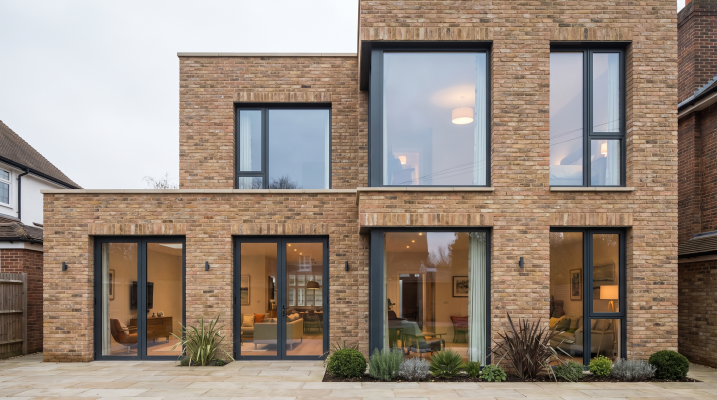
Section 3: More Glass Doesn’t Automatically Mean Better Design
It is easy to assume that the ultimate goal of aluminium window design is to maximise glass and minimise frame. After all, slimmer sightlines admit more daylight, create cleaner views and contribute to the contemporary aesthetic many homeowners admire. Yet architects rarely approach design in such absolute terms. They understand that great architecture is built on proportion rather than extremes, and that more glass does not automatically produce a better building.
Every home has its own architectural language. The proportions of the walls, roof, doors and windows all work together to create a balanced composition. If one element becomes disproportionately dominant, that balance can quickly be lost. This is why architects evaluate sightlines as part of the whole building rather than judging them in isolation. A beautifully proportioned window often contributes more to the quality of a home than the slimmest frame available.
Contemporary architecture frequently embraces expansive glazing because it seeks to strengthen the relationship between interior spaces and the landscape. Large sliding doors, floor-to-ceiling windows and generous picture glazing all benefit from refined aluminium sightlines that reduce visual interruption and allow natural light to become a defining feature of the home. In these settings, slim frames support the architectural ambition by helping the building feel lighter and more connected to its surroundings.
A period property presents a very different challenge. Georgian, Victorian and traditional country homes often rely on carefully judged proportions, symmetrical façades and window details that have evolved over centuries. Installing the slimmest possible contemporary frame in these buildings may actually weaken their architectural character rather than enhance it. Architects working on sensitive renovations therefore consider how modern glazing can respect the rhythm, scale and proportions of the original design while still delivering contemporary levels of comfort and performance.
This illustrates an important principle: windows should complement the architecture, not compete with it. A frame that appears beautifully refined on a minimalist contemporary home may seem visually out of place on a traditional stone cottage. Equally, a heavier traditional profile may interrupt the clean architectural lines of a modern self-build. The success of the window depends not on achieving the smallest sightline possible but on selecting proportions that feel appropriate for the building.
Rhythm also plays an important role. Architects often think about windows as repeating elements across an elevation, creating patterns that give the façade structure and coherence. Mullions, transoms and frame widths establish a visual rhythm that guides the eye across the building. Altering those proportions affects not only individual windows but the appearance of the entire elevation. Sightlines therefore influence the architecture at a much broader scale than homeowners often realise.
Composition is equally significant from inside the home. Looking through a window involves more than simply seeing the view beyond. The frame itself becomes part of the visual composition, shaping how the landscape is presented. Much like the frame surrounding a painting, it defines the relationship between the viewer and what lies beyond the glass. Architects therefore consider how sightlines contribute to this experience, ensuring they enhance rather than distract from the views the home has been designed to celebrate.
This balanced approach explains why architects rarely ask for the narrowest frame without qualification. Instead, they ask whether the sightlines are right for the project. They consider the scale of the building, the style of the architecture, the surrounding landscape and the overall design intent before deciding what proportions will create the strongest result. Sometimes that leads to exceptionally slim aluminium profiles; sometimes it calls for more substantial framing that better suits the character of the home.
For homeowners, this offers a valuable perspective when comparing glazing systems. Rather than assuming that less frame automatically means better design, it is worth asking how the window contributes to the architecture as a whole. Does it strengthen the proportions of the building? Does it frame views naturally? Does it support the atmosphere the design is trying to create? These questions often lead to better long-term decisions than focusing solely on millimetres of visible aluminium.
Ultimately, architecture is about relationships rather than individual components. Glass, frame, wall, roof and landscape all depend upon one another to create homes that feel balanced and timeless. Slim sightlines can be an important part of that composition, but only when they serve the architecture itself. The best window is not necessarily the one with the least visible frame—it is the one whose proportions feel so natural that the entire home simply looks and feels right.
Section 4: Why Architects Spend So Much Time Looking at Elevations
When homeowners imagine the design process, they often picture architects creating floor plans, choosing materials or deciding where windows should be positioned. What is less obvious is the amount of time architects spend studying the outside of the building through carefully drawn elevations. These drawings reveal far more than the placement of windows—they show how every opening contributes to the balance, proportion and character of the entire façade. It is here that sightlines become one of the most important architectural considerations.
An elevation allows architects to step back and view the building as a complete composition. Rather than focusing on individual windows, they consider how each opening relates to those around it, how frame widths influence visual weight and how the building will be experienced from different viewpoints. Even relatively small changes to window sightlines can alter the overall appearance of a façade, making it feel either refined and balanced or unnecessarily heavy and fragmented.
Symmetry is one of the first qualities architects assess. Many homes rely on carefully aligned openings to create a sense of order and harmony. When window proportions, mullions and frame widths are consistent, the building appears calm and well resolved. In contrast, inconsistent sightlines can subtly disrupt this balance, even if homeowners cannot immediately identify why the architecture feels less coherent. The eye instinctively recognises proportion, often without consciously understanding the details behind it.
Alignment is equally important. Architects pay close attention to how windows line up with doors, rooflines, floor levels and other architectural features. Mullions may align vertically through several storeys, while transoms often correspond with internal floor levels or external architectural details. Slim, carefully engineered sightlines help maintain these visual relationships by allowing glazing to integrate cleanly into the wider composition without introducing unnecessary bulk.
Visual weight is another factor that receives considerable attention. Every frame contributes a degree of presence to the façade. Wider visible profiles naturally create a heavier appearance, while slimmer sightlines allow the building to feel lighter and more transparent. Architects carefully balance this visual weight so that the glazing complements the walls, roof and surrounding materials rather than overpowering them. The objective is not simply to reduce the frame but to ensure every element feels proportionate to the whole.
Consistency across different window types is particularly valuable. Modern homes often combine fixed picture windows, opening casements, sliding doors and feature glazing within the same project. Without careful consideration, these different systems can produce noticeably different frame widths, disrupting the visual rhythm of the building. Architects therefore look for glazing systems that maintain consistent sightlines wherever possible, creating façades that appear unified rather than assembled from unrelated components.
This attention to detail becomes even more significant on contemporary homes where glazing forms a major part of the architecture. Large expanses of glass, corner windows and minimal sliding doors all draw attention to the precision of the surrounding frames. Every visible line contributes to the overall composition, making thoughtful sightline design essential rather than optional. Slim profiles succeed not because they disappear completely, but because they reinforce the architectural clarity of the building.
The surrounding materials also influence how sightlines are perceived. A refined aluminium frame set within natural stone, timber cladding or crisp rendered walls creates different visual relationships depending on the proportions involved. Architects consider these interactions carefully, ensuring the windows complement rather than compete with the textures and materials that define the character of the home. Good architecture emerges when every element supports the others.
Importantly, these decisions are rarely about creating buildings that appear fashionable. Architects are aiming for homes that continue looking balanced and elegant many decades after they are completed. Well-considered sightlines contribute to this longevity because they are based on timeless principles of proportion rather than short-term design trends. Buildings designed in this way often age more gracefully because their visual harmony remains relevant even as styles evolve.
For homeowners, understanding the importance of elevations offers a valuable perspective. Sightlines are not simply technical measurements discussed in showroom conversations—they influence how your home will look every time you arrive, every photograph you take and every first impression visitors experience. The reason architects spend so much time refining these drawings is simple: when the proportions are right, the architecture feels effortless. The building appears calm, confident and beautifully resolved, often without anyone consciously noticing the carefully judged sightlines that helped make it possible.
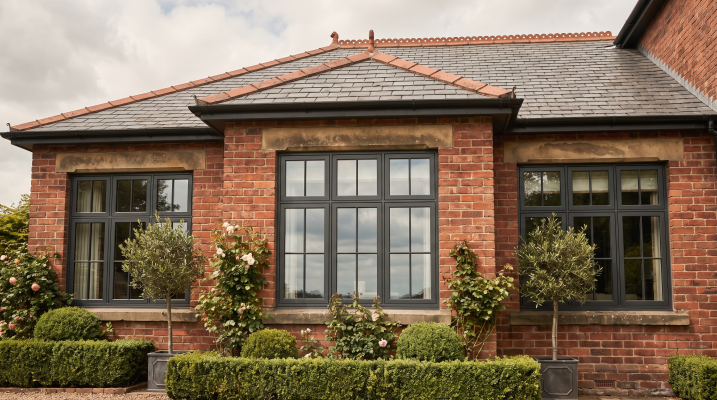
Section 5: Sightlines and Large Sliding Doors
Few architectural features transform a home as dramatically as large sliding doors. They flood interiors with natural light, create uninterrupted views and strengthen the connection between living spaces and the garden beyond. Yet while homeowners are often captivated by the size of the glass, architects frequently focus on something much smaller: the sightlines surrounding it. These refined frame widths play a crucial role in determining whether a sliding door feels impressive or truly exceptional.
Large areas of glazing naturally draw the eye towards the landscape. Every visible frame becomes part of that experience, defining the boundary between architecture and nature. Slim aluminium sightlines reduce this visual interruption, allowing the garden, countryside or coastal view to become the dominant feature rather than the frame itself. The result is not that the architecture disappears, but that it feels lighter and less intrusive.
This relationship becomes particularly noticeable when the doors are closed. Modern sliding systems are designed so that homeowners can enjoy expansive views throughout the year, regardless of the weather. During winter, the glazing continues to frame the landscape like a living piece of artwork. Slim sightlines allow those views to remain as uninterrupted as possible, preserving the sense of openness that makes contemporary glazing so appealing.
When the doors are opened, the effect becomes even more powerful. Interior and exterior spaces begin to flow together, encouraging movement between kitchen, living areas and outdoor terraces. Architects often describe this as blurring the boundary between inside and outside, but that experience depends on more than simply creating a large opening. Refined sightlines help minimise the visual distinction between the built environment and the landscape, making the transition feel far more natural.
Corner glazing demonstrates this principle beautifully. Where structural engineering allows glass to meet at the corner of a building with minimal framing, the architecture can appear almost transparent from certain viewpoints. The building still provides shelter and enclosure, yet the visual connection with the surrounding environment feels remarkably open. Achieving this effect relies on sophisticated engineering, but the architectural impact comes from carefully controlling the visible sightlines rather than eliminating them altogether.
This is why architects often speak about framing views rather than simply installing windows. Every sliding door presents a carefully composed relationship between the home and its surroundings. A mature oak tree, a landscaped garden, distant hills or a courtyard can all become integral parts of the interior experience when framed thoughtfully. Slim aluminium profiles allow these views to remain the focus while quietly supporting the structure around them.
Structural glazing pushes this concept even further by reducing visible framing wherever practical. Although the engineering involved is highly sophisticated, the objective remains surprisingly simple: to allow architecture and landscape to work together as one continuous visual experience. The less attention drawn to the frame, the more naturally the eye moves beyond the glass towards the environment outside.
Importantly, achieving these elegant sightlines requires exceptional engineering. Large sliding glass panels can weigh several hundred kilograms, demanding precise manufacturing and robust aluminium systems capable of supporting substantial loads while maintaining smooth operation. Architects therefore appreciate slim sightlines not only because they look refined, but because they demonstrate how structural performance and thoughtful engineering can enhance architectural beauty rather than restrict it.
For homeowners, the benefits are experienced every day rather than admired as technical achievements. Morning light reaches deeper into the home. Evening sunsets remain uninterrupted by bulky framing. Gardens feel visually connected to living spaces even when the doors are closed. The architecture begins to feel calmer because fewer visual elements compete for attention. These subtle improvements accumulate over time, shaping the quality of everyday life in ways that are difficult to capture in a specification sheet.
Ultimately, the finest sliding doors are not defined by the size of the opening alone. They are defined by how effortlessly they connect people with the spaces beyond the glass. Slim aluminium sightlines help make that connection possible, quietly supporting the architecture while allowing daylight, landscape and everyday living to take centre stage. In the best contemporary homes, homeowners rarely notice the frames themselves—they simply enjoy feeling closer to the world outside.
Section 6: Why Different Manufacturers Produce Different Sightlines
At first glance, many aluminium windows appear remarkably similar. They may share comparable colours, glazing specifications and opening styles, making it easy to assume that the visible frame widths will also be much the same. Architects know this is rarely the case. In reality, the sightlines of an aluminium window are the result of countless engineering decisions, and those decisions vary significantly between manufacturers.
The width of a frame is never determined by appearance alone. Every millimetre of visible aluminium must perform a structural role, supporting the weight of the glass, resisting wind loads, accommodating thermal movement and ensuring the window operates reliably for decades. Reducing the visible frame is therefore not simply a matter of making the profile thinner—it requires sophisticated engineering that maintains strength while minimising unnecessary bulk.
This is one of the reasons premium aluminium systems often achieve noticeably slimmer sightlines. Manufacturers invest heavily in research, structural analysis and product development to refine every element of the frame. High-strength aluminium alloys, carefully engineered profile shapes and advanced manufacturing techniques allow the frame to carry substantial loads while remaining visually elegant. The result is not simply a slimmer window but a more refined balance between engineering and architecture.
Thermal break technology also plays an important role. Modern aluminium frames are divided into internal and external sections separated by an insulating barrier. Integrating this thermal break while preserving slim proportions requires careful profile design and precision manufacturing. Premium systems often achieve better thermal performance without significantly increasing visible frame widths because the engineering has been developed as a complete solution rather than a collection of individual components.
Profile geometry is another area where manufacturers differ. Some systems rely on deeper or wider sections to achieve structural performance, while others use more sophisticated internal reinforcement and chamber design to reduce visible dimensions. These subtle engineering choices influence not only the appearance of the finished window but also its thermal efficiency, structural capability and long-term durability. What homeowners see as a narrow sightline is often the visible result of years of hidden product development.
Opening mechanisms contribute to the differences as well. Fixed windows, opening casements, tilt-and-turn systems and sliding doors all require different structural arrangements. Some manufacturers place greater emphasis on maintaining consistent sightlines across multiple product types, allowing large glazed elevations to appear visually unified. Others prioritise individual product performance, resulting in more noticeable variations between adjacent window styles. Architects pay close attention to these details because consistency contributes significantly to the overall quality of the architecture.
Manufacturing precision is equally important. Even the most carefully designed profile depends upon accurate extrusion, machining and assembly. Tight production tolerances ensure that slim frames remain straight, durable and capable of supporting large glazing units without distortion over time. Premium manufacturers achieve this through rigorous quality control, allowing architects to specify refined sightlines with confidence that the finished installation will perform exactly as intended.
This explains why architects rarely compare aluminium windows by visible dimensions alone. A frame that appears only a few millimetres slimmer may represent a substantially more sophisticated engineering solution, offering improvements in structural strength, thermal performance and long-term reliability alongside its aesthetic advantages. The sightline is therefore not simply a styling feature—it is evidence of the engineering decisions hidden within the profile itself.
For homeowners, this means that comparing aluminium windows should involve more than measuring the width of the frame. It is worth understanding why those dimensions have been achieved and how they relate to the overall performance of the system. Questions about structural capability, thermal efficiency, testing and long-term durability often reveal far more about the quality of a window than sightline measurements viewed in isolation.
Ultimately, not all aluminium windows look the same because they are not engineered in the same way. Every visible profile reflects a series of technical decisions balancing strength, insulation, durability and architectural elegance. The finest systems demonstrate that excellent engineering and refined aesthetics are not competing priorities. Instead, they show that thoughtful engineering is precisely what makes beautifully proportioned sightlines possible in the first place.
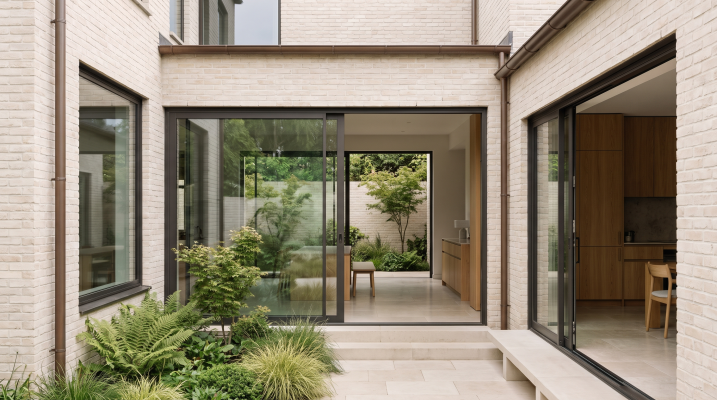
Section 7: Choosing the Right Sightlines for Your Home
Once homeowners understand the importance of sightlines, the next question naturally follows: what is the right sightline for my project? The answer is rarely found by comparing frame widths alone. Architects do not begin with a catalogue and search for the slimmest profile available. Instead, they begin with the architecture of the home, the character of the surrounding environment and the experience the building is intended to provide. The sightlines are then chosen to support those wider design ambitions.
For contemporary homes, slim aluminium sightlines often feel entirely appropriate. Modern architecture frequently celebrates clean geometry, generous glazing and strong visual connections with gardens or surrounding landscapes. Refined frames help reinforce these qualities by allowing daylight and views to become central features of the design. Rather than drawing attention to themselves, the windows quietly support the simplicity and openness that contemporary architecture strives to achieve.
Architect-designed self-builds frequently benefit from this same approach. Because every aspect of the home has been carefully considered from the earliest design stages, glazing becomes an integral part of the architectural composition rather than an afterthought. Sightlines influence how natural light enters the building, how internal spaces relate to one another and how the exterior elevations are perceived from a distance. Selecting the right proportions therefore becomes an important part of achieving the overall architectural vision.
Renovation projects often require a more balanced response. Introducing modern aluminium windows into an existing property involves respecting the character of the original building while improving comfort and performance. In some cases, contemporary slim sightlines create an elegant contrast with traditional materials. In others, slightly more substantial proportions feel more sympathetic to the scale and rhythm of the existing architecture. The right solution depends on understanding the building rather than following a universal trend.
Heritage and period homes deserve particular sensitivity. Historic properties frequently rely on carefully judged window proportions that contribute significantly to their architectural identity. While modern performance standards remain important, architects often look for glazing systems whose sightlines respect the original character of the building. The objective is not to imitate historic construction unnecessarily, but to ensure new interventions sit comfortably within the established architectural language.
Lifestyle also influences the decision. A family home overlooking open countryside may place enormous value on uninterrupted panoramic views, making refined sightlines especially desirable. A townhouse within a busy urban environment may prioritise privacy, rhythm and the relationship between the façade and neighbouring buildings. The architecture should always respond to the way the occupants intend to live rather than simply pursuing the latest design fashion.
This long-term perspective is one reason architects encourage homeowners to think beyond current trends. Window frames remain part of a building for many decades, often outlasting changes in interior design, landscaping and architectural fashion. Choosing sightlines that complement the proportions of the home rather than chasing temporary stylistic preferences usually results in buildings that continue looking balanced and elegant for many years after completion.
Working with experienced glazing specialists can make this process significantly easier. Rather than presenting every available profile as an equal option, knowledgeable suppliers help homeowners understand how different sightlines influence both the appearance and performance of the building. They consider architectural context, glazing layouts, structural requirements and long-term maintenance, ensuring the recommendation supports the project as a whole rather than focusing on one specification in isolation.
Ultimately, there is no universally perfect sightline. There is only the sightline that best serves the architecture, the setting and the people who will live within the home. The most successful projects are those where the proportions feel entirely natural—as though the windows could never have been designed any other way.
For homeowners, this provides perhaps the most valuable principle of all. Choose sightlines because they strengthen your architecture, frame your views and enrich your everyday experience—not because they happen to be the narrowest on a specification sheet. When proportion takes priority over fashion, the result is a home that feels timeless, balanced and deeply satisfying to live in for decades to come.
Section 8: The Best Sightlines Are the Ones You Stop Noticing
By the time homeowners reach the end of a glazing project, they rarely find themselves discussing sightlines. Conversations naturally move towards enjoying brighter rooms, opening large sliding doors on summer evenings or admiring how naturally the garden feels connected to the interior. In many ways, this is the greatest compliment a window can receive. The best sightlines do not demand attention—they quietly allow the architecture itself to shine.
This reflects one of the fundamental principles of good design. Architecture is most successful when every element works together so harmoniously that nothing feels forced or overdesigned. Window sightlines contribute to this balance by supporting the proportions of the building rather than competing for attention. They frame views, admit generous daylight and define the rhythm of the façade, yet they do so with remarkable subtlety.
Homeowners rarely walk into a beautifully designed room and immediately comment on the width of the aluminium frames. Instead, they notice how calm the space feels, how daylight fills the room or how effortlessly their eyes are drawn towards the landscape outside. These experiences are shaped by carefully considered sightlines, even though the occupants may never consciously recognise the role they play. Good design succeeds because it influences perception without constantly reminding people how it has been achieved.
The same is true from the outside. A well-composed elevation feels balanced, elegant and appropriate to its surroundings. Visitors may admire the home without ever analysing the alignment of the mullions or the proportions of the glazing. Yet those carefully judged relationships are precisely what create the impression of architectural quality. Sightlines contribute quietly to the harmony of the façade, allowing the building to appear timeless rather than simply fashionable.
This subtle influence extends throughout everyday life. Morning sunlight enters the home with fewer visual interruptions. Gardens become part of the interior experience even when viewed through closed glazing. Large living spaces feel brighter and more generous because the relationship between glass and frame has been carefully refined. None of these qualities relies on dramatic gestures. They emerge from a series of small architectural decisions that collectively transform the way a home feels.
Architects often describe this as designing for experience rather than appearance alone. A window is not simply an object to be admired—it is something people look through thousands of times each year. Every meal enjoyed beside a picture window, every changing season observed from the living room and every quiet moment spent watching the rain becomes part of the relationship between the occupants and the architecture. Thoughtfully proportioned sightlines strengthen these experiences by allowing the landscape and natural light to remain the focus.
This is why engineering and design are so closely connected. Slim, elegant sightlines are not achieved through aesthetics alone. They rely on sophisticated aluminium systems, thermal break technology, structural precision and careful manufacturing. The engineering makes the proportions possible, while the proportions shape the experience of living in the building. When both disciplines work together successfully, homeowners enjoy the results without needing to understand the complexity behind them.
It is also worth remembering that great architecture rarely depends on a single feature. Beautiful homes emerge because hundreds of thoughtful decisions reinforce one another. Materials, proportions, lighting, structure, landscaping and glazing all contribute to a coherent whole. Sightlines may seem like a relatively small detail within that wider picture, but they influence almost every view, every source of natural light and every visual connection between the home and its surroundings.
For homeowners choosing aluminium windows, this offers perhaps the most reassuring conclusion of all. Rather than chasing the narrowest frame or the latest design trend, focus on selecting sightlines that suit the architecture of your home and the way you want to live within it. The right proportions will continue feeling appropriate long after fashions have changed because they are rooted in timeless principles of balance rather than short-term styling.
Ultimately, the finest sightlines are not the ones that attract the most attention—they are the ones that quietly disappear into everyday life. They allow daylight to take centre stage, frame the landscape with elegance and strengthen the architecture without ever overshadowing it. Years after installation, homeowners may never remember the exact dimensions of their window frames, but they will remember how bright their home feels, how effortlessly the garden becomes part of their living space and how naturally the architecture supports everyday life. That is the true value of exceptional sightline design.